Reading options
What's inside (6 sections)
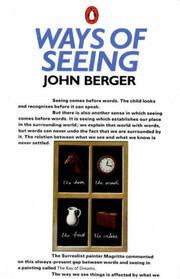
I read Ways of Seeing in a single afternoon with a pencil, then spent a week annoyed at every ad on the bus. That is the point. The 166 page Penguin book, first published in 1972 after the BBC series, ISBN 9780140135152, is short enough to finish fast and sharp enough to stick. John Berger wrote it with collaborators, and it reads like talk, not lecture. Seven essays. Three use only pictures. Four mix words and images. All ask one question. Who gets to show, and who learns to be shown?
My copy is creased and smudged now. I lent it to a friend who works in marketing and he gave it back quieter than usual. That feels right for this book. It does not teach names and dates. It teaches suspicion. Friendly suspicion, the kind you can carry into a gallery or a grocery aisle. Berger keeps saying, look again. Look at who is looking with you. I found myself doing it without trying. At a cafe. On the train. While scrolling late at night with the sound off.
The opening claim is simple. Seeing comes before words. A child looks before it speaks. But seeing is never neutral. What we know changes what we see. A photo of a field means one thing to a farmer and another to a developer. Berger proves it fast with a painting shown with different captions, then with a Van Gogh wheatfield that hits differently after you learn he painted it on his last walk. I tried the trick on my phone photos. Captions steered my friends every time.
I tried it twice to be sure. First I sent a photo of my street at dusk with no caption. People said calm, pretty, quiet. Then I sent the same photo saying the landlord just raised rent again and a shop on the corner is closing. Suddenly the same pink sky looked sad and tense. Nothing in the pixels had changed. Only the story around them. That little test sold me on chapter one more than any theory could. Berger was writing about oil paintings in 1972, but he was really writing about framing. We live inside frames all day. Headlines. Captions. Filters. Crops.
Perspective gets the first full hit. Before oil paint and single point perspective, pictures did not put one viewer at the center. Medieval scenes stacked saints by holiness, not distance. Then architects and bankers wanted windows that behaved. Perspective placed the eye like a lighthouse. Everything bent toward it. Berger links that to property. To see from one owned point is to survey. Maps, deeds, and painted estates grew together. I had never connected a pretty country view to a landowner's fence. After his examples, I cannot unsee it.
Think of those big English portraits Berger loves to pick apart. Thomas Gainsborough and his Mr and Mrs Andrews, that couple posed in front of their own fields on a fine day. The field is not background. It is the point. It says, we own this far. Frans Hals does a similar thing with merchants who stare out calm and well fed, hands on gloves and chairs, sure of their place. Berger makes you notice where the painter stands. The painter stands where the owner would stand. You, the viewer in a gallery fifty years later, are invited to borrow that stance for a minute. Stand tall. Survey. Approve.
That idea followed me into a local museum. I stood in front of a harbor scene with tall ships and neat crates and a bright sky, the kind of painting that looks harmless on a postcard. Then I asked Berger's questions. Who paid for this. What work is hidden. Where are the sailors who unloaded those crates in rain. The painting did not answer, but the silence was loud. It was painted to keep things tidy and owned.
Mysteries and money
The second essay tackles the nude, or rather the naked versus the nude. To be naked is to be oneself without clothes. To be nude, in the European oil tradition, is to be arranged for a watcher. Berger walks through centuries of reclining women looking out at men, holding apples or mirrors, oiled and calm. He contrasts them with Rembrandt's Bathsheba, sad and heavy with a letter, or with Rubens bodies that spill past poses. The key line is blunt. Men act. Women appear. In those paintings, the woman watches herself being watched.
He builds the case slowly, and it is worth following. Titian and his Venus of Urbino, awake and gazing straight out while a maid bends in the back room. Ingres and his odalisques, impossibly smooth, turned for display. Manet quoting the same pose and causing scandal, not because the body was new but because the stare was too direct. Berger keeps pointing to small props. A mirror held up so the woman can join the viewer in looking at herself. Flowers tucked where the eye should rest. Hair arranged to soften and invite. None of it is accidental. Each choice flatters an owner who will hang the picture in his dining room and show friends his taste.
I found this chapter dated in language and alive in argument. Dated because Berger writes of men and women as fixed camps and barely notes race or empire. A modern reader will ask where Black models are, where colonial loot sits. Alive because advertising still uses the same poses. A perfume ad with a woman on silk, eyes to camera, hand near mouth. A car ad with a woman draped on the hood. Scroll once and you will collect five. Berger's test still works. Who does the picture flatter. Who pays for the flattery.
The missing parts nagged me most on a second read. Berger talks about owners and mistresses and wives, but he says little about servants who cleaned those rooms, or about paint ground by apprentices, or about ships that brought sugar money to pay for portraits. He also writes as if looking is mostly a man looking at a woman, which leaves out a lot of looking that fills our phones now. Friends photographing friends. Women photographing women with care and humor. Older people sending proud garden photos that flatter no buyer at all. His frame is tight for 1972 London television. Still, when I see a fitness ad where a woman in activewear glances back over her shoulder with parted lips while holding a protein shake, I hear Berger laugh dryly. Same tilt. Same invite. New product.
Reproduction is the third lever. Cameras move images. A painting once sat in a church or a rich house. You traveled to it, in silence, with a guide. Now it sits on mugs, screens, stamps. Meaning thins and spreads. Berger does not mourn simply. He says reproductions can free pictures from priests and dealers. A worker can tape a master to a locker. But they also let owners use pictures as information without aura. A detail cropped for texture. A face cropped for feeling. Context decides. I thought of museum shops after. Postcards teach us to love details more than wholes.
That locker image stayed with me. I remembered a mechanic I knew who had taped a Vermeer milkmaid above his bench, cut from a calendar. She poured milk in that calm blue light while wrenches clanged below. Did the painting lose force being there. Berger would say it gained a new force. It was no longer a treasure to whisper before. It was company during work. At the same time, I see the other side every week. A news feed crops a painting to one crying face to prove a point about pain, or crops a protest photo to hide how many people actually came. Reproduction frees and misleads in the same motion. The camera does not lie on its own. People crop, caption, and sequence until it leans their way.
Oil paint gets its own material history. Berger argues oil, with its thick light and fillable surfaces, suited owners who wanted things to look ownable. Cloth you could feel. Gold you could weigh. Flesh you could almost touch. Portraits showed land, ships, and wives as assets in one frame. That is why so many merchant portraits include ledgers, keys, and dogs. Power liked to be painted as calm possession. Later, photography took over the job cheaper. Painters then had to find new work, like doubt.
You can feel this in the paint if you stand close. Velvet that looks brushable. Pewter that throws back light. Bread crusts and lemon peels rendered so sharp you want to reach. Berger says this skill was not innocent showing off. It was proof of wealth made visible. Look what we can have painted so well that you want to touch it. I tested this by looking up close at a Dutch still life on my phone, then in person the next weekend. On screen the lemons looked flat and bright. In person the oil sat up like skin. The owner who ordered that picture wanted guests at dinner to see plenty and order rendered as calm fact. No hunger in the frame. Only plenty.
What photos leave out
Berger is sharp on what reproduction adds, but I kept thinking about what family photos leave out, because he barely touches home albums. That gap feels large now. He wrote before phones, before clouds full of birthdays and holidays. The book talks about art photos and news photos and ads, yet most pictures we actually handle are smaller and kinder. A blurry shot of a dad asleep on a sofa. A niece with cake on her cheek. A dead dog loved beyond sense. Those photos do not hang in churches. They live on fridges and in wallets and in message threads.
I pulled out my own albums after this chapter. Paper ones from my parents, then my phone roll from the last three years. The pattern was plain. We keep smiles and cut fights. We keep feasts and cut bills. Birthdays fill pages while night shifts vanish. My mother has six albums of holidays and almost no photos of the flat we lived in for eleven years, the one with the loud pipes. It was not a lie. It was care. She wanted a record she could stand to revisit. Berger helps here even where he is silent. He asks what the image owns or wants. A family album wants continuity. We were here. We loved each other. It held.
The phone has changed the album without changing the wish. We shoot far more and show far less. Out of forty shots of a beach walk, we post one with wind in hair and sea flat behind. We delete the one where eyes are shut and bins overflow. Filters polish light the way varnish once polished apples. Captions do quiet work too. Best day ever under a photo can seal over a tired afternoon and make it shine in memory later. I do this myself and I like doing it. The trouble starts only when we forget we did it, and then compare our messy mornings to other people's best day ever posts and feel thin.
News photos work the opposite way and Berger nails that move. Where albums keep the sweet part, papers and feeds often keep the wound. A single crying child stands in for a whole town. A burned car stands in for a whole protest. The photo is true and partial at once. I remember a march I joined where the mood was mostly bored and kind, people sharing water and bad jokes. The photo that ran that night showed the one shove near the edge. It was real. It was not the day. After Berger, I read such photos slower. I ask what sat just outside the crop. Who chose this frame. What sequence would change the sense.
Selfies add a twist he could not have guessed. In old nudes, the painter arranged the woman and the owner looked. In a selfie, the sitter and the shooter are the same person, which sounds like freedom. Often it is. My nephew takes joyful silly selfies with friends, tongues out, no flattery involved. Yet many selfie poses repeat the old grammar without thinking. Chin down, eyes up. Back arched in gym mirrors. Hand in hair. Stare held a beat too long. We learn these angles from ads and feeds, then aim them at ourselves and call it choice. Sometimes it is choice. Sometimes it is habit wearing choice as a mask. Berger gives a plain tool for telling the difference. Look at the pose. Ask who taught it. Ask who gains if you keep striking it.
Ads and envy
The advertising essay hit hardest for me. Berger says publicity borrows art's poses to make envy. Ads show a life slightly better than yours, then sell a cream or a car as the bridge. Oil paint showed what the owner already had. Ads show what you lack and might get. Both use envy, but ads aim it forward. Be thin later. Be rich soon. Be loved after purchase.
What makes it sting is how precisely he tracks the borrowing. Cherubs become babies on detergent boxes. Goddesses become movie stars leaning on cars. Feasts become brunch spreads in delivery apps, shot from above in warm light. I started a folder on my phone for pairs, old and new. A 17th century feast beside a meal kit ad. A countess with pearls beside an influencer with layered gold. The rhyme is almost comic once you see it. The ad does not sell the object so much as the small gap between your kitchen and that kitchen, your skin and that skin. The product poses as a bridge across envy.
He pairs old paintings with modern ads to prove the theft. A cherub offering fruit beside a soda hand offering a bottle. A lord on a horse beside a man on a motorcycle. The gestures match. The promise shifted from status kept to status loaned. I walked past a bus shelter after reading and saw a watch ad with a man in a suit leaning like a minor duke. I laughed out loud. Then I wanted the watch for a second. That second is the whole chapter.
That second deserves a closer look. I stood there longer than I meant to. The man in the ad was not beautiful in a rare way. He was rested, lit, unbothered. His suit fell clean. His stubble was exact. Behind him a blurred city suggested work handled elsewhere by others. The caption promised heritage and precision. All I had done that morning was miss my bus and spill coffee. The ad did not argue. It placed his calm next to my rush and let envy do the talking. Berger says ads speak to our fear of missing a future self. Buy, and you step toward the man you might have been. I did not buy the watch. I still remember the urge with embarrassment and respect. The makers know their craft.
Berger also notes who ads flatter. The imagined buyer is often male, even when the product is for women. Women in ads watch themselves, too, judging their own skin and kitchens as a man might. Men in ads act, drive, choose. The book's examples are 1970s British, all white, all straight. The pattern has widened since to include more faces while keeping the same grammar. That update matters. Diversity in casting has not ended envy as engine. It has spread the same poses to more bodies.
You can see the update on any feed in a minute. A travel ad now shows a Black couple on a bright balcony. A bank ad shows two dads and a kid at a kitchen table. A running shoe ad shows an older woman sprinting through morning streets. The faces changed, which is good. The grammar often did not. Youth still glows. Skin still shines without pores. Kitchens stay wide and clean with no bills on the counter. Bodies still lean and gaze in the old ways, just with a wider cast. I am glad more people get to be shown as happy and free. I also notice who still rarely gets that glow. Tired carers. Night workers. People in small flats with laundry drying indoors. Envy needs a shining future. It keeps picking the same light.
The three picture essays without words do their own teaching. One strings wartime photos, hunger, and boardrooms. One strings women's faces from paintings to ads. One strings protests and police. No captions tell you what to think. You feel the argument in sequence. Images rhyme. A soldier's hand matches a dealer's hand. A model's stare matches a duchess stare. I slowed down here. Flipping fast misses it. Let pairs sit.
I gave those sections a full evening the second time through. No phone. Just the book and a lamp. The effect is closer to music than to reading. A boardroom with hands folded, then a field surgery with hands working fast. A duchess with pearls lowered, then a shampoo model with head tilted the same way. A line of police with shields, then a line of spectators with cameras. Without words telling me what to feel, my eyes started to argue with themselves. Am I seeing likeness or forcing it. That doubt felt useful. Berger trusts pictures to think. He also trusts you to catch yourself projecting. Sit with a pair for a minute before you decide what it proves.
How to test Berger on your phone
Berger invites argument, so I turned his claims into small tests I could run without buying anything. Each takes a few minutes. Each works best with a friend who will push back.
First, try the caption swap. Pick a plain photo you took, a street, a meal, a dog asleep. Send it to two friends with different captions. Tell one the backstory is happy. Tell the other it is sad. Watch how their replies split. Then tell them what you did and compare notes. You will see meaning slide with words. That is chapter one in your pocket. It also makes you kinder with news. You start to ask what caption rode in with the photo and what other caption could fit the same pixels.
Second, track the gaze. For one day, save every ad that shows a person looking straight at you. Perfume, watches, clothes, cars, food delivery, holiday deals, all of it. At night, lay them out in a grid on your phone. Count who acts and who appears. Who drives, points, lifts, chooses. Who reclines, touches face, parts lips, looks over a shoulder. Note age and skin and size too. You will likely find old poses in new clothes, just as Berger found old paint in new print. I did this on a rainy Sunday and filled a folder with fourteen faces in three hours. Eleven used the old grammar. Two broke it with humor. One was just a dog with a raincoat, which won the day.
Third, make your own pair. Find one old painting online, anything from Vermeer to Gainsborough to Rembrandt, and match it with one ad from your feed that copies the pose. Put them side by side. Show a friend and ask what both promise. Who owns what. Who labors out of frame. My best pair was Mrs Andrews and her fields beside a property app ad with a couple on a balcony over a bright estate. Same survey stare. Same calm ownership. Three hundred years apart. My friend groaned when she saw it, then sent me a better pair within the hour. A milkmaid pouring beside an oat milk carton pouring in clean light. The game spreads fast.
Fourth, audit your album. Open your last fifty photos. Mark how many show smiles, meals, trips, and sunsets. Mark how many show bills, queues, tired eyes, sinks full of dishes. Ask what a stranger would think your life holds. Then ask what got left out and why. Keep the sweet photos. They matter. Just notice the cut. I found I had no photos of my actual work desk in a month of pretty streets and plates. My life is mostly that desk. The album had quietly edited it away. Seeing the edit helped me trust other people's albums less blindly and enjoy them more honestly.
Fifth, visit one painting in person if you can. Pick something famous nearby and go stand before it. Notice size, varnish, cracks, guards, glass, the bench placed for viewing, the shop at the exit. Take a photo of it, then look at that photo later at home. Feel how much thins out. Scale goes. Surface goes. Room hush goes. What stays is information you can carry. Berger loved that thinning and feared it. Freeing pictures from locked rooms is good. Turning them into small files that serve any caption is risky. Standing in the room reminds you what the file cannot hold.
What works is brevity and nerve. At 166 pages, no chapter wastes time. Sentences are short. Examples are famous enough to find online. Berger invites you to argue. He states, then shows. The tone is Marxist without jargon pileups. Owners, workers, image makers. You can disagree and still use the tools. I disagreed about his cold take on photography as mere record, yet I now check captions twice.
Short books often fade fast. This one sticks because each chapter hands you a move you can repeat. Change the caption and watch sense shift. Cover the title and ask who looks at whom. Crop tighter and feel feeling rise as fact falls. I taught the caption trick to my nephew in five minutes using two football photos with swapped lines. He got it at once and started captioning his own shots as jokes. That teachability is rare. You do not need a degree to use Berger. You need eyes, a phone, and a friend willing to argue.
What drags is age and narrowness. Gender is binary. Empire is thin. Photography theory has moved on. The book ignores family albums, porn, selfies, memes. Ads now track you personally, not just flatter generally. Berger could not foresee feeds. His envy machine assumed broadcast. Ours is narrowcast. Still, the core holds. Pictures still arrange power. Feeds still sell futures.
The narrowcast point feels large once you live it. Berger imagined millions seeing the same poster on a wall. We see separate walls tuned to each of us. My feed sells boots and books. Yours might sell prams and protein. The envy is fitted now, measured from clicks and pauses. That makes his test harder and more urgent. Harder because we cannot point to one shared image. More urgent because the flattery follows us home and learns our names. I wish he had lived to see retargeting, that small haunting when a jacket you viewed once trails you for days. He would have had fun with it. He would have told us to screenshot the trail and show friends.
Content notes are light. Nude paintings discussed frankly, with reproductions. No erotic detail for thrill. Some war photos in picture essays show injury and grief. Language plain. No slurs except in quoted historical context. The tone is political but not abusive.
For younger readers or school groups, the picture essays need a heads up. A few wartime images are stark and sad. They are not placed for shock alone. They sit in sequence to ask who pays for boardroom choices. A teacher could cover those pages first, then reveal slowly with room to talk. The nude chapter also needs context. It discusses naked bodies as art history, not as tease. Read it as an argument about power and posing, and it stays clear and useful.
How to read it now. Get a cheap paper copy you can mark. Look up each painting on a phone as you go. Cover captions first, guess, then read. Make your own pairs. One old portrait and one ad from your feed. Ask who acts and who appears. Ask what the image owns or wants. Bring one friend who loves art and one who distrusts theory. The argument sharpens with pushback.
Give it two passes if you have time. First pass fast, pencil in hand, arguing in margins. Second pass slow, with search open. Look up the Bathsheba and sit with her tired face. Look up the Andrews couple and their wide fields. Look up a Hals merchant and his sure hands. Then open your feed and hunt their twins. The book is only 166 pages from Penguin Books, first out in 1972, but it opens outward. One short book can fill a week of looking if you let it. Keep notes on your phone. Save pairs. Trade them.
I closed the Penguin edition thinking about my own looking. I take photos of meals, streets, nephews. I crop, filter, caption. Berger would ask what I keep and what I cut, and who I imagine watching. That question annoyed me for days in a useful way. Seeing is not a window wiped clean. It is a habit built by owners, makers, and feeds. Habits can be rebuilt. Start by noticing the frame. Then ask who built it, who paid for it, and what it wants you to want next. Those three questions, carried from 1972 into now, still open pictures like keys.
Lately I catch myself pausing before I shoot. On a walk last week I saw fine light on brick and lifted my phone, then lowered it and just looked. No post. No caption. The wall stayed with me longer than most saved shots. That is Berger working in the background, not as a rule but as a nudge. Look first. Notice who taught you how to frame. Then decide if you want that frame or another. Pictures will keep asking for envy and assent. You can answer slower, and sometimes not at all.
FAQ
When was Ways of Seeing published?
It was first published in 1972 by Penguin Books, based on the BBC series. The standard edition runs 166 pages with ISBN 9780140135152.
What does it cover?
Berger argues perspective, reproduction, oil paint, gender, and advertising shape sight more than beauty alone, using paintings and photos as proof.
Is it part of a series?
No. It is a standalone work of art criticism, though Berger returned to looking and labor in later books like About Looking.
Similar books
More like Ways of Seeing →
Origin
Robert Langdon chases Edmond Kirsch's lost discovery through Bilbao and Barcelona to answer where we come from and where we are going.
2,604-word summary · 12 min read

I'll Give You the Sun
Twins Noah and Jude split after their mother's death, bound by art, guilt and first love.
2,260-word summary · 10 min read
Drawing on the Right Side of the Brain
Edwards teaches seeing edges spaces to draw via right brain exercises.
2,229-word summary · 10 min read

Confess
A young mother fighting to see her son takes a job with a Dallas artist who turns anonymous confessions into paintings.
2,733-word summary · 12 min read

Girl with a Pearl Earring
A maid in Vermeer's Delft household is drawn into the painter's world and into his most famous canvas.
1,973-word summary · 9 min read

The Invisible Life of Addie LaRue
Addie trades her soul for freedom in 1714 France and lives forgotten for 300 years, until a Brooklyn bookseller remembers her name.
3,480-word summary · 15 min read