
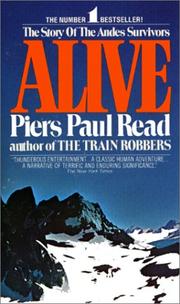
Alive: The Story of the Andes Survivors
2,179-word summary 10 min read 416 pages in the book
- First published
- 1974
- Publisher
- J.B. Lippincott Company
- Pages
- 416
- ISBN
- 9780380003211
Reading options
What's inside (9 sections)
I picked this up because I had seen the newer film and wanted the version the survivors themselves had told. Nearly everyone knows the outline now: a plane full of rugby players goes down in the Andes, and a few of them come home months later. What surprised me is how little the book tries to feel like a story in the usual sense. Piers Paul Read published it in 1974, two years after the rescue, after talking at length with the men who came off the mountain and with the families who waited for them. The first edition came from J.B. Lippincott. The Avon paperback I have runs to 416 pages. Read set out to write down what happened without dressing it up, and that choice is what makes the book both hard to put down and, in an odd way, hard to love.
The Day the Plane Went Down
The passengers were members of the Old Christians Club, an amateur rugby side drawn mostly from alumni of Stella Maris College in Montevideo. They were flying to Santiago, Chile, to play a match. It was a trip a team like that had taken before, ordinary enough that nobody thought much about the route across the Andes. On 13 October 1972, the aircraft went down in a high, remote valley on the Chilean side of the range. Of the 45 people aboard, 16 would eventually walk off the mountain. The rest died in the crash or in the weeks that followed.
What Read does with this opening is tell it plainly. There is no chapter of foreshadowing, no clever angle on the men in the seats. He gives you the route, the weather, the impact, and the immediate confusion, and then he stays with the people in the wreckage. The survivors were young, mostly in their twenties, and many of them knew one another from school or the club. That matters, because a good part of what kept them alive was already in place before the plane hit: friendships formed years earlier, and a shared habit of looking after the person next to you.
The crash site was far from any road and well above the tree line. The temperature dropped below freezing at night. The fuselage lay in snow, and the passengers who could still move dragged the injured into what shelter they could find. Read, who had the advantage of interviewing the survivors after the fact, is careful about who was where and who did what in those first hours. Names recur: Nando Parrado, Roberto Canessa, Carlos Páez Rodríguez, Eduardo Strauch, Gustavo Zerbino, Javier Methol. It reads less like a cast list than a roll call, which is exactly the effect he wanted.
The First Week and the Silence After
A search was mounted, and for eight days aircraft looked for the wreck. Bad weather stopped the search on two of those days, and after a week the official effort was called off. The families in Montevideo were told there was no hope. Read spent time with those families, and those chapters are among the quietest and best in the book. He describes people who had been given an answer they could not accept, and who kept making plans for a return that everyone else had stopped expecting. Carlos Páez Vilaró, the father of one of the players, had built a hotel in the mountains and had flown over the range himself looking for his son.
Inside the fuselage, the logic of the first days was simple. There was very little food in the wreckage: some chocolate, a few cans, scraps from the galley. They melted snow for water. They tried to signal, and they listened for aircraft. The injured were cared for as well as untrained hands could manage. Roberto Canessa, who was a medical student, did what he could for the worst wounds. Read keeps the scale small and physical. He writes about cold, thirst, exhaustion, and the slow understanding that rescue was not coming on the timetable they had assumed. He does not need to tell you they were frightened.
That is the method of the whole book. Read resists the temptation to score the emotion for you. When a family in Montevideo holds a funeral, he tells you what happened. When a search plane passes and is not seen, he tells you that too. The restraint can feel almost clinical, and some readers will find it cold. I found it the opposite of cold, because the facts were already terrible enough and did not need a soundtrack.
The Decision Nobody Wanted to Make
The subject everyone associates with this book arrives a couple of weeks in. There was not enough food, and the snow around the wreck held the bodies of people who had died in the crash. To survive, the living would have to eat the dead. Read handles this with the same flat attention he brings to everything else. He does not linger over it, and he does not look away. He explains who argued for it, who could not face it at first, and how the group reached a working arrangement with something none of them had ever imagined doing.
What struck me is how practical the conversation is in his telling. These were not philosophers working out a theory of necessity. They were young men who had watched friends die and who understood, with increasing clarity, that they would join them if nothing changed. The rugby team had been a group that ate together and lived together, and the discipline of that life did not vanish in the mountains. Read himself wrote that the bare facts were enough to carry the narrative. He was right about that. The passage on the food is short, and it is the part of the book I keep returning to.
Read also understood something about his audience. He knew that readers would come to the book for this single element, and he refused to give them a lurid version of it. The eating is not sensationalized, but neither is it buried. It sits inside a longer account of cold, thirst, faith, and the slow attrition of the group. That placement is a moral choice on the author's part, and it is worth noticing.
Two Men Start Walking
By late November it had become clear that nobody was coming. A small group decided that some of them had to go for help. Nando Parrado and Roberto Canessa, joined at first by Antonio Vizintín, set out across the mountains. Read follows them closely, and these chapters have the pace of the best part of the book. They had no proper equipment, no map worth the name, and only a vague sense that Chile lay to the west. They walked through snow, slept in the open, and found their way by daylight and by stubbornness. Vizintín eventually turned back. Parrado and Canessa kept going.
Their journey took about ten days. Read describes the physical toll without turning it into a set piece: blistered feet, exhaustion, the difficulty of breathing at that height, the moments when it would have been easy to stop. What carries these pages is the plain fact that they did not stop. After days of walking they reached a valley with a river, saw a man on horseback in the distance, and made contact with a Chilean shepherd. They had, against every reasonable expectation, found people. A helicopter was called. The rescue came on 23 December 1972, after 72 days on the mountain. Sixteen men came off.
Read does not save his finest writing for the rescue itself. He spends as much time on the mechanics of getting the party to a place where a helicopter could land. There is something appropriately undramatic about it. The men who had survived the unthinkable were still dealing with wind, altitude, and the problem of a landing site. That refusal to tidy the ending is one of the book's quiet strengths.
How Read Put It Together
The book was published two years after the rescue, and Read had the cooperation of the survivors and their families. He has said that he was sometimes tempted to fictionalize parts of the story because it might have made them more dramatic, and that he decided the bare facts were enough. He has also said that when he showed the manuscript to some of the survivors in 1973, a few of them were disappointed. They felt that the faith and friendship which had sustained them in the mountains did not come through clearly enough on the page. That admission, which he includes in his own account of the book, tells you a great deal about the distance between living an event and reading about it.
The prose was described at the time as unliterary and undecorated, in a review that meant it as praise. That seems right. Read writes with the habits of a reporter who trusts his material. He gives you dates, names, and sequences, and he lets the horror register on its own. Critics responded well. Newsweek called it a book that would become a classic of survival writing, and the New York Times review gave it a rave, arguing that the men's essential courage survived Read's objectivity and that the book was important for anyone responsible for preparing people to face hard circumstances. Those judgments have held up reasonably well.
The book's title has changed shape over the years. A paperback issued around the 1993 film carried a different subtitle, and a 2005 HarperCollins edition added new interviews and another subtitle entirely. There is also a later companion account by Pablo Vierci. None of that changes the core of what Read wrote, but it is worth knowing that the version you hold may not match the first one exactly.
Where the Book Falls Short
I want to be fair about the limits, because they are real. Read's discipline is also a kind of blindness. He reproduces the facts of what the survivors did and said, but the inner life of the group sometimes stays just out of reach. You learn a great deal about who walked, who melted snow, and who argued about the food. You learn less about what it felt like to be eighteen and freezing and certain you were going to die, except in the broadest terms. The survivors who told him the faith and friendship were missing from the pages had a point. Read answers that he never meant to underestimate those qualities and that perhaps no writer could express them adequately. That is an honest answer, and it is also an admission that the book does less than it appears to promise.
There is a second issue, which is that the book is unrelentingly procedural. For every stretch of genuine terror there is a stretch of logistics. Some readers will find the detail absorbing and others will find it dry. I would put myself in the first camp for the trek chapters and the second for some of the early weeks, where the same facts about cold and rationing recur more often than they need to. The book is 416 pages in the edition I read, and there are moments when it feels like it could be shorter without losing anything essential.
None of that should be confused with dishonesty. Read never inflates anything, and he never invents a feeling to spike a chapter. The restraint that costs him some emotional truth also protects him from the worse failure of pretending to know more than he does. Given the subject, that is a trade I am willing to accept.
Why It Still Matters
The crash has been filmed more than once, most visibly in Frank Marshall's 1993 movie and, more recently, in J.A. Bayona's 2023 film. Those versions reach people who will never open Read's book, and they do a different job with the same events. What the book offers that they do not is the sense of a reporter sitting down with the men soon after, writing while the memories were still raw and the families were still reachable. It is a record, not a drama, and that is its value.
I finished it thinking less about the famous decision everyone warns you about and more about the ordinary ones. A group of young men who happened to be on the same plane kept choosing, day after day, to do the next small thing that might keep them alive. Somebody melted snow. Somebody checked on the injured. Two of them decided to walk. Read gives you those choices without fanfare, and by the end the accumulation of them is more moving than any speech could have been. If you want a book that explains what happened on that mountain, this is the one. If you want a book that explains what it meant to the people who were there, it will leave a gap, and Read says as much himself.
FAQ
Is Alive based on interviews with the real survivors?
Yes. Read interviewed the men who came off the mountain and their families, then published the result in 1974, two years after the rescue. He set out to record the bare facts without embellishment.
Is this the book behind the 1993 movie Alive?
Yes. Frank Marshall's 1993 film Alive: The Miracle of the Andes draws on Read's account, and the 2023 film Society of the Snow covers the same events from a newer perspective.
Does the book sensationalize the decision to eat the dead?
No. Read gives it a short, plain passage and refuses to milk it, placing it inside the longer physical ordeal of cold, thirst, and dwindling rations.
Similar books
In the Heart of the Sea: The Tragedy of the Whaleship Essex
The whaleship Essex sunk by a whale leaves men in boats for ninety days.
2,750-word summary · 12 min read
The Perfect Storm
Gloucester's Andrea Gail vanished in the October 1991 nor'easter; Junger joins the crew, storm science, and Tamaroa rescues into a plain and hardworking sea…
2,592-word summary · 12 min read
Endurance: Shackleton's Incredible Voyage
Trapped and crushed in Antarctic ice, Shackleton and 28 men survive floes, open boats, and an 800 mile sea crossing. Lansing tells it from their diaries.
2,818-word summary · 13 min read
Lone Survivor: The Eyewitness Account of Operation Redwing and the Lost Heroes of SEAL Team 10
Marcus Luttrell's account of the 2005 SEAL mission in Afghanistan that killed three of his team and left him alone.
2,144-word summary · 10 min read
The Lost City of Z: A Tale of Deadly Obsession in the Amazon
David Grann retraces Percy Fawcett's 1925 disappearance in the Amazon and finds that the lost city he sought was not entirely a fantasy.
2,493-word summary · 11 min read
The Wager: A Tale of Shipwreck, Mutiny and Murder
Thirty starved men reach Brazil as heroes in 1742, then three more land in Chile calling them mutineers, and Grann sorts the wreck.
2,995-word summary · 13 min read
A Long Way Gone: Memoirs of a Boy Soldier
A Sierra Leone boy flees rebels, becomes a child soldier at thirteen, and fights his way back through rehab.
2,434-word summary · 11 min read
Into Thin Air
Krakauer's account of the 1996 Everest disaster: a guided summit push, a sudden storm, and the choices that left eight dead above 26,000 feet.
2,447-word summary · 11 min read
Unbroken
Louis Zamperini survives a Pacific crash, sharks and POW camps after running in the Berlin Olympics.
3,263-word summary · 15 min read
Zeitoun
A Syrian-American contractor rides out Hurricane Katrina by canoe, rescuing neighbors and stray dogs, until a routine arrest turns into twenty-three days…
2,097-word summary · 9 min read
The Guns of August
Tuchman narrates the first month of World War I, from a 1910 royal funeral to the Marne, and the decisions that trapped Europe.
2,405-word summary · 11 min read
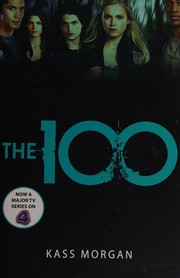
The 100
Three centuries after a nuclear war, a hundred teenage prisoners are sent from a failing space colony to test whether Earth is livable again.
2,152-word summary · 10 min read
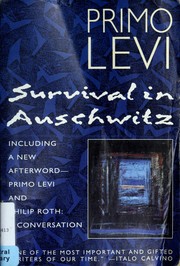
Survival in Auschwitz
A chemist deported from Turin records ten months in Auschwitz with a restraint that makes the horror impossible to look away from.
2,177-word summary · 10 min read
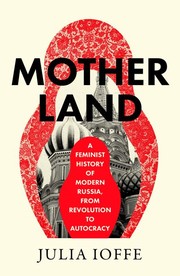
Motherland: A Feminist History of Modern Russia, from Revolution to Autocracy
A feminist history of modern Russia told through women's lives, from the revolutionaries of 1917 to Pussy Riot and the politics of today.
2,191-word summary · 10 min read
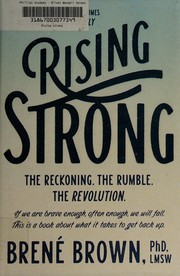
Rising Strong: The Reckoning. The Rumble. The Revolution.
Brené Brown's 2015 book asks what happens after we fall, and argues that examining the stories we invent about failure and heartbreak is the path to getting…
2,271-word summary · 10 min read
My Side of the Mountain
Sam Gribley leaves a crowded New York apartment for the Catskills, builds a home in a tree and trains a falcon to help him survive.
2,242-word summary · 10 min read
Migrations
A woman released on parole travels to Greenland to follow the last Arctic terns on a final migration toward Antarctica.
2,296-word summary · 10 min read
Hiroshima
In 1946 John Hersey followed six ordinary people through the atomic bombing of Hiroshima and its aftermath, using a plain style that made the reporting feel…
2,991-word summary · 13 min read
Hawaii
Michener tells the history of the Hawaiian islands in six sweeping sections, from volcanic origins to statehood, through the lives of those who arrived.
2,295-word summary · 10 min read
Everything Is Tuberculosis
John Green tells the story of a boy with tuberculosis in Sierra Leone and argues that a disease curable since the 1950s still kills a million people a year…
2,015-word summary · 9 min read
1929
Sorkin's narrative history of the 1929 crash opens on 1 February of that year, seven months before the fall, and follows bankers and speculators through to…
2,953-word summary · 13 min read
Truman
McCullough's 1992 Pulitzer-winning biography follows Harry Truman from Missouri farm boy and senator to the president who ended a world war.
2,262-word summary · 10 min read
The Obstacle Is the Way: The Timeless Art of Turning Trials into Triumph
A 2014 Stoic self-help book arguing that perception, action and will can turn setbacks into fuel, told through historical anecdotes.
2,669-word summary · 12 min read

The Light We Carry: Overcoming in Uncertain Times
Michelle Obama's follow-up to Becoming offers ten practical habits for meeting fear, self-doubt and uncertainty, told through stories of her family,…
2,327-word summary · 10 min read

The Zookeeper's Wife: A War Story
The directors of the Warsaw Zoo hid roughly three hundred Jews in empty cages and outbuildings after the German invasion, while Jan worked for the resistance.
2,065-word summary · 9 min read

Long Walk to Freedom
Mandela's account of a Thembu childhood, a law practice, a banned movement, twenty-seven years in prison, and the negotiation that ended apartheid.
2,454-word summary · 11 min read
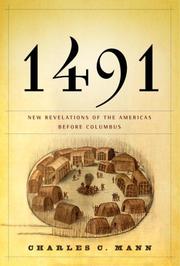
1491: New Revelations of the Americas Before Columbus
Charles C. Mann gathers archaeology, ecology, and demography to argue that the Americas before Columbus were older, fuller, and more deliberately shaped than…
2,712-word summary · 12 min read
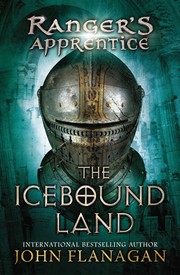
The Icebound Land
Captured and enslaved in Skandia, Will fights a drug that erases him while Halt and Horace cut a bloody road through Gallica to bring him home.
2,088-word summary · 9 min read
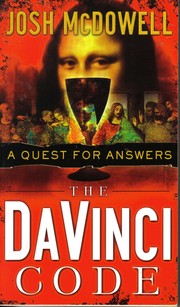
The DaVinci Code: A Quest for Answers
A short 2006 dialogue in which three friends test Dan Brown's claims about Jesus, Mary Magdalene, Nicaea, and the canon.
2,088-word summary · 9 min read

The Beach
A young backpacker follows a dead man's map to a hidden island community, then discovers what the people there are willing to do to keep it secret.
2,067-word summary · 9 min read