
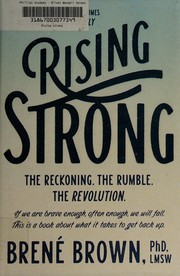
Rising Strong: The Reckoning. The Rumble. The Revolution.
2,271-word summary 10 min read 301 pages in the book
- First published
- 2015
- Publisher
- Spiegel & Grau
- Pages
- 301
- ISBN
- 9780812995824
Reading options
What's inside (8 sections)
I picked this up because it kept getting recommended to me by people who had never finished a book about vulnerability in their lives. It was published in 2015 by Spiegel & Grau, the first edition running 301 pages, and it sits third in the run of Brené Brown books that started with The Gifts of Imperfection and Daring Greatly. The full title is a mouthful, Rising Strong: The Reckoning. The Rumble. The Revolution. At first I thought the three nouns were marketing. By the end I could see they are the book's spine, and that Brown has built the whole argument around them.
What surprised me is how physical the premise is. This is a book that starts with a fall, and it keeps returning to the idea that falling is the price of being brave in public. Brown is a social worker and researcher by training, with a doctorate from the University of Houston and years of grounded theory interviews behind her, and her 2010 TED talk on the power of vulnerability had been watched well over eighteen million times by the time this book came out. That mix of academic research and mass-platform storytelling shapes everything here. She writes from evidence, but she writes the way someone talks.
Readers coming from Daring Greatly will recognise the furniture. The vocabulary of wholehearted living, shame resilience, and courage over comfort is all here. What changes is the question. Daring Greatly asked what it would look like to show up vulnerable in the first place. This book asks what happens on the morning after, when the vulnerability has not gone the way you hoped and you are left sorting through the wreckage of a conversation or a decision.
A fall, and the physics of vulnerability
The book's central claim arrives early, in a chapter called The Physics of Vulnerability. The line is that if we are brave enough often enough, we will fall. Brown treats this as simple physics rather than as a loose metaphor about failure, and she grounds it in a moment from her own life: a public fall at a conference, in front of an audience, where she ended up on the floor and had to decide what the event meant before she had even stood up. The fall itself matters less than the speed with which the mind builds a story about it.
I keep coming back to that scene because it makes the rest of the book concrete. We have all had a smaller version of it. An email goes badly, a meeting goes quiet, someone does not call back, and within seconds we have a whole account of what it means about us. Brown's claim is that the story arrives faster than the facts, and that most of the damage in a setback comes from the story rather than the setback. Rising strong, for her, is the process of noticing that story and doing something with it.
Two early chapters, Truth and Dare and Owning Our Stories, set up the terms. There is also a note on research and storytelling as methodology, in which Brown explains how she uses interviews and narrative as evidence. That openness is one of the book's strengths. She is not pretending to have run a laboratory experiment on heartbreak. She is drawing on years of interviews and on her own attempts to live what she teaches, and she says so plainly.
The reckoning: looking at what actually happened
The first of the three parts, the reckoning, is about facing facts. Brown's argument is that you cannot get past a fall you refuse to look at. The reckoning means naming what happened, admitting what you felt, and resisting the urge to skip straight to a reassuring explanation. It is the unglamorous part of the process, and it is where the book asks the most of a reader who would rather move on quickly.
A chapter called Civilization Stops at the Waterline sits in this stretch of the book. Its title is a reminder that the polite surface breaks down under emotional pressure, and that the stories we reach for in those moments are rarely the ones we would defend in daylight. Brown is interested in the gap between the event and the account we give of it. She wants the reader to slow down inside that gap.
That framing explains why she spends so much time on the small mechanics of a setback. She is interested in the moment before a person knows what they feel, when the body registers something and the mind has not yet named it. Her insistence on naming it comes from her clinical background, where vague distress is often the first thing a client brings into the room. Getting specific, in her view, is the beginning of regaining some control.
The reckoning also asks for honesty about feeling. Brown treats feelings as data rather than as instructions, a view that runs through her earlier books as well. The task is to say what is true without immediately judging it. In practice that means admitting hurt, embarrassment, anger, or envy before deciding what any of it says about your character. It is harder than it sounds, and the book is at its best when it stays with the awkwardness of that admission instead of rushing to a tidy lesson.
The rumble: arguing with the story you made up
The middle section, the rumble, is the largest and the most useful. Here Brown goes after the first story we tell ourselves after a hurt, the one she calls the SFD, a rough and emotion-soaked first draft that she names bluntly and that we then mistake for the truth. The chapters in this part, including Sewer Rats and Scofflaws, The Brave and Brokenhearted, and Easy Mark, work through different versions of that mistake.
Rumbling means taking the first draft apart. Brown's method is to get curious about it. What do I know for certain? What am I assuming? What would I tell a friend who came to me with this same story? She writes about the internal voice that throws shame at us in these moments, the voice that turns one bad meeting into a verdict on a whole life. The way through, in her account, is to examine what the voice is protecting instead of arguing that it is wrong. Shame, she has argued across her career, grows in secrecy and loses force when it is spoken to someone safe.
Brown calls that internal voice a shame quarterback at one point, and the image is a fair one: it stands at the centre of the huddle calling plays that are guaranteed to hurt. The alternative she proposes is curiosity. Curiosity is not a soft substitute for honesty here. It is a discipline, a way of staying in the question long enough for something other than the first draft to emerge. She asks readers to hold their assumptions lightly and to check them against what they would say to someone they love.
This is where the phrase the story I'm making up earns its place. Brown offers it as a piece of language for separating fact from interpretation in real time. It is a small tool, and the book's best moments come when she shows how such a small shift in wording can change what a person does next. She connects it to parenting, to partnership, and to leadership, always with the same underlying move: notice the story, rumble with it, then choose a response rather than reacting on autopilot.
I found the rumble chapters more convincing than the book's grander claims. When Brown stays close to a single moment, a person replaying a conversation or deciding whether to apologise, the advice feels earned. When she widens out to declarations about how brave people live, the prose starts to sound like the summary on the back cover. The distinction matters, because the book contains both registers, sometimes in neighbouring paragraphs.
The revolution, and composting failure
The last part, the revolution, is about what changes when you practice rising strong over time. Brown's position is that the process alters how we live, love, parent, and lead, because a person who has learned to rumble with their stories becomes less controlled by the fear of getting it wrong. The chapters Composting Failure and You Got to Dance with Them That Brung You develop this idea, borrowing a gardener's logic for what to do with mistakes and offering a plain acknowledgement of the people who helped along the way.
The revolution unfolds as a habit rather than a single dramatic change. Brown frames the wholehearted life, a term she has used since The Gifts of Imperfection, as something built through repeated small acts of courage and honesty. She writes about brave leaders and brave teams, extending the argument into the workplace in a way that anticipates her later book Dare to Lead. The through line is that vulnerability, properly understood, is a condition of trust rather than a display of weakness.
The word revolution is deliberately larger than the word coping. Brown wants to argue that the cumulative effect of these small practices is a different way of being in the world, one in which failure stops being a verdict and starts being information. She connects this to the idea of courage as a set of skills that can be taught and practised, an idea that runs through the Daring Way training programme she founded. It is an optimistic claim, and the book does not fully prove it, but it gives the final chapters a sense of direction.
The book's closing pages include appendices that are genuinely useful: notes on trauma and complicated grief, guidance on finding a certified Daring Way helping professional, and short summaries of the key learnings from The Gifts of Imperfection and Daring Greatly. Those summaries are a sign of how Brown sees the three books fitting together. This one is the middle chapter of a larger argument about courage, and the appendices keep pointing back to the volumes on either side.
Where the book loses me
I want to be fair about what does not work. The first problem is repetition. Brown has a finite set of core ideas, and at 301 pages she circles them often. The reckoning, the rumble, and the revolution are a clean structure, but several chapters restate the same point about stories and shame in different words. If you have already read Daring Greatly, a fair amount of this will feel familiar, and the new material is sometimes thin.
There is also an issue of audience. Much of the book reads as though it were written for people who already know the Brown canon and want the next instalment. The appendices that summarise her earlier books help, but the main text rarely stops to explain a term from scratch. A reader picking this up cold will spend the first chapters catching up on ideas that the book treats as settled.
The second problem is the brand around the book. Brown's work has been embraced by Oprah Winfrey and by corporate leaders, and the prose sometimes sounds written for a keynote rather than a reader. The line about struggle being our greatest call to courage and rising strong our clearest path to a wholehearted life is exactly the kind of sentence that sells well on a jacket but lands flat on the page. There is a slickness to some of the language that sits awkwardly beside the messy human stories it is meant to serve.
There is also a limit to how far the research carries the advice. Brown is careful about her method, but the leap from interview-based grounded theory to broad prescriptions about how to live is sometimes larger than the evidence supports. Readers looking for a rigorous account of resilience science will find something looser here. And readers who want a step-by-step programme may be frustrated, because the book offers a vocabulary and a way of looking at setbacks more than it offers a set of instructions.
I would also say this is not a book for a bad week. The subject is heartbreak and grief, and Brown asks the reader to look directly at both. Handed to someone in the middle of a fresh loss, the call to rumble with your story can feel like one more task. It works better as a book for the period after, when the immediate pain has settled and there is room to think about what happened.
Who should read it
I would hand this to someone who already respects Brown's research and wants a fuller account of the middle step in her argument, the part between deciding to be vulnerable and actually recovering from what follows. The three-part structure gives the book a clear shape, and the chapters on the reckoning and the rumble offer language that is genuinely useful for talking about setbacks without dressing them up.
I would be cautious with a reader who wants a self-help manual or a dispassionate survey of the psychology of resilience. This is a book with a strong point of view and a recognisable voice, and it repeats itself. Read it for the vocabulary it gives you about the stories you tell after a fall, and for the stubborn insistence that getting back up is a practice rather than a personality trait. Those are the parts that have stayed with me, long after the slogans faded.
FAQ
Is Rising Strong part of a series?
No. It stands on its own, though Brown wrote it as the middle step between The Gifts of Imperfection and Daring Greatly, and its appendices summarise both books.
What does rumble mean in this book?
To rumble is to examine the first story you tell yourself after a setback, asking what is fact and what is assumption, rather than reacting on autopilot.
Who published Rising Strong and when?
Spiegel & Grau published the first edition in 2015, running 301 pages with the subtitle The Reckoning. The Rumble. The Revolution.
Similar books
Braving the Wilderness: The quest for true belonging and the courage to stand alone
Belonging to yourself first lets you stand alone and still stay close to others.
2,004-word summary · 9 min read
The Gifts of Imperfection
Shame research turned into ten guideposts for dropping perfectionism and living with courage and connection.
2,799-word summary · 12 min read
The Defining Decade: Why Your Twenties Matter - and How to Make the Most of Them Now
A clinical psychologist argues that the twenties are not a holding pattern and urges readers to build skills, ties, and commitment now.
2,443-word summary · 11 min read
The Miracle Morning
Hal Elrod argues that the first hour of the day sets its tone, and offers six short practices, silence, affirmations, visualization, exercise, reading and…
2,240-word summary · 10 min read

Ikigai: The Japanese Secret to a Long and Happy Life
Two Spanish writers explain the Japanese idea of a reason for being, drawing on Okinawan centenarians, flow, friendship and the acceptance of imperfection.
2,030-word summary · 9 min read
Flow: The Psychology of Optimal Experience
Csikszentmihalyi's 1990 study of optimal experience asks when people feel most alive and finds the answer in a balance of challenge and skill. Drawing on…
3,073-word summary · 14 min read
Boundaries: When to Say Yes, How to Say No to Take Control of Your Life
A Christian self-help book that treats a boundary as a personal property line and applies the idea to family, friendship, marriage, work and the self.
2,047-word summary · 9 min read
The Light We Carry: Overcoming in Uncertain Times
Michelle Obama's follow-up to Becoming offers ten practical habits for meeting fear, self-doubt and uncertainty, told through stories of her family,…
2,327-word summary · 10 min read
The Courage to Be Disliked: The Japanese Phenomenon That Shows You How to Change Your Life and Achieve Real Happiness
A philosopher and an angry young man argue over five nights about Adlerian psychology, trauma, approval, and the freedom to be disliked.
2,054-word summary · 9 min read
Don't Sweat the Small Stuff ... and It's All Small Stuff: Simple Ways to Keep the Little Things from Taking Over Your Life
Richard Carlson’s 1997 bestseller offers one hundred short chapters on lowering the volume on daily irritations, and it is more pragmatic than its title…
2,502-word summary · 11 min read
Four Thousand Weeks: Time Management for Mortals
Oliver Burkeman turns the whole productivity project on its head, arguing that a human lifespan of roughly four thousand weeks is not a problem to optimize…
2,447-word summary · 11 min read

Atlas of the Heart: Mapping Meaningful Connection and the Language of Human Experience
Brené Brown maps 87 emotions and experiences into thirteen 'places we go,' arguing that precise language changes what we can ask for and how we connect.
2,491-word summary · 11 min read
Dare to Lead
Research on courage shows how leaders build trust through vulnerability and clear values.
2,442-word summary · 11 min read
You Can Heal Your Life
Louise Hay's 1984 bestseller argues that thoughts and beliefs shape the body, pairing a mirror-and-affirmation workbook with an A to Z list of ailments and…
3,672-word summary · 16 min read
Wild at Heart: Discovering the Secret of a Man's Soul
Why do men feel bored and tame? John Eldredge argues a man's heart is wild by design, and that recovering it means facing the wound and the question of whether…
2,289-word summary · 10 min read
The Power of Your Subconscious Mind
Joseph Murphy argues that the subconscious accepts whatever the conscious mind repeats, so worry and confidence quietly grow into very different lives.
2,259-word summary · 10 min read
Getting to Yes: Negotiating Agreement Without Giving In
Fisher and Ury propose negotiating on interests rather than positions, using fair standards and a clear alternative if no deal is reached.
2,231-word summary · 10 min read
Emotional Intelligence 2.0
Bradberry and Greaves turn emotional intelligence into four learnable skills, a self-assessment and dozens of strategies, while their headline numbers rest on…
3,276-word summary · 15 min read
Digital Minimalism: Choosing a Focused Life in a Noisy World
Cal Newport argues that willpower cannot beat an attention economy designed against you, and offers a thirty day reset to rebuild your digital habits around…
2,701-word summary · 12 min read
The Obstacle Is the Way: The Timeless Art of Turning Trials into Triumph
A 2014 Stoic self-help book arguing that perception, action and will can turn setbacks into fuel, told through historical anecdotes.
2,669-word summary · 12 min read
Everything is F*cked: A Book About Hope
Manson argues that hope, built on control, values, and community, keeps despair at bay, then takes apart the stories and diversions we use to sustain it.
2,789-word summary · 12 min read
As a Man Thinketh: A book that will help you to help yourself
In seven short chapters, James Allen argues that character and circumstance grow from thought, and that changing how you think is the practical route to…
2,673-word summary · 12 min read
What Happened to You?
Oprah Winfrey and psychiatrist Bruce Perry explain how early experience shapes the brain, and why asking what happened to someone works better than asking what…
2,238-word summary · 10 min read
Moonwalking with Einstein: The Art and Science of Remembering Everything
A journalist spends a year training for the U.S. Memory Championship and discovers that extraordinary memory is mostly technique, attention, and a lot of…
2,027-word summary · 9 min read
The Total Money Makeover: A Proven Plan for Financial Fitness
Dave Ramsey lays out seven Baby Steps, from a $1,000 starter fund to a paid-off house, with the debt snowball at the center.
2,663-word summary · 12 min read
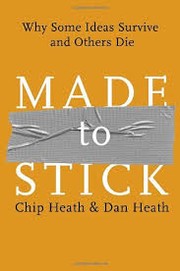
Made to Stick: Why Some Ideas Survive and Others Die
The Heath brothers break down why some ideas vanish on contact while others lodge in memory, tracing six traits that make a message stick.
2,527-word summary · 11 min read
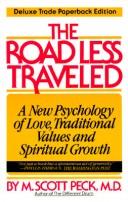
The Road Less Traveled: A New Psychology of Love, Traditional Values and Spiritual Growth
M. Scott Peck argues that maturity begins with accepting difficulty, then builds discipline, love, and spiritual growth through honest, often painful work.
2,200-word summary · 10 min read

Attached
A psychiatrist and a psychologist explain adult attachment styles and show how anxious, avoidant, and secure patterns shape dating, conflict, and the search…
2,157-word summary · 10 min read
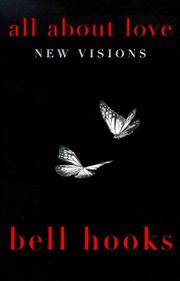
All About Love: New Visions
bell hooks borrows a definition of love as an action rather than a feeling, then spends thirteen chapters showing how hard it is to practice.
2,385-word summary · 11 min read
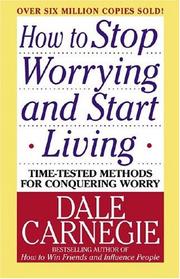
How to Stop Worrying and Start Living
Carnegie offers day-tight routines for worry built from interviews and worker stories.
2,505-word summary · 11 min read