
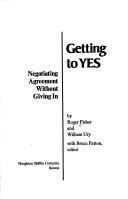
Getting to Yes: Negotiating Agreement Without Giving In
2,231-word summary 10 min read 200 pages in the book
- First published
- 1981
- Publisher
- Houghton Mifflin
- Pages
- 200
- ISBN
- 9780395317570
Reading options
What's inside (9 sections)
I read Getting to Yes before a salary conversation I had been dreading, and it changed how I prepared for that meeting. Roger Fisher and William Ury published the first edition in 1981 through Houghton Mifflin. It runs about 200 pages in that edition. Both authors worked with the Harvard Negotiation Project, and the book grew out of that work. Later editions added Bruce Patton as a co-author, but the version I am describing here is the original two author book with its plain subtitle about agreement without giving in.
The case against haggling
The book opens with a chapter called Don't Bargain Over Positions. Fisher and Ury argue that the familiar way of negotiating, where each side states a number and then moves toward the middle, is a bad method even when it works. It produces unwise outcomes, it is slow, and it leaves both sides feeling that the relationship took a beating. I had never seen it put so bluntly. Haggling rewards the person who is willing to be more stubborn and more comfortable with silence, which has nothing to do with what the argument is actually about.
Their example is the kind of bargaining everyone recognizes. A seller asks a high price. A buyer offers a low one. Both sides spend energy defending the number they said out loud, because backing down feels like losing face. By the time anyone talks about the real issue, the conversation has become a contest over positions. The authors point out three costs: a bad deal, wasted time, and damage to whatever relationship has to continue afterward. I thought of several arguments I had handled exactly this way and felt a little exposed.
What they offer instead is principled negotiation. The phrase sounds like a slogan, but the method is concrete. Decide issues on their merits rather than through a haggling process. Aim for an agreement that is fair to both sides and that can be defended with reasons. The four principles that follow are separate the people from the problem, focus on interests rather than positions, invent options for mutual gain, and insist on using objective criteria. The whole book is basically an expansion of those four lines.
Separate the people from the problem
The first principle addresses the fact that negotiators are people before they are positions. They arrive with different values, different backgrounds, and a pile of feelings that have nothing to do with the issue on the table. Fisher and Ury say the relationship tends to get tangled up with the problem, so perception, emotion, and communication have to be handled directly.
On perception, their advice is to put yourself in the other person's shoes and to discuss each other's perceptions instead of arguing about who is right. They also talk about face saving, which means making a proposal fit the other side's values so that agreeing does not feel like humiliation. This is the part I used most. In my salary conversation I stopped trying to prove that my number was correct and started asking what the other person was afraid would happen if they said yes. That changed the conversation more than any script would have.
On emotion, they ask negotiators to look at the causes of anger on both sides and to let the other party voice grievances. An apology, even a small symbolic one, can do work that a better argument cannot. On communication, they name three familiar failures: not speaking clearly, listening only in order to reply, and mishearing what was said. The remedies are direct speech and active listening. It is simple advice, and it is much harder in practice than it reads on the page. I caught myself doing all three things in the same week I finished the book.
The chapter also makes a point that stuck with me. Being hard on the problem is not the same as being hard on the person. You can be warm and still be stubborn about the terms. That single distinction removed a lot of the theatre I used to bring into disagreements, where I thought being friendly meant giving ground.
Interests rather than positions
The second principle is the one everybody quotes. A position is what a side says it wants. An interest is why it wants it. Fisher and Ury use the dispute over the Sinai Peninsula between Israel and Egypt as their case. Both countries held positions about occupation in 1978, but the reasons were different. Israel wanted security and Egypt wanted sovereignty. Once the discussion moved to those underlying interests, the 1979 peace treaty became possible. I had heard the example before, but seeing it used as a working tool rather than a history fact made it clearer.
The authors push negotiators to identify basic human needs behind stated demands, things like economic well being and control over one's own life. Then both sides talk about those needs and keep an open mind about how to satisfy them. This is where the book stops being about technique and starts being about curiosity. You cannot find an interest by asking better questions unless you actually want to hear the answer. I underlined a line about being open to the other side's account of what matters to them, because I tend to treat listening as a pause before I speak.
The practical test is useful too. If I can say what the other person needs and they agree with my description, I am no longer bargaining over positions. If I cannot, I am probably still arguing about the number. That is a clean way to check yourself in a difficult meeting, and it takes only a moment.
Options and objective standards
The third principle is inventing options for mutual gain. Fisher and Ury recommend brainstorming, separately and then together, and they describe a Circle Chart that moves through problem, analysis, approaches, and action ideas. The point is to separate the act of inventing from the act of deciding. If you judge each idea as soon as it appears, you will never get to the option that actually works for both sides. They use the Jack Sprat rhyme to show how different interests can be complementary rather than opposed.
One tactic I liked is drafting a written agreement before the final conversation. A written draft makes the decision easy because the other side can react to something concrete instead of imagining a proposal. It also exposes which parts of the deal are still vague. I have since used this in small negotiations, and it does lower the temperature. People argue about sentences more calmly than they argue about intentions.
The fourth principle is insisting on objective criteria. The authors want both sides to negotiate on a basis independent of what either one happens to want. Market value, precedent, a professional standard, or a rule both sides accept can do that job. They discuss the Law of the Sea negotiations and then give a small, everyday example about a driver whose car is a total loss dealing with an insurance claims adjuster. Instead of trading offers, the driver asks what standard the company uses and whether that standard was applied here.
The three steps are simple: search for criteria jointly, keep an open mind about which criteria to use, and do not give in to pressure or threats. That last clause matters. The whole method falls apart if you use fair standards only when they favor you. The book is aware of that and keeps returning to consistency as the thing that gives the method its force, though I would have liked a tougher chapter on what to do when the other side simply ignores fairness.
What if the other side will not play
The last section answers three questions that any reader will have. What if they are more powerful? The answer is to develop your BATNA, which stands for Best Alternative To a Negotiated Agreement. It is the result you can obtain without negotiating at all. If you know that alternative, you can walk away from a bad deal, and the quality of your alternative improves whatever deal you do accept. Fisher and Ury suggest listing actions you could take if no agreement happens, turning the promising ones into real options, and picking the best.
This is the most useful idea in the book for ordinary life. Before a negotiation, I now write down what I will do if there is no agreement. Sometimes that alternative is strong, and I relax. Sometimes it is weak, and I know I have to listen harder. Either way I am no longer guessing how much I can afford to ask for.
What if the other side insists on positional bargaining? The authors suggest negotiation jujitsu, which means refusing to fight on their ground and redirecting toward interests. They describe a one text procedure where a third party gathers both sides' interests and keeps revising a single draft until it can be put to everyone. The Camp David Accords are their example, with the United States drafting agreements between Egypt and Israel. I found this convincing as a description of how mediators actually work, less convincing as something one person can do alone across a table.
What if they use dirty tricks? Here the book points to the Munich Agreement of 1938 and the failure to address Hitler's tactics. The response is to negotiate about the rules of negotiation itself, using the same four principles. Misrepresentation and psychological pressure are easier to handle when you have named them and agreed that the process should be fair. I appreciated the honesty of the example. It admits that some people negotiate in bad faith, which the rest of the book sometimes glosses over.
What I kept and what I questioned
I kept the vocabulary. Having words for positions, interests, objective criteria, and a BATNA makes a messy conversation easier to think about. I also kept the habit of separating the person from the problem, which has improved arguments at home as much as at work. The book is short enough to reread, and each chapter is built around one move you can try. That is why it has lasted, and why people still hand it to each other decades after the first edition.
I questioned the optimism. Fisher and Ury write as though most disagreements contain a mutually better answer waiting to be found, and as though both sides will recognize it once it is described clearly. There are negotiations where one side simply wants more of a fixed pile. The book does not give distributive bargaining enough attention, a criticism made by James J. White in 1984 and by others since. Roger Fisher himself reportedly tore a copy of the book in half in class to make the point that it was imperfect. I like that story because it keeps the method from becoming a religion.
Gerald Steinberg wrote in 1982 that the authors describe the world as it should be rather than as it is. There is truth in that. Finding shared objective criteria can be hard when the other side does not want a fair standard. Chris Voss, a former FBI negotiator, later praised the book and then argued that its win win approach is inadequate for hostage situations, asking what happens when you try to devise a mutually beneficial solution with someone who thinks he is the messiah. That line made me laugh and also made the limits of the method clear.
The book has also been read closely for what it leaves out. Carrie Menkel Meadow argued in 1984 that legal negotiators could borrow its problem solving approach while doubting that the advice to separate people from problems always applies in a legal setting. A feminist analysis in the Otago Law Review questioned whether the recommended style assumes a male negotiator. More recent work on cross cultural negotiation warns that interests have to include cultural interests before the method travels well. I am not qualified to settle those arguments, but reading about them made the book more useful to me, not less. A method that invites this much argument is still a method you can test against your own experience.
The book I would hand someone
Read it before a negotiation, not during one. It is easier to absorb the four principles when you are calm, and the examples are meant to be chewed over rather than consulted in a crisis. If you are preparing for a job offer, a contract, a divorce settlement, or a disagreement with a colleague, you will find at least one idea you can use the same day. If you are looking for a detailed manual on hard bargaining, this is the wrong shape of book.
I closed it with a clearer mind about the conversation I had been dreading. I knew what I wanted, I knew why I wanted it, and I knew what I would do if there was no agreement. That is a modest result for a short book, and it is more than most advice books manage. The title promises a way to reach yes without giving in. What it delivers is a way to notice what you are actually arguing about, which is often the harder part.
FAQ
Who wrote Getting to Yes and when did it first appear?
Roger Fisher and William Ury published the first edition in 1981 with Houghton Mifflin. It runs about 200 pages. Bruce Patton joined as co-author for the 1991 second edition and the 2011 third edition.
What are the four principles of principled negotiation?
Separate the people from the problem, focus on interests rather than positions, invent options for mutual gain, and insist on using objective criteria. Fisher and Ury developed the method at the Harvard Negotiation Project.
What does BATNA stand for?
It stands for Best Alternative To a Negotiated Agreement. It is what you can obtain without negotiating, and knowing it helps you judge whether to accept a deal or walk away.
Similar books
Emotional Intelligence 2.0
Bradberry and Greaves turn emotional intelligence into four learnable skills, a self-assessment and dozens of strategies, while their headline numbers rest on…
3,276-word summary · 15 min read

Atlas of the Heart: Mapping Meaningful Connection and the Language of Human Experience
Brené Brown maps 87 emotions and experiences into thirteen 'places we go,' arguing that precise language changes what we can ask for and how we connect.
2,491-word summary · 11 min read

The Total Money Makeover: A Proven Plan for Financial Fitness
Dave Ramsey lays out seven Baby Steps, from a $1,000 starter fund to a paid-off house, with the debt snowball at the center.
2,663-word summary · 12 min read

Made to Stick: Why Some Ideas Survive and Others Die
The Heath brothers break down why some ideas vanish on contact while others lodge in memory, tracing six traits that make a message stick.
2,527-word summary · 11 min read
Dare to Lead
Research on courage shows how leaders build trust through vulnerability and clear values.
2,442-word summary · 11 min read
Essentialism
McKeown argues for less but better: discern the vital few, refuse the trivial many, and use buffers, small wins, and steady routines so key work gets done well…
2,421-word summary · 11 min read
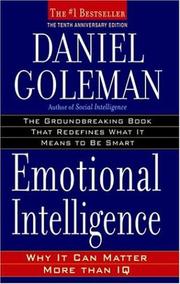
Emotional Intelligence
Goleman argues self awareness and empathy shape success more than IQ alone.
2,026-word summary · 9 min read
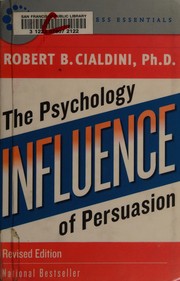
Influence: The Psychology of Persuasion
Six levers plus unity explain why people say yes, learned undercover in salesrooms and labs.
2,030-word summary · 9 min read
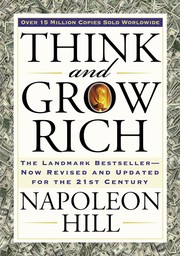
Think and Grow Rich
Hill teaches desire, faith and autosuggestion, distilling lessons from Carnegie interviews into thirteen principles for success.
2,458-word summary · 11 min read
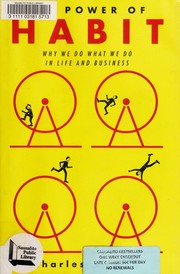
The Power of Habit
Why we do what we do: the cue routine reward loop, keystone habits, and how companies and movements use the same science, from toothpaste to the bus boycott.
2,207-word summary · 10 min read
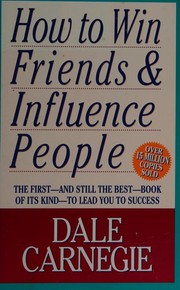
How to Win Friends and Influence People
Carnegie's 1936 guide to getting along offers plain habits for listening, praise, and persuasion. This summary walks through its parts, stories, limits, and…
2,360-word summary · 10 min read
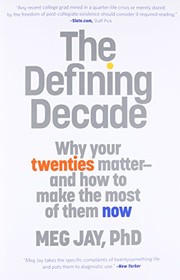
The Defining Decade: Why Your Twenties Matter - and How to Make the Most of Them Now
A clinical psychologist argues that the twenties are not a holding pattern and urges readers to build skills, ties, and commitment now.
2,443-word summary · 11 min read

Wild at Heart: Discovering the Secret of a Man's Soul
Why do men feel bored and tame? John Eldredge argues a man's heart is wild by design, and that recovering it means facing the wound and the question of whether…
2,289-word summary · 10 min read
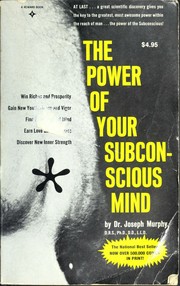
The Power of Your Subconscious Mind
Joseph Murphy argues that the subconscious accepts whatever the conscious mind repeats, so worry and confidence quietly grow into very different lives.
2,259-word summary · 10 min read
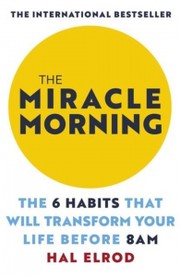
The Miracle Morning
Hal Elrod argues that the first hour of the day sets its tone, and offers six short practices, silence, affirmations, visualization, exercise, reading and…
2,240-word summary · 10 min read
Rising Strong: The Reckoning. The Rumble. The Revolution.
Brené Brown's 2015 book asks what happens after we fall, and argues that examining the stories we invent about failure and heartbreak is the path to getting…
2,271-word summary · 10 min read

Ikigai: The Japanese Secret to a Long and Happy Life
Two Spanish writers explain the Japanese idea of a reason for being, drawing on Okinawan centenarians, flow, friendship and the acceptance of imperfection.
2,030-word summary · 9 min read
Flow: The Psychology of Optimal Experience
Csikszentmihalyi's 1990 study of optimal experience asks when people feel most alive and finds the answer in a balance of challenge and skill. Drawing on…
3,073-word summary · 14 min read
Digital Minimalism: Choosing a Focused Life in a Noisy World
Cal Newport argues that willpower cannot beat an attention economy designed against you, and offers a thirty day reset to rebuild your digital habits around…
2,701-word summary · 12 min read
Boundaries: When to Say Yes, How to Say No to Take Control of Your Life
A Christian self-help book that treats a boundary as a personal property line and applies the idea to family, friendship, marriage, work and the self.
2,047-word summary · 9 min read
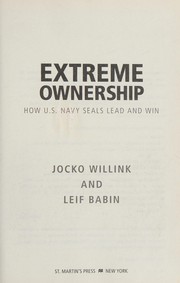
Extreme Ownership: How U.S. Navy SEALs Lead and Win
Two retired Navy SEALs turn their Ramadi combat experience into a blunt leadership creed: the leader owns everything, and the team follows when the why is…
2,368-word summary · 11 min read
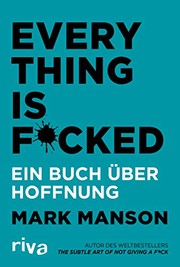
Everything is F*cked: A Book About Hope
Manson argues that hope, built on control, values, and community, keeps despair at bay, then takes apart the stories and diversions we use to sustain it.
2,789-word summary · 12 min read

What Happened to You?
Oprah Winfrey and psychiatrist Bruce Perry explain how early experience shapes the brain, and why asking what happened to someone works better than asking what…
2,238-word summary · 10 min read

The Courage to Be Disliked: The Japanese Phenomenon That Shows You How to Change Your Life and Achieve Real Happiness
A philosopher and an angry young man argue over five nights about Adlerian psychology, trauma, approval, and the freedom to be disliked.
2,054-word summary · 9 min read

Moonwalking with Einstein: The Art and Science of Remembering Everything
A journalist spends a year training for the U.S. Memory Championship and discovers that extraordinary memory is mostly technique, attention, and a lot of…
2,027-word summary · 9 min read
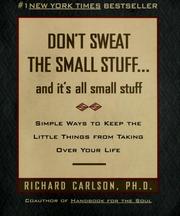
Don't Sweat the Small Stuff ... and It's All Small Stuff: Simple Ways to Keep the Little Things from Taking Over Your Life
Richard Carlson’s 1997 bestseller offers one hundred short chapters on lowering the volume on daily irritations, and it is more pragmatic than its title…
2,502-word summary · 11 min read
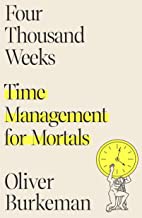
Four Thousand Weeks: Time Management for Mortals
Oliver Burkeman turns the whole productivity project on its head, arguing that a human lifespan of roughly four thousand weeks is not a problem to optimize…
2,447-word summary · 11 min read
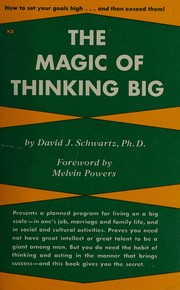
The Magic of Thinking Big
Schwartz's 1959 self-help classic argues that success follows from the size of your thinking, supported by sales anecdotes, vocabulary drills and goal setting.
2,579-word summary · 11 min read
The Road Less Traveled: A New Psychology of Love, Traditional Values and Spiritual Growth
M. Scott Peck argues that maturity begins with accepting difficulty, then builds discipline, love, and spiritual growth through honest, often painful work.
2,200-word summary · 10 min read

Attached
A psychiatrist and a psychologist explain adult attachment styles and show how anxious, avoidant, and secure patterns shape dating, conflict, and the search…
2,157-word summary · 10 min read