
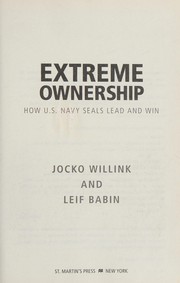
Extreme Ownership: How U.S. Navy SEALs Lead and Win
2,368-word summary 11 min read 298 pages in the book
- First published
- 2015
- Publisher
- St. Martin's Press
- Pages
- 298
- ISBN
- 9781250067050
Reading options
What's inside (8 sections)
I picked this book up expecting a memoir about the Iraq war and found something closer to a management manual written in the language of a rifle squad. That is not a complaint. Jocko Willink commanded Task Unit Bruiser, the SEAL unit that fought in Ramadi in 2006, and Leif Babin served alongside him as a platoon commander. Both men later left the Navy and started Echelon Front, a consulting firm that teaches leadership to businesses. The book is their attempt to turn what they learned in combat into rules any team can use. It came out in 2015 from St. Martin's Press. Reading it now, the combat chapters are the reason it became a bestseller, and the business chapters are where it gets shakier.
The core claim is simple enough to fit on a sticky note: a leader must own everything in his or her world. When a mission fails, the leader looks in the mirror first. Willink and Babin tell stories from Ramadi to make this stick. One of the most repeated is about two SEAL teams in a training exercise. One team kept losing, and its leader kept explaining why: his men were slow, the equipment was bad, the other team had an easier lane. When the leaders were swapped, the same men who had been called bad suddenly won. The lesson the authors draw is that there are no bad teams, only bad leaders.
That is a strong idea, and it is the book at its best. Willink writes about his own failures too. He describes a time early in his command when a plan went wrong and he found himself listing reasons it was not his fault. The realization that he was the one who had signed off on the plan is the moment the philosophy clicks. It is hard to argue with the habit of asking what you could have done differently before you blame the people below you.
Believing in the mission and checking your ego
Two of the early chapters cover belief and ego. Willink argues that a leader who does not believe in the mission cannot expect the team to believe in it. In the SEALs, this showed up as a habit of explaining the why behind every order, even a simple one, so that every man understood what he was doing and why it mattered. He describes a platoon that was slow to patrol because the men thought the task was pointless. Once the leader explained that the patrols were keeping the unit alive by denying the enemy a predictable pattern, the behavior changed. I am paraphrasing the broad stroke here, but the mechanism they describe is real and it is used by good managers everywhere.
The ego chapter is about the danger of a leader who cares more about looking good than about the team. Babin tells a story about a firefight where a leader's concern for his own reputation nearly got people killed because he would not admit he was lost or ask for help. The point lands. A leader who protects his image at the expense of the mission is a liability, and the authors are right to hammer it.
Fair warning though: these chapters repeat themselves. Check your ego and believe circle back to the same mirror idea from the ownership chapter, and a reader who has read one business leadership book will notice the recycled scenery. The combat stories save it. They are told with a calm, specific detail that makes the stakes clear without shouting.
The fighting in Ramadi
It helps to know what Task Unit Bruiser actually was, because the lessons are wrapped around real events. In 2006 Willink led the unit, a SEAL element attached to SEAL Team Three, during the Battle of Ramadi. Babin served as one of its platoon commanders. The unit fought in some of the hardest street fighting of the Iraq war, moving house by house through a city where the enemy could appear on any roof. Among the men who served with them were Chris Kyle, who worked as a sniper, Michael Monsoor, Marc Alan Lee, Kevin Lacz, and Ryan Job. Monsoor and Lee both died in Ramadi in 2006, and the outfit became one of the most decorated Special Operations units of the war. Willink himself earned a Silver Star and a Bronze Star and retired in 2010 after twenty years of service.
That background matters because the book's authority comes from it. When Willink writes about a team that fell apart under pressure, he is not inventing a case study for a slide deck. He is writing about a patrol that did not go where it was supposed to, a door that was not breached on time, a moment when someone's hesitation put the whole element at risk. The best chapters have the feel of an after-action review, the kind where a commander sits his men down and asks what happened without trying to spin it. That tone is the book's real contribution to leadership writing. It treats failure as information rather than as a verdict on a person.
The SEAL habit that comes through most clearly is the insistence on after-action reviews after every mission. The team gathers, talks about what worked and what did not, and writes it down so the next group can learn. Willink presents this as normal practice, not as a special program. In the business world it would be called a learning culture, and companies spend a great deal of money trying to build one. The book's quiet suggestion is that you get there by making it routine to say what went wrong in front of the people who were there. That is a more useful takeaway than most of the slogans.
Cover and move, simple, prioritize and execute
The middle of the book lays out what the authors call the laws of combat. The first is cover and move. In a firefight, one element lays down suppressing fire while another element moves to a better position, then they switch. The authors describe a machine gun team pinning down an enemy position while the rest of the platoon repositioned during a Ramadi battle. Translated to an office, it means that teams must support one another rather than compete for credit, and that no one element should be left exposed. This is the most practical of the laws because it gives a concrete picture of mutual support.
The second law is simple. Willink tells the story of a mission with a plan so detailed that nobody could remember it, and of how it fell apart in the first few minutes. His preference is for a plan everyone can hold in their head, with clear priorities and a short order. He describes writing mission orders that a new guy could repeat back. The corporate version is the familiar advice to keep strategy to a few sentences, and the book is honest that simple is hard because it requires making real choices.
The third law, prioritize and execute, is about what you do when several things go wrong at once. Willink writes about a moment of overload in training and the advice he got: relax, look around, decide what matters most, and do that one thing. He calls this the relaxation response. The SEAL version is a squad leader facing multiple problems who refuses to be paralyzed and works the biggest threat first. The business examples are thinner here. The book leans on generalities about focusing on the highest priority without showing much of how that looks in a real company, and a reader looking for a decision framework may come away wanting more.
Decentralized command and the plan
Decentralized command is the chapter I found most useful. The idea is that a leader explains the what and the why of a mission, then lets the team figure out the how. Willink writes about a raid where the commander was wounded early and a junior SEAL had to take over because he understood the intent well enough to keep moving. In the SEALs this is called commander's intent, and it is a real and valuable practice. The book connects it to the business world by arguing that micromanagement destroys initiative, and that a team which knows the goal will outperform one waiting for instructions. That argument is convincing because the combat story behind it is concrete.
The planning chapter is built around a blunt slogan about proper planning preventing poor performance. Willink describes a mission where a small gap in the plan, a door nobody had thought about, nearly broke the whole operation. The lesson is that planning is not paperwork, it is the work of imagining what can go wrong. He pushes back on the idea that planning means making a long document. What he wants is a shared mental model of the mission and a rehearsal of the hard parts. This is good advice and it is delivered without much fog.
What the chapter lacks is a treatment of planning under conditions where you genuinely cannot know enough. Real businesses face that constantly. The book's answer is mostly to plan harder and communicate better, which is true but incomplete.
Leading up, deciding in uncertainty, and discipline
The later chapters cover leading up and down the chain of command, decisiveness amid uncertainty, and discipline. Leading up is about managing your own boss. Willink tells the story of a leader who disliked a superior's plan but still had to execute it, and who used extreme ownership to make the best of a decision he had not chosen. The honest tension here is interesting: the book tells you to own everything, but also tells you to push back upward when a decision is wrong. It never fully reconciles the two, and that is one of the book's real weak points. Taken literally, extreme ownership can become a doctrine of absorbing every problem and never saying no, which is a recipe for burnout.
Decisiveness amid uncertainty brings in the idea that a good decision made now beats a perfect decision made too late. Willink draws on combat examples where the team had partial information and had to move. He describes the SEAL habit of acting at about seventy percent of available information, because waiting for certainty means losing the initiative. The chapter is short and the business analogy is mostly asserted, but the underlying point about speed is sound.
The final chapter, discipline equals freedom, is the one that made Willink famous on podcasts. He describes getting up at four thirty in the morning, using several alarm clocks, and starting the day with training before anyone else is awake. The argument is that disciplined habits create the freedom to act when it counts. It is a memorable line and it is the book at its most quotable. It is also the easiest part to overplay. Plenty of people can be disciplined about waking up early and still have no clearer idea of what to do with the day.
The book sold well enough to spawn a companion workbook and a follow-up called The Dichotomy of Leadership, and Willink went on to host a weekly podcast. That reach is part of the story of the book. A lot of readers met these ideas first as short clips and interviews, where the sayings travel better than the arguments. Reading the whole book is different. The anecdotes have more weight in context, and the limits of the framework are easier to see. If you have only heard the slogans, the full text is worth the time.
What holds up and what does not
The strengths are real. The Ramadi stories are gripping, and they are told by men who were there. The mirror idea, that a leader should examine their own contribution before blaming anyone else, is a genuinely useful corrective to how most teams talk about failure. The decentralized command chapter offers a practical method for giving people ownership. And the discipline chapter gives the book a unifying phrase that readers remember.
The weaknesses are just as real. The laws of combat are mostly common sense dressed in military language, and the book sometimes presents them as discoveries rather than as old ideas in new words. The business case studies never feel as vivid as the combat ones, and the transition from a squad in a firefight to a quarterly review is often asserted rather than shown. There is repetition between chapters, and the tone can turn preachy, especially when the authors insist there are no excuses. The phrase extreme ownership also does a lot of work that a more careful term might do better. Ownership has limits, and the book's habit of pushing every problem back onto the leader ignores the fact that some problems are structural. A manager who reads this and decides that every missed target is a personal moral failing of the team has missed the point the authors themselves make about bad systems.
It is also worth saying who this book is not for. If you work in a field where the chain of command is short and the consequences of a mistake are measured in lives, the SEAL model will feel familiar and useful. If you lead a team of knowledge workers where the plan has to be invented as you go, some of the language about covering and moving and executing will feel like a costume. The authors know this and they try to bridge it, but the bridge is uneven. The reader has to do the translation themselves, and that is work the book does not always acknowledge.
I would hand this book to a new manager who needs to learn that responsibility starts at the top, and to anyone who likes a well told war story. I would be cautious about treating it as a complete management philosophy. It is a book of habits and stories, not a system, and its best chapters are the ones where the authors stop generalizing and simply describe what happened to them in Ramadi.
FAQ
Who wrote Extreme Ownership?
Jocko Willink and Leif Babin, two retired Navy SEAL officers who served together in Task Unit Bruiser in Ramadi and later co-founded the consulting firm Echelon Front.
What is the main idea of the book?
That a leader must take responsibility for everything in their world. Willink and Babin argue that leaders should examine their own decisions first when a mission fails, rather than blaming the team.
Is the book useful for business leaders?
The combat stories are widely admired, but the business examples are thinner. The book works best as a lesson in responsibility and commander's intent, not as a complete management system.
Similar books
Emotional Intelligence 2.0
Bradberry and Greaves turn emotional intelligence into four learnable skills, a self-assessment and dozens of strategies, while their headline numbers rest on…
3,276-word summary · 15 min read

The Magic of Thinking Big
Schwartz's 1959 self-help classic argues that success follows from the size of your thinking, supported by sales anecdotes, vocabulary drills and goal setting.
2,579-word summary · 11 min read
Make Your Bed: Little Things That Can Change Your Life...And Maybe the World
SEAL lessons from bed making to never ringing the bell, from McRaven's 2014 Texas speech and 144 page book.
2,974-word summary · 13 min read
Dare to Lead
Research on courage shows how leaders build trust through vulnerability and clear values.
2,442-word summary · 11 min read
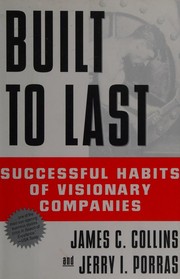
Built to Last: Successful Habits of Visionary Companies
Collins and Porras compare eighteen durable companies with their rivals and find habits like clock building, core ideology, and home grown management.
2,132-word summary · 9 min read

The Miracle Morning
Hal Elrod argues that the first hour of the day sets its tone, and offers six short practices, silence, affirmations, visualization, exercise, reading and…
2,240-word summary · 10 min read
Getting to Yes: Negotiating Agreement Without Giving In
Fisher and Ury propose negotiating on interests rather than positions, using fair standards and a clear alternative if no deal is reached.
2,231-word summary · 10 min read
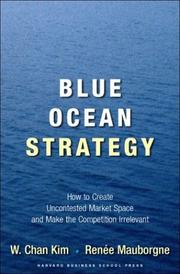
Blue Ocean Strategy: How to Create Uncontested Market Space and Make the Competition Irrelevant
Two INSEAD professors argue that companies win by creating uncontested markets rather than fighting rivals, and give managers tools to do it.
2,333-word summary · 10 min read

The Ride of a Lifetime: Lessons Learned from 15 Years as CEO of the Walt Disney Company
Bob Iger's 2019 memoir on leading Disney through Pixar, Marvel, Lucasfilm and a global rebuild, told through the lessons he learned along the way.
2,475-word summary · 11 min read
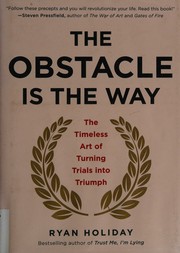
The Obstacle Is the Way: The Timeless Art of Turning Trials into Triumph
A 2014 Stoic self-help book arguing that perception, action and will can turn setbacks into fuel, told through historical anecdotes.
2,669-word summary · 12 min read

Everything is F*cked: A Book About Hope
Manson argues that hope, built on control, values, and community, keeps despair at bay, then takes apart the stories and diversions we use to sustain it.
2,789-word summary · 12 min read
The Total Money Makeover: A Proven Plan for Financial Fitness
Dave Ramsey lays out seven Baby Steps, from a $1,000 starter fund to a paid-off house, with the debt snowball at the center.
2,663-word summary · 12 min read

Don't Sweat the Small Stuff ... and It's All Small Stuff: Simple Ways to Keep the Little Things from Taking Over Your Life
Richard Carlson’s 1997 bestseller offers one hundred short chapters on lowering the volume on daily irritations, and it is more pragmatic than its title…
2,502-word summary · 11 min read
Made to Stick: Why Some Ideas Survive and Others Die
The Heath brothers break down why some ideas vanish on contact while others lodge in memory, tracing six traits that make a message stick.
2,527-word summary · 11 min read
Creativity, Inc.: Overcoming the Unseen Forces That Stand in the Way of True Inspiration
Pixar's president on why the studio that made Toy Story nearly broke itself, and the daily habits that kept the creativity coming.
2,179-word summary · 10 min read
The Hard Thing About Hard Things
A founder and CEO writes about the parts of running a company that no framework can fix, from layoffs and demotions to the loneliness of the job.
2,161-word summary · 10 min read

The War of Art
Pressfield names Resistance and urges daily professional work.
2,565-word summary · 11 min read
How to Stop Worrying and Start Living
Carnegie offers day-tight routines for worry built from interviews and worker stories.
2,505-word summary · 11 min read
Think Again
Adam Grant argues for holding views loosely and testing them like a scientist, moving past preacher, prosecutor, and politician habits at work and in debate.
3,204-word summary · 14 min read
Essentialism
McKeown argues for less but better: discern the vital few, refuse the trivial many, and use buffers, small wins, and steady routines so key work gets done well…
2,421-word summary · 11 min read
Braving the Wilderness: The quest for true belonging and the courage to stand alone
Belonging to yourself first lets you stand alone and still stay close to others.
2,004-word summary · 9 min read

The Power of Positive Thinking
Peale's 1952 guide to faith, affirmations, picturing success, prayer, and worry control, retold chapter by chapter with stories, limits, and small daily habits…
2,742-word summary · 12 min read

The Millionaire Next Door
Stanley and Danko survey wealthy Americans and find frugal savers living next door, not big spenders, in this 1996 money study.
2,466-word summary · 11 min read
Drive: The Surprising Truth About What Motivates Us
Pink argues fair pay plus autonomy, mastery, and purpose at work beat carrots and sticks, using FedEx days, ROWE, flow, and clear Goldilocks tasks to explain…
2,339-word summary · 10 min read
The Five Dysfunctions of a Team
New CEO Kathryn unites warring execs through trust, conflict, and care.
2,029-word summary · 9 min read
Emotional Intelligence
Goleman argues self awareness and empathy shape success more than IQ alone.
2,026-word summary · 9 min read
The One Minute Manager
A young seeker learns three one minute habits from a plainspoken boss: clear goals, quick praise, and fast fair correction.
2,997-word summary · 13 min read
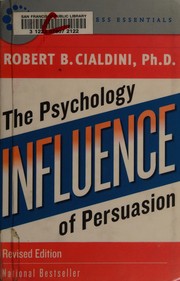
Influence: The Psychology of Persuasion
Six levers plus unity explain why people say yes, learned undercover in salesrooms and labs.
2,030-word summary · 9 min read

Getting Things Done: The Art of Stress-Free Productivity
Capture all, clarify next moves, sort by context, review weekly, and engage calmly like water.
2,030-word summary · 9 min read
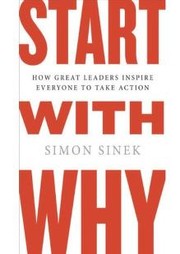
Start with Why
Great leaders start with Why before How and What, from Apple to King.
2,206-word summary · 10 min read