
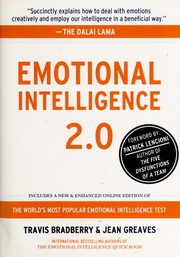
Emotional Intelligence 2.0
3,276-word summary 15 min read 255 pages in the book
- First published
- 2009
- Publisher
- TalentSmart
- Pages
- 255
- ISBN
- 9780974320625
Reading options
What's inside (10 sections)
- EQ, not IQ
- The four skills and the two halves
- The appraisal and the plan
- Self-awareness: watching yourself closely
- Self-management: what you do with what you notice
- Social awareness: reading other people
- Relationship management and the tough conversation
- The big numbers, and where they come from
- Key takeaways
- FAQ
I picked this up because of a number printed on the back cover. Emotional intelligence, the blurb claimed, is responsible for 58 percent of performance in all kinds of jobs. That is a strange sort of promise for a book to make, and I wanted to see what could possibly sit behind it. What I found was a short, brisk manual far more interested in getting you to practice than in proving anything. It is also the book that helped turn a patch of academic psychology into a familiar piece of office language.
Emotional Intelligence 2.0 was published in 2009 by TalentSmart, the company founded by its two authors, Travis Bradberry and Jean Greaves. Patrick Lencioni wrote the foreword. The hardcover runs about 255 pages, and the original edition came with an access code for an online test called the Emotional Intelligence Appraisal. That code is part of the design rather than a bonus. The book expects you to measure yourself before you start changing anything.
I should say at the outset that the title is a little misleading. The "2.0" suggests a sequel, and there is a famous 1995 book called Emotional Intelligence by Daniel Goleman. This is not that book in a new edition. It is a separate, practical guide built around Bradberry and Greaves's own appraisal and their own research database. Knowing that cleared things up for me, and it is worth clearing up for anyone who comes to it expecting Goleman's argument repackaged.
EQ, not IQ
Bradberry and Greaves open with a definition plain enough to repeat from memory. Emotional intelligence, they write, is your ability to recognize and understand emotions in yourself and others, and your ability to use that awareness to manage your behavior and relationships. The definition has two moving parts. You have to notice what is happening emotionally, and then you have to do something useful with the noticing.
The move that made this book famous comes next. The authors set emotional intelligence against IQ, and they make the contrast deliberately sharp. Intelligence, in their telling, is largely fixed. You have roughly the same capacity to learn at fifteen as you do at fifty. Emotional intelligence is different. It is a flexible set of skills you can acquire and improve with practice, and they say there is no known connection between the two. A very smart person can be hopeless with their own feelings, while a person of ordinary intellect can be excellent at reading a room.
This is the argument I have seen quoted most often from the book, and I found it both liberating and a bit too tidy. It is liberating because it suggests you can get better at something that often feels like a fixed personality trait. It is too tidy because the boundary between a skill and a trait is not nearly so clean in the research, a problem I will come back to. Bradberry and Greaves are writing for a reader who wants permission to change, not for a reviewer looking for caveats.
They back the claim with figures drawn from TalentSmart's work with more than 500,000 people. They say that 90 percent of top performers are high in EQ, that EQ accounts for 58 percent of job performance, and that only about 36 percent of us can accurately identify our emotions as they happen. They also repeat the line that EQ is twice as important as IQ in getting where you want to go. These numbers appear on the cover, in the foreword, and throughout the early chapters, and they do a great deal of persuasive work before the reader has seen a single strategy.
The four skills and the two halves
The framework is simple, and the book is at its clearest when it lays it out. There are four emotional intelligence skills, grouped under two larger competencies. Personal competence covers self-awareness and self-management, the skills that focus on you as an individual. Social competence covers social awareness and relationship management, the skills that focus on how you are with other people.
Self-awareness comes first. The authors define it as your ability to accurately perceive your own emotions in the moment and understand your tendencies across situations. They stress that this means being willing to tolerate the discomfort of looking at feelings that may be negative. Self-awareness is the foundation, because the other three skills depend on it.
Self-management builds directly on that foundation. It is what happens when you act, or do not act. The book defines it as your ability to use your awareness of your emotions to stay flexible and direct your behavior positively. In practice that means managing your reactions to situations and people, and being willing to sit with uncertainty until a sensible course of action becomes visible.
Social awareness is the first half of social competence. It is the ability to pick up on emotions in other people and to understand what is really going on with them, even when you do not feel the same way yourself. Listening and observing are the two tools the authors emphasize here. Relationship management is the last and most complex skill. It draws on all three earlier skills, because it means using your awareness of your own emotions and other people's emotions to handle interactions well, both in the moment and across a long relationship.
I liked the order of this. It is not a list of four equal virtues. The book treats each skill as resting on the one before it, which gives the whole thing a logic you can follow. You cannot manage what you have not noticed, and you cannot manage a relationship if you have not noticed the other person. That progression is the best idea in the book.
The appraisal and the plan
After the framework comes the practical turn. The reader takes the online appraisal, gets a score in each of the four areas, and looks for the weakest one. The authors then hand over a long list of strategies, 66 in total, with 15 of them aimed at self-awareness. Each strategy is short, usually a paragraph or two, with an explanation and an example. The book is closer to a workbook than an argument at this point.
The advice on how to use the list is the part I would keep. Bradberry and Greaves tell readers to work on one component at a time and to pick only a couple of strategies within it. Trying to change all four skills at once, they argue, leaves you without the attention needed to spot the relevant patterns and build a new habit. That is sensible advice, and it is also an admission of sorts. Sixty-six strategies is far too many to act on, and the book knows it.
The appraisal itself is a self-report test. You answer questions about how you typically respond to situations, and the score reflects how you see yourself. That makes the book easy to use on a Tuesday evening without a lab or a coach. It also creates a problem the book does not discuss, and I will get to that when I talk about the criticisms.
Self-awareness: watching yourself closely
The self-awareness chapter is the one I found most useful, largely because it stays close to ordinary experience. The first strategy is to quit treating your feelings as good or bad. Judging an emotion, the authors argue, just piles another emotion on top of the original one and hides the cause. Understand first, evaluate later. Another strategy asks you to observe the ripple effect of your emotions, because an outburst aimed at one person often spreads much further than that person.
Several strategies are variations on the same instruction: pay closer attention. Lean into your discomfort instead of ignoring it. Feel your emotions physically, by noticing the changes in your body. Know who and what pushes your buttons, and be specific about the people, places and situations involved. Watch yourself like a hawk as a situation unfolds. Keep a journal, because emotions are hard to pin down and writing them down reveals patterns you would otherwise miss.
Two strategies deal with moods that color everything else. Do not be fooled by a bad mood, and do not be fooled by a good one either. A mood can sit over all your other feelings and make it hard to see what actually triggered it. The good-mood warning is the one I had not expected. The authors point out that irrational exuberance can do real harm, so a happy mood deserves the same scrutiny as a gloomy one.
The rest of the list asks you to stop and ask why you do things, to visit your values by writing them next to recent actions you regret, to check your appearance and body language for clues, to notice which books and films and songs grab you, to seek specific feedback from other people, and to learn your early warning signs under stress. None of this is dramatic. The whole chapter rests on the idea that feelings become manageable once you can name them and see their shape across different situations.
Self-management: what you do with what you notice
Self-management is where awareness turns into behavior. The strategies here range from the very old to the mildly surprising. Breathe right is on the list, and so is count to ten, both of them familiar ways to buy a few seconds before you react. Sleep on it is there too, on the grounds that time often lets an emotion settle so a decision can be made more clearly.
The most useful device in this chapter is the emotion versus reason list. When your feelings and your reasoning disagree, you write both sides down. The exercise helps you sort out which feelings are valid considerations and which ones are noise that your reason might have missed. It is a private, paper-based way to slow down a decision, and it fits the book's habit of turning vague inner states into something you can look at.
Other strategies ask you to make your goals public so other people's expectations help keep you accountable, to talk to someone who manages their emotions well and ask how they do it, to set aside fifteen minutes for problem solving without your phone, and to smile and laugh more. The self-talk strategy is the most specific. The authors say the average person has around 50,000 thoughts a day, each one triggering a chemical response, and they suggest catching absolute phrases like "I always" or "it's their fault" and replacing them with something more accurate.
This is the chapter that will feel most like common sense to some readers. Count to ten is not news. The book's defense is that these are small, repeatable actions, and that the point is to make them deliberate rather than clever. I think that defense holds up, as long as you do not expect the advice to feel original.
Social awareness: reading other people
Where self-awareness asks you to watch yourself, social awareness asks you to watch everyone else. The authors describe the ideal stance as something like an anthropologist's: observing behavior objectively instead of rehearsing what you will say next. Listening and noticing nonverbal signals do most of the work.
The strategies are concrete. Greet people by name and use the name twice early in a conversation. Watch body language. Make timing everything, which means considering the other person's emotional state before you ask for a favor or raise a difficult subject. Keep a back-pocket question ready for conversations that stall. Go on a fifteen minute tour of the workplace and look at the mood of desks and movements. Watch a film specifically to study the characters' emotions. Practice listening to tone, speed and volume. Go people-watching in a coffee shop. Test your guesses by saying what you see and asking a direct question. Step into the other person's shoes and check whether your guess was right.
Two of the strategies go further. Seek the whole picture by asking for a 360 degree survey, so you can see how you appear to others. Catch the mood of the room, which is the leap from reading one person to reading a group. There is also a strategy telling readers not to take notes at meetings, because note-taking keeps you from watching the people and picking up emotional cues. That one struck me as too glib. Plenty of jobs require a written record, and missing the room is a poor trade if you also miss the decisions.
The authors also tell readers to understand the rules of the culture game, meaning the norms that differ across personal, family and business settings in different cultures. This is the most ambitious item in the chapter, and a few paragraphs cannot really carry it. Still, the chapter's central habit, which is to notice before you interpret, is sound.
Relationship management and the tough conversation
Relationship management is where the previous three skills get used at once. The chapter opens with strategies about being open and curious, adjusting your natural communication style, and avoiding mixed signals, where your words say one thing and your body still carries the residue of another conversation. There are reminders about old-fashioned manners, about taking feedback well, and about building trust through open communication, willingness to share, consistency between words and behavior over time, and reliability in following through.
The book is at its best when it gets specific about conflict. Only get mad on purpose is the memorable instruction. Anger can be useful when it signals that something matters, the authors say, but it should be used deliberately rather than allowed to take over. Another strategy suggests writing a fix-it statement for a conversation that is going badly, something as simple as "This is hard" or "How are you feeling?", to reopen the lines of communication. Align your intention with your impact asks you to look at the times you caused hard feelings without meaning to.
The six-step approach to a tough conversation is the most complete piece of advice in the book. Start from common ground. Ask the other person to help you understand how they feel. Do not defend your position until you have heard theirs. Then explain your side, your reasoning and your feelings, and apologize if the situation calls for it. Move the conversation forward by agreeing on next steps. Follow up later to check that the issue was actually addressed. It is a procedure, and like most procedures it will feel artificial the first time you try it. It also gives someone a way through a conversation that would otherwise collapse into defensiveness.
By the end of this chapter the reader has met a great many strategies. I came away with a handful I could imagine using and a larger number that felt like reasonable things everyone already knows. The book would probably be stronger with fewer of them and more space on each.
The big numbers, and where they come from
That brings me back to the 58 percent on the back cover. The figure comes from TalentSmart's own research with more than 500,000 responses, and the same database supplies the claims about top performers and about EQ being twice as important as IQ. The trouble is that this is the authors' own company data, gathered through products the company sells. There is no independent dataset in the book for a reader to inspect. Frank Landy, writing in the Journal of Organizational Behavior back in 2005, made the broader point that a great deal of the data needed to prove emotional intelligence adds something unique to work performance sits in proprietary databases, which stops anyone from testing the claim properly.
Independent research gives a much smaller picture. Psychologist Carolyn MacCann has summarized the meta-analyses this way: differences in IQ explain roughly a quarter of the variation in job performance, while differences in emotional intelligence explain a little over 3 percent, rising to about 7 percent for jobs that require people to display positive emotions. That is not nothing, and MacCann is careful to say that a few percent of performance is worth having. It is simply nowhere near 58 percent. Meta-analyses such as the one by Joseph and Newman do find that EQ contributes meaningful variance in jobs heavy on interpersonal interaction, which supports the authors in a general way while undercutting their headline number.
A second criticism concerns the test. The appraisal asks you to rate your own emotional abilities. If you are poor at reading your own emotions, you are also poorly placed to report on them accurately. Psychologist Marc Brackett and colleagues found in 2006 that self-reported emotional ability and performance-based emotional ability correlate only modestly, around 0.20, and that only the performance test predicted social competence that other people could see. The book never raises this problem, even though its whole plan begins with a self-report score.
The third criticism is about what the word intelligence is being asked to carry. Bradberry and Greaves use what researchers call a mixed model, blending genuine emotional abilities with personality traits such as optimism and adaptability and with learned skills such as conflict management. The ability model built by John Mayer, Peter Salovey and David Caruso treats emotional intelligence as a cognitive ability with better and worse answers, and it includes a branch the book has no equivalent for: using emotions to facilitate thought. Mayer and his colleagues argued in 2008 that popular claims about emotional intelligence explaining most of workplace success went well beyond the evidence, and that ability-based emotional intelligence overlaps with verbal intelligence and with the Big Five personality traits. Some of what the book calls EQ, in other words, may be agreeableness or conscientiousness under another name.
I do not think these criticisms make the book worthless. They change what it is reasonable to take from it. The strategies are mostly harmless, often useful, and easy to try. The claim that emotional skills can be practiced holds up better than the exact percentage attached to them. What does not hold up is the impression, created by the cover and repeated in the foreword, that the authors have measured a force twice as powerful as IQ and bottled it in 255 pages.
I would hand this to someone who wants a common vocabulary for emotions at work and a set of small prompts to try, especially a reader new to the idea that feelings can be examined rather than just endured. I would be cautious with a reader looking for rigorous science or a careful account of how emotional intelligence is measured. Some readers have also found the guidance dated and American in its assumptions, and much of it does presuppose a neurotypical way of reading faces and tone. The book is short enough that it could have been shorter, and a fair number of its 66 strategies are things a thoughtful person already does.
What I kept was the plain instruction underneath the marketing. Notice what you are feeling. Notice what the other person might be feeling. Choose your response instead of being swept into it. The book dresses that instruction up in a score, a model and a very large list, but the instruction itself needs no dressing. It is a decent little book as long as you take the strategies and leave the percentages alone.
FAQ
Who wrote Emotional Intelligence 2.0?
Travis Bradberry and Jean Greaves, co-founders of TalentSmart, wrote it with a foreword by Patrick Lencioni. TalentSmart published the first edition in 2009.
Is it a sequel to Daniel Goleman's Emotional Intelligence?
No. Despite the 2.0 title, it is a separate practical guide built around Bradberry and Greaves's own EQ appraisal, not a follow-up to Goleman's 1995 book.
Does the book's 58 percent claim hold up?
It comes from TalentSmart research with more than 500,000 people, but independent meta-analyses put EQ's contribution to job performance far lower, and the book's assessment relies on self-report.
Similar books
Extreme Ownership: How U.S. Navy SEALs Lead and Win
Two retired Navy SEALs turn their Ramadi combat experience into a blunt leadership creed: the leader owns everything, and the team follows when the why is…
2,368-word summary · 11 min read
The Magic of Thinking Big
Schwartz's 1959 self-help classic argues that success follows from the size of your thinking, supported by sales anecdotes, vocabulary drills and goal setting.
2,579-word summary · 11 min read
Dare to Lead
Research on courage shows how leaders build trust through vulnerability and clear values.
2,442-word summary · 11 min read
The Miracle Morning
Hal Elrod argues that the first hour of the day sets its tone, and offers six short practices, silence, affirmations, visualization, exercise, reading and…
2,240-word summary · 10 min read
Getting to Yes: Negotiating Agreement Without Giving In
Fisher and Ury propose negotiating on interests rather than positions, using fair standards and a clear alternative if no deal is reached.
2,231-word summary · 10 min read
Everything is F*cked: A Book About Hope
Manson argues that hope, built on control, values, and community, keeps despair at bay, then takes apart the stories and diversions we use to sustain it.
2,789-word summary · 12 min read
The Total Money Makeover: A Proven Plan for Financial Fitness
Dave Ramsey lays out seven Baby Steps, from a $1,000 starter fund to a paid-off house, with the debt snowball at the center.
2,663-word summary · 12 min read
Don't Sweat the Small Stuff ... and It's All Small Stuff: Simple Ways to Keep the Little Things from Taking Over Your Life
Richard Carlson’s 1997 bestseller offers one hundred short chapters on lowering the volume on daily irritations, and it is more pragmatic than its title…
2,502-word summary · 11 min read
Made to Stick: Why Some Ideas Survive and Others Die
The Heath brothers break down why some ideas vanish on contact while others lodge in memory, tracing six traits that make a message stick.
2,527-word summary · 11 min read
How to Stop Worrying and Start Living
Carnegie offers day-tight routines for worry built from interviews and worker stories.
2,505-word summary · 11 min read
Think Again
Adam Grant argues for holding views loosely and testing them like a scientist, moving past preacher, prosecutor, and politician habits at work and in debate.
3,204-word summary · 14 min read
Essentialism
McKeown argues for less but better: discern the vital few, refuse the trivial many, and use buffers, small wins, and steady routines so key work gets done well…
2,421-word summary · 11 min read
Braving the Wilderness: The quest for true belonging and the courage to stand alone
Belonging to yourself first lets you stand alone and still stay close to others.
2,004-word summary · 9 min read
Drive: The Surprising Truth About What Motivates Us
Pink argues fair pay plus autonomy, mastery, and purpose at work beat carrots and sticks, using FedEx days, ROWE, flow, and clear Goldilocks tasks to explain…
2,339-word summary · 10 min read
Emotional Intelligence
Goleman argues self awareness and empathy shape success more than IQ alone.
2,026-word summary · 9 min read
Make Your Bed: Little Things That Can Change Your Life...And Maybe the World
SEAL lessons from bed making to never ringing the bell, from McRaven's 2014 Texas speech and 144 page book.
2,974-word summary · 13 min read
Influence: The Psychology of Persuasion
Six levers plus unity explain why people say yes, learned undercover in salesrooms and labs.
2,030-word summary · 9 min read
Start with Why
Great leaders start with Why before How and What, from Apple to King.
2,206-word summary · 10 min read
12 Rules for Life
Twelve essays on responsibility from posture to truth to petting cats.
2,045-word summary · 9 min read
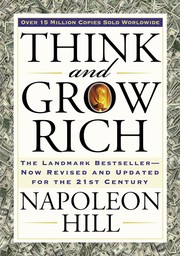
Think and Grow Rich
Hill teaches desire, faith and autosuggestion, distilling lessons from Carnegie interviews into thirteen principles for success.
2,458-word summary · 11 min read
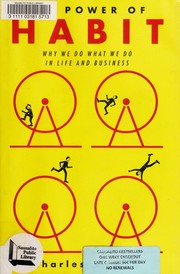
The Power of Habit
Why we do what we do: the cue routine reward loop, keystone habits, and how companies and movements use the same science, from toothpaste to the bus boycott.
2,207-word summary · 10 min read
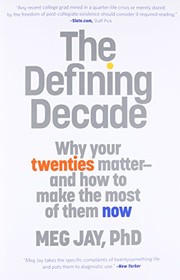
The Defining Decade: Why Your Twenties Matter - and How to Make the Most of Them Now
A clinical psychologist argues that the twenties are not a holding pattern and urges readers to build skills, ties, and commitment now.
2,443-word summary · 11 min read
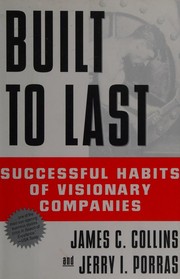
Built to Last: Successful Habits of Visionary Companies
Collins and Porras compare eighteen durable companies with their rivals and find habits like clock building, core ideology, and home grown management.
2,132-word summary · 9 min read

Wild at Heart: Discovering the Secret of a Man's Soul
Why do men feel bored and tame? John Eldredge argues a man's heart is wild by design, and that recovering it means facing the wound and the question of whether…
2,289-word summary · 10 min read
The Power of Your Subconscious Mind
Joseph Murphy argues that the subconscious accepts whatever the conscious mind repeats, so worry and confidence quietly grow into very different lives.
2,259-word summary · 10 min read
Rising Strong: The Reckoning. The Rumble. The Revolution.
Brené Brown's 2015 book asks what happens after we fall, and argues that examining the stories we invent about failure and heartbreak is the path to getting…
2,271-word summary · 10 min read

Ikigai: The Japanese Secret to a Long and Happy Life
Two Spanish writers explain the Japanese idea of a reason for being, drawing on Okinawan centenarians, flow, friendship and the acceptance of imperfection.
2,030-word summary · 9 min read
Flow: The Psychology of Optimal Experience
Csikszentmihalyi's 1990 study of optimal experience asks when people feel most alive and finds the answer in a balance of challenge and skill. Drawing on…
3,073-word summary · 14 min read
Digital Minimalism: Choosing a Focused Life in a Noisy World
Cal Newport argues that willpower cannot beat an attention economy designed against you, and offers a thirty day reset to rebuild your digital habits around…
2,701-word summary · 12 min read
Boundaries: When to Say Yes, How to Say No to Take Control of Your Life
A Christian self-help book that treats a boundary as a personal property line and applies the idea to family, friendship, marriage, work and the self.
2,047-word summary · 9 min read