
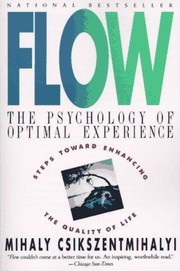
Flow: The Psychology of Optimal Experience
3,073-word summary 14 min read 303 pages in the book
- First published
- 1990
- Publisher
- Harper & Row
- Pages
- 303
- ISBN
- 9780060162535
Reading options
What's inside (10 sections)
- Where the idea came from
- Happiness, attention, and the business of consciousness
- The eight elements of an optimal experience
- The graph with a channel running through it
- Flow in the body and the mind
- Work, free time, and other people
- Cheating chaos and the making of meaning
- The dark side, and my honest verdict
- Key takeaways
- FAQ
I picked this book up expecting a self-help manual about getting "in the zone," and I put it down having read something stranger and more interesting: a research report, a philosophical argument, and a kind of field guide to ordinary happiness all bound together. It appeared in 1990 from Harper & Row, runs just over three hundred pages, and reads nothing like the glossy productivity books that came after it. There is no ten-step program here. There is a psychologist asking a stubborn question, which is what makes the book worth reading. The question is this: when do people feel most alive, and what is actually happening in their minds at those moments?
What surprised me most was how much of the book is built on other people's words. Csikszentmihalyi does not sit in an armchair inventing a theory of enjoyment. He listens to painters, chess players, rock climbers, surgeons, factory workers, and farmers describe the best hours of their lives, and he finds the same description coming back from all of them. That consistency is the raw material of the whole argument. Let me walk you through how he gets from those interviews to a theory of what he calls optimal experience, and then tell you honestly where I think the book overreaches.
Where the idea came from
The story starts in the 1960s, when Csikszentmihalyi was a doctoral student at the University of Chicago studying the creative process. He spent hundreds of hours watching artists work and interviewing them about what it felt like. What struck him was a peculiar pattern. A painter would lose himself in a canvas for hour after hour, completely absorbed, forgetting time, hunger, and fatigue. Then the moment the painting was finished, that intense involvement evaporated. The artist would set the work aside and lose interest in it. The reward, Csikszentmihalyi realized, was not the finished painting or the praise it might bring. It was the act of painting itself.
He began asking a simpler version of that question of everyone he studied. Hockey players, musicians, chess players, dancers, and surgeons all described their best moments in remarkably similar language. They talked about meeting a challenge, about knowing clearly what to do, about getting constant feedback on how well they were doing, and about feeling good when skill met difficulty. It took a few years before he had a name for the state. The word came from the people he interviewed, who kept reaching for the same image: being carried along by a river or a current, moving without having to think, acting spontaneously and almost automatically. He called it flow.
As the research grew, so did the method. Early on it was interviews and questionnaires. Later his team at Chicago and colleagues around the world used what they named the Experience Sampling Method. Participants wore an electronic pager for a week, and roughly eight times a day, at random moments, the pager would signal. Each time, the person wrote down what they were doing, feeling, and thinking. Over time this produced a running record of a life, what Csikszentmihalyi calls a written film clip made from representative moments. By the time of the book he had more than a hundred thousand such snapshots from different parts of the world. He reports that the description of flow came back in essentially the same words from old women in Korea, adults in Thailand and India, teenagers in Tokyo, Navajo shepherds, farmers in the Italian Alps, and assembly line workers in Chicago. That cross-cultural sameness is what convinces him he has found something basic rather than a quirk of one place or class.
Happiness, attention, and the business of consciousness
The first chapters set up the problem in a way I found a little forbidding at first. Csikszentmihalyi opens by revisiting happiness and asking why it stays so elusive. He argues that we tend to treat happiness as something that happens to us, a reward delivered by good luck, money, or circumstances. He is having none of that. In his view, happiness is a byproduct of how we use our attention, and it can be built.
To explain what he means, he asks us to look at consciousness. He treats attention as a form of psychic energy, a limited resource that can be directed or scattered. The mind, in his framing, has a limit on how much it can hold at once. When that energy is scattered or pulled in conflicting directions, he calls the result psychic entropy, a state of disorder. When it is focused on a realistic goal and matched to a person's skills, consciousness becomes ordered. Flow is his name for that ordered state. This is the book's central claim, stated early: the best moments are not passive experiences of pleasure but times when a person stretches skills against a real challenge and, for a while, forgets everything else.
He ties this to the idea of the self. The self, for him, is not a fixed thing but a pattern of goals and memories that consciousness builds up over time. Every time we invest attention in a difficult goal and come out the other side, we add a little complexity to that pattern. This is why he thinks flow matters beyond the pleasant hour it provides. A life spent in flow is, in his telling, a life in which the self grows more complex and capable. I found this part of the argument the most demanding in the book, because it asks you to accept a fairly large theory of mind before you get to the parts that are immediately useful.
The eight elements of an optimal experience
In the chapter on enjoyment and the quality of life, Csikszentmihalyi separates pleasure from enjoyment. Pleasure, he says, is mostly about satisfying a need or restoring the body to comfort: a good meal when you are hungry, a warm bath when you are cold. Enjoyment is different. It comes from doing something that is not required for survival, something we choose because of how it feels while we are doing it. This distinction runs through everything that follows.
From the interviews he distills a set of elements that show up in enjoyable experiences. The activity must be challenging and require skill. Action and awareness merge, so that a person stops noticing themselves as separate from what they are doing. The goals are clear, and the feedback is immediate, so you know at each moment how you are doing. Attention is fully concentrated on the task at hand. There is a sense of control, though it is a curious kind of control, less about commanding the outcome than about knowing that your next move matters. Self-consciousness drops away, and yet afterward the sense of self often comes back stronger. Finally, the experience of time changes, with hours contracting into minutes or minutes stretching out.
He then introduces a word that has stuck in psychology ever since: autotelic. It comes from the Greek, auto meaning self and telic meaning goal. An autotelic activity is one done for its own sake, with the reward inside the experience rather than in some payoff down the road. Playing chess because you love the game is autotelic; playing it only to win a purse or impress someone is not. He is careful to note that most real activities sit somewhere between the two poles. A surgeon may love the work and also want the salary, and that mixture is ordinary rather than corrupt.
The graph with a channel running through it
The clearest idea in the book, and the one I would keep if I had to throw the rest away, is a simple diagram of challenges against skills. Imagine a graph with challenges rising on one axis and skills rising on the other. Csikszentmihalyi walks through it with a boy named Alex who is learning tennis. At first Alex has almost no skill, and the only challenge is getting the ball over the net. That small task fits his ability, so he is in flow. As he practices, his skills improve. If he keeps merely lobbing the ball, the task becomes too easy and he slides into boredom. If he faces a much better player too soon, the challenge outruns his ability and he feels anxiety. Both feelings push him back toward the narrow band where challenge and skill match. That band is the flow channel.
What makes the diagram more than a tidy picture is its dynamic quality. Alex does not return to the same point. When boredom pushes him to raise the difficulty, or anxiety pushes him to sharpen his skill, he re-enters flow at a higher level. The enjoyment comes with growth built in. You cannot stay in flow by doing the same thing at the same level forever; the state dissolves, and the urge to get it back is what pulls you upward. This is the book at its best, taking a felt experience that everyone recognizes and showing a mechanism underneath it.
He also asks why some people seem to find flow easily while others remain bored even when surrounded by opportunity. The answer, he suggests, is an autotelic personality, a person who can turn potential threats into enjoyable challenges and keep inner order without much fuss. Such a person is hard to upset and hard to bore. On the other side, he describes what blocks the state. When attention is too fluid and scattered, as in certain attentional disorders, a person cannot hold focus long enough to enter flow. When attention is too rigid, as in extreme self-consciousness or self-centeredness, a person is so wrapped up in how they appear or what they can get that they cannot lose themselves in an activity for its own sake. In one case psychic energy leaks away; in the other it is locked up.
Flow in the body and the mind
The middle chapters are a tour of human activity, and they are the most enjoyable part of the book to read straight through. Csikszentmihalyi looks at flow in the body first. Sports provide the obvious examples, with their records of higher, faster, stronger performance, but he is just as interested in the quieter pleasures of movement, in dance, in the control of yoga and the martial arts, in the flow of music, and even in the joys of tasting. He treats sex as a form of flow too, which caused a stir when the book came out and still feels bolder than most writing in this genre. Throughout, his point is the same: the body can be an instrument for ordered consciousness, rather than a mere source of needs to be satisfied.
Then he turns to the mind. He calls curiosity the mother of science and looks at the rules that make games of the mind work, from word play to history, which he refers to with a nod to Clio, the muse of history. He considers the delights of science, the love of wisdom in philosophy, and the difference between amateurs and professionals. One of his quietly useful observations here is about lifelong learning: the challenge of keeping the mind in flow means continually finding new difficulties to match growing skill. A mind that stops being challenged goes the way of a body that stops moving.
I should admit that these chapters can feel like a catalog. One activity after another gets the same treatment, and after a while the examples blur. The argument is consistent enough that by the fourth or fifth activity I was skimming for the ones that spoke to me. This is a fair criticism of the book's middle stretch. It is thorough, and that thoroughness is also a kind of drag.
Work, free time, and other people
The chapter on work is where the book becomes practical in a way that surprised me. Csikszentmihalyi is interested in autotelic workers, people who find flow on the job, and in the kinds of jobs that make flow possible. He names what he calls the paradox of work: many people complain about their jobs, yet work is often where they report their most intense enjoyment, precisely because it supplies clear goals, feedback, and challenges. He then turns to what he calls the waste of free time. Leisure, far from being a guaranteed pleasure, is often a stretch of passivity and vague frustration. People come home from a demanding day and reach for the least demanding thing available, then wonder why the evening felt empty. His point is that free time only becomes enjoyable when we impose some structure on it, giving it a goal and a challenge the way a game does.
He also looks at the tension between solitude and company. Loneliness is a real pain for him, but so is the inability to be alone without discomfort. Taming solitude means learning to make one's own company interesting. From there he moves to flow with family and friends, and to the wider community. The family material is the part I found most applicable. Drawing on studies of teenagers, he describes a family context that makes flow likely, with five features: clarity, where young people know what is expected; centering, where parents show interest in what their children are actually feeling now rather than only in future success; choice, with room to decide and to face consequences; commitment, a trust that lets a person drop their defenses; and challenge, the offering of ever more complex opportunities. It is a demanding list, but it is concrete in a way that much of the book is not.
Cheating chaos and the making of meaning
The last two chapters take the theory into harder territory. Under the heading of cheating chaos, Csikszentmihalyi asks what happens to flow when life goes badly wrong. He looks at how people transform tragedies, how they cope with stress, and how some manage to impose order on circumstances that seem to have none. He borrows the idea of dissipative structures from the physical sciences, systems that keep their form by taking in energy from their surroundings, to describe how a person can maintain inner order under pressure. The autotelic self, which he summarizes here, is the person who can turn a threat into a challenge and keep consciousness ordered when it would be easier to come apart.
The final chapter asks about meaning. He distinguishes meaning from simple pleasure or even from flow itself. A person can be very good at something and feel flow while doing it, and still have a life that feels empty. Meaning, in his account, comes from a system of goals that connects the pieces of a life into a coherent whole. He writes about cultivating purpose, forging resolve, recovering harmony after loss, and the way meaning can unify the themes of a life. The chapter is quieter than the ones before it, and it reads almost like a summing up of his own career-long interest in what makes life worth living.
The dark side, and my honest verdict
Here is the part I wish more readers of this book took seriously. Csikszentmihalyi is explicit that flow is not good in an absolute sense. It is morally neutral. A burglar applying skill to a difficult lock, a con artist running a elaborate scheme, or an assassin planning carefully can all experience the same ordered consciousness and the same loss of self that a painter or a climber does. He makes this point with a chilling example from recent history, suggesting that even the meticulous scheduling of trains by Adolf Eichmann could be a kind of flow, in which conscience was suspended so long as consciousness stayed in harmony. The point is not that flow is corrupt. It is that a delicious state of mind tells you nothing by itself about whether what you are doing is worth doing.
He also warns that flow can become addictive. An activity that brings order to the mind can become a black hole, pulling in all of a person's psychic energy and leaving them unwilling to face the ambiguities and empty spaces of ordinary life. The chess player who wants nothing but the next game, the worker who cannot stop, the person who prefers the controlled world of a game to the messy freedom of a relationship, all illustrate the trap. A good flow life, in his view, needs something outside flow to give it direction, which is why the chapter on meaning comes last. He also notes, with a quote he admires from Ernest Hemingway about a great athlete who was a terrible person, that excellence in one field does not make a person wise or decent in the rest of life.
So who is this book for? I would hand it to anyone who has ever lost track of time doing something they love and wondered why that feels so much better than being entertained. The challenge and skill diagram alone is worth the price of admission, and it changes how you read your own boredom and anxiety. I would be more cautious with a reader looking for a compact self-help plan, because the book keeps wandering into research history and theory of mind. The middle chapters repeat themselves, the tone can be dry, and the author sometimes sounds as if he has discovered that play matters, which is a finding many readers will find unsurprising. It is also a book of its moment, written before the word flow had been chewed thin by popular culture, and some of its examples now feel dated.
What I took from it was a way of paying attention to my own days. When I notice I am bored, I ask whether the task has become too easy and needs a harder goal. When I notice I am anxious, I ask whether the challenge has outrun my skill and what I could practice. When an evening of passive entertainment leaves me flat, I remember that enjoyment usually asks something of me. These are small changes, and the book is honest enough not to promise more than that. It cannot rearrange a life, and it does not try. It offers a lens, grounded in thousands of real interviews, for noticing when a life is most fully awake.
FAQ
Is Flow a self-help book?
Not in the usual sense. It is a research-based argument built on thousands of interviews, though its challenge and skill diagram offers advice a reader can put to work.
What does Csikszentmihalyi mean by an autotelic personality?
It is someone who can turn potential threats into enjoyable challenges and keep an ordered mind without much fuss. He sets that against scattered attention and rigid self-consciousness.
Does the book treat flow as always a good thing?
No, he calls the experience morally neutral. A burglar or a con artist can enter flow just as a painter does, and the state can also become addictive.
Similar books
Ikigai: The Japanese Secret to a Long and Happy Life
Two Spanish writers explain the Japanese idea of a reason for being, drawing on Okinawan centenarians, flow, friendship and the acceptance of imperfection.
2,030-word summary · 9 min read

The Courage to Be Disliked: The Japanese Phenomenon That Shows You How to Change Your Life and Achieve Real Happiness
A philosopher and an angry young man argue over five nights about Adlerian psychology, trauma, approval, and the freedom to be disliked.
2,054-word summary · 9 min read

Four Thousand Weeks: Time Management for Mortals
Oliver Burkeman turns the whole productivity project on its head, arguing that a human lifespan of roughly four thousand weeks is not a problem to optimize…
2,447-word summary · 11 min read
The Defining Decade: Why Your Twenties Matter - and How to Make the Most of Them Now
A clinical psychologist argues that the twenties are not a holding pattern and urges readers to build skills, ties, and commitment now.
2,443-word summary · 11 min read
The Power of Your Subconscious Mind
Joseph Murphy argues that the subconscious accepts whatever the conscious mind repeats, so worry and confidence quietly grow into very different lives.
2,259-word summary · 10 min read
The Miracle Morning
Hal Elrod argues that the first hour of the day sets its tone, and offers six short practices, silence, affirmations, visualization, exercise, reading and…
2,240-word summary · 10 min read
Rising Strong: The Reckoning. The Rumble. The Revolution.
Brené Brown's 2015 book asks what happens after we fall, and argues that examining the stories we invent about failure and heartbreak is the path to getting…
2,271-word summary · 10 min read
Digital Minimalism: Choosing a Focused Life in a Noisy World
Cal Newport argues that willpower cannot beat an attention economy designed against you, and offers a thirty day reset to rebuild your digital habits around…
2,701-word summary · 12 min read
Boundaries: When to Say Yes, How to Say No to Take Control of Your Life
A Christian self-help book that treats a boundary as a personal property line and applies the idea to family, friendship, marriage, work and the self.
2,047-word summary · 9 min read
Everything is F*cked: A Book About Hope
Manson argues that hope, built on control, values, and community, keeps despair at bay, then takes apart the stories and diversions we use to sustain it.
2,789-word summary · 12 min read
As a Man Thinketh: A book that will help you to help yourself
In seven short chapters, James Allen argues that character and circumstance grow from thought, and that changing how you think is the practical route to…
2,673-word summary · 12 min read
Don't Sweat the Small Stuff ... and It's All Small Stuff: Simple Ways to Keep the Little Things from Taking Over Your Life
Richard Carlson’s 1997 bestseller offers one hundred short chapters on lowering the volume on daily irritations, and it is more pragmatic than its title…
2,502-word summary · 11 min read
The Road Less Traveled: A New Psychology of Love, Traditional Values and Spiritual Growth
M. Scott Peck argues that maturity begins with accepting difficulty, then builds discipline, love, and spiritual growth through honest, often painful work.
2,200-word summary · 10 min read
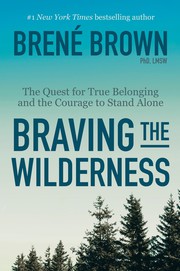
Braving the Wilderness: The quest for true belonging and the courage to stand alone
Belonging to yourself first lets you stand alone and still stay close to others.
2,004-word summary · 9 min read
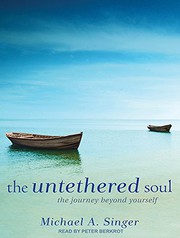
The Untethered Soul
Singer names the noisy inner voice and shows how watching thoughts, loosening old hurt, and keeping the heart open through surrender can ease daily suffering…
2,752-word summary · 12 min read
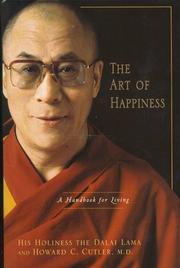
The Art of Happiness
The Dalai Lama and psychiatrist Howard Cutler link lasting happiness to training the mind, human warmth, compassion, and basic spiritual values for daily life.
3,394-word summary · 15 min read
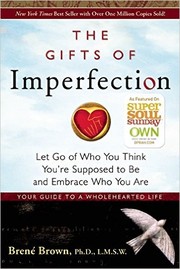
The Gifts of Imperfection
Shame research turned into ten guideposts for dropping perfectionism and living with courage and connection.
2,799-word summary · 12 min read
A New Earth
Tolle maps ego pain and shows how presence can loosen roles, thoughts, and suffering.
1,909-word summary · 8 min read
12 Rules for Life
Twelve essays on responsibility from posture to truth to petting cats.
2,045-word summary · 9 min read
How to Change Your Mind
Pollan blends the history of psychedelic research, his own guided trips, and current neuroscience to ask what these drugs reveal about consciousness.
2,466-word summary · 11 min read
You Can Heal Your Life
Louise Hay's 1984 bestseller argues that thoughts and beliefs shape the body, pairing a mirror-and-affirmation workbook with an A to Z list of ailments and…
3,672-word summary · 16 min read
Wild at Heart: Discovering the Secret of a Man's Soul
Why do men feel bored and tame? John Eldredge argues a man's heart is wild by design, and that recovering it means facing the wound and the question of whether…
2,289-word summary · 10 min read
The Art of Loving
Fromm argues that love is an art requiring care, responsibility, respect and knowledge, not a feeling we simply fall into. A short, stern classic of 1950s…
3,175-word summary · 14 min read
Getting to Yes: Negotiating Agreement Without Giving In
Fisher and Ury propose negotiating on interests rather than positions, using fair standards and a clear alternative if no deal is reached.
2,231-word summary · 10 min read
Emotional Intelligence 2.0
Bradberry and Greaves turn emotional intelligence into four learnable skills, a self-assessment and dozens of strategies, while their headline numbers rest on…
3,276-word summary · 15 min read
Atlas of the Heart: Mapping Meaningful Connection and the Language of Human Experience
Brené Brown maps 87 emotions and experiences into thirteen 'places we go,' arguing that precise language changes what we can ask for and how we connect.
2,491-word summary · 11 min read
The Obstacle Is the Way: The Timeless Art of Turning Trials into Triumph
A 2014 Stoic self-help book arguing that perception, action and will can turn setbacks into fuel, told through historical anecdotes.
2,669-word summary · 12 min read
The Light We Carry: Overcoming in Uncertain Times
Michelle Obama's follow-up to Becoming offers ten practical habits for meeting fear, self-doubt and uncertainty, told through stories of her family,…
2,327-word summary · 10 min read
What Happened to You?
Oprah Winfrey and psychiatrist Bruce Perry explain how early experience shapes the brain, and why asking what happened to someone works better than asking what…
2,238-word summary · 10 min read

Moonwalking with Einstein: The Art and Science of Remembering Everything
A journalist spends a year training for the U.S. Memory Championship and discovers that extraordinary memory is mostly technique, attention, and a lot of…
2,027-word summary · 9 min read