

Flesh
2,537-word summary 11 min read 368 pages in the book
- First published
- 2025
- Publisher
- Jonathan Cape
- Pages
- 368
- ISBN
- 9780224099783
Reading options
What's inside (9 sections)
I picked this up shortly after it won the Booker, mostly because I kept reading that it was a book about a man who barely speaks. That sounded like either a brilliant idea or an annoying one, and I wanted to find out which. It turned out to be both, often on the same page. Flesh is David Szalay's sixth novel, published by Jonathan Cape on 6 March 2025, and it runs to 368 pages. It follows a Hungarian man called István from a housing estate to the very top of London society, and it does so while leaving out almost everything a normal novel would stop to explain. By the time I closed it I understood why the prize judges liked it, and also why a lot of readers were left cold.
The first thing to say is that this is a book built on gaps. Szalay jumps over years without a second thought. A chapter ends with István as a teenager and the next finds him somewhere else entirely, with no bridge offered. Whole stretches of his life are reported in a sentence or two, the way you might summarise your own past to a stranger. That choice is the whole point, and it is also the thing that makes the book such a strange, occasionally frustrating experience. I spent a good part of it leaning forward, trying to fill in what the author had deliberately left out.
A fifteen-year-old in a strange apartment block
The novel opens with István at fifteen. He is shy and awkward, living with his mother, new to the town they have moved to and thoroughly isolated at school. Szalay does not give us much of the interior life here. We see the boy from a slight distance, as someone who drifts through days that happen to him rather than days he chooses. He has no friends to speak of and no obvious way of fitting in. The apartment block they live in becomes the whole of his world, and it is there that he falls into a sexual relationship with a woman in her forties who lives in the same building and is married.
This is where the book starts to feel uncomfortable in a way that never fully goes away. The woman is older, she is married, and István is barely more than a child. Szalay writes the encounter without commentary, without a narrator stepping in to tell us how to judge it. The sex is described, but the feelings around it are not. István does not seem to understand what is happening to him, and the woman is given just enough presence to be a person rather than a device. I found the whole section quietly disturbing, which I think is intended. The book is interested in bodies and what they do before the mind catches up.
I should be honest that this opening is a hard sell. There is no warmth here, no guiding voice to make the teenager sympathetic. He is presented as a boy who responds to what is in front of him, and the adult reader is left to supply the horror and the pathos. Some readers will find that coldness honest. Others will find it a wall. I sat somewhere in the middle, convinced by the restraint but occasionally wishing for one moment of genuine inwardness.
The fight, and the years that vanish
The relationship ends badly. There is a fight with the woman's husband, and the husband ends up dead. István is blamed. This is the pivot on which the entire book turns, and Szalay gives it about as much space as he gives everything else, which is to say not much. A life is redirected in a few paragraphs. István is sent to juvenile detention, and then, as the Booker judges described it, to borstal and to soldiering in Iraq. The phrase stays with you because the book offers so little else to hold on to.
What struck me is how little interest the novel has in the mechanics of any of this. We are not shown the trial in detail, or the detention, or much of the war. These things are named, and István passes through them, and the narrative moves on. It is a peculiar method. A conventional novel would linger over a wrongful accusation, or over a young man's experience of conflict. Szalay refuses. He gives us the outline and trusts us to imagine the rest, or perhaps does not care whether we do.
That refusal is what the book's defenders praise and what its critics attack. When the years vanish, the reader cannot settle into the usual rhythm of cause and effect. We never see István decide to become one thing or another. Things happen to his body and his circumstances, and he continues. The Booker judges called the style singular, and there is a real skill in keeping the reader oriented when so little is being supplied. I never lost the thread of the story, even when whole chapters felt like footnotes to a life rather than the life itself.
A man who says almost nothing
The most famous thing about István is his dialogue, or the near absence of it. His lines are reduced to fragments: "yeah," "okay," "I don't know." Reviewers have pointed out that his body knows things his mind does not, and that observation seems exactly right. He is a man who reacts rather than reflects. When something happens, he moves, eats, drinks, has sex, travels, and says very little about any of it. The interior life that most novels take for granted is almost entirely missing here.
I found this fascinating for a while and then began to feel the strain. Early on, the silences feel like a sharp piece of characterisation. Here is a man shaped by institutions and by violence, someone who has never been taught or allowed to put his experience into words. The few phrases he does speak land hard because they are so rare. But across 368 pages, the same limitation starts to feel less like insight and more like a rule the book has imposed on itself. You can only watch a man fail to explain himself so many times before you want the author to give him one sentence of real feeling.
This is the central risk of the design. Szalay is arguing, in effect, that a life can be lived without self-understanding, and that such a life can still move from a housing estate to a mansion. The spare style is meant to embody that. And it does, up to a point. What I missed was any sign that the author was willing to let István be more than the sum of his silences, even for a page. The man remains, to the end, hard to know in the way a real person is hard to know, which is either the book's great achievement or its great failure depending on what you want from fiction.
Into security work and a chauffeur's seat
After the war István drifts into civilian life, and then into private security. Szalay skips forward again, and the next thing we know he is working as a chauffeur for a wealthy London family. This is where the book's title starts to make its full sense. István is, in a very literal way, a body in the employment of other people. He drives them, he is near them, he is useful to them, and he slips quietly into their world of designer clothes, private jets and exclusive restaurants. The money and the access arrive without any obvious effort on his part. He does not climb so much as get carried.
The contrast with the opening is deliberate and pretty blunt. The awkward teenager in a strange apartment block has become a man moving through rooms he could never have imagined as a boy. Szalay does not make a speech about class or immigration, though both are clearly on his mind. He simply places István in these new settings and lets the reader register the distance travelled. I liked this part of the book more than the earlier sections, mostly because the details of the rich family's world are observed with a dry, exact eye. The clothes, the cars, the restaurants, the small assumptions of entitlement are all there, described without fuss.
What remains unchanged is István himself. Wealth gives him contentment of a sort, but it does not give him fluency. He is still coarse and inarticulate, still a passive participant in his own life. He can wear the clothes and sit at the table, but he cannot speak the language. This is where the book is at its most interesting, because it refuses the comforting idea that money changes the person who has it. István can be driven around London in a car he does not own and sleep in a house that is not his, and he is still the same man who said "I don't know" as a boy.
The widow, the boy, and a life that goes wrong
The arrangement with the family becomes an affair with the wife. When her husband dies of natural causes, István marries the widow and finds himself stepfather to a boy who despises him. This is the book's last major turn, and it is played with the same restraint as everything before it. István does not seem to plan any of this. He is carried into the marriage the way he was carried into the job and into the money and into the war. One moment he is the chauffeur, the next he is the husband, and the narrative does not pause to ask how he feels about it.
The stepfather relationship is where the book finally shows some heat. The boy's contempt for István is clear and sustained, and István has no idea what to do with it. Here, at last, is a connection that cannot be managed by silence alone, because the boy is not a stranger he can drift away from. The new family begins to fracture under the weight of István's impulses. He drinks, he acts without thinking, and the contentment that wealth brought starts to come apart. I wanted more of this. The scenes with the boy have a tension the earlier chapters mostly lack, and they hint at a fuller novel fighting to get out.
But that fuller novel never arrives. Just as the family drama begins to build, Szalay keeps his distance. We are told that the family fractures; we are not made to live through the fracturing in any sustained way. The impulses are named rather than dramatised. It is the same method as the fight that killed the husband and the war that made a soldier of the teenager, applied to the domestic sphere. Events are reported. Feelings are withheld. By the end István is still, essentially, a mystery, a man whose life has been a series of things done to him and around him rather than chosen by him.
What the omissions do, and what they cost
It is impossible to talk about this book without talking about what it leaves out. Dwight Garner, writing in The New York Times, said he "admired this book from front to back without ever quite liking it," and that line captures a real response. There is much to admire in the craft. The prose is spare and exact. The leap from a housing estate to a London mansion is handled with a confidence that fewer writers would manage. The repeated pattern of a man being carried along by forces he cannot name becomes, over the whole book, a genuine idea about class and fate and the limits of self-invention.
And yet the omissions do cost something. Cal Revely-Calder in The Telegraph called the book "half the novel it could have been," faulting both the gaps and the near-absence of inner life. I understand the complaint. When you strip away so much, you remove the texture that makes a character feel like a person rather than an idea. István is memorable partly because he is so unusual, but there are moments when he feels more like an argument about a kind of life than a life itself. Readers looking for a conventional rise-and-fall story should know how much is deliberately left unsaid here. There is no tidy arc, no moment of self-knowledge, no reckoning that pays off the early chapters.
I also found that the book's spareness sometimes tipped into something close to coyness. When a writer withholds this much, the reader can start to suspect the withholding is the performance, that the emptiness is being offered as depth. I did not always shake that feeling. Still, there are passages where the method pays off completely, usually when a physical detail does the work that a paragraph of explanation would have done elsewhere. Szalay trusts the reader to feel the weight of a scene without naming it, and when it works, it works better than a fuller account would have.
The prize and the argument about this book
Flesh won the 2025 Booker Prize, and the judges, chaired by Roddy Doyle, singled out the spare style as singular. That word gets at both the strength and the problem. The style really is distinctive. It is also narrow, and the narrowness is the source of both the book's power and the resistance it provoked. I finished it convinced that Szalay had done something deliberate and difficult, and equally convinced that a great many readers would find the experience cold. The reviews bore this out, with admiration and frustration sitting side by side in the same papers.
So who would I hand this to? I would give it to a reader who enjoys fiction that trusts them to supply what is missing, and who is interested in the way class and luck can carry a person through a life without ever asking their opinion. I would be careful with a reader who wants a fully realised interior life, or a story that builds to a clear emotional payoff. This book offers neither. What it offers is a precise, unsentimental account of a man who moves through extraordinary circumstances while remaining almost entirely unreadable, and a question about whether fluency, the ability to explain oneself, is a privilege rather than a human constant.
That question is what kept me thinking after I finished. István ends the book much as he began it, a man in surroundings he did not choose, saying very little, understood mostly through what he does with his body. The rich clothes and the private jets are new. The man inside them is not. Whether you call that a brilliant piece of restraint or a missed opportunity depends on how much you need a novel to let you inside its central character. I lean toward admiration, but I had to earn it, and I would not push this book on someone who wants to be swept away. It is a small, hard, carefully made thing, and it wears its limitations openly.
FAQ
Who is István and what happens to him?
He is a Hungarian man whose life carries him from a housing estate to juvenile detention, soldiering in Iraq, private security work, and a chauffeur's job with a wealthy London family, which leads to marriage to the widow.
Why does the book's style feel so unusual?
Szalay leaves out most of István's inner life, skips years at a time, and gives the reader fragments of dialogue and physical detail instead of explanation. Booker chair Roddy Doyle called the spare style 'singular.'
Was Flesh well received?
It won the 2025 Booker Prize, but opinion was divided. Dwight Garner said he admired it without ever quite liking it, and Cal Revely-Calder called it 'half the novel it could have been.'
Similar books
The Loneliness of Sonia and Sunny
Two Indian families, a failed arranged match, and years between Allahabad and New York shape a slow, sprawling romance.
2,092-word summary · 9 min read
Misinterpretation
An unnamed Albanian interpreter in New York is drawn into the trauma of a Kosovo war victim, and the empathy she brings home begins to undo her marriage.
2,546-word summary · 11 min read
The Reluctant Fundamentalist
In a Lahore cafe, Changez tells a nervous American how Princeton and a New York career gave way to anger after September 11.
2,340-word summary · 10 min read

The Guest
Cast out of her wealthy boyfriend's Hamptons house, twenty-two-year-old Alex spends five days talking her way through other people's homes and accounts.
2,165-word summary · 10 min read

Unaccustomed Earth
Lahiri’s second story collection follows Bengali families in America and abroad, tracing the quiet distances between parents and children, spouses, and the…
2,333-word summary · 10 min read
Interpreter of Maladies
Nine stories follow Bengali families split between Calcutta and New England, through marriage, grief, and arrival.
2,412-word summary · 11 min read
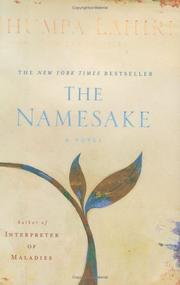
The Namesake
Jhumpa Lahiri follows Gogol Ganguli from a hated namesake to adult loss, marriage, and family reckoning between Calcutta and Boston.
2,878-word summary · 13 min read
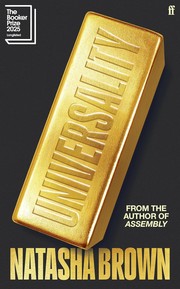
Universality
Natasha Brown's short second novel turns a lockdown fracas over a gold bar into a sharp satire of money, identity and public argument.
2,302-word summary · 10 min read
The Sisters
Three sisters watch one another take the lives they imagined, across thirty years in Stockholm and Tunisia, in a novel that bends time like an accordion.
2,199-word summary · 10 min read

One Boat
A woman returns to a Greek coastal town after her father's death, and the holiday she took nine years earlier after her mother's death keeps breaking through.
2,143-word summary · 10 min read
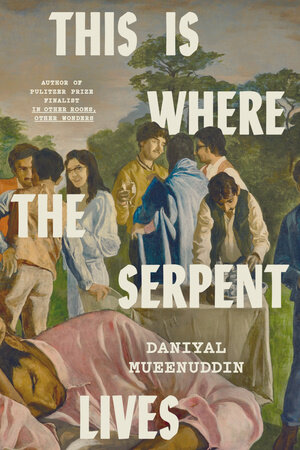
This Is Where the Serpent Lives
Daniyal Mueenuddin's second novel follows an orphan who rises through Lahore and a gardener's son who becomes an outlaw, across a Pakistan of caste and capital.
2,257-word summary · 10 min read
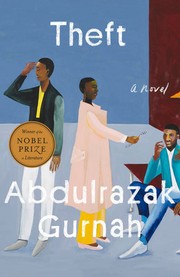
Theft
Gurnah traces three linked lives in Tanzania, where a servant's accusation of theft opens a family history of love, duty and quiet betrayal.
2,454-word summary · 11 min read
The Emperor of Gladness
Ocean Vuong's second novel follows a young addict pulled back from a bridge in a dying Connecticut mill town and into the home of an elderly immigrant woman…
2,693-word summary · 12 min read
The Dream Hotel
A Muslim American archivist lands at LAX and is detained because her sleep implant says she might kill her husband. Lalami's near-future novel follows her into…
2,687-word summary · 12 min read
Good Girl
A nineteen-year-old artist in Berlin, grieving her mother, falls into an unequal romance with an American author who offers escape from the ideal of the good…
2,579-word summary · 11 min read

Flashlight
Susan Choi's Booker-shortlisted novel opens with a father and daughter on a breakwater in 1978, then follows the loss outward through four generations and…
2,849-word summary · 13 min read
Dream Count
Four women narrate the 2020 lockdown in their own voices: a travel writer, a friend in early labor, a banker cousin and a housekeeper assaulted in a hotel room.
2,286-word summary · 10 min read

Detransition, Baby
Torrey Peters's debut follows three Brooklyn adults as an unexpected pregnancy pushes them to imagine an unconventional family. Funny, sharp, and unwilling to…
2,925-word summary · 13 min read
Black and Blue
A nurse leaves her abusive police-officer husband and vanishes into small-town Florida with her son, where a new name buys years of peace and a fear that never…
2,456-word summary · 11 min read
Behold the Dreamers
A Cameroonian chauffeur and his wife chase the American dream while driving a Lehman Brothers executive through the 2008 crash in Mbue's debut novel.
2,578-word summary · 11 min read
Audition
Kitamura's Booker-shortlisted fifth novel tells the same lunch twice, with a young film student who believes he is the actress narrator's son. Two versions…
2,315-word summary · 10 min read
A Guardian and a Thief
Over one week in near-future Kolkata, a mother's flight plan and a homeless young man's hunger collide over a set of stolen travel documents.
2,306-word summary · 10 min read
Last Night in Brooklyn
A copywriter in 2005 Fort Greene trades a scripted engagement for a bar crowd, a rising designer, and a neighborhood being remade around her.
2,540-word summary · 11 min read
The Idiot
A Turkish-American freshman at Harvard falls in love through email with a Hungarian math student and spends a summer in Hungary trying to turn correspondence…
2,019-word summary · 9 min read

Howards End
Forster's 1910 novel follows two families, a house in Hertfordshire, and a burned note, asking whether money and feeling can ever be connected.
2,187-word summary · 10 min read
The Lowland
Two brothers grow up beside a marshy lowland in Calcutta, and the choices of the younger one draw the older into a life of duty, distance, and quiet grief that…
2,213-word summary · 10 min read
This Is How You Lose Her
Yunior cycles through love affairs and betrayals in nine linked stories, tracing the damage he does and the family history behind it.
2,195-word summary · 10 min read

American Born Chinese
Three stories, a monkey king, a Chinese-American boy and a sitcom cousin, converge in a graphic novel about shame, assimilation and learning to accept yourself.
2,107-word summary · 9 min read
The Orphan Master's Son
Adam Johnson's Pulitzer-winning novel follows Pak Jun Do from a North Korean orphanage to a deadly identity swap, under a state whose loudspeakers never stop…
2,219-word summary · 10 min read
The House of Mirth
Lily Bart, beautiful and penniless at twenty-nine, navigates New York's marriage market until a Dorset yacht scandal strips her of the only currency she has.
2,468-word summary · 11 min read