
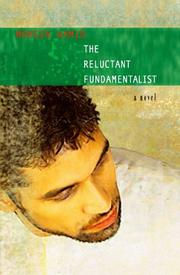
The Reluctant Fundamentalist
2,340-word summary 10 min read 224 pages in the book
- First published
- 2007
- Publisher
- Hamish Hamilton
- Pages
- 224
- ISBN
- 9780241143650
Reading options
What's inside (8 sections)
I read The Reluctant Fundamentalist on a evening when I had promised myself I would stop at one chapter and did not. It is a short novel, only 224 pages in the Hamish Hamilton first edition, but it has the kind of pressure that makes putting it down feel like an interruption. Mohsin Hamid published it in 2007, and it arrived with a reputation as the post-9/11 novel that would not explain itself to Western readers. That reputation is partly deserved and partly misleading. The book is less an argument about America than a long, slippery conversation between two people who may not be talking about the same thing at all.
The whole novel takes place in one evening in a cafe in Lahore. A Pakistani man named Changez offers to help a nervous American visitor find a decent cup of tea, and then begins talking. He talks for the entire book. The American says almost nothing, which is strange and effective: you, the reader, are addressed directly as though you were that stranger. Hamid uses a frame story and a dramatic monologue, and the result is a voice that never stops performing. Changez is charming, funny, self-deprecating, and almost impossible to pin down. Every statement he makes about himself is also a performance for the man across the table.
Changez tells his version
Changez begins with his student years. He is an excellent student, finishes a degree in finance, and is recruited by an elite valuation firm called Underwood Samson before he has even graduated from Princeton. He goes to Greece with classmates after graduation and meets Erica, an aspiring writer. He falls for her immediately and completely. The problem is that Erica is still grieving her childhood sweetheart, Christopher Zee, who died of lung cancer. Their relationship has to pass through that grief, and it never really comes out the other side.
The romance is the book's quietest and most uncomfortable strand. On their first date, Changez stops when he realizes Erica cannot respond to him while she is thinking of Chris. Later, she asks him to let her close her eyes and imagine she is with the boy she lost. He agrees because he wants her, and he is satisfied by it, but the compromise poisons what follows. She begins treatment in a mental institution. When he sees her there she is thin and absent, and when he returns from a trip to Chile he finds that she has left and that her clothes were discovered near the Hudson River. She is officially a missing person; her body is never found. Hamid gives this story just enough space to hurt, then folds it back into Changez's larger account of how his life came apart.
At Underwood Samson, Changez is good at his work and quickly marked for advancement. Jim, the man who recruited him, likes him and trusts him. The firm sends him offshore, first to the Philippines and then to Valparaiso in Chile, to value a business. The Chilean job is where the novel turns. He is distracted by events back home and by the publisher's own suggestion that his company is there to assess the business so it can be broken up. Instead of finishing the assignment, he visits the preserved home of Pablo Neruda, the left-wing poet, and comes away seeing himself as a servant of an American empire that has spent decades interfering in Pakistan. He returns to New York without completing the work and loses his job.
The reader as the stranger
The novel's form deserves a moment of attention, because it is doing more than decorating the story. Hamid writes the entire book as a monologue addressed to a "you" who never answers. That choice puts the reader in the seat of the nervous American, and it makes every one of Changez's small observations feel directed at us. When he notes that his listener is sweating or glancing at the door, we are the ones being described. The effect is claustrophobic in a very controlled way. You cannot step outside the conversation to check the facts, because the only version available is the one being spoken in your direction.
This is why the book can be described as metafictional without being a puzzle box. Hamid is not playing tricks with the plot so much as making the act of listening visible. Changez knows he is being heard, and he adjusts what he says to the person hearing it. A narrator like that is never neutral. He is building a case, and he is measuring the case against the reaction of a man he expects to be hostile. The pauses that are not on the page matter as much as the speeches. You find yourself supplying the American's silences, and once you do, you are partly responsible for the story.
The technique also explains why the ending can stay open. If everything comes through one man's voice, the truth about the stranger's pocket is something only he could report, and he chooses not to. That refusal is consistent with the rest of the performance. Changez has spent the evening describing a man he claims to read clearly, yet he ends by admitting he cannot tell what is in a pocket beside his own hand. The gap between his confidence and his uncertainty is the real subject of the book.
The line that startled everyone
The most quoted moment in the book comes when Changez describes his reaction to the attacks of September 11. He admits, with obvious relish for the effect it has on his listener, that he was pleased. The exact line is worth sitting with: "Yes, despicable as it may sound, my initial reaction was to be remarkably pleased." He watches the smoke and thinks of his country, and he watches the towers fall. Hamid places this confession early enough that the rest of the novel has to answer for it.
What matters is that Changez says it to an American. He is not confessing to the reader in private; he is testing the stranger across the table. He notices the man's unease and keeps going. The sentence is contemptuous, but it is also an invitation: if you are shocked, he seems to be asking, what exactly did you expect from me? That question runs through everything that follows. The novel is structured so that the reader cannot simply approve of Changez's politics or dismiss them as bitterness. He is too intelligent and too honest about his own vanity for either response to stick.
After the attacks, he becomes aware of a new suspicion directed at Pakistanis. Because of his education and his job, he is not among the people stopped and humiliated on the street, but he sees it happening. He grows a beard, partly in solidarity with men who are treated worse than he is. Then, after an attack on the Indian parliament, India and Pakistan mobilize and the two countries face off. Watching the American response, Changez decides that his country is being used as a pawn. With no job, an expiring visa, and no reason to stay, he returns to Lahore.
Back in Lahore
The second half of the novel is quieter and, to my mind, more interesting. Changez becomes a professor of finance at a local university. His experience abroad makes him a figure of authority with students, and he gathers groups of them around him to talk about politics and the world. He and his students take part in demonstrations against policies they see as harmful to Pakistani sovereignty. He argues for nonviolence, but one of his students, a young man nobody knows well, is arrested over an attempt on an American representative. That arrest throws attention onto Changez, and in a widely televised interview he delivers a sharp attack on the militarism of American foreign policy.
The televised interview is where the novel's title becomes hardest to hold. Changez condemns American militarism in public, and his students cheer him on, but he has already told us that he does not consider himself a man of violence. He is careful about that distinction, almost fussy about it. The book keeps asking whether a person can oppose an empire without borrowing its habits of certainty, and Changez cannot answer that question about himself. He wants to be seen as principled, and he also wants to be feared. Those desires pull in different directions, and the final walk to the hotel is where they stop pretending to agree.
This is where the frame presses hardest on the story. Changez tells the American stranger that people around him began to think someone might be sent to intimidate him, or worse. Meanwhile he keeps describing the man sitting across from him: the way he looks at the street, the sophisticated satellite phone he keeps using, the bulge under his clothing that might be a gun. Changez walks him toward his hotel at the end of the evening. The American reaches into his pocket, and Changez says he trusts it is only a business card holder. The book ends without saying what was in the pocket.
That refusal to resolve is the point. The American may be a CIA agent sent to kill Changez, or Changez may have been staging the whole encounter with the cafe waiter as a trap. Hamid gives evidence for both readings and settles for neither. I found the ambiguity frustrating in a way I enjoyed. Most novels tell you whose side to be on by the final page. This one makes you rehearse the conversation again, looking for the moment when Changez stopped being a host and became a manipulator, or the moment when he was never anything but a man performing for a stranger he despised.
The word in the title
The title has troubled readers from the start, and it should. Fundamentalist is a loaded word, and Hamid puts reluctant in front of it without ever explaining exactly what Changez is reluctant about. Is he reluctant to become a fundamentalist, reluctant to admit that he already has, or reluctant to perform the role for his American listener? The novel leaves all three possibilities open. Changez is a man who has lost a job, a love, and a country he once believed in, and anger gives him a shape he did not have before. Whether that shape counts as faith or merely as resentment is the question the book keeps asking.
Hamid's technique matters here. Because we only get Changez's voice, we can never check his account against anyone else's. Erica never speaks for herself. Jim is seen only through the filter of a former employee who admired him. The American stranger is a blank screen onto which Changez projects his fears. That design could feel like a trick, but it is also the honest way to tell this particular story. A man explaining his own radicalization is not a reliable witness, and the reader's job is to notice the places where his charm papers over a gap in the reasoning.
The book was shortlisted for the Booker Prize and picked up a string of other honours, and it became an international bestseller. It was also adopted as a common read at a remarkable number of universities, which says something about how useful it is as a discussion text. I understand why. There is no single lesson to extract, and every reader can argue about the ending. It was adapted into a film by Mira Nair and into a radio version read by Riz Ahmed, both of which had the difficult task of making the silence of the American stranger visible.
What stayed with me
I think about the cafe more than the politics. Two people sit together in a public place, one of them talking without pause and the other listening with increasing fear, and neither can leave without admitting something. Changez wants the American to understand him, but he also wants to be feared by him. The stranger wants to leave, but he cannot quite bring himself to walk out. That small standoff contains the whole book, and it is a better metaphor for the clash of expectations than any speech about empire could be.
One more thing I noticed on a second pass: Hamid never gives the American a name, and he never lets him speak. That asymmetry is easy to miss while you are caught up in Changez's story, but it matters. The man who may be a threat is reduced to a set of gestures observed by the person who may be the target. We know about his phone and his bulge and his nervousness, but we never know what he thinks. Whether that is justice or simply another imbalance depends on how much you trust Changez, and the book declines to tell you how much you should.
My reservation is that the novel's cleverness sometimes feels like a shield. Because Changez is so articulate and so aware of how he is perceived, it is easy to admire the performance and forget the suffering underneath it. Erica's disappearance in particular risks becoming a plot device in a man's political awakening. Hamid knows this, and I suspect the discomfort is intentional, but it does mean the book can feel colder than its subject matter suggests. That coldness is also what keeps it from turning into a simpler novel about a man who learns to hate America, which is a book nobody needed.
Read it slowly and pay attention to what Changez does not say. The best moments are the small adjustments he makes when he senses his listener's reaction, the way he changes the subject, the way he offers hospitality while letting the threat sit beside it. The Reluctant Fundamentalist is not a novel with an answer. It is a novel about how hard it is to hear another person when you are certain you already know what they mean.
FAQ
Why does the American stranger never speak?
Hamid writes the book as a dramatic monologue addressed to a silent reader, so we occupy the stranger's seat and must judge Changez from his performance alone.
What happens to Changez in the end?
He returns to Lahore, teaches finance, and criticizes American foreign policy on television. The final scene walks him and the stranger toward a hotel without resolving the threat.
When was The Reluctant Fundamentalist published?
It appeared in 2007. The Hamish Hamilton first edition runs 224 pages with ISBN 9780241143650; a Harcourt US edition appeared the same year.
Similar books
The Orphan Master's Son
Adam Johnson's Pulitzer-winning novel follows Pak Jun Do from a North Korean orphanage to a deadly identity swap, under a state whose loudspeakers never stop…
2,219-word summary · 10 min read
Universality
Natasha Brown's short second novel turns a lockdown fracas over a gold bar into a sharp satire of money, identity and public argument.
2,302-word summary · 10 min read
Misinterpretation
An unnamed Albanian interpreter in New York is drawn into the trauma of a Kosovo war victim, and the empathy she brings home begins to undo her marriage.
2,546-word summary · 11 min read
Theft
Gurnah traces three linked lives in Tanzania, where a servant's accusation of theft opens a family history of love, duty and quiet betrayal.
2,454-word summary · 11 min read

Flesh
David Szalay's Booker-winning sixth novel follows István, a Hungarian man carried from a housing estate to London's super-rich by forces he barely understands,…
2,537-word summary · 11 min read
Flashlight
Susan Choi's Booker-shortlisted novel opens with a father and daughter on a breakwater in 1978, then follows the loss outward through four generations and…
2,849-word summary · 13 min read
Dream Count
Four women narrate the 2020 lockdown in their own voices: a travel writer, a friend in early labor, a banker cousin and a housekeeper assaulted in a hotel room.
2,286-word summary · 10 min read
Behold the Dreamers
A Cameroonian chauffeur and his wife chase the American dream while driving a Lehman Brothers executive through the 2008 crash in Mbue's debut novel.
2,578-word summary · 11 min read

Unaccustomed Earth
Lahiri’s second story collection follows Bengali families in America and abroad, tracing the quiet distances between parents and children, spouses, and the…
2,333-word summary · 10 min read
This Is How You Lose Her
Yunior cycles through love affairs and betrayals in nine linked stories, tracing the damage he does and the family history behind it.
2,195-word summary · 10 min read

Invisible Man
A nameless young Black man goes from a Southern college to Harlem, hunting for identity in a country that refuses to see him.
2,871-word summary · 13 min read

Interpreter of Maladies
Nine stories follow Bengali families split between Calcutta and New England, through marriage, grief, and arrival.
2,412-word summary · 11 min read
Dreams from My Father
Obama traces his Kansas and Kenyan families from Hawaii to Chicago community work to a first trip to Kenya.
2,053-word summary · 9 min read
The Namesake
Jhumpa Lahiri follows Gogol Ganguli from a hated namesake to adult loss, marriage, and family reckoning between Calcutta and Boston.
2,878-word summary · 13 min read
Americanah
Ifemelu leaves Nigeria for America on a scholarship, blogs about race and hair, while Obinze endures undocumented London until they reunite years later in…
2,527-word summary · 11 min read
Zeitoun
A Syrian-American contractor rides out Hurricane Katrina by canoe, rescuing neighbors and stray dogs, until a routine arrest turns into twenty-three days…
2,097-word summary · 9 min read

The Wilderness
Four Black women move through twenty years of friendship in Angela Flournoy's discontinuous, widely praised second novel.
2,141-word summary · 10 min read
The Sisters
Three sisters watch one another take the lives they imagined, across thirty years in Stockholm and Tunisia, in a novel that bends time like an accordion.
2,199-word summary · 10 min read

The Loneliness of Sonia and Sunny
Two Indian families, a failed arranged match, and years between Allahabad and New York shape a slow, sprawling romance.
2,092-word summary · 9 min read

One Boat
A woman returns to a Greek coastal town after her father's death, and the holiday she took nine years earlier after her mother's death keeps breaking through.
2,143-word summary · 10 min read
Left Neglected
A busy mother suffers left neglect after a car crash, forcing her family and her own attention to rebuild a slower life.
2,201-word summary · 10 min read
Women
Charles Bukowski's semi-autobiographical novel of Henry Chinaski at fifty, drinking heavily and sleeping his way through Los Angeles while fame arrives late.
2,124-word summary · 9 min read

The Zahir
A bestselling novelist's wife vanishes from their Paris home, sending him on a search that becomes a reckoning with his own marriage and attention.
2,433-word summary · 11 min read
The Housekeeper and the Professor
A single mother becomes housekeeper to a mathematician who can remember nothing for more than eighty minutes, and builds a life with him around baseball and…
2,141-word summary · 10 min read
The Emperor of Gladness
Ocean Vuong's second novel follows a young addict pulled back from a bridge in a dying Connecticut mill town and into the home of an elderly immigrant woman…
2,693-word summary · 12 min read
The Dream Hotel
A Muslim American archivist lands at LAX and is detained because her sleep implant says she might kill her husband. Lalami's near-future novel follows her into…
2,687-word summary · 12 min read
The Children Act
A High Court family judge weighs whether a dying teenage boy can refuse a blood transfusion while her own marriage quietly comes apart.
2,399-word summary · 11 min read

The Bonfire of the Vanities
Tom Wolfe's first novel follows a Wall Street bond trader whose life unravels after a hit-and-run in the Bronx, in a satire of 1980s New York money, race and…
2,268-word summary · 10 min read
The Antidote
In a Dust Bowl town where a woman stores her neighbors' unwanted memories inside her own body, a storm blows the bank away and leaves a tangle of debts and…
2,707-word summary · 12 min read