
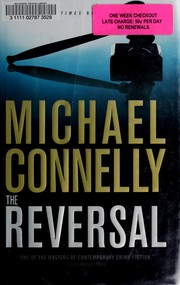
The Reversal
2,056-word summary 9 min read 389 pages in the book
- First published
- 2010
- Publisher
- Little, Brown and Company
- Pages
- 389
- ISBN
- 9780316069489
- Series
- Lincoln Lawyer (#3)
Reading options
What's inside (7 sections)
Why I picked it up
I came to The Reversal because the two Lincoln Lawyer books before it had stuck with me, and because the title promised a switch I wanted to see played out. Mickey Haller has made his name and his money defending people the city wants to put away. This time Connelly puts him on the other side of the table, and the whole book turns on whether a defense lawyer can learn to want a conviction. It is the third Lincoln Lawyer novel, published by Little, Brown in 2010, and it is also the twenty-second book in the wider world Connelly shares with Harry Bosch. That double identity is the source of its best energy. The two men are half brothers, and they have never been comfortable being on the same side of anything.
The book opens with Haller bored and restless. The defense work that once thrilled him has become a grind, and when the city needs someone to retry a case that was thrown out on appeal, he takes the job. There is a condition. He gets to pick his own team. He names his ex-wife Maggie McPherson as co-prosecutor and his half-brother Harry Bosch as the investigator from the LAPD. That choice is the engine of the story. Every scene between the three of them carries the weight of old arguments and old affection, and Connelly is very good at writing people who are related and do not know how to be easy with each other.
If you have not read The Lincoln Lawyer or The Brass Verdict, some of this will land differently. Haller works out of the back of a Lincoln Town Car, a detail that started as a practical matter after his office was shot up and became his trademark. He is media savvy, vain about his suits, and far cleverer than the lawyers around him give him credit for. Connelly lets him narrate in the first person, and Mickey's voice is the pleasure of the series: fast, funny, and slightly pleased with itself. When he is prosecuting, that voice gets an uneasy edge, because he knows exactly which tricks the other side will try.
The old crime
The case is the 1986 murder of twelve-year-old Melissa Landy. The child was reported missing and her body was found hours later in a dumpster. What makes the case solvable is that her older sister Sarah had been hiding in the garden when the abduction happened. She saw a man take Melissa and she identified him as Jason Jessup, a tow truck driver. The speed of that identification put Jessup in custody quickly, and he was convicted.
Then the DNA came apart. A semen stain on the dress Melissa was wearing could not be tied to Jessup. It belonged to the girls' stepfather. That did not prove the stepfather killed her, but it was enough to undermine the original conviction, and Jessup walked after an appeal. He has spent more than two decades in prison by the time the retrial begins, and he is not a sympathetic figure. He is the man who took a child, and the legal system has handed him a second chance because of a laboratory result.
That is the moral knot Connelly ties at the start, and he keeps it tight. Nobody in the book is comfortable with the retrial. Haller takes the job in part because he wants to prove he can win as a prosecutor, but he also knows he is arguing for a man's freedom in a case where the evidence of guilt is overwhelming. Maggie, who has spent her career as a prosecutor, is the one person who can match him in court and the one person whose marriage to him ended badly. Their exchanges have a clipped, professional surface with a great deal underneath. When she pushes back on one of his stunts, you can hear both the colleague and the former spouse in the same line.
Connelly is careful about the rules of the retrial. The jury is not allowed to know that Jessup was convicted before, or that an appeals court set that conviction aside. Testimony from the first trial, given by witnesses who are now dead or too ill to appear, has to be read aloud to the jury by Bosch. Those sections give the book its procedural texture, and they also let Connelly show the gap between a case as it lives in a detective's memory and a case as it has to be rebuilt in court. Bosch has carried this murder for twenty-four years. Now he has to hand it to a jury in pieces, without the history that makes it make sense to him.
The team and the other side
The prosecution's whole case rests on Sarah Landy's memory. She is the one who can explain how the police got to Jessup so fast, and she is the one who can put him at the garden. The problem is that Sarah's life went badly after her sister's death. She fell into drug use and prostitution, and by the time of the retrial she has been clean and straight for years. That history is exactly what the defense will attack.
Jessup's lawyer is Clive Royce, a man everyone calls Clever Clive. He mounts a media campaign for his client and lets it be known that Jessup intends to sue the state for a large payout once he is cleared. The money is the tell. Royce is not driven by a burning belief in his client's innocence. He is building a claim. Haller understands that kind of ambition because he has lived it from the other side, and his response is characteristically risky. He argues that Jessup should be granted bail, then has the police follow him. The idea is that a man who abused children once will drift back toward the places where he did it, and that surveillance might give the prosecution something the first trial never had.
It works in a slow, unpleasant way. Jessup starts visiting mountain trails in the Mulholland area. On one occasion he parks his car outside Bosch's house at night. Both men have teenage daughters, and both of them understand what that parking means without saying it out loud. They suspect he is a serial killer, but they cannot act on the suspicion without exposing the surveillance and wrecking the trial they are in the middle of. That restraint is one of the stronger things about the book. Connelly lets the two men sit on a horrible possibility because the rules of their jobs require it.
Inside the courtroom, Sarah gives testimony that complicates the DNA evidence rather than dodging it. She admits that the dress Melissa was wearing belonged to her, and that her stepfather was raping her. That is what put the stain there. It is a brutal thing to say in public, and it hands the defense a story they can use: that the family lied, that the stepfather was the real killer, and that Jessup is a victim of their confusion. Royce does not need to prove his client innocent. He only needs to make the jury doubt the one witness who matters.
The witness who nearly breaks it
Haller works out that Royce must have someone who will claim Sarah told a different story during what the book calls her lost years. Bosch traces that someone to Eddie Roman, Sarah's former lover, a junkie who has disappeared from his usual haunts. The assumption is that the defense has put him up somewhere and will call him to say Sarah once named a different man. This is the moment where Connelly's two detectives and one lawyer mesh properly. Haller reads the strategy, Bosch finds the witness, and the plan to answer it comes from the street rather than the courtroom.
Bosch locates Sonia Reyes, a prostitute whose pimp is Roman. He persuades her to come into the courtroom at a precise moment while Roman is on the stand. When Roman sees her, he changes his testimony, and the defense's last serious attack on Sarah collapses. I liked this stretch of the book a great deal, and not only because the trick is clever. It depends on Bosch knowing people that a prosecutor would never know, which is the entire reason Haller wanted him on the team. The two halves of Connelly's world need each other here, and for a few chapters the book feels like it is about what each man can do that the other cannot.
The comeuppance, though, arrives with less subtlety. During a lunch break, with Haller and Bosch expecting a plea offer from the defense team, word comes that Jessup has walked into Royce's offices with a gun. He kills Royce, two members of his legal team, and a police officer, then disappears. The gunplay is sudden and loud after all the patient work of the trial, and it has the effect of a man admitting, in the only language left to him, that the defense was right about his character in the one sense that matters. He is a killer.
What the book gets right and where it strains
The courtroom material is the best part. Connelly knows how a trial actually moves, and he understands that cases are won by small decisions about timing and sequence rather than by speeches. The detail about keeping the prior conviction from the jury is a good example. It is a rule with a clear purpose and a cruel effect, and the book lets both be true. Haller's discomfort with his new role is also handled well. He is good at prosecution precisely because he knows how defense lawyers think, and that skill makes him uneasy. The man he is trying to put away is someone he might once have defended, and he never pretends that the reversal of roles is morally clean.
The strains are easy to name. The premise depends on a lawyer switching sides in a way that feels more dramatic than realistic, and Haller's reason, boredom, is thin for a decision that big. The villains are drawn broadly. Royce is clever in name and greedy in fact, with little else to him, and Jessup is given almost no interior life, so the book never has to wrestle with the possibility that a man who killed once might have changed in prison. The stepfather, whose DNA is the hinge of the whole case, is barely a person on the page. And the ending, in which Jessup is cornered and killed by police at a hideout under the Santa Monica Pier that Bosch found through the surveillance operation, ties things up with a tidiness the earlier chapters had earned their way past. It is satisfying, and it is also a little too neat.
What stays with me is the argument the book makes about law as a machinery that does not care who is right. Jessup gets a new trial because the evidence against him was imperfect. Sarah has to explain a rape in public to keep her account standing. Bosch has to read the words of dead witnesses into a record and then watch a jury weigh them. Nobody in the book comes out of the process whole, including the lawyers. Connelly is not writing a tract about the justice system, but he keeps finding small moments where the system's rules and a person's needs do not line up.
I would hand this to a reader who likes courtroom novels and wants one with real procedure rather than a string of speeches. It helps to have read the earlier Haller books, because the relations between Mickey, Maggie, and Bosch carry a history that a new reader will only partly feel. On its own, it is still a fast and capable thriller with a mean streak and a clever central device. As the third entry in a series that keeps finding new ways to put these two men in the same room, it is one of the more interesting ones, mostly because the case forces them to want the same outcome for the first time and neither of them knows quite what to do with that.
FAQ
Is The Reversal part of a series?
Yes. It is the third Lincoln Lawyer novel featuring Mickey Haller and the twenty-second book in Michael Connelly's wider Harry Bosch universe.
When was The Reversal published and who published it?
Little, Brown and Company published it in the United States on October 5, 2010. The first edition hardcover runs 389 pages.
Do I need to read the earlier Lincoln Lawyer books first?
It helps. The book follows The Brass Verdict and assumes familiarity with Mickey, Maggie, and Bosch, though the retrial plot stands on its own.
Similar books
More from Lincoln Lawyer first, then related titles.
The Lincoln Lawyer
Mickey Haller defends a rich assault suspect from his Lincoln while doubting his innocence.
2,317-word summary · 10 min read
The Brass Verdict
Mickey Haller takes over a murdered lawyer's caseload and a Hollywood double-murder trial, with Harry Bosch circling the edges.
2,672-word summary · 12 min read
The Fifth Witness
A foreclosure case turns into a murder trial when a client's banker turns up dead, and a slick Los Angeles lawyer wins a case he wishes he had lost.
2,154-word summary · 10 min read
Nightshade
Connelly launches Detective Stilwell on Catalina Island, where a beheaded buffalo and a Jane Doe in the harbor pull a quiet sheriff's post into violence and…
2,272-word summary · 10 min read
The Unquiet Grave
In Dervla McTiernan's fourth Cormac Reilly novel, a body found in a Galway bog turns out to be a missing school principal, and the case opens into something…
2,253-word summary · 10 min read
Fractured
In Karin Slaughter's second Will Trent novel, a mother kills the wrong man in an Atlanta mansion, and a GBI agent with a hidden reading difficulty finds a…
2,219-word summary · 10 min read
Eight Perfect Murders
A Boston bookseller's old blog post listing eight perfect fictional murders becomes the blueprint for a real killer, and the narrator knows more than he admits.
2,292-word summary · 10 min read

The Beach House
A young valet is beaten to death at a Hamptons party, and his law-student brother spends a year building a case against the family that covered it up.
2,049-word summary · 9 min read

4th of July
Lindsay Boxer shoots two armed teenagers in self-defense, faces a wrongful-death trial, and spends her leave chasing a string of throat-slashing murders in…
2,192-word summary · 10 min read

3rd Degree
The third Women's Murder Club novel follows a San Francisco terror cell and a three-day killing schedule, and it costs the club a member.
2,685-word summary · 12 min read
The Racketeer
A jailed lawyer trades a judge murder secret for freedom and revenge.
2,434-word summary · 11 min read
The Judge's List
Lacy Stoltz hunts a sitting judge who murders off his list.
2,513-word summary · 11 min read
The Guardians
A innocence lawyer reopens a prison murder where the wrong man waits on death row.
2,564-word summary · 11 min read
The Club
A luxury island resort for the rich turns deadly when secrets, staff and guests collide.
2,386-word summary · 11 min read
Presumed Innocent
Rusty Sabich must solve coworker Carolyn Polhemus's murder while hiding his affair with her, then stands accused himself in Turow's 1987 Kindle County debut.
2,726-word summary · 12 min read

Jar of Hearts
At sixteen Geo helped bury her best friend. Fourteen years later the body is found, she goes to prison, and the killing starts again.
2,389-word summary · 11 min read
The Kind Worth Killing
A plane seat chat about murder becomes a pact, then a game where no one tells the full truth.
2,080-word summary · 9 min read
The Last Coyote
On stress leave, Harry Bosch reopens the unsolved murder of his mother, a prostitute strangled when he was twelve, and finds corruption reaching the DA's…
2,069-word summary · 9 min read
The Black Ice
Harry Bosch works a Christmas-night death the Robbery-Homicide Division does not want him near, and the trail runs from a dead cop to a drug operation across…
2,399-word summary · 11 min read

The Late Show
Exiled to the LAPD night shift after accusing her supervisor, Renée Ballard keeps two cases that were meant to be handed off at dawn: a brutal assault and a…
2,563-word summary · 11 min read
The Poet
A crime reporter investigates his twin brother's apparent suicide and uncovers a killer who leaves Edgar Allan Poe quotes behind, in the novel that took…
2,020-word summary · 9 min read
The Black Echo
Harry Bosch links a fellow veteran's death to a tunnel bank robbery and a dangerous FBI investigation in Los Angeles.
2,133-word summary · 9 min read

There Will Be Bodies
Digging out a villa buried by Vesuvius, Flavia Albia finds chained corpses and a death someone tried to hide for ten years.
2,152-word summary · 10 min read
The Hangman's Daughter
In 1659 Bavaria, a hangman ordered to torture an innocent midwife instead investigates the deaths of children marked with a strange tattoo.
2,523-word summary · 11 min read
The 5th Horseman
Two linked cases pull Lindsay Boxer and the Women's Murder Club into a hospital full of strange deaths and a luxury-car murder spree.
2,609-word summary · 12 min read
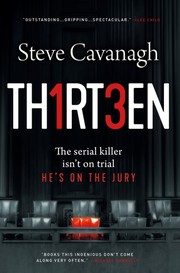
Th1rt3en
A former con artist turned defense lawyer takes a celebrity murder trial while a serial killer sits on the jury, steering the verdict.
2,254-word summary · 10 min read
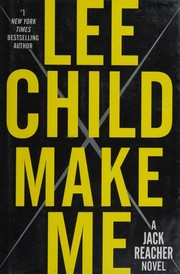
Make Me
Reacher drifts into a quiet Midwestern town and finds a missing investigator, a trail of killers, and a deep web secret.
2,352-word summary · 10 min read
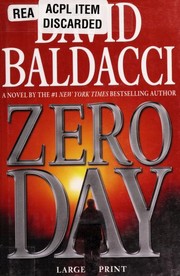
Zero Day
Army investigator John Puller is sent alone to a West Virginia coal town to solve a colonel's murder, and finds a much larger secret buried nearby.
3,434-word summary · 15 min read
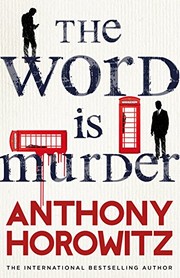
The Word Is Murder
A fictionalised Anthony Horowitz is talked into chronicling a prickly ex-detective's case: a woman murdered hours after planning her own funeral. A clever…
2,296-word summary · 10 min read
The Summons
A law professor is summoned home to find his judge father dead and more than three million dollars hidden in the house.
2,265-word summary · 10 min read