
Reading options
What's inside (9 sections)
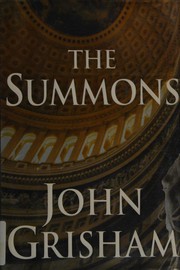
A friend handed me The Summons after I said I wanted a Grisham that was less about a courtroom and more about a family. That is a fair way to describe it, though it misses how odd the opening is. John Grisham published it in 2002 with Doubleday. The first hardcover runs 373 pages. I read it over a long weekend and kept coming back to the father, because the whole book is built around a man who is already dead when the real story starts.
The call from the Judge
The summons of the title is a call from Judge Reuben V. Atlee to his younger son, Ray. Ray Atlee teaches law at the University of Virginia. He has a good salary, a quiet life, and a career that does not require him to go back to Clanton, Mississippi. The Judge tells him he is sick and wants to see him. Ray goes. He drives down knowing that his father has been a large presence in that town for decades, a man whose word carried weight in the courthouse and on the street. Forrest, the older brother, is somewhere else in the family picture, harder to pin down and easier to avoid.
I liked the plainness of that setup. There is no mystery phone call and no threat. An old man asks his son to come home, and the son obeys because that is what sons do in this family. Grisham gives Ray a dry, professional way of looking at the world, which makes the next few chapters land harder. Ray is used to reading documents and weighing evidence. He is not used to being summoned.
Ray's life in Charlottesville is drawn with care, and that matters. He has built a career on clear rules and reasoned arguments, the kind of work that rewards a person who keeps his feelings in check. Clanton is the opposite of that life. It is a place where history is remembered in personal terms, where a family name does half the talking. Ray knows he will be measured against his father the moment he arrives, and he knows he will come up short. That is why he has stayed away. The drive south is less a trip home than a trip into a case he would rather not be assigned.
The money in the house
Ray arrives at the old house and finds his father dead in the study. The death is treated as natural, and the town moves quickly into the rituals of a funeral and a will. Ray stays on to deal with the estate, which is the sort of job a lawyer son cannot refuse. That is when he finds the cash. There is more than three million dollars hidden in the house, bundled and ready, and none of it appears in the will. I remember the scene less as a jolt than as a practical problem: a law professor staring at money he could never explain if he turned it in.
His first thought is that the money is dirty. A career judge could not have earned that much honestly, and Ray assumes there is a history behind it that he does not want to hear. If he reports it, the estate gets taxed and the money disappears into fees and claims. If he keeps it quiet, he can decide what to do later. So he packs it away and leaves the house with the secret. Grisham spends real time on the small mechanics of this, the packing, the driving, the fear that someone might notice. It works because Ray is not a criminal. He is a careful man making a choice he already knows is wrong.
The reading of the will and the days around the funeral are handled in a way I found convincing. People say the right things to Ray, and a few of them say more than the right things, which is how he learns how much of his father's life was conducted in public and how little of it was shared at home. The old lawyers and neighbors speak of the Judge with a warmth that makes Ray uneasy. He has no memory to match their stories. Grisham is interested in that gap, in the way a child can grow up beside a famous man and know almost nothing about him.
The father's reputation hangs over every scene. Judge Atlee is spoken of with respect, and with a little too much feeling from people who knew him well. Ray never quite knew his father, and the death forces him to piece together a man from other people's stories. Grisham gives the Judge a past that is not flattering, and that complicates Ray's tidy plan. The money is not a clean clue to a clean crime. It belongs to a life that was messier than the funeral suggested.
A man who is being followed
The book changes gear once Ray has the money. He is being followed. A car stays behind him, a stranger turns up where he does not expect, and the feeling of being watched follows him back toward his ordinary life. Ray starts asking where the cash came from and who else knew about it. That trail leads him into rooms he would never have entered on his own: casino floors, quiet meetings with prominent southern lawyers, conversations conducted in the polite code that people use when they are discussing something they would rather not put in writing.
I liked this part more than I expected to. Grisham is good at the texture of a small legal world, the old lawyers who know each other's histories, the way a name opens a door in one town and closes it in another. Ray is an outsider with a law degree, which means he can follow the paperwork and still misread the people. He keeps telling himself he is gathering facts. What he is really doing is avoiding the one fact he already suspects, which is that this was never about a stranger.
The investigation has a pleasant, old fashioned shape. Ray follows a lead, meets someone who knows more than they should, gets half an answer, and follows the next lead. The trips to the casinos are not glamorous. Grisham writes them as places full of noise and bad light, where people go when they want a transaction to feel like luck. The meetings with lawyers are better, mostly because the dialogue is careful and indirect. Nobody says the word money for a long time. Everyone says family, or friendship, or an old favor. Ray has to translate, and so do we.
What holds the middle together is Ray's own bad conscience. He is not chasing a thief so much as trying to find a version of events that lets him keep the cash and still sleep. Each answer he gets makes that harder. Grisham lets him rationalize for a while, then quietly takes each excuse away. By the time Ray understands where the trail leads, the reader has understood it a few pages earlier, which is the right balance for this kind of book.
Forrest
Forrest is the answer, though it takes most of the book to get there. He is Ray's older brother, a man whose life has been pulled apart by drugs and by the long shadow of their father. Ray has spent years keeping a sensible distance. Now he has to follow the money to Forrest, which means accepting that the family he thought he understood has been hiding its worst trouble in plain sight. The moments where Ray thinks about his brother are the best in the book, mostly because they are not written as revelations. They sound like a man finally noticing what was always said at dinner and never explained.
The trail ends at a drug rehab compound where Forrest is staying. Ray confronts him there. The confrontation is quieter than a thriller usually allows, and I think that is the right call. There is no shootout and no long confession. There are two brothers, a large amount of money, and a father who is gone and cannot be asked to explain any of it. Forrest admits enough for Ray to understand the shape of the story, and that has to be enough. Grisham understands that families rarely hand out complete answers.
I wanted more from that ending and also trusted it. The book resists the neat closing where the guilty party is named and the money is returned. Instead the brothers part with Forrest saying he will contact Ray in a year. It is an unfinished sort of finish. Ray goes back to a life that looks much like the one he had before, except that he now knows what his family was capable of. The last pages sit with that rather than trying to resolve it.
What worked for me
The strongest thing here is the premise. A man is summoned home by a father who dies before the conversation can happen, and the only explanation left is a pile of unexplained cash. That is a good hook, and Grisham keeps it alive by making Ray's choices small and believable. He does not turn into a detective. He takes a road trip through his father's world, asks awkward questions, and slowly realizes he is the person who has been misreading everything. The legal detail is accurate without becoming a lecture.
I also liked the pacing of the middle. The casino scenes and the lawyer meetings have a lived in feel, and the tail on the road is handled with patience rather than noise. Grisham knows that a man who is frightened in a car is frightening in a quiet way. Clanton itself is drawn carefully, a town where everyone knows whose father you are. That matters in a book where inheritance is as much about reputation as it is about money.
The prose is restrained, which suits the material. Grisham is not trying to write a beautiful sentence on every page. He is trying to keep a story moving while he changes the question being asked. Early on the question is why the Judge called Ray home. Later it is what the money is for. By the end it is what Ray is willing to believe about his own brother. That shift is handled without announcements, and it is the quiet craft of the book.
What stayed with me after I closed the book was the way the father is built from other people's accounts. Judge Atlee never gets a chapter of his own. We meet him through Ray's memory, through the lawyers who knew him, and through the house he left behind. That is a risky choice, because a dead man can be made to mean almost anything, and Grisham takes the risk on purpose. The Judge is respected and also something of a mystery, and the money makes both things true at once. By the end Ray has not solved his father. He has only stopped pretending he understood him, which is a smaller and more honest outcome than the plot seemed to promise at the start.
Where it lost me
The opening asks for patience. Ray's life at the university takes up space before the story really starts, and some of that setup never pays off. I also found his decision to take the money hard to accept at first. He is a law professor who teaches for a living, and the idea that he would pocket millions because of a tax calculation felt like a character being pushed into a plot. Grisham works hard to make it plausible, and by the end I half bought it, but the seam shows.
The women in the book are thinly drawn. They are wives, receptionists, and figures from the father's past who exist mainly to hand Ray a piece of information. Forrest gets an interior life and Ray gets an interior life, and everyone else is furniture. The mystery also loses some tension once it becomes clear where the money leads. The last stretch is more of a family reckoning than a suspense story, which is fine, but it should be sold as such.
There is a problem of tone as well. The book wants to be both a legal thriller and a quiet novel about a son who never understood his father. Those two ambitions pull against each other. The thriller wants a culprit and a chase. The family novel wants an argument that cannot be finished. Grisham lands the family ending and leaves the thriller a little short. Readers who loved the tight machinery of A Time to Kill may find this one loose by comparison. Readers who liked the family material in A Painted House will recognize the same interest in people who cannot say what they mean.
The last page
Who should read it. If you come to Grisham for courtroom fights, this will feel slow. If you are interested in what inherited guilt looks like in a family that never talks, it is one of his more interesting books. I finished it thinking less about the money than about Ray's drive home, a man in a car with a secret he could not put down, heading back to a life that no longer fit him. The title works better at the end, when you understand that a summons can be a piece of paper, a call from a dying man, and a debt that arrives after the funeral.
FAQ
When was The Summons published and by whom?
John Grisham published it in 2002 with Doubleday. The first hardcover runs 373 pages. Wikipedia and Open Library both date the original edition to 2002, though some lists label it 2000.
Is The Summons part of a series?
No. It is a standalone legal thriller. Ray Atlee and the Atlee family do not return in another Grisham novel.
Who is Forrest Atlee?
Forrest is Ray's older brother, a man whose drug addiction and troubled past tie directly to the hidden cash. Ray confronts him at a rehab compound near the end of the book.
Similar books

The Beach House
A young valet is beaten to death at a Hamptons party, and his law-student brother spends a year building a case against the family that covered it up.
2,049-word summary · 9 min read

The Woods
Twenty years after two teenagers were murdered and two vanished at summer camp, prosecutor Paul Copeland identifies a fresh corpse as one of the missing.
2,490-word summary · 11 min read
Presumed Innocent
Rusty Sabich must solve coworker Carolyn Polhemus's murder while hiding his affair with her, then stands accused himself in Turow's 1987 Kindle County debut.
2,726-word summary · 12 min read
My Sister's Grave
Detective Tracy Crosswhite reopens her sister disappearance and finds town secrets still guarded.
2,084-word summary · 9 min read
The Litigators
Two Chicago ambulance chasers and a burned-out Harvard Law graduate take on a drug giant, only to find the case sliding toward disaster.
2,244-word summary · 10 min read
Gray Mountain
A Manhattan associate furloughed after the financial crash takes a year of unpaid legal aid work in Appalachian coal country, and finds the case of her life…
2,026-word summary · 9 min read
The Racketeer
A jailed lawyer trades a judge murder secret for freedom and revenge.
2,434-word summary · 11 min read
The Judge's List
Lacy Stoltz hunts a sitting judge who murders off his list.
2,513-word summary · 11 min read
The Guardians
A innocence lawyer reopens a prison murder where the wrong man waits on death row.
2,564-word summary · 11 min read
The Street Lawyer
Michael Brock survives a hostage morning at his rich D.C. firm, then quits for a street clinic after learning a buried eviction file cost a mother and kids…
2,745-word summary · 12 min read
Sycamore Row
Jake Brigance returns to defend a contested will that leaves a fortune to a Black housekeeper in racially tense Clanton.
2,017-word summary · 9 min read
Camino Island
A Princeton manuscript heist pulls a blocked young writer into spying on a charming Florida bookstore owner who may hold the loot.
2,984-word summary · 13 min read
The Runaway Jury
A tobacco trial in Biloxi is quietly rigged from inside the jury box and by a woman offering to sell the verdict.
2,920-word summary · 13 min read

The Client
Eleven-year-old Mark Sway learns a mob secret in Memphis and hires lawyer Reggie Love for one dollar.
2,536-word summary · 11 min read
A Time to Kill
Lawyer Jake Brigance defends a father who killed his daughter's attackers.
2,064-word summary · 9 min read
The Last Coyote
On stress leave, Harry Bosch reopens the unsolved murder of his mother, a prostitute strangled when he was twelve, and finds corruption reaching the DA's…
2,069-word summary · 9 min read
The 5th Horseman
Two linked cases pull Lindsay Boxer and the Women's Murder Club into a hospital full of strange deaths and a luxury-car murder spree.
2,609-word summary · 12 min read
Make Me
Reacher drifts into a quiet Midwestern town and finds a missing investigator, a trail of killers, and a deep web secret.
2,352-word summary · 10 min read
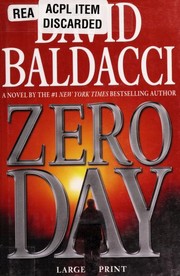
Zero Day
Army investigator John Puller is sent alone to a West Virginia coal town to solve a colonel's murder, and finds a much larger secret buried nearby.
3,434-word summary · 15 min read
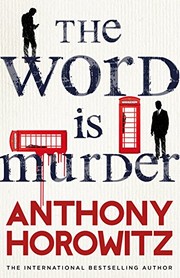
The Word Is Murder
A fictionalised Anthony Horowitz is talked into chronicling a prickly ex-detective's case: a woman murdered hours after planning her own funeral. A clever…
2,296-word summary · 10 min read
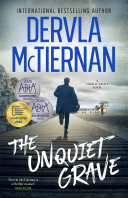
The Unquiet Grave
In Dervla McTiernan's fourth Cormac Reilly novel, a body found in a Galway bog turns out to be a missing school principal, and the case opens into something…
2,253-word summary · 10 min read
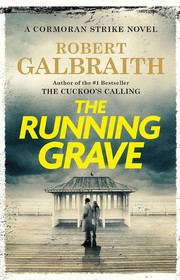
The Running Grave
In the seventh Cormoran Strike novel, Robin goes undercover inside a Norfolk cult while Strike digs into a child's death from decades earlier.
2,615-word summary · 12 min read
The Reversal
Mickey Haller prosecutes a child killer's retrial with ex-wife Maggie and half-brother Harry Bosch on his team.
2,056-word summary · 9 min read
The Midnight Line
A West Point class ring in a Wisconsin pawnshop sends Jack Reacher across the Midwest, from a biker's lie to a wounded veteran hiding from the opioid trade.
2,590-word summary · 12 min read
The Keeper of Lost Causes
Jussi Adler-Olsen introduces Carl Mørck and Department Q, a Copenhagen cold-case unit in a basement, and a missing politician whose file refuses to stay closed.
2,759-word summary · 12 min read
The Hard Way
A man Reacher sees drive a ransom-laden Mercedes pulls him into a retired colonel's hunt for his missing wife and stepdaughter.
2,637-word summary · 12 min read

The Girl Who Takes an Eye for an Eye
Lisbeth Salander investigates a secret childhood experiment from prison while Mikael Blomkvist uncovers a twin conspiracy behind a wealthy businessman.
2,059-word summary · 9 min read
The Girl in the Ice
A young socialite is found frozen beneath the ice in a south London park, and DCI Erika Foster returns to work to lead the case. Grief, privilege and three…
2,492-word summary · 11 min read
The Fix
Amos Decker watches a government contractor shoot a teacher outside FBI headquarters, then turn the gun on himself. The DIA wants the case shut.
2,315-word summary · 10 min read
The Brass Verdict
Mickey Haller takes over a murdered lawyer's caseload and a Hollywood double-murder trial, with Harry Bosch circling the edges.
2,672-word summary · 12 min read