
Reading options
What's inside (10 sections)
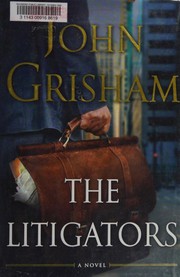
The first line of The Litigators is a joke. The law firm of Finley & Figg refers to itself as a boutique firm, which is funny because Oscar Finley and Wally Figg are about as boutique as a strip mall storefront. I read the Doubleday hardcover, 385 pages (ISBN 9780385535137), published in October 2011. It was Grisham's twenty-fifth novel, and the one where he leaned hardest into comedy. Critics noticed the shift. Some loved the humor, others said the suspense had gone missing. Doubleday released the book on October 25, and it went straight to the top of the bestseller lists, including the New York Times and the Wall Street Journal. It reached number one in both hardcover and ebook fiction, which was notable at a time when those lists were still working out how to count digital sales. One list that combines fiction and nonfiction put it at number two, behind Walter Isaacson's biography of Steve Jobs. The paperback followed in June 2012.
The joke is not the whole book. Underneath the farce is a pretty sharp question: what happens to the lawyers at the bottom of the food chain when a case too big for them lands in their laps? By the end I was laughing and also a little depressed about how easily the answer fits the American legal system. Grisham has said that he drew on television advertisements and the Deepwater Horizon oil spill for the story, and both influences show. This is a book about the business of suing, not the pursuit of justice.
Finley and Figg
The firm operates on the South Side of Chicago. It handles injury claims, quickie divorces, and driving while intoxicated cases, mostly for people who have no one else to call. Oscar Finley is a former street cop who became a street lawyer, and he is the cautious one. Wally Figg is the hustler, always working on a new scheme to get rich without doing much work. They bicker constantly, like an old married couple who have forgotten why they got together.
Rochelle, their African American secretary, is the competent one who actually keeps the place running. She knows where the files are, she knows when the bills are due, and she knows how to calm both men down when their shouting gets out of hand. Grisham gives her a steadiness the partners lack. I had fun with these two from the first chapter. Their arguments have a real rhythm, and Wally in particular is a force of nature. He is the engine of the firm, and Oscar is the brake, worried about disbarment and the next client who will never pay.
The office itself is a character. It is shabby and disorganized, and the clients who come through the door are a catalog of ordinary trouble. Grisham clearly enjoys this world, and the affection comes through even when he is making fun of it. The name of the firm is one of his better jokes, and he keeps returning to it. Finley & Figg is a boutique firm in the sense that a corner garage is a car dealership. It has two lawyers, one secretary, and a cloud of unpaid invoices. Yet the partners genuinely believe they are owed a big case, and that confidence is part of what makes them funny. I have known people like that in every line of work, people who mistake being overlooked for being misunderstood.
David Zinc's Bad Day
David Zinc is thirty-one, a Harvard Law graduate, and an associate at Rogan Rothberg, one of Chicago's most prestigious firms. He works eighteen hour days, his phone never stops, and his personal life has evaporated. One morning he simply snaps. He leaves the office, goes on a serious drinking binge, and ends up more or less by accident in the Finley & Figg office. Drunk and desperate, he talks his way into a job. He has nowhere else to go and no strength left to keep up the pretense of having a career.
This is the most believable part of the novel to me. The idea that someone could walk away from a prestigious job and land in a two bit firm sounds like a comic premise, but the exhaustion that drives it is real. Grisham has described the grind of big law before, and here he plays it for laughs while keeping the desperation intact. David is not a fool. He is a man who has been running too long and finally stopped.
When he sobers up he cannot quite believe what he has done, but he stays. He is fascinated by the clients, who are real people with real problems in a way that the partners at Rogan Rothberg never were. The job is a step down on paper and a step toward something honest in practice. That tension drives his whole arc through the book.
The Krayoxx Case
Wally smells money in a class action over Krayoxx, a cholesterol lowering drug made by Varrick Labs, a pharmaceutical giant with twenty five billion dollars in annual sales. The claim is that Krayoxx causes heart attacks. On paper this is the perfect case for a firm like Finley & Figg. All they have to do is find a handful of users who have suffered, sign them up, and let someone else handle the real litigation. Wally lines up Jerry Alisandros, a lawyer in South Florida who promises to take the case and deliver an out of court settlement. Everybody will get rich.
The comedy kicks in as the firm goes looking for plaintiffs. The people they find are a parade of dubious characters, and Wally's methods are a mixture of intimidation, bribery, and sheer nerve. Grisham is at his best here, puncturing the idea of the noble class action. These clients are not saints, and the lawyers are not crusaders. They are people trying to get paid. One claimant trades favors for legal services, and the whole exercise feels less like a crusade than a street corner hustle with a federal case number.
I should note that this section is very funny until you remember that the drug may not have done anything wrong. That is the pivot the book keeps making. Every time the farce gets going, a fact arrives to make it sour.
The Other Side Gets Serious
Varrick is not defenseless. The company hires Nadine Karros, Rogan Rothberg's ace litigator, a woman with a reputation for never losing a case. David knows her, and the knowledge that he will be facing his old firm makes the whole thing personal. Worse, the evidence starts to turn against Finley & Figg. Krayoxx appears to work exactly as advertised and to have no dangerous side effects. The drug has been unfairly blamed. The whole suit may be built on a false premise.
Varrick pushes for the case to be tried in front of a Chicago federal judge named Harry Seawright, who has ties to Rogan Rothberg. The docket moves fast, Finley & Figg's claim is singled out from the many others, and the case is set for trial. Then Alisandros pulls out as co counsel. The little firm that wanted someone else to do the work now has to try the case itself, against one of the best lawyers in the city, in front of a judge who favors the other side, with a case that may have no merit at all.
This is where the book's tone gets strange. The setup is comic, but the fix is in, and watching the partners realize they have been used is genuinely uncomfortable. Grisham is not really writing a thriller here. He is writing a story about people who mistake a hustle for an opportunity. The drug company is not presented as a mustache twirling villain either, which sets this book apart from his usual courtroom fights.
The Trial Comes Apart
The trial is a scramble. Finley & Figg puts on the sort of witnesses you would expect from its usual clientele, and the firm lurches from one disaster to the next. The witnesses are a mix of people who want their fifteen minutes and people who will say anything for a share of the settlement, and the firm's desperation shows in the questions it asks. Grisham keeps the pace brisk, so even the legal maneuvering reads like farce rather than procedure. There is no brilliant cross examination and no last minute document that changes everything. The case comes apart in slow motion, and the partners end up trying to avoid a malpractice suit and sanctions for filing a frivolous claim. The stakes are money and professional survival rather than life and death.
Critics complained that the book loses the ratcheting suspense of Grisham's earlier work, and I see their point. Readers who came for the tight machinery of The Firm or The Rainmaker will find this loose and much sillier. There is also a fairy tale quality to the ending that several reviewers held against the book. Given the dark humor of the opening, the resolution felt too soft to me as well. Still, I understood what Grisham was doing. He wanted to show that a case can be morally empty and still change the people who touch it.
One of the more interesting reviews called the book a heartier meal than Grisham's usual potato chip fiction, and I think that is fair. The characters have more depth than his stock figures often do. Wally in particular is more than a joke by the time the trial ends.
The Lead Paint Case
While the Krayoxx suit collapses, David follows a different lead. He comes across a brain damage case involving the child of Burmese immigrants, harmed by lead in a toy. The toy was made in China and imported by an American company. David tracks down the importer and works out a settlement. It is not the flashy class action, but it is real work for a real child, and it is the thing that lets him survive the collapse of Finley & Figg.
He ends up opening his own firm, with Rochelle as his legal secretary. That pairing is the quiet payoff of the book. Rochelle has been the most competent person in the office from the first page, and it is satisfying to see her get the role she deserved. David's way out is not to become a different person but to do the work he was actually good at, away from the prestige machine that nearly broke him. The subplot is brief, but it gives the novel a moral center the main case never quite provides.
What I Think Grisham Is Doing Here
The Litigators is more of a comedy than most Grisham novels, and that is both its charm and its weakness. The humor is specific and well observed. The fighting between Oscar and Wally has a real rhythm, and the scenes of them chasing clients are very funny. At the same time, the book never quite decides how seriously to take its own legal plot. The drug company is not vilified in the usual Grisham way, the plaintiffs are far from innocent, and no one is murdered for stumbling too close to the truth. Several reviewers saw this as a strength, praising the way the book lets corporations be ordinary and plaintiffs be flawed. Others found the story flat and unsuspenseful.
The reviews were genuinely split. Publishers Weekly called it a bitingly farcical look at lawyers at the bottom of the food chain, while USA Today said the David and Goliath story was missing the ratcheting up of suspense that Grisham had used successfully before. The Washington Post noted that the book avoids the usual melodramatic devices, with no corporations that are evil by default and no plaintiffs who are glowing with goodness, and no one murdered for getting too close to the truth. Reading those lines after finishing the book, I think they describe exactly why it felt so unfamiliar.
I landed in the middle. I enjoyed the characters more than the case. The Krayoxx plot is a device, a way to put three people under pressure, and once I stopped expecting a courtroom thriller I had a good time. The scenes with David at his lowest were the ones that stayed with me, because they are the least like the rest of the book. For a few pages the joke stops and you see a man who has spent a decade becoming someone he does not want to be. That is the part of the novel I would keep if I could only keep one chapter.
A Last Word
I finished the book thinking less about the lawsuit than about the office. Finley & Figg is a small, shabby place where people bring their ordinary disasters, and its two lawyers are crooked in small, human ways. That is the real subject. The class action is the storm that blows through and shows what the building is made of. Grisham has written darker and tighter books, but few with this much affection for the people at the bottom of the ladder. If you want a legal thriller with a pulse pounding finale, this is not it. If you want to spend a few hundred pages with three lawyers who are trying to survive their own bad decisions, it is a very good companion.
FAQ
Is The Litigators part of a series?
No. It is a standalone novel. David Zinc, Oscar Finley, and Wally Figg do not appear again in Grisham's other books.
Is it a typical Grisham thriller?
It is lighter and funnier than most of his novels. Critics praised the humor, but many said the suspense was thinner than readers expect from him.
What edition is this post based on?
The Doubleday hardcover first edition from October 2011, which runs 385 pages and carries ISBN 9780385535137.
Similar books
Sycamore Row
Jake Brigance returns to defend a contested will that leaves a fortune to a Black housekeeper in racially tense Clanton.
2,017-word summary · 9 min read
The Runaway Jury
A tobacco trial in Biloxi is quietly rigged from inside the jury box and by a woman offering to sell the verdict.
2,920-word summary · 13 min read
A Time to Kill
Lawyer Jake Brigance defends a father who killed his daughter's attackers.
2,064-word summary · 9 min read
The Summons
A law professor is summoned home to find his judge father dead and more than three million dollars hidden in the house.
2,265-word summary · 10 min read
Rogue Lawyer
A street lawyer with a bulletproof van and a gun takes on clients no one else will defend, from a wrongly accused teenager to a mobster on death row.
2,353-word summary · 10 min read
Gray Mountain
A Manhattan associate furloughed after the financial crash takes a year of unpaid legal aid work in Appalachian coal country, and finds the case of her life…
2,026-word summary · 9 min read
The Street Lawyer
Michael Brock survives a hostage morning at his rich D.C. firm, then quits for a street clinic after learning a buried eviction file cost a mother and kids…
2,745-word summary · 12 min read
The Rainmaker
Broke rookie Rudy Baylor sues an insurer over a denied transplant and faces Leo Drummond at trial.
3,040-word summary · 14 min read
The Client
Eleven-year-old Mark Sway learns a mob secret in Memphis and hires lawyer Reggie Love for one dollar.
2,536-word summary · 11 min read
Th1rt3en
A former con artist turned defense lawyer takes a celebrity murder trial while a serial killer sits on the jury, steering the verdict.
2,254-word summary · 10 min read
Salem Falls
A former teacher wrongly convicted takes a job washing dishes in a small New Hampshire town, where a new accusation stirs a modern-day witch hunt.
2,415-word summary · 11 min read

4th of July
Lindsay Boxer shoots two armed teenagers in self-defense, faces a wrongful-death trial, and spends her leave chasing a string of throat-slashing murders in…
2,192-word summary · 10 min read
Finlay Donovan Knocks 'Em Dead
Someone has put a contract on Finlay Donovan's ex-husband, and the novelist and her nanny have to find the hitman before the school pickup.
1,990-word summary · 9 min read
Presumed Innocent
Rusty Sabich must solve coworker Carolyn Polhemus's murder while hiding his affair with her, then stands accused himself in Turow's 1987 Kindle County debut.
2,726-word summary · 12 min read
My Sister's Grave
Detective Tracy Crosswhite reopens her sister disappearance and finds town secrets still guarded.
2,084-word summary · 9 min read
The Innocent Man: Murder and Injustice in a Small Town
Grisham's first nonfiction book tells how Ron Williamson lost eleven years on death row for a murder he did not commit in Ada, Oklahoma.
2,245-word summary · 10 min read
The King of Torts
A public defender is bribed into hiding evidence about a violent experimental drug, then rides a wave of mass-tort settlements to fame and a spectacular crash.
2,283-word summary · 10 min read
The Brethren
Three disgraced judges run a blackmail scam from a federal prison and accidentally trap a presidential candidate, pulling the CIA into their scheme.
1,967-word summary · 9 min read
The Last Juror
A young editor buys a dying Mississippi paper and covers the murder trial that defines his town for a decade. Grisham's small-town novel about race, juries,…
2,528-word summary · 11 min read
The Racketeer
A jailed lawyer trades a judge murder secret for freedom and revenge.
2,434-word summary · 11 min read
The Judge's List
Lacy Stoltz hunts a sitting judge who murders off his list.
2,513-word summary · 11 min read
The Guardians
A innocence lawyer reopens a prison murder where the wrong man waits on death row.
2,564-word summary · 11 min read
The Testament
John Grisham's The Testament sends washed-up lawyer Nate O'Riley to the Brazil Pantanal to find missionary heir Rachel Lane and settle her…
2,731-word summary · 12 min read
The Partner
A Biloxi lawyer fakes his death, steals $90 million, and hides in Brazil until hired muscle drags him home to trial.
2,221-word summary · 10 min read
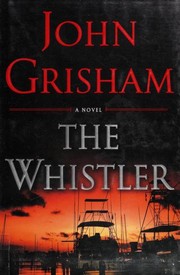
The Whistler
A Florida judicial investigator takes a bribery tip that leads to a crooked judge, a tribal casino, and murder.
2,935-word summary · 13 min read
The Chamber
Young Chicago lawyer Adam Hall defends his grandfather Sam Cayhall on Mississippi death row as a gas chamber date nears.
2,828-word summary · 13 min read
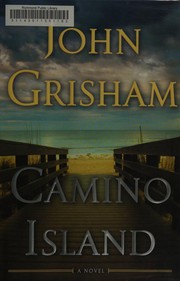
Camino Island
A Princeton manuscript heist pulls a blocked young writer into spying on a charming Florida bookstore owner who may hold the loot.
2,984-word summary · 13 min read
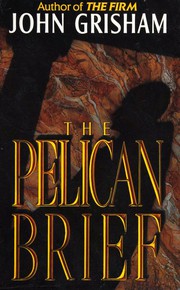
The Pelican Brief
Law student Darby Shaw writes a brief on murdered justices and becomes a target, fleeing with a reporter.
2,994-word summary · 13 min read
The Firm
Young lawyer Mitch joins a Memphis firm with great pay, then learns clients die and the FBI watches.
2,079-word summary · 9 min read
The 5th Horseman
Two linked cases pull Lindsay Boxer and the Women's Murder Club into a hospital full of strange deaths and a luxury-car murder spree.
2,609-word summary · 12 min read