
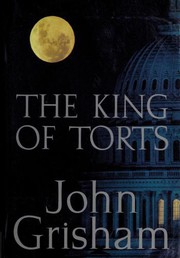
The King of Torts
2,283-word summary 10 min read 376 pages in the book
- First published
- 2003
- Publisher
- Doubleday
- Pages
- 376
- ISBN
- 9780385508049
Reading options
What's inside (8 sections)
A public defender takes a strange case
I picked this one up expecting the familiar Grisham machine: a young lawyer, a crooked corporation, a courtroom reckoning. What I got instead is a book that spends more time on the business of litigation than on the drama of a trial, and that is a large part of its appeal and its limitation. Published in 2003 by Doubleday, The King of Torts is Grisham's take on the mass-tort gold rush, the period when a television advertisement could turn a lawyer into a celebrity and a defective product into a fortune.
There is a reason this book feels different from The Firm or A Time to Kill. Those novels build toward a single courtroom showdown in which a clever lawyer exposes the truth. Here the truth is available almost immediately, and the question is what a lawyer will do with it. Grisham shifts the source of suspense from the trial to the deal. Clay's problem is not how to prove that Tarvan made Watson violent. It is whether he can resist selling that proof to the highest bidder. Once you see the shape of it, the book reads less like a courtroom drama and more like a story about a man who discovers that his talents are for sale.
Clay Carter is a public defender in Washington, D.C., a job he treats with a weary competence rather than any romantic zeal. The case that starts him down the road to ruin is that of Tequila Watson, a man accused of a random street killing. Watson insists, in the way that clients often do, that he was not in control of his body when he pulled the trigger. Most defense lawyers would file that away as a bad excuse. Clay does something more stubborn. He issues a subpoena that forces drug rehabilitation centers to hand over Watson's medical records, along with those of another man charged with a similar murder.
That subpoena is the first stone in an avalanche. The records suggest that Watson and other recovering addicts had been given an experimental drug called Tarvan without their informed consent, and that the drug produced violent behavior. Suddenly the case is not about one killing but about a cover-up. Clay has stumbled onto exculpatory evidence, the kind that could free his client and embarrass a pharmaceutical company at the same time.
Before he can do anything with it, he gets a visit from a man named Max Pace. Max is smooth, vague about his employer, and very clear about what he wants. He claims to represent the company behind Tarvan and offers Clay a great deal of money to walk away from the public defender's office, keep the records quiet, and help arrange secret payments to the victims. It is a dirty bargain, and Clay knows it. He takes it anyway, and Grisham gives him a reason that is painfully ordinary: he wants to win back Rebecca Van Horn, a junior congressional aide he has been dating, whose father, the developer Bennett Van Horn, has been pressuring her to end the relationship. Money, Clay figures, will change her mind.
The firm and the first fortune
Once Clay leaves the public defender's office, the book changes gear. He puts together a small practice aimed at mass torts and recruits people he trusts: a lawyer named Paulette, a paralegal named Rodney, and a computer expert named Jonah. These three are the most likable people in the book, and Grisham clearly knows it. They are the ones who do the work, who keep the files straight, and who later show a loyalty that Clay only partly deserves.
Max Pace returns with a fresh tip. The drug is now Dyloft, made by Ackerman Laboratories, and it is carcinogenic. Max has inside information, and he tells Clay exactly when to move. Clay launches an intensive television campaign, signs up clients by the thousands, and pushes a settlement through for a hundred million dollars. The press crowns him the King of Torts. The title is half compliment, half warning.
The money arrives faster than anyone can spend it, and the firm enjoys a windfall. The clients do considerably less well. After fees and costs, each of the thousands of people who were harmed gets a little over fifty thousand dollars. Grisham does not shy away from that arithmetic. It is the clearest statement the book makes about mass torts: the machinery that delivers justice also skims a living for the people who operate it, and the gap between a hundred million and fifty thousand is where the lawyers live.
I found this section the most interesting part of the novel, because it treats a lawsuit as a business with a cash flow. Grisham writes about advertising budgets, office rent, and the logistics of signing up thousands of claimants with an enthusiasm he rarely brings to the actual courtroom. The trial, when it comes, is compressed. The racket of building a practice is given pages and pages.
What is striking is how little Clay seems to care about the people he is suing for. They arrive as names on a list, sorted by the computer program Jonah builds, and the television campaign is written to reach them at the cheapest possible cost per signature. Grisham never says in so many words that Clay has stopped seeing his clients as human beings. He shows it in the way Clay refers to the case file, as inventory to be managed rather than grievances to be heard. That choice of emphasis tells you more about the character than any number of confessions would.
The second drug and the big gamble
Flushed with success, Clay makes the mistake that defines the second half. Max offers him another defective drug, Maxatil, and Clay assumes the pattern will repeat itself. He spends lavishly: a coast-to-coast television campaign, dozens of new staff, extra office space, and thousands of Maxatil clients. All of it is financed on the assumption that a settlement is coming.
Two problems surface. First, linking Maxatil to its alleged side effects turns out to be far harder than the Dyloft case was. The science is murky, and the company that makes it, Goffman, is known for fighting tort suits rather than settling them. The whole claim comes to rest on a single test case being run by an aging maverick lawyer in Arizona, a man whose methods are as unpredictable as his hours. Clay has bet everything on a verdict he cannot control.
Second, Max Pace is not who he says he is. He is a con artist, wanted by the authorities, and he disappears without a trace. The information that made Clay rich came from a man who was playing him, and there is nobody left to ask when the deals start to sour.
Grisham uses Max brilliantly as a device. He is the embodiment of the book's central suspicion, that the line between a lawyer who spots an opportunity and a grifter who manufactures one is thinner than anyone wants to admit. Clay is not a criminal in the same sense that Max is, but he is a man who has learned to profit from other people's injuries, and he keeps making the same wager: that he can get out before the music stops.
Everything arrives at once
The reckoning is stacked up with a convenience that is pure thriller craft. The FBI questions Clay about insider trading. He sold Ackerman shares short while knowing that his own lawsuit would drive the price down, and a criminal lawyer tells him plainly that this is culpable and could send him to prison. Then the Dyloft aftermath turns uglier. The drug's effects are found to be deadlier than first thought, and terminal patients who were kept from suing Ackerman for millions turn around and sue Clay for malpractice. The fee that looked like a triumph now looks like a debt.
Desperate for cash, Clay takes on a mass tort against Hanna, a building supplies company that made batches of defective cement. Here Grisham stages a moral test that is more interesting than the legal one. Hanna's directors are willing to offer fair compensation to angry homeowners, but only if Clay trims his own share. He refuses. The company goes bankrupt, thousands of people lose their jobs, and the town that depended on the plant is wrecked. When word gets out that a greedy lawyer caused the collapse, Clay is ambushed and beaten by some of the townsfolk.
This is the point where the book stops being a satire of the legal profession and becomes a cautionary tale about appetite. Clay's refusal to cut his fee is not a moment of principled stubbornness. It is the same reflex that made him take Max's first offer and bet on Maxatil. He has confused stubbornness with strength, and the people of the company town pay for the difference. Grisham is not subtle about it, and he does not need to be. The scene lands because the earlier sections made Clay's greed feel like a series of small, reasonable steps rather than one villainous decision.
The fall and what survives
Rebecca turns up while Clay is recovering from the beating, and her return gives him the one thing the book has been withholding: someone who cares about him without calculating his worth. The final blow to his career arrives calmly. The Arizona jury rejects the Maxatil suit. The millions he poured into the case are gone. Clay declares bankruptcy, closes the firm, gives up his assets, and surrenders his law license. The FBI drops its case because an old friend refuses to give evidence against him, a piece of loyalty that feels slightly too tidy after everything that came before.
In the last movement, Clay tells an investigative journalist about the Tarvan affair, and a criminal lawyer sets about reopening the cases of the test subjects, Watson among them. He and Rebecca fly to London, where they can live without the opulence he says he no longer misses. Grisham hints that Clay will not be destitute forever. Paulette and Rodney, the two people he treated generously when the money was flowing, both promise to give some of it back. Their reasons are plain: they owe their success to him, and they remember it.
The ending is deliberately smaller than the rise. A man who was photographed as the King of Torts ends up with a ruined license, a handful of loyal friends, and a flight to London. That shrinkage is the book's quiet argument. The fortune was never the point, and the title was never anything but a headline.
What works and what doesn't
The strongest thing here is the portrait of mass torts as an industry. Grisham understands the appeal of the contingency fee and the way a lawyer can come to see a class of injured people as a list of billable names. The arithmetic of the Dyloft settlement, the hundred million that becomes fifty thousand a head, is stated without fuss and does more work than any courtroom speech. The book is also good on the way a lawyer rationalizes a bad decision. Clay never thinks of himself as a crook. He thinks of himself as a man who is about to win, and that self-image is what keeps him taking Max's calls.
The weaknesses are the usual Grisham ones, and they are real. The female characters exist mainly to motivate or comfort the hero. Rebecca's father is a cartoon villain whose real estate deals never amount to much more than a reason to make Clay angry. Max Pace is fun while he is on the page, but his disappearance and his identity as a con artist are telegraphed early enough that the reveal has little force. The Arizona test case, which the whole Maxatil gamble hinges on, is dispatched with a sentence about a jury verdict, when it could have carried a chapter. The FBI thread, which should be a source of sustained dread, fizzles out because of a friend's loyalty in the final pages.
The prose does not help as much as it could. Grisham writes in short, blunt sentences that keep the story moving, but they flatten the people who are not Clay. Paulette and Rodney are defined by their competence, Jonah by his skill with a computer, and Rebecca by her relationship to two men. Nobody gets an interior life the way Clay does. This is a common tradeoff in a fast thriller, and it usually works. Here it leaves the book emotionally thin right where it is asking us to care about the wreckage Clay leaves behind.
The romance, too, is engineered. Rebecca leaves because of her father, then returns at exactly the moment Clay needs her, and the two end up in London with a warmth the earlier pages did not earn. If you came to Grisham for the courtroom, the ending may feel like a shrug. If you came for a story about how a lawyer loses his way by treating other people's suffering as inventory, it is a reasonably honest landing.
This is not the best Grisham novel, and it is not the worst. It is the one that is most interested in money. Read it for the machinery of the mass-tort business and for the steady, unglamorous way Clay talks himself into each bad decision. Skip it if you want a tight legal puzzle or a hero who learns a clean lesson. The lesson here is messier than that, and the book is better for admitting it.
FAQ
Is The King of Torts part of a series?
No. It is a standalone legal thriller, first published by Doubleday in 2003.
Does Clay Carter fake his own death in this book?
No. Clay loses his license and leaves for London with Rebecca, but he never fakes his death. That particular plot device belongs to a different Grisham novel, The Partner.
What criticism does the book make about mass tort lawsuits?
It shows how a hundred million dollar settlement can leave each injured client with barely fifty thousand while the lawyers who assembled the case grow rich.
Similar books
Rogue Lawyer
A street lawyer with a bulletproof van and a gun takes on clients no one else will defend, from a wrongly accused teenager to a mobster on death row.
2,353-word summary · 10 min read
The Rooster Bar
Three law students buried in debt discover their for-profit law school is a scam, and decide the only way out is to con their way into practicing law before…
2,837-word summary · 13 min read
The Rainmaker
Broke rookie Rudy Baylor sues an insurer over a denied transplant and faces Leo Drummond at trial.
3,040-word summary · 14 min read
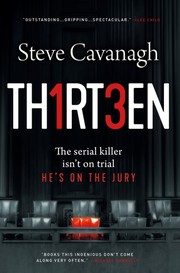
Th1rt3en
A former con artist turned defense lawyer takes a celebrity murder trial while a serial killer sits on the jury, steering the verdict.
2,254-word summary · 10 min read

4th of July
Lindsay Boxer shoots two armed teenagers in self-defense, faces a wrongful-death trial, and spends her leave chasing a string of throat-slashing murders in…
2,192-word summary · 10 min read
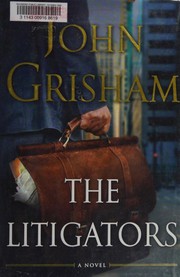
The Litigators
Two Chicago ambulance chasers and a burned-out Harvard Law graduate take on a drug giant, only to find the case sliding toward disaster.
2,244-word summary · 10 min read
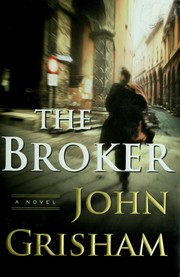
The Broker
A disgraced Washington lobbyist is pardoned and hidden in Bologna, where the CIA uses him as bait to find out who wants a stolen satellite.
2,211-word summary · 10 min read
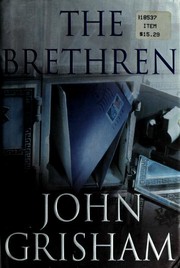
The Brethren
Three disgraced judges run a blackmail scam from a federal prison and accidentally trap a presidential candidate, pulling the CIA into their scheme.
1,967-word summary · 9 min read
The Last Juror
A young editor buys a dying Mississippi paper and covers the murder trial that defines his town for a decade. Grisham's small-town novel about race, juries,…
2,528-word summary · 11 min read
Gray Mountain
A Manhattan associate furloughed after the financial crash takes a year of unpaid legal aid work in Appalachian coal country, and finds the case of her life…
2,026-word summary · 9 min read
The Racketeer
A jailed lawyer trades a judge murder secret for freedom and revenge.
2,434-word summary · 11 min read
The Judge's List
Lacy Stoltz hunts a sitting judge who murders off his list.
2,513-word summary · 11 min read
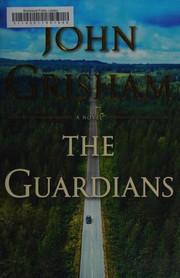
The Guardians
A innocence lawyer reopens a prison murder where the wrong man waits on death row.
2,564-word summary · 11 min read
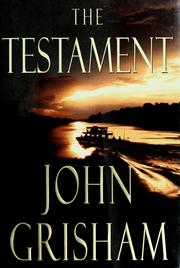
The Testament
John Grisham's The Testament sends washed-up lawyer Nate O'Riley to the Brazil Pantanal to find missionary heir Rachel Lane and settle her…
2,731-word summary · 12 min read
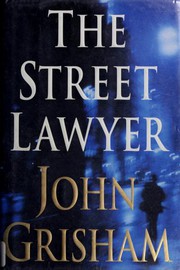
The Street Lawyer
Michael Brock survives a hostage morning at his rich D.C. firm, then quits for a street clinic after learning a buried eviction file cost a mother and kids…
2,745-word summary · 12 min read

The Partner
A Biloxi lawyer fakes his death, steals $90 million, and hides in Brazil until hired muscle drags him home to trial.
2,221-word summary · 10 min read
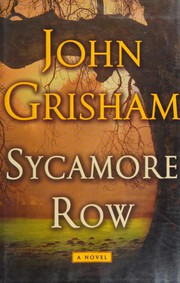
Sycamore Row
Jake Brigance returns to defend a contested will that leaves a fortune to a Black housekeeper in racially tense Clanton.
2,017-word summary · 9 min read
The Whistler
A Florida judicial investigator takes a bribery tip that leads to a crooked judge, a tribal casino, and murder.
2,935-word summary · 13 min read
The Chamber
Young Chicago lawyer Adam Hall defends his grandfather Sam Cayhall on Mississippi death row as a gas chamber date nears.
2,828-word summary · 13 min read
The Runaway Jury
A tobacco trial in Biloxi is quietly rigged from inside the jury box and by a woman offering to sell the verdict.
2,920-word summary · 13 min read
The Pelican Brief
Law student Darby Shaw writes a brief on murdered justices and becomes a target, fleeing with a reporter.
2,994-word summary · 13 min read
The Firm
Young lawyer Mitch joins a Memphis firm with great pay, then learns clients die and the FBI watches.
2,079-word summary · 9 min read
A Time to Kill
Lawyer Jake Brigance defends a father who killed his daughter's attackers.
2,064-word summary · 9 min read
The Unquiet Grave
In Dervla McTiernan's fourth Cormac Reilly novel, a body found in a Galway bog turns out to be a missing school principal, and the case opens into something…
2,253-word summary · 10 min read
The Reversal
Mickey Haller prosecutes a child killer's retrial with ex-wife Maggie and half-brother Harry Bosch on his team.
2,056-word summary · 9 min read
The Fifth Witness
A foreclosure case turns into a murder trial when a client's banker turns up dead, and a slick Los Angeles lawyer wins a case he wishes he had lost.
2,154-word summary · 10 min read
The Children Act
A High Court family judge weighs whether a dying teenage boy can refuse a blood transfusion while her own marriage quietly comes apart.
2,399-word summary · 11 min read
The Brass Verdict
Mickey Haller takes over a murdered lawyer's caseload and a Hollywood double-murder trial, with Harry Bosch circling the edges.
2,672-word summary · 12 min read
Salem Falls
A former teacher wrongly convicted takes a job washing dishes in a small New Hampshire town, where a new accusation stirs a modern-day witch hunt.
2,415-word summary · 11 min read
King of Ashes
A Virginia crematorium, a debt owed to the Black Baron Boys and a family secret pull Roman Carruthers back into a war where everything burns.
2,229-word summary · 10 min read