
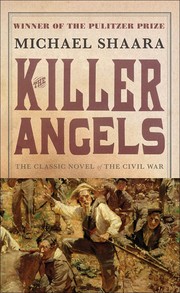
The Killer Angels
2,242-word summary 10 min read 374 pages in the book
- First published
- 1974
- Publisher
- McKay
- Pages
- 374
- ISBN
- 9780679504665
- Series
- The Civil War Trilogy (#2)
Reading options
What's inside (9 sections)
I read this one because it kept turning up on lists of books that changed how people see the Civil War, and because I had seen the 1993 film Gettysburg long before I knew there was a novel behind it. Michael Shaara published the book in 1974 with McKay, and it won the Pulitzer Prize for Fiction in 1975. The first edition runs to xix plus 374 pages. In the Shaara family sequence it sits second in The Civil War Trilogy, after the prequel Gods and Generals and before The Last Full Measure, both written later by his son Jeffrey. What follows includes the whole battle, so read on only if you want the ending.
A Spy Comes in From the Dark
The novel opens not with a general but with a man named Henry Thomas Harrison, a scout working for the Confederacy. He has slipped through the countryside with news that the Union army is closer than General Robert E. Lee expects. Jeb Stuart's cavalry, which should be feeding Lee information, is out of touch and off on its own ride. Lee is reluctant to trust a spy he cannot verify, but he has no better source, and so the Army of Northern Virginia starts moving toward a town called Gettysburg.
That opening tells you a great deal about Shaara's method. He puts a decision in front of a reader before he puts a battle. The generals in this book are mostly shown at the moment when the map is wrong and the information is late. Lee wants a decisive victory in Pennsylvania, something that will break the Union army's will and perhaps end the war. Longstreet, his closest subordinate, does not share the confidence. British observer Arthur Fremantle, of the Coldstream Guards, moves through the Confederate camp as a polite, curious outsider, which gives Shaara someone to explain the armies to without a lecture.
The prose here is plain and physical. Men are tired, horses are starving, the heat is brutal, and the staff officers argue about routes. The book's reputation for realism rests less on the sound of the guns than on these ordinary details, and on Shaara's willingness to let his commanders be uncertain.
Shaara's own life explains some of that attraction to men under pressure. He was born in 1928, served as a sergeant in the 82nd Airborne Division, worked as a police officer and an amateur boxer, and sold science fiction stories in the 1950s. A heart attack at thirty-six ended the boxing and nearly ended the rest, but he recovered, taught literature at Florida State University, and kept writing. He knew something about the way a body and a mind can be pushed, and he brought that knowledge to a book about soldiers who are exhausted before the first shot is fired.
July First: Buford Holds the Ridge
On the first day the Confederate infantry runs into Union cavalry under General John Buford outside Gettysburg. Buford recognizes that the high ground south of town is the ground to keep. He dismounts his men, spreads them thin, and fights a delaying action at dawn against a force much larger than his own. It is one of the great stubborn stands in the book, made more dramatic because Buford knows he is buying time rather than winning anything.
General John Reynolds arrives to support him and is killed in the fighting. The Union line bends and falls back through the town, but by nightfall the surviving troops have dug in on the high ground, including Cemetery Hill and the long ridge the Confederates will spend the next two days trying to break. The Southern soldiers celebrate what looks like another routine victory for Lee. Shaara lets the reader feel the gap between the two camps: one side knows it has survived, the other believes it has won.
The chapter work is brisk and the point of view keeps shifting. Shaara gives us the Confederates and then the Federals, sometimes in the space of a few pages, and the effect is a kind of stereo vision. You understand why Lee believes the moment is right and why the men opposite him believe they must simply hold on.
Buford's stand is also a study in the limits of command. He has fewer men than the situation calls for, and the Confederate advance comes faster than he expected. He sends messengers, shifts regiments, and watches the horizon, and the prose stays close to what a man in his position could actually know. General Henry Heth's infantry presses the attack at dawn, and the fighting spreads toward the town before either side has a clear picture of the other's strength. Shaara keeps the scale intimate even when the numbers are large.
July Second: The End of the Line
The second day belongs to two men arguing and one colonel holding a hill. James Longstreet has seen the Union position, entrenched on steep slopes and behind stone walls, and he wants no part of a frontal assault. He urges Lee to march around the Union left and force Meade to attack on ground of the Confederates' choosing. Lee refuses. He orders a flanking attack on the entrenched line instead, and the assault falls on the Union left, near a pair of rocky heights known as Little Round Top.
Colonel Joshua Lawrence Chamberlain of the 20th Maine has been told that he holds the very end of the Union line and that he must hold it at any cost. If his regiment breaks, the whole left flank collapses. Shaara spends a long time in Chamberlain's head, and it is easy to see why the character became the most famous thing in the book. Chamberlain is a former professor who thinks in words and analogies, a man who remembers reciting Hamlet for his father and worries about what he will tell that father now. When the Confederate attacks come, his line is stretched so thin that he refuses to extend it. After taking heavy losses and running low on ammunition, he orders a bayonet charge down the slope, which drives the attackers back and saves the flank.
His brother Thomas is nearby in the 20th Maine, and the family connection gives the chapter its human weight. Chamberlain is not portrayed as a natural soldier. He is frightened, sometimes awkward, and intensely aware that the men around him are looking at him. That is the novel's best gift to him: the courage is interesting because the fear is visible.
Elsewhere on the second day, James Longstreet's attack grinds forward, and the fighting around the Peach Orchard and the Wheatfield costs both sides heavily. Shaara does not give us a clean map of every brigade. He gives us Hood, Kemper, Armistead, and the men who have to carry the orders, and the confusion is part of the design.
July Third: The Field in the Middle
On the third morning Lee concludes that the Union has pulled strength from its center to reinforce the flanks. He tells Longstreet that the enemy is weak in the middle and orders a direct assault. Longstreet, who has already argued against the previous day's attack, argues harder now. He knows what the men will have to do: march in formation across an open field under artillery fire toward a line of breastworks. He watches them go with a despair that Shaara treats as the emotional center of the Confederate side.
General George Pickett leads the charge, with divisions under Isaac Trimble and James Kemper moving forward as well. The infantry crosses the field and reaches the stone wall, and a handful of men get over it, but the Union line holds. The slaughter is described without much ornament, which is why it still lands. Lee rides among his men afterward and tells them to reform, his voice steady while the scale of the loss becomes clear. The Army of Northern Virginia retreats that evening. Chamberlain, on the other side, finally understands that the Union has won.
This is the part readers usually remember, and it is presented less as a spectacle than as a sequence of decisions that made the spectacle inevitable. The novel's argument is not that Pickett's Charge was foolish in hindsight. It is that intelligent men, trusting bad assumptions and their own earlier successes, can walk into it step by step.
The Men Shaara Keeps in the Room
The book's structure is built on a small group of recurring viewpoints. Lee is presented as courteous, formal, and almost painfully composed, a man whose soldiers love him and whose judgment Shaara treats with respect. Longstreet is the blunt, practical friend who says the unpopular thing and then obeys the order. Chamberlain is the thoughtful amateur who rises to the moment. Buford is the professional who sees the ground first. John Bell Hood, Jubal Early, A. P. Hill, Richard Ewell, and J. E. B. Stuart appear in shorter turns, often to show how much of a battle is made of missed messages and wounded pride.
One fictional character appears among all the historical names: Buster Kilrain, a former sergeant in the 20th Maine who speaks in a rough, direct idiom and serves as a kind of running comment on the officers around him. He gives Shaara a way to ask what all of this looks like from the ranks. Arthur Fremantle, the real British observer, performs a similar function on the other side, noticing the strange mix of elegance and brutality in the Confederate camp.
Those voices have had a long afterlife. Steve Earle recorded a song called Dixieland, sung from Kilrain's point of view, for his 1999 album The Mountain. Karen Tarjan's stage adaptation opened in Chicago in 2004 and was revived in 2013, and another version reached a theater in California in 2017. The book has also been assigned at the Citadel, the Army War College, and West Point, and it sits on the Army's reading list for officer professional development alongside Anton Myrer's Once an Eagle. A novel that can survive that many different audiences is doing something more durable than retelling a battle.
The title comes from a memory of Chamberlain's. As a boy he recited a line from Hamlet about man in action being like an angel, and his father answered that if he was an angel he was surely a murdering angel. Chamberlain later used the phrase for a schoolboy speech. Shaara places that small family scene inside a novel about mass death, and the collision is the point. The phrase is both affectionate and an accusation.
What the Book Changed
It is hard to overstate how much this novel shaped popular memory of Gettysburg. Shaara worked from Longstreet's own memoirs, and at the time Longstreet's reputation had been damaged for decades by writers of the Lost Cause, Jubal Early among them, who blamed him for the defeat. The book put Longstreet back at the center of the story as a serious, tragic figure. Visitors to the battlefield began treating the 20th Maine monument on Little Round Top as an essential stop, and Ken Burns has said the novel helped drive his interest in the war. The 1993 film took much of its dialogue directly from the pages. Even Joss Whedon credited the book as the starting point for Firefly, which is a strange and genuine tribute to how freely Shaara's characters move between history and myth.
The book has also been assigned for decades at West Point and other military schools, which is a form of praise and a warning in equal measure. Military readers admire the way it handles command decisions under uncertainty. General H. Norman Schwarzkopf called it the best realistic historical novel about war he had read, and that kind of endorsement explains both its stature and the objections to it.
The Cost of the Admiration
The most common criticism is that Shaara is too gentle with Lee. The general here is noble, restrained, and nearly without fault, and when he is wrong the fault belongs to the fog of war or to his loyalty to men who failed him. Modern readers may want more of the political context, especially what the Confederacy was fighting to preserve, and Shaara largely leaves that argument outside the tent. The book is about soldiers and their commanders, not about enslaved people, and the absence is felt once you notice it.
There is also a grinding quality to the middle chapters. Shaara is so committed to showing every command decision that some scenes repeat the same argument: Longstreet warns, Lee decides, the orders go out. Readers who want pure narrative momentum may find the second day slow. And the stylized speech, especially Kilrain's, can tip into self-consciousness.
None of that explains why I kept reading. Shaara understood that a battle is made of individual choices made by people who cannot see the whole field, and he had the patience to write those choices one at a time. When Chamberlain orders the bayonet charge or Longstreet watches the men cross the field, the scene works because the book has earned the right to it. The novel ends with a retreat and a surviving general who has lost more than he can comfortably name, and the last pages are quiet rather than grand. That restraint is the reason this book still has readers more than fifty years on.
FAQ
Did The Killer Angels win the Pulitzer Prize?
Yes. It won the 1975 Pulitzer Prize for Fiction, a year after its 1974 publication by McKay.
Where does it fit in The Civil War Trilogy?
It is book two. The prequel Gods and Generals came later, written by Michael Shaara's son Jeffrey, and Jeffrey also wrote the closing novel, The Last Full Measure.
Is the story historically accurate?
Shaara based it on careful research, including Longstreet's memoirs, and used memoirs and maps to keep the military detail credible. One soldier, Buster Kilrain, is fictional.
Similar books
More from The Civil War Trilogy first, then related titles.
The Teacher of Nomad Land
In 1941 Iran, an orphaned boy straps a chalkboard to his back and sets off to teach nomads, hoping to keep his little sister with him.
2,534-word summary · 11 min read

The Last Bookshop in London
A woman who has never cared for reading takes a job in a dusty London bookshop as the Blitz begins, and finds her place in it.
2,264-word summary · 10 min read
The Guns of August
Tuchman narrates the first month of World War I, from a 1910 royal funeral to the Marne, and the decisions that trapped Europe.
2,405-word summary · 11 min read

She Who Became the Sun
A peasant girl takes her dead brother's name and becomes Zhu Chongba, climbing from a Buddhist monastery toward a fractured China's throne.
2,170-word summary · 10 min read
I Must Betray You
In 1989 Romania, a seventeen-year-old is forced to inform on an American diplomat's family and records the truth in a hidden notebook.
2,258-word summary · 10 min read
The Night Watchman
A Chippewa night watchman in 1953 North Dakota recognizes a bill as an attempt to end tribal recognition, while a young woman searches for her missing sister…
2,036-word summary · 9 min read
Red Storm Rising
A fired Siberian oil field pushes the Politburo toward the Persian Gulf, and a conventional Third World War opens with stealth strikes and a fight for Iceland.
2,661-word summary · 12 min read

Endling
A Ukrainian scientist breeds endangered snails from her van and funds the work by posing as a mail-order bride, until a kidnapping plot meets the outbreak of…
3,041-word summary · 14 min read
Carnegie's Maid
An Irish immigrant answers to a dead woman's name and lands a job as lady's maid in Andrew Carnegie's Pittsburgh household, where her mind for business draws…
2,271-word summary · 10 min read
Birdsong
A love affair in Amiens before the First World War and a granddaughter's search through encoded journals decades later, joined by the tunnels of the Somme.
2,041-word summary · 9 min read
Truman
McCullough's 1992 Pulitzer-winning biography follows Harry Truman from Missouri farm boy and senator to the president who ended a world war.
2,262-word summary · 10 min read
The Ghost Brigades
A traitor inside the CDF sparks an alien alliance, and a soldier grown from his DNA may be the only one who can stop him.
2,279-word summary · 10 min read
The Bronze Horseman
On the day Germany invades the Soviet Union, Tatiana Metanova meets a mysterious Red Army officer, and their love is tested by the Siege of Leningrad.
2,461-word summary · 11 min read

Corelli's Mandolin
A British doctor's daughter on a Greek island falls for the Italian captain billeted with her, until the German arrival turns a gentle occupation into a fight…
2,247-word summary · 10 min read

The Orphan's Tale
A Dutch teenager rescues a Jewish baby from a death train and joins a German circus, where a Jewish aerialist teaches her to fly.
2,943-word summary · 13 min read

Sophie's Choice
A young Southern writer in 1947 Brooklyn befriends a brilliant, unstable couple and slowly learns the story of the Polish Catholic woman at the center of their…
2,798-word summary · 12 min read
A Long Walk to Water
Two eleven-year-olds in southern Sudan, twenty-three years apart: a Dinka boy fleeing war and a Nuer girl walking hours for water, until their stories meet at…
2,217-word summary · 10 min read

Lone Survivor: The Eyewitness Account of Operation Redwing and the Lost Heroes of SEAL Team 10
Marcus Luttrell's account of the 2005 SEAL mission in Afghanistan that killed three of his team and left him alone.
2,144-word summary · 10 min read

Bury My Heart at Wounded Knee: An Indian History of the American West
Dee Brown's 1970 retelling of the American West from the point of view of the people it destroyed.
2,233-word summary · 10 min read
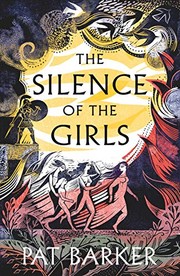
The Silence of the Girls
Briseis, queen of Lyrnessus, is captured by Achilles and narrates the Trojan War from inside the Greek camp, where women are prizes and survival is its own…
2,098-word summary · 9 min read
The Last of the Mohicans
During the French and Indian War, Hawkeye and two Mohican warriors try to save two British sisters from a Huron chief whose revenge will end the Mohican line.
2,017-word summary · 9 min read

Doctor Zhivago
A doctor and poet lives through revolution, war, and love in Pasternak's novel of private life under the pressure of Russian history.
2,213-word summary · 10 min read
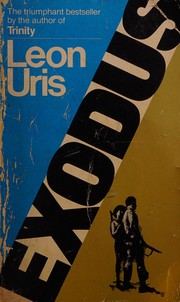
Exodus
Leon Uris's sweeping 1958 novel follows Jewish refugees, Haganah fighters, and Holocaust survivors from Cyprus to the founding of Israel and the 1948 war.
2,529-word summary · 11 min read
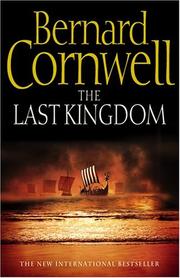
The Last Kingdom
Kidnapped by Danish raiders as a boy and raised in their halls, Uhtred of Bebbanburg must choose what he is when the fight for England begins.
1,997-word summary · 9 min read

A Long Petal of the Sea
A pregnant widow and her brother-in-law marry for passage on a ship of Spanish exiles bound for Chile, then spend decades building and losing homes together.
2,016-word summary · 9 min read
The Red Badge of Courage
Henry Fleming runs at Chancellorsville, then returns to stand.
2,486-word summary · 11 min read
Edge of Eternity
Five families cross civil rights, Cold War and Berlin Wall to the eighties.
2,489-word summary · 11 min read
Cryptonomicon
Codebreakers in World War II and hackers in the 1990s chase gold, ciphers, and a secret data haven.
2,280-word summary · 10 min read

The Island of Missing Trees
A talking fig links 1970s Cyprus lovers Kostas and Defne with their grieving London daughter Ada years later.
3,172-word summary · 14 min read
Code Name Verity
In 1943 France, captured agent Verity writes a confession for von Linden to buy time. Her pilot friend Maddie survives the crash and searches for her by…
2,690-word summary · 12 min read