
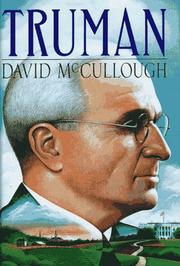
Truman
2,262-word summary 10 min read 1120 pages in the book
- First published
- 1992
- Publisher
- Simon & Schuster
- Pages
- 1120
- ISBN
- 9780671456542
Reading options
What's inside (9 sections)
I put off reading Truman for years because a biography that long sounded like homework. I was wrong about the homework part. David McCullough's 1992 biography of Harry S. Truman, published by Simon & Schuster in June of that year and running roughly 1,120 pages in the first edition tied to ISBN 9780671456542, reads like a long argument that the man deserves to be seen whole. It won the 1993 Pulitzer Prize for Biography, and after finishing it I understood why. This is not a book that treats Truman as a quip machine or a historical footnote between Roosevelt and Eisenhower. It is a full-life account, chronological on purpose, that begins in the Missouri countryside and ends with a retired president feeding the birds in Independence.
McCullough said he wanted a mural instead of a Vermeer. After Mornings on Horseback, a tight study of a slice of Theodore Roosevelt's life, he wanted to try the whole arc of a person. He first considered a biography of Picasso and abandoned it for Truman. The choice mattered to him, and the book carries the weight of that decision. He was writing about a man he considered a nineteenth-century figure who happened to hold a twentieth-century office, so he refused the fashionable trick of starting in the middle. He proceeds from birth onward, the way a Dickens novel would.
Independence, the farm, and the Great War
Harry Truman was born in Lamar, Missouri, in 1884 and raised mostly in Independence, a town whose rhythms shape the whole book. McCullough is patient with the ordinary parts of a life. There is the farm work, the bank clerking, the failed haberdashery, and the local politics that grew out of his Missouri upbringing and a late Victorian work ethic. Truman did not go to war with a plan for the presidency. He went to France in the First World War as an artillery officer, commanding a battery, and the experience gave him both a taste for responsibility and a lasting respect for men who did what they were told under fire. McCullough writes these sections with obvious affection.
What emerges early is a man of habits. Truman walked. He got up early, he kept accounts, he wrote letters home to Bess Wallace with a plainness that sometimes borders on the aching. Bess is the great quiet presence of the book. She was his wife and the mother of their daughter Margaret, and she spent a remarkable amount of time away from Washington while he was vice president and president. McCullough never quite solves that puzzle. The usual explanation is that she hated the heat and her mother was ill. He says plainly that he does not know, that her absence and the plaintive tone of Truman's letters leave a question he cannot answer. That admission is one of the most honest moments in the book, because it refuses to tidy a marriage into a theme.
The Senate and the Truman Committee
Truman's rise through Missouri politics is the slow middle of the biography, and it is where the book earns its length. He runs for county judge, loses, learns, and keeps going. He is elected to the United States Senate in 1934, arrives in Washington as an unremarkable newcomer, and eventually chairs a special committee to investigate waste and corruption in the war effort. The Truman Committee, as it came to be called, saved the government enormous sums and made his name. McCullough treats it as the making of him, because it showed the same traits that later defined his presidency: a suspicion of waste, a willingness to read the documents himself, and a temper that flashed but was usually aimed at a real target.
The committee work also gives the reader a Truman who is not yet a world figure. He travels, he listens to contractors and soldiers, he gets angry at fraud, and he builds a reputation for fairness among people who had assumed he was a machine politician. McCullough's research here is deep. He interviewed relatives, Secret Service agents, and hundreds of people who knew Truman, and he read almost everything written about him. The result is a narrative dense with small corroborations rather than grand claims. A person's character shows up in how he handles a budget, not only in how he answers a reporter.
April 1945, Potsdam, and the bomb
The book's center of gravity arrives when Franklin Roosevelt dies and Truman is sworn in on April 12, 1945, with no real preparation for the office. McCullough makes the moment feel like a door swinging shut. Truman had been vice president for only a few months, and he had not been read into the most important secret of the war. The account of his first days includes the famous sign he kept on his desk, the one about the buck stopping here, though McCullough is more interested in what the phrase cost him than in the slogan itself.
Then come the decisions that will define the chapter. At Potsdam, Truman meets Stalin and Churchill, and the book's treatment of those conversations is careful about how little Truman understood of the Soviet leader's intentions at first. The decision to use atomic bombs against Hiroshima and Nagasaki is handled with a gravity that matches the subject. McCullough does not turn it into a puzzle with a clever answer. He lays out the advice Truman received, the pressure to end the war quickly, the desire to avoid an invasion that would have killed enormous numbers of American soldiers, and the dawning awareness that the weapon changed the balance of the postwar world. He also lets the human cost register. The chapters are among the longest and most sober in the book.
Japan's surrender follows, then the immense problem of bringing millions of soldiers home without wrecking the economy. McCullough gives this unglamorous work real attention. Demobilization, labor disputes, and the reconversion of industry occupy pages that a shorter biography would skip. That is the point of a mural. Presidents do not only make dramatic choices; they preside over the slow shuffling of a country from one state to another.
The 1948 upset and the Fair Deal
No section is more satisfying than the 1948 campaign. Truman becomes president on his own terms after a grueling cross-country train tour, speaking from the back platform to crowds that organizers had expected to be small. The famous picture of him holding a newspaper that declared Dewey the winner belongs to this story, and McCullough uses it as more than a cute image. He shows how the polls, the pundits, and his own party had counted him out, and how Truman's stubbornness and direct appeal carried him through. It is the best kind of underdog story because the underdog was the incumbent.
The second term brings the Fair Deal, an ambitious domestic program that includes proposals for national health insurance, housing, and civil rights measures. Much of it stalls in Congress, and McCullough is clear-eyed about the limits of what Truman could accomplish. He also covers the recognition of Israel in 1948, a decision made under intense pressure and with deep personal concern for the refugees of Europe. And he describes Executive Order 9981, which desegregated the armed forces, a move that faced fierce resistance within the military and that Truman pushed through anyway. These are not presented as isolated acts of kindness. They are decisions made by a man who believed the federal government could be used to correct what states and institutions would not.
Korea, MacArthur, and the cost of decisions
The Korean War dominates the later presidency, and it is where McCullough's Truman is most exposed. He commits American troops under a United Nations mandate, then has to fight a limited war in a country that wanted unlimited victory. General Douglas MacArthur becomes the central antagonist of these chapters, a flamboyant commander who publicly challenged civilian control of the military and was eventually relieved of command. McCullough does not hide how unpopular that firing was, or how much abuse Truman took in the mail. He shows a president who believed that a general who ignores civilian authority is a danger to the republic, even when the general is a hero to the public.
The book also covers the Marshall Plan and the formation of NATO, both of which placed the United States in a permanent leadership role it had never sought. McCullough is alert to the irony. Truman, the small-town Missourian with no college degree, presided over the construction of the modern national security state. He did it without much philosophical preparation, guided by a sense that the United States had to act or watch Europe collapse. The achievements are real, and so are the costs. The arms race, the nuclear standoff, and the commitment to contain Soviet power all begin to take the shape they will keep for decades.
What struck me in these chapters is how often Truman's best quality, his decisiveness, is also the source of trouble. He signs orders quickly and accepts responsibility, which is admirable until the order is to drop a bomb or fire a general. McCullough never resolves that tension into a tidy moral. He simply records it, and lets the reader sit with the fact that the buck really did stop at one desk.
The retirement years and how the book was written
After leaving office in 1953, Truman returns to Independence, works on his presidential library, writes his memoirs, and lives quietly with Bess. He survives an assassination attempt at Blair House in 1950, watches the country he helped build move in directions he did not always welcome, and dies in 1972. McCullough gives the retirement years their due rather than treating them as a coda. The library, the little white house in Key West, the long walks, the ordinary routine of a man who had held enormous power and then set it down, all of it is here.
The book's final stretch also explains how it was made. McCullough wrote it over ten years, during which his youngest daughter grew up, both of his parents died, grandchildren were born, and he moved twice. He began each day with an early morning walk, as Truman did, lived for a time in Independence, and retraced the route Truman ran to the White House on the day Roosevelt died. He read every draft page aloud to his wife and had her read it back, on the theory that the ear catches what the eye misses. He insisted on the chronological structure because he thought the man was neither tricky nor fashionable. He has said the book was aimed not at academics but at ordinary readers, including future politicians, so they could see how great a man in that office can be, flaws and all.
That ambition explains both the book's strength and its occasional drag. The desire to be complete produces a monument. It also produces stretches where the sheer accumulation of detail slows the narrative to a crawl. Ronald Steel, writing in The New Republic, called it a thousand-page valentine, and there is truth to the jab. McCullough plainly likes his subject. Gene Lyons, in Entertainment Weekly, called the job monumentally persuasive and gave it an A, and that is also fair. The affection is the engine of the book, not a flaw in it, but readers who want a lean, argumentative biography will find plenty of pages they would cut.
Where it works and where it slows
For all its length, Truman is not a book that wears you down with facts for their own sake. The letters to Bess, the committee reports, the recollections of aides and agents, all of it accumulates into a portrait of a man who was smaller than the office and grew into it anyway. McCullough's great trick is to keep reminding us that history was not on rails. The people in these pages did not know how things would turn out. They were alive in their own present, with ambitions and fears and incomplete information. Once you accept that, the bomb decision and the MacArthur firing stop feeling like inevitable chapters and start feeling like choices that could have gone another way.
The criticism I would make is structural rather than factual. The middle stretches of Senate maneuvering and postwar administrative detail ask a lot of a general reader, and some of the supporting cast never becomes vivid. Bess remains partly a mystery, which may be accurate but leaves an emotional gap at the center of the marriage. McCullough is honest about not knowing, and I respect that more than a made-up explanation. The book was adapted into an HBO film in 1995 with Gary Sinise in the lead, which is a reasonable shortcut if the 1,120 pages daunt you, though it necessarily loses the texture that makes the biography worth reading.
I closed the book convinced that McCullough achieved what he set out to do. He wrote a life in which the decisions are inseparable from the man who made them, and in which the man is larger and stranger than the legends. Truman was a farmer, a failure at one business, a county judge, a senator, a president who inherited a world war and ended one with a weapon that changed everything. The book does not flatten that into a lesson. It gives you the whole unruly thing, and trusts you to make of it what you will.
FAQ
Is Truman a good starting point for David McCullough?
Yes, if you want a full-life biography with the research and narrative voice that made his name. It won the 1993 Pulitzer Prize for Biography and reads faster than its 1,120 pages suggest.
Does the book take a position on the atomic bombings?
It lays out the advice Truman received, the pressure to avoid an invasion, and the human cost without reducing the decision to a clever argument. McCullough treats it as a grave choice with consequences that outlasted the war.
How long did it take to write, and what is the research like?
McCullough worked on it for ten years, walked early in the morning as Truman did, lived for a time in Independence, and interviewed relatives, Secret Service agents, and hundreds of acquaintances.
Similar books
The Wright Brothers
David McCullough tells the story of two self-taught Ohio brothers, working largely alone and out of a bicycle shop, who solved the problem of flight before…
2,027-word summary · 9 min read
1776
Washington's amateur army from Boston siege to Trenton through mud and doubt.
2,139-word summary · 10 min read
John Adams
McCullough follows Adams from Braintree lawyer to second president.
2,515-word summary · 11 min read
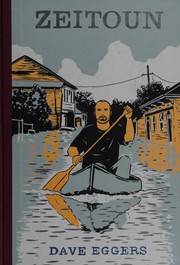
Zeitoun
A Syrian-American contractor rides out Hurricane Katrina by canoe, rescuing neighbors and stray dogs, until a routine arrest turns into twenty-three days…
2,097-word summary · 9 min read
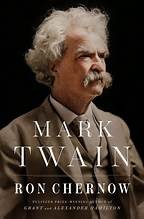
Mark Twain
Ron Chernow's 1,200-page biography follows Samuel Clemens from the Mississippi River to worldwide fame, weighing a literary genius against a lifetime of…
2,501-word summary · 11 min read
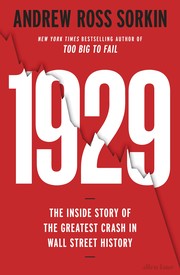
1929
Sorkin's narrative history of the 1929 crash opens on 1 February of that year, seven months before the fall, and follows bankers and speculators through to…
2,953-word summary · 13 min read

Long Walk to Freedom
Mandela's account of a Thembu childhood, a law practice, a banned movement, twenty-seven years in prison, and the negotiation that ended apartheid.
2,454-word summary · 11 min read
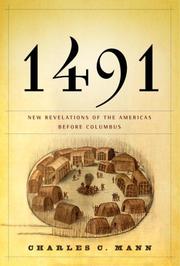
1491: New Revelations of the Americas Before Columbus
Charles C. Mann gathers archaeology, ecology, and demography to argue that the Americas before Columbus were older, fuller, and more deliberately shaped than…
2,712-word summary · 12 min read
Bury My Heart at Wounded Knee: An Indian History of the American West
Dee Brown's 1970 retelling of the American West from the point of view of the people it destroyed.
2,233-word summary · 10 min read
The Letters of Vincent van Gogh
Vincent van Gogh's letters to his brother Theo, in a Penguin Classics selection edited by Ronald de Leeuw, trace a decade of work, faith, and obsession.
2,611-word summary · 12 min read
Catherine the Great: Portrait of a Woman
A German princess survives a miserable marriage and a coup to rule Russia for thirty-four years, torn between Enlightenment ideas and absolute power.
2,065-word summary · 9 min read
The Warmth of Other Suns
Three migrants ride north out of Jim Crow toward Chicago and LA.
2,561-word summary · 11 min read
The Emperor of All Maladies
A biography of cancer from Galen to chemo through one doctor cases.
2,255-word summary · 10 min read
Killing Lincoln
Booth plots as Lincoln pushes war end and reunion in 1865.
2,486-word summary · 11 min read
Hidden Figures
Black women computers at Langley launch rockets past Jim Crow.
2,385-word summary · 11 min read
Wild Swans
Three generations of women survive warlords, revolution, and the Cultural Revolution in Jung Chang's family memoir.
2,356-word summary · 10 min read
The Surgeon of Crowthorne
James Murray built the Oxford dictionary with Broadmoor inmate William Minor, whose thousands of slips shaped this 1998 HarperCollins story of murder, madness…
2,775-word summary · 12 min read
Cleopatra: A Life
Pulitzer winner Schiff restores Cleopatra as a capable ruler, from Ptolemy debts and Caesar to Antony, Actium, and her death in 30 BC, built from coins and…
3,586-word summary · 16 min read
The Splendid and the Vile
Larson follows Churchill circle through Blitz year with diaries and bombing nights.
2,038-word summary · 9 min read
American Sniper: The Autobiography of the Most Lethal Sniper in U.S. Military History
Navy SEAL sniper Chris Kyle recounts Texas roots, SEAL training, four Iraq tours, and the strain combat placed on his marriage and health.
2,011-word summary · 9 min read
A Beautiful Mind
Mathematician John Nash's brilliant game theory rise, schizophrenia collapse, and Nobel return, with wife Alicia's care.
2,142-word summary · 10 min read
Cosmic Music
The first full biography of Alice Coltrane, from Detroit church piano to ashram guru.
2,048-word summary · 9 min read
Einstein: His Life and Universe
Isaacson traces Einstein from patent clerk to world fame using newly opened papers, through 1905, relativity, exile, and the long unified theory search.
2,773-word summary · 12 min read
Alexander Hamilton
Orphaned Caribbean immigrant becomes Washington's aide and America's first Treasury secretary, then falls in a duel.
2,004-word summary · 9 min read
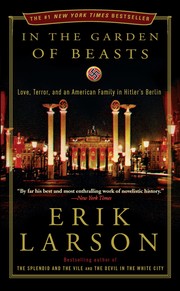
In the Garden of Beasts
Ambassador Dodd takes his family to 1933 Berlin and watches charm curdle into terror.
1,927-word summary · 9 min read
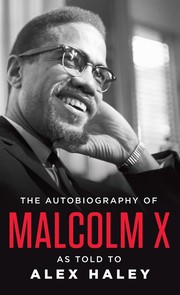
The Autobiography of Malcolm X
Malcolm X traces his life from Michigan childhood through Harlem, prison, and the Nation of Islam to Mecca in this 1965 memoir told to Alex Haley.
2,816-word summary · 13 min read
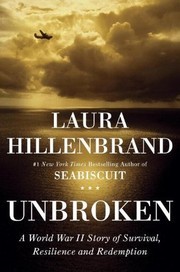
Unbroken
Louis Zamperini survives a Pacific crash, sharks and POW camps after running in the Berlin Olympics.
3,263-word summary · 15 min read
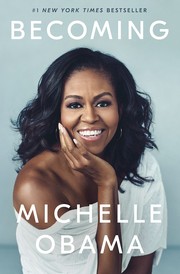
Becoming
Michelle Obama traces her path from South Side Chicago through Princeton, Harvard law and the White House years in this warm, candid memoir of family, work and…
2,143-word summary · 10 min read
The Guns of August
Tuchman narrates the first month of World War I, from a 1910 royal funeral to the Marne, and the decisions that trapped Europe.
2,405-word summary · 11 min read
Survival in Auschwitz
A chemist deported from Turin records ten months in Auschwitz with a restraint that makes the horror impossible to look away from.
2,177-word summary · 10 min read