
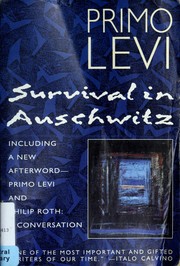
Survival in Auschwitz
2,177-word summary 10 min read 192 pages in the book
- First published
- 1947
- Publisher
- Touchstone
- Pages
- 192
- ISBN
- 9780684826806
- Original title
- Se questo è un uomo
Reading options
What's inside (10 sections)
Why I keep coming back to this short book
I first read this as a student, when it felt like an assignment, and I came back to it years later with a different question in mind. I wanted to see how much a writer could leave out and still make a horror understandable. The answer is almost everything. This is a thin book, first published in Italian in 1947 as Se questo è un uomo, and the English version appeared in 1959 in Stuart Woolf's translation. The edition on my shelf is the Touchstone one, which adds a conversation between Philip Roth and Levi, and it runs just under two hundred pages. There is no scenery in it, no invented dialogue, no attempt to turn the experience into a story with a satisfying shape. What there is instead is a record, set down by a man who had trained as a chemist in Turin and who understood that a clear report can do more than a loud one.
The title is the American one, and the same book is published in English as If This Is a Man. Both titles point to the question posed in the short poem that opens the book: whether the people in the camps were still human, and whether readers who come after can bring themselves to judge what was done to them. I want to be careful here, because paraphrasing a poem is a good way to flatten it. But that question is the engine of everything that follows. Levi is not asking for pity. He is asking you to look closely enough that denial becomes difficult.
The poem ends by telling the reader to meditate on what has happened, and that word matters. It is closer to ponder than to remember. The book is built as evidence for a reader who has not been there, and it treats that reader as capable of thought rather than as someone to be managed. That is why the tone can feel almost cold. Levi trusted the material to do the work if he kept his own hand steady, and he wrote in the evenings after long days at a paint factory, sometimes late into the night. He said the words came out like a flood held back and suddenly released. The first manuscript was finished in December 1946, and his future wife Lucia Morpurgo helped give it shape.
The journey and the bottom
Levi was born in Turin in 1919, the son of Piedmontese Jews, and he graduated in chemistry from the University of Turin in 1942 despite Mussolini's racial laws. He found work with a Swiss drug company in Milan. When German forces occupied northern Italy in 1943, he joined a partisan group in the Aosta Valley. He was captured by fascist militia in December of that year, just shy of his twenty-fifth birthday, and held in a detention camp near Modena.
That opening is told with the same dryness as the rest. Six hundred and fifty Italian Jews are told they are leaving, for a destination none of them can place. They are packed into freight cars without water, and the train moves slowly through Austria and Czechoslovakia into Poland. On arrival, those fit for work are separated from those who are not. The reader understands the meaning of that separation before the characters do, and the gap between what they know and what we know is part of what makes the early pages so hard to read.
The second chapter, "On the Bottom," is the one I remember most vividly. The prisoners are stripped, shorn, showered, and given rags to carry as they run naked to another barrack. They look at one another and understand that they have reached the bottom, that no human condition could be more wretched. A number is tattooed on each arm. At the end of the day they are assembled in the square and made to watch the new comrades march back from work. Levi writes this as a sequence of actions, almost a checklist, and the restraint is what gives it force.
Learning the rules of the camp
Much of the book is a guide to a world with its own laws. There are rites and taboos, and there is a constant effort to read the intentions of the guards, who speak a language most of the prisoners barely know. The confusion is not incidental. Levi shows that the camp depends on people not understanding what is happening to them until it is too late to act.
One of the most memorable figures is Steinlauf, a fellow prisoner who contradicts Levi's conclusion that washing in filthy water without soap is pointless. Steinlauf argues that a person must force himself to preserve at least the outward forms of civilisation, if only to bear witness later. This is the book's moral centre in miniature. The argument is not about cleanliness. It is about whether the self can be held together by small acts of discipline when every circumstance argues for letting go.
Levi's foot is injured at work, and after a humiliating examination he is admitted to Ka-Be, the infirmary. Those unlikely to recover are selected to leave, and one of his neighbours is among them. Another prisoner observes that Levi does not want to understand. The days there are a kind of limbo: physical discomfort is minor, but memory and conscience wake up, and he arrives at the realisation that no one is meant to survive who can report what was done here. That sentence is the quiet hinge of the whole book.
Work, hunger, and the good day
After twenty days Levi is discharged and assigned to a barrack where his friend Alberto lives. Alberto is intelligent and intuitive, and their friendship is one of the few sources of warmth in the account. Levi describes the recurring dream of being at home with loved ones who do not listen when he tries to tell them about the camp. Alberto tells him the dream is common. The nightly procession to the bucket that serves as a latrine, the shapeless nightmares, the shock of reveille: these are described without emphasis, which is why they stay with you.
At work Levi is paired with Resnyk, a man notable for his kindness, who takes on the greater share of the painful labour. There is a brief respite at midday when the prisoners eat watery soup in silence and fall into a short sleep in the warmth of the shed. In "A Good Day," the first sunshine gives them hope of spring, but once the cold is forgotten the hunger returns. They torment one another by describing old meals. The discovery of a fifty-litre vat of soup briefly removes the torment, and with their hunger eased they can think of their mothers and wives again. For a few hours, Levi writes, they are unhappy in the manner of free men. That line has stayed with me longer than almost anything else in the book.
The moral world behind the wire
Levi keeps returning to the question of right and wrong in a place where almost nothing is supplied, not even a spoon. Anything can be bartered or stolen: strips of a shirt, a gold tooth. In "This Side of Good and Evil," he asks the reader to consider what the moralistic words we use at home can mean behind barbed wire, among desperate, half-starved people. He refuses to make it simple. He is clear about the German machinery of the camp, but he is also unflinching about the prisoner who steals from another prisoner.
In "The Drowned and the Saved," he describes the camp as a vast experiment in how the human animal behaves in a struggle for life, and he divides the prisoners into two categories. He reserves particular contempt for the Jewish prominents, who gained privilege by currying favour with the Germans and ruling over their fellows. That anger is worth noticing, because Levi is careful everywhere else to resist easy moral categories. He does not spare his fellow victims when he thinks they have colluded, and he does not excuse the starving man who steals. What he objects to is the arrangement itself, which was designed to make people compete for scraps of advantage and then judge one another by the result.
The chemistry examination is the most surreal scene in the book. Levi is marched to a warehouse with a chance to become a Specialist, and, barely able to stand, he takes an oral exam in German from Doktor Pannwitz, who looks at the filthy, emaciated man in front of him as though he were a specimen of a lower species. The scene is played out with the courtesies of an academic test, and the absurdity of it is worse than any shout. He returns to his barrack with no idea what will happen.
Ulysses, Lorenzo, and reasons to go on
Two episodes complicate the idea that survival here is only a matter of luck or brute will. In "The Canto of Ulysses," Levi is sent to fetch soup with Jean, a young Alsatian prisoner, and tries to recall a passage from Dante's Inferno, Ulysses' final speech. The lines evoke dignity and human striving, and for a moment lift him out of the camp. He forgets four triplets, but he does not forget the feeling. For a short time he is a man again, and Jean listens as though he understands.
The other is Lorenzo, an Italian civilian who quietly brings Levi bread for six months. In a world that is collapsing around them, the daily gesture affirms Levi's humanity without asking for anything back. Levi begins to believe that he survived because someone once did good without reward. I find this harder to read than the scenes of cruelty, because it asks me to recognise that decency is a practice, not a feeling. It is also where the book's famous restraint pays off. A less disciplined writer would have made a speech about gratitude. Levi just notes what Lorenzo did.
The last months and the ten days
By the summer of 1944 Levi and his companions are old hands. Allied bombing shakes the camp and disrupts work on the Buna factory, and hopes raised by news of Normandy and the Russian advance fade quickly. In October the prisoners anticipate a selection, and everyone reassures everyone else that it will not be them. When it comes, the process is so casual that survival is close to chance. There is a Hungarian prisoner named Kraus who has not understood that in this place hard work is not rewarded; conserving energy is more likely to keep you alive. Later Levi and two others are chosen to work in a laboratory, whose warmth and cleanliness contrast sharply with the bombed camp.
In "The Last One," Levi and Alberto devise schemes to trade for bread, and the prisoners are assembled to watch the hanging of a man who took part in an uprising. At the moment of death the man cries out, "Comrades, I am the last!" The prisoners look on passively, emptied of any capacity to act. The epilogue, "The Story of Ten Days," is written like a diary. Levi has scarlet fever and is in the camp hospital when the Germans decide to abandon the camp. Only the healthy are evacuated. Alberto leaves with them; the forced march will kill him. Levi stays with two others and helps the other patients, scavenging the abandoned camp for provisions. Soviet troops arrive on 27 January 1945.
On the writing and its limits
Levi said he wanted his words to be credible because they sounded objective, like a witness in court preparing the ground for a judge. He attributed the clarity to his training, to the habit of factory reports that had to be concise and precise and readable by everyone in the hierarchy. In a 1976 appendix he addresses the question of memory directly, and it is worth reading alongside the main text, because he knows how easily such a record can be doubted.
The limits are real. The book is deliberately narrow. It does not attempt the whole history of the Holocaust, and it does not follow the fate of the millions who died elsewhere. Characters appear and vanish in a few sentences, and some chapters move so quickly that you have to slow yourself down to take them in. Readers looking for a narrative with a clear arc may find the flatness frustrating. That is a fair reaction, and I think the book survives it. The flatness is the point. Levi's aim was to give the reader material for judgement, not to arrange that judgement in advance. When I close the book, I am not left with a lesson. I am left with a set of faces, a number of small acts, and the uncomfortable sense that I have been allowed to look.
FAQ
Is Survival in Auschwitz the same book as If This Is a Man?
Yes. If This Is a Man is the British English title and Survival in Auschwitz the American title for the same 1947 memoir. Stuart Woolf translated both from the Italian.
Did Levi use his chemistry training in the camp?
Levi trained as a chemist in Turin. Near the end of his imprisonment he worked in a camp laboratory and was tested for a Specialist post, an episode he describes in his chemistry examination chapter.
Is this book too difficult to read?
It describes starvation, selections and a hanging in plain language, so it is disturbing. Levi keeps the prose short and unemotional, which many readers find easier to absorb than a more dramatic account.
Similar books
Night
Elie Wiesel's account of Sighet, the cattle cars, Auschwitz and Buchenwald, told in short flat sections by a boy about fifteen. Why the book carries the year…
2,594-word summary · 12 min read

The Zookeeper's Wife: A War Story
The directors of the Warsaw Zoo hid roughly three hundred Jews in empty cages and outbuildings after the German invasion, while Jan worked for the resistance.
2,065-word summary · 9 min read

The Diary of a Young Girl
Anne Frank's diary explained: two years in the Secret Annex, the entries on fear and boredom, what Otto Frank cut, and why the book still reads like a…
1,913-word summary · 9 min read

The Pianist
A Polish pianist endures the Warsaw Ghetto, the Umschlagplatz, and life hidden in the ruins of the 1944 uprising, until a German officer asks him to play.
2,481-word summary · 11 min read

Motherland: A Feminist History of Modern Russia, from Revolution to Autocracy
A feminist history of modern Russia told through women's lives, from the revolutionaries of 1917 to Pussy Riot and the politics of today.
2,191-word summary · 10 min read
Hiroshima
In 1946 John Hersey followed six ordinary people through the atomic bombing of Hiroshima and its aftermath, using a plain style that made the reporting feel…
2,991-word summary · 13 min read

Long Walk to Freedom
Mandela's account of a Thembu childhood, a law practice, a banned movement, twenty-seven years in prison, and the negotiation that ended apartheid.
2,454-word summary · 11 min read
The Happiest Man on Earth
Eddie Jaku's memoir follows a Leipzig childhood, Buchenwald, Auschwitz, a death march, and the slow rebuilding of a life in Australia.
2,597-word summary · 12 min read

Down and Out in Paris and London
Orwell's account of washing dishes in Paris hotels and tramping through London does not ask for pity, only for a clear look at how poverty actually works.
2,282-word summary · 10 min read

Lone Survivor: The Eyewitness Account of Operation Redwing and the Lost Heroes of SEAL Team 10
Marcus Luttrell's account of the 2005 SEAL mission in Afghanistan that killed three of his team and left him alone.
2,144-word summary · 10 min read
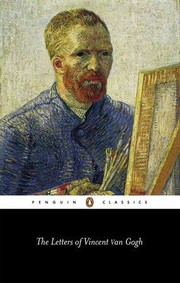
The Letters of Vincent van Gogh
Vincent van Gogh's letters to his brother Theo, in a Penguin Classics selection edited by Ronald de Leeuw, trace a decade of work, faith, and obsession.
2,611-word summary · 12 min read

The Choice
Auschwitz survivor and therapist turns prison into a guide for healing.
2,472-word summary · 11 min read
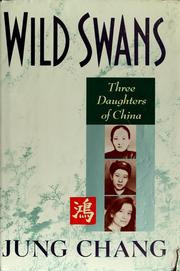
Wild Swans
Three generations of women survive warlords, revolution, and the Cultural Revolution in Jung Chang's family memoir.
2,356-word summary · 10 min read

Twelve Years a Slave
Free violinist Solomon Northup tells how Brown and Hamilton lured him south into twelve years of Louisiana bondage until Bass letters brought rescue in January…
2,931-word summary · 13 min read
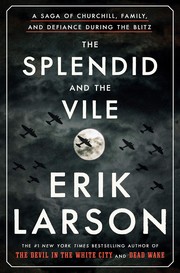
The Splendid and the Vile
Larson follows Churchill circle through Blitz year with diaries and bombing nights.
2,038-word summary · 9 min read
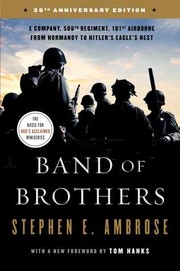
Band of Brothers
Easy Company, 506th Airborne, from Toccoa training through D-Day, Holland, Bastogne, and Hitler's Eagle's Nest.
2,685-word summary · 12 min read
American Sniper: The Autobiography of the Most Lethal Sniper in U.S. Military History
Navy SEAL sniper Chris Kyle recounts Texas roots, SEAL training, four Iraq tours, and the strain combat placed on his marriage and health.
2,011-word summary · 9 min read

The Rise and Fall of the Third Reich: A History of Nazi Germany
A Berlin correspondent turned historian traces Nazi Germany from beer halls to bunker using eyewitness memory and captured German records.
3,559-word summary · 16 min read
Maus II: A Survivor's Tale: And Here My Troubles Began
Vladek survives Auschwitz and the death march while Art struggles with success, guilt, and his father's aging stubbornness.
2,111-word summary · 9 min read
Autobiography of Cotton
A Pulitzer winner traces her cotton-worker grandparents and a 1934 border strike through archives, memory, and damaged land.
2,213-word summary · 10 min read
A Long Way Gone: Memoirs of a Boy Soldier
A Sierra Leone boy flees rebels, becomes a child soldier at thirteen, and fights his way back through rehab.
2,434-word summary · 11 min read

In the Garden of Beasts
Ambassador Dodd takes his family to 1933 Berlin and watches charm curdle into terror.
1,927-word summary · 9 min read

A Promised Land
First-volume memoir from Iowa 2008 through the 2011 bin Laden raid, crisis management and doubt.
2,243-word summary · 10 min read
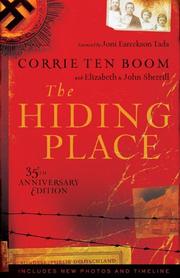
The Hiding Place: The Triumphant True Story of Corrie Ten Boom
The Ten Booms hide Jews in Haarlem, suffer Ravensbruck, lose Betsie, and learn forgiveness.
2,593-word summary · 12 min read
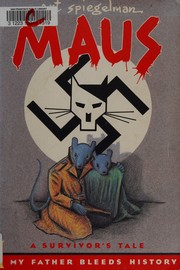
Maus I: A Survivor's Tale: My Father Bleeds History
Art Spiegelman interviews his father Vladek about Sosnowiec and Auschwitz, drawing Jews as mice in this tense father and son memoir.
2,223-word summary · 10 min read
Between the World and Me
Coates writes to his son about the Black body in America, from Howard to the loss of Prince Jones.
2,234-word summary · 10 min read
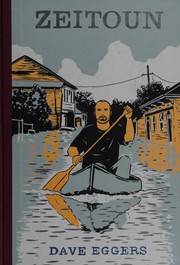
Zeitoun
A Syrian-American contractor rides out Hurricane Katrina by canoe, rescuing neighbors and stray dogs, until a routine arrest turns into twenty-three days…
2,097-word summary · 9 min read
The Guns of August
Tuchman narrates the first month of World War I, from a 1910 royal funeral to the Marne, and the decisions that trapped Europe.
2,405-word summary · 11 min read

The Forest of Vanishing Stars
A girl raised in the Polish wilderness uses her survival skills to hide Jewish refugees, until a secret from her own past catches up.
2,250-word summary · 10 min read

I Feel Bad About My Neck: and Other Thoughts on Being a Woman
In short, funny essays written just after her sixty-fifth birthday, Nora Ephron takes on aging, vanity, a White House summer, and the daily upkeep of looking…
2,099-word summary · 9 min read