
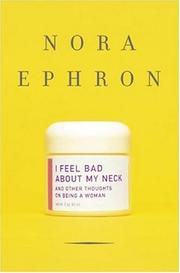
Reading options
What's inside (9 sections)
I came to this book late, in the way most people do, through a quotation someone had pasted on a wall. The line was about faces and necks, and it made me laugh before I knew who had written it. The collection came out in 2006 from Knopf, shortly after Nora Ephron turned sixty-five, and it runs to just 137 pages. It is filed as humor, and it is funny, but it is also a book about being a woman in a culture that keeps asking you to look younger than you are. Ephron had spent decades writing screenplays and essays by the time she wrote it. What she does here is turn her own face, neck, apartment, and thinning patience into a kind of stand-up routine that happens to be about mortality.
The Neck as Evidence
The title essay opens with a complaint that sounds trivial and turns out not to be. Ephron's dermatologist told her that the neck starts to go at forty-three, and that there is nothing to be done about it. You can put makeup on your face and dye your hair and inject things into the wrinkles, she writes, but the neck gives you away. Her famous line is that faces are lies and necks tell the truth, and there is a comparison to cutting open a redwood tree to count its rings, except that a tree would be honest enough to have a neck.
It is a small comic notion, and it works because it is true in a way that is uncomfortable to admit. I read the essay and immediately thought of photographs of my own family, where the faces kept their composure long after the necks had given up. Ephron is not really writing about skincare. She is writing about the moment when other people can see something you have been managing to hide from yourself. The joke is a way of getting at that moment without becoming solemn about it.
She sets the tone for the whole collection here. The essays are short, first-person, and chatty, with the rhythms of someone talking across a table. Several of them had appeared earlier in magazines and newspapers, including the New Yorker, Vogue, Harper's Bazaar, the New York Times, and O, and you can feel the magazine origins in the way each piece finds one idea and rides it until it is worn out. There is no attempt to build an argument across the book. Each essay is its own small performance.
The Cost of Keeping Up
The longest piece in the collection is called On Maintenance, and it is a list. Ephron itemizes everything she does to stay presentable: her hair, the dye for her hair, her nails, her skin, her teeth, exercise, and the ongoing removal of hair that she would rather not have. She estimates the hours and the money, and the point is not that she is vain, though she happily pleads guilty to that. The point is that the work is endless and that its reward is only a temporary delay. She writes that she does all of it just to keep from looking like someone who no longer cares.
The essay turns on a moment walking down the street. She passes a homeless woman and realizes, with a jolt, that she is only about eight hours a week away from looking exactly like that woman. It is the sharpest thing in the book, and it is funny and horrifying at the same time. Ephron is not asking for pity and she is not making a case for giving up. She is describing the arithmetic of vanity, in which the upkeep is the price of the illusion and the illusion never quite holds.
What I admire is that she never pretends to be above it. A lot of writing about aging adopts a superior tone, as though the writer has discovered that appearances do not matter and the reader has not. Ephron does the opposite. She admits she cares, counts the cost, mocks herself for caring, and then goes right on caring. That contradiction is the engine of her humor. She is both the woman checking her reflection and the woman making fun of the woman checking her reflection.
The Girl in the White House
Not all of the essays are about aging, and the ones that are not are among the best. In Me and JFK: Now It Can Be Told, Ephron recalls a summer in 1961 when she worked as an intern in the White House press office. She was twenty, and the president was about as close to a movie star as a real person could be. Her one actual encounter with him came when he was leaving by helicopter for Hyannis Port. She stood under the portico by the Rose Garden while the rotors thundered, and he paused to say something she could not hear over the noise.
She read his lips and decided he had asked how she was coming along. She said What. He turned and walked to the helicopter, and she never saw him again. The joke, delivered dryly, is that she is probably the only young woman who worked in that White House whom the president did not make a pass at. She notes that she has told the story to nearly everyone she has ever met in the forty-two years since, which is the funniest line in the piece.
This essay shows what Ephron could do with a small true story. She does not decorate it. There is no great revelation, no lesson about Camelot. There is a girl who could not hear a famous man over the sound of a helicopter, and a lifetime of telling the story because it is the only one she has. The humor comes from the gap between the grand setting and the tiny, anticlimactic encounter, and from her willingness to be the person who keeps bringing it up.
Advice She Mostly Means
In What I Wish I'd Known, Ephron offers the kind of advice you would give a much younger friend if you could get her to listen. Some of it is practical: never buy anything that is one hundred percent wool, no matter how soft it feels in the store. Some of it is hard-won in a way that stings: never marry a man you would not want to be divorced from. And some of it is a prediction about the body that turns out to be brutal. Anything you think is wrong with your body at thirty-five, she writes, you will be nostalgic for at forty-five.
I copied that last one into a notebook, because it is the rare piece of advice that is both funny and accurate. The essay works as a list because Ephron understands that advice is more bearable in small doses. Each line lands and then gets out of the way. She is not building a philosophy of womanhood; she is handing you a handful of things she learned the expensive way. The plainness is part of the appeal.
There is a section of the book where she writes about her mother and about food and about the particular nonsense that families accumulate over decades. Those pieces feel closer to the earlier Ephron of Heartburn, where the comedy came from domestic life observed at close range. She is good at the small indignity: the outfit, the recipe, the remark from a relative that has been repeated for thirty years. When the book stays at that level, it is very good company.
The Apartment and the Alternative
The pieces that go deeper are the ones about loss. In Moving On, Ephron writes about being forced out of a Manhattan apartment she loved because the rent had climbed beyond what she could pay. It is a story about New York, where people are defined by where they live, and about the particular humiliation of losing a place you thought was yours. In the middle of complaining, she notes that nobody cared, and that she would not have cared either if she had not been herself. That line is the book at its best: self-aware, quick, and refusing to let you feel too sorry for her.
Considering the Alternative is the essay that surprised me most. The title refers to death, and Ephron is fed up with books that insist it is better to be old than young. She writes that people have written whole books about how wonderful it is to be elderly, and that she cannot understand it, because it is not better. Even if you have all your marbles, she points out, you are constantly reaching for the name of someone you met the day before yesterday. There is a line about the true nightmare of an empty nest: the children are gone, and they were the only people in the house who knew how to use the remote control.
That essay also contains a sober account of the death of a close friend, and it is here that the collection shows its weight. Ephron is not writing about the abstract idea of aging. She is writing about a woman who has buried people her own age and who knows that the next decades will bring more of it. The humor does not disappear, but it changes temperature. She is using jokes to keep from looking directly at something, and you can see her doing it.
How It Landed
The book reached the top of the nonfiction bestseller list and stayed on it for months, and it connected with readers who recognized themselves in the complaints. Ephron had a reason for writing it. She had seen a wave of upbeat books about older women and thought it strange that nobody was saying how complicated and confusing and sad it could be. She has said that she forgot, while worrying that this would be too depressing, that she usually writes from the point of view of someone who tries to make a joke now and then. That is the book in one sentence.
Reviewers mostly loved the voice. Janet Maslin, writing in the New York Times, said the book was for readers willing to buy into Ephron's familiar persona: a sharp, funny, theatrically domesticated New Yorker who could throw arrows at the petty things that plague her. Others noted that her self-deprecation was a carefully chosen strategy, one she had used since the seventies, because it gets a laugh with less risk of backlash than satire. In 2019 the Guardian placed the book at number one hundred on its list of the best books of the twenty-first century.
What the Book Leaves Out
Not everyone was convinced. Karen Sandstrom, writing in the Plain Dealer, said she felt bad about her neck but also felt bad about spending time thinking about it, and wanted Ephron to fold the complaint into something larger. Her charge was that Ephron skims the surface of topics that deserve more of her intelligence, and that the brain could be in better trim even if the neck sags. I think that is a fair criticism, and I also think it slightly misses what the book is. This is a collection of magazine essays, not a treatise on aging.
The limitation is real, though. Ephron is writing about a woman with money, good hair care, and a Manhattan address, and the worries in these pages are the worries of someone whose biggest fear is looking like a person she passed on the street. The book has almost nothing to say about what aging looks like without the means to fight it. When she writes about the homeless woman, the joke depends on the distance between them, and the distance never gets examined. That is where the collection stops short of the subject it keeps circling.
I still think it is a small masterpiece of its kind. It is short, it is very funny, and it says something true about the gap between what we know about getting older and what we feel about it. Ephron never claims to have solved the problem. She is a woman with a mirror and a deadline, making jokes because that is what she does. Read it for the one-liners if you like, but stay for the moment when the jokes stop being enough and you notice what she is not saying.
FAQ
Is I Feel Bad About My Neck a memoir?
It is a collection of short personal essays, several of which first appeared in magazines like the New Yorker and Vogue. Some are comic reminiscences, while others deal directly with aging and loss.
What is the essay On Maintenance about?
It lists the time and money Ephron spends on hair, skin, teeth, nails, and exercise, and ends with her realizing she is only about eight hours a week away from looking like a homeless woman she passed on the street.
Was the book a success?
Yes. It reached number one on the New York Times nonfiction bestseller list and stayed on the list for 45 weeks, and in 2019 the Guardian ranked it among its hundred best books of the century.
Similar books

Dear Girls: Intimate Tales, Untold Secrets & Advice for Living Your Best Life
Ali Wong's debut collects fourteen letters to her daughters, covering sex, money, work, marriage, Vietnam, and being a working Asian American mother.
2,266-word summary · 10 min read
Scrappy Little Nobody
Anna Kendrick's essays trace her path from a Portland childhood and Broadway to Hollywood, with jokes, anxiety, and a refusal to pretend fame fixed her.
2,092-word summary · 9 min read
My Horizontal Life: A Collection of One-Night Stands
Handler turns dating disasters and family chaos into brash comic essays about single life in Los Angeles.
2,304-word summary · 10 min read
How to Be a Woman
Moran mixes girlhood and work stories into plain feminist advice.
2,600-word summary · 12 min read
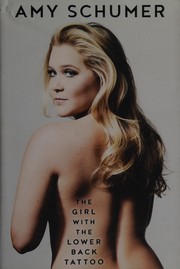
The Girl with the Lower Back Tattoo
Amy Schumer mixes raunchy jokes with frank essays on family, dating, body image, and the shooting that pushed her into gun control advocacy.
2,259-word summary · 10 min read
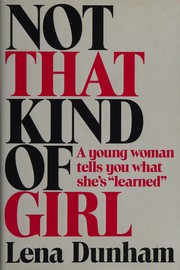
Not That Kind of Girl: A Young Woman Tells You What She's Learned
Girls creator Lena Dunham's essays on work, bodies, love, and family, frank and funny with uneven edges.
2,156-word summary · 10 min read
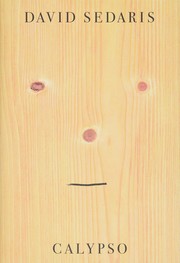
Calypso
Sedaris buys a Carolina beach house, grieves his sister Tiffany, tends his aging father, and turns illness and marriage into dry family comedy.
2,835-word summary · 13 min read
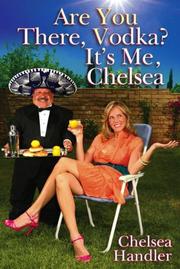
Are You There, Vodka? It's Me, Chelsea
Handler mines family, jail, dating, and travel for brash essays where oversharing is both joke and shield.
2,186-word summary · 10 min read
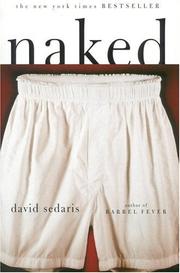
Naked
Growing up odd in Carolina, working bad jobs, and learning to watch people closely and kindly.
2,020-word summary · 9 min read
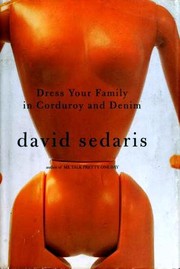
Dress Your Family in Corduroy and Denim
Sedaris on snow days, rental houses, Dutch Christmas, and the family that made him funny.
3,098-word summary · 14 min read
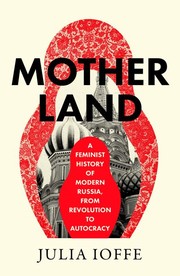
Motherland: A Feminist History of Modern Russia, from Revolution to Autocracy
A feminist history of modern Russia told through women's lives, from the revolutionaries of 1917 to Pussy Riot and the politics of today.
2,191-word summary · 10 min read
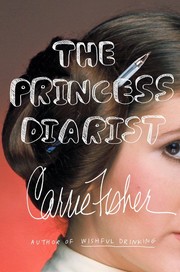
The Princess Diarist
Built from diaries Fisher kept at nineteen while filming the first Star Wars movie, this 2016 memoir revisits her affair with Harrison Ford and the strange…
2,360-word summary · 10 min read
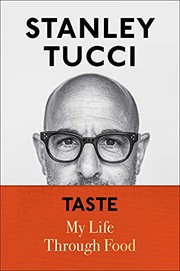
Taste: My Life Through Food
Stanley Tucci's memoir traces his life through food, from a Calabrian family kitchen in Katonah to film sets, marriage and a cancer fight that cost him his…
2,503-word summary · 11 min read
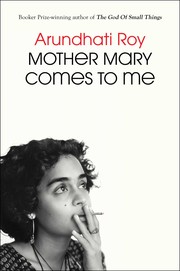
Mother Mary Comes to Me
Arundhati Roy's memoir circles her mother, Mary Roy, a formidable Kerala school founder whose love and cruelty made her the writer she became and then resented…
2,413-word summary · 11 min read
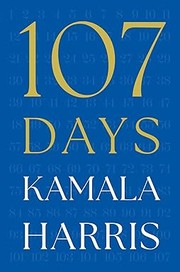
107 Days
Kamala Harris's memoir of the 107 days between Biden's withdrawal and Election Day, drawn from a journal kept during a campaign she believes she was best…
2,132-word summary · 9 min read
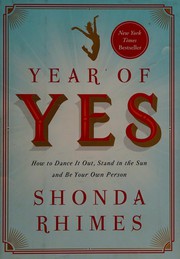
Year of Yes: How to Dance It Out, Stand in the Sun and Be Your Own Person
Shonda Rhimes takes her sister’s accusation seriously and spends a year saying yes to the things that frighten her, from live television to her own reflection.
2,585-word summary · 11 min read
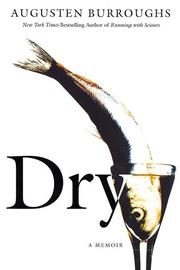
Dry
A memoir of drinking, rehab and relapse, and the strange business of getting sober one morning at a time.
2,643-word summary · 12 min read
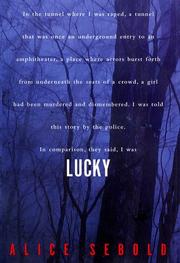
Lucky
Alice Sebold's memoir of the 1981 rape she survived as a college freshman, the courtroom that followed, and a conviction later proven to be a case of mistaken…
2,091-word summary · 9 min read
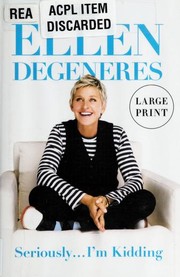
Seriously...I'm Kidding
DeGeneres strings show stories and home jokes into light life advice.
2,292-word summary · 10 min read
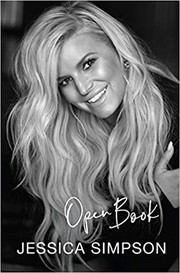
Open Book
Simpson replays pop fame, love and drink through recovery work.
2,552-word summary · 11 min read
Eats, Shoots & Leaves
Truss defends commas with jokes about pandas and posters.
2,423-word summary · 11 min read
Notes from a Small Island
Bill Bryson's 1995 farewell tour of Britain, funny and fond, from Dover to London, the north, Scotland and Wales.
2,301-word summary · 10 min read
In a Sunburned Country
Bryson revisits Australia by city walks and long trains, with reef trips, critter comedy, and explorer history.
2,387-word summary · 11 min read
Bad Feminist
Gay mixes memoir and pop culture criticism to argue for imperfect feminism, from Sweet Valley to Django to Fifty Shades.
2,493-word summary · 11 min read
Tiny Beautiful Things: Advice on Love and Life from Dear Sugar
Dear Sugar answers letters on love, grief, and work with tough empathy drawn from her own losses.
2,253-word summary · 10 min read
Holidays on Ice
Six Christmas pieces, from a Macy's elf stint to a feral family newsletter. Sedaris at his sharpest and most sentimental.
2,410-word summary · 11 min read
The Anthropocene Reviewed: Essays on a Human-Centered Planet
John Green reviews ordinary parts of human life on a five-star scale, turning geese, keyboards, and sunsets into a warm memoir about attention.
2,982-word summary · 13 min read
Talking as Fast as I Can: From Gilmore Girls to Gilmore Girls
Lauren Graham looks back on broke actress years, Parenthood, and playing Lorelai Gilmore twice in this funny 2016 memoir.
2,701-word summary · 12 min read
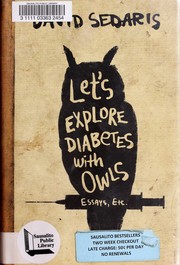
Let's Explore Diabetes with Owls
Sedaris gets French dental work, feeds a kookaburra in Australia, shops for a stuffed owl in London, and survives China, airports and a colonoscopy.
2,538-word summary · 11 min read
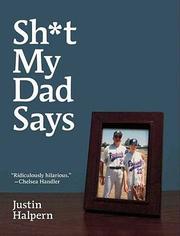
Sh*t My Dad Says
A comedy writer moves home and writes down his blunt fathers funniest lines with love.
1,961-word summary · 9 min read