
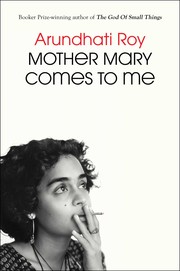
Mother Mary Comes to Me
2,413-word summary 11 min read 374 pages in the book
- First published
- 2025
- Publisher
- Hamish Hamilton
- Pages
- 374
- ISBN
- 9780143473060
Reading options
What's inside (9 sections)
I picked this memoir up wanting to understand the writer behind a book I had loved from a distance for years. The God of Small Things always felt to me like something made out of a specific kind of pain, the sort that becomes art because there is nowhere else to put it. This new book, published on 28 August 2025 by Hamish Hamilton and running to 374 pages, shows where a good deal of that pain came from. It is not a tidy life story, and it is not written to make anyone comfortable. It is Arundhati Roy working out what her mother made of her, what she made of her mother, and why both things have to be held at once.
Roy says her purpose plainly. She calls this a book about how her mother made her the writer she became and then resented it. That line is the key to everything that follows. This is not a daughter settling old scores, though there is anger here. It is not a daughter writing a warm tribute, though there is tenderness. It is a daughter keeping two contradictory feelings in her hands and refusing, right to the end, to let either one go.
The mother at the centre is Mary Roy, and she arrives on the page as a person who seems to have been difficult to ignore in real life. Roy was a formidable figure in Kerala, a divorced single mother who founded a school, won a famous legal case, and ran both her family and her school with a discipline that could be tender and could be brutal, sometimes in the space of a morning. To understand the daughter, you have to understand the scale of the mother.
The woman who would not be called Amma
Mary Roy founded the Corpus Christi school at Kottayam, which later became Pallikoodam. This was not a small undertaking. Setting up a school, running it, and standing as its authority day after day is hard work anywhere, and doing it as a divorced woman in Kerala carried a weight that Roy does not let us forget. One of the details that sticks is her rule about names. She made her own children and her pupils call her Mrs. Roy, not Amma or any of the warm forms that might soften the distance between them. Her reason was to avoid favouritism. If her daughter called her Mother in front of a classroom, the other children would know which one of them belonged to the woman at the front. So everyone got the same name, and the same distance.
I found that detail quietly startling. It tells you so much at once. Here is a woman determined to be fair to children who were not her own, even if it meant making her own child address her formally. Here is a mother building a wall on purpose, then expecting her daughter to love her across it. Roy does not resolve that contradiction. She just sets it down and lets you sit with it.
Mary also sued her own brother and won a landmark case that secured equal inheritance rights for Syrian Christian women. This is the public side of her, the part that belongs to history rather than to family gossip. It matters that Roy includes it. Without it, the mother in this memoir could be read as simply a harsh woman who happened to raise a famous daughter. With it, you see a person who took on an entire structure of custom and changed something for women beyond her own family. The legal victory is not a footnote. It is part of why Roy looks at her mother with something close to awe even when she is describing the worst of what happened between them.
Leaving the tea estate
The story starts, in Roy's childhood, with a departure. Roy was three and her brother, whom she calls LKC, was four and a half when their mother left the Assam tea estate where their father worked. They moved to Ooty, and later to Ayemenem, on the Meenachil river. Ayemenem will be familiar to anyone who read The God of Small Things, because it is the world of that novel. Reading this memoir, I kept noticing how the places of the fiction turn out to be real places, lived in before they were written down.
Mary had divorced a Bengali Hindu, and after the divorce, relatives tried to evict her and the children from their grandfather's cottage. This is the background to the childhood Roy describes: a mother with no stable standing in the family, holding two small children, starting schools and fighting cases and keeping a roof over their heads. You can feel how much of Roy's later work grew out of watching a woman fight for ground that everyone assumed she should not have. The fear of losing a home, the scrutiny of relatives, the sense that belonging is something that has to be won and can be taken away, all of that is here in the raw before it becomes material for novels.
What struck me is how young Roy was during all of this. Three and four and a half are not ages at which a child can understand the reasons behind a rupture. They are ages at which a child absorbs the feeling of one. Roy writes about these early moves without turning them into a neat explanation of herself. She is not saying, this is why I became a writer. She is showing a child being carried from place to place by a mother who was herself under pressure, and leaving a trail of impressions that a writer would spend a lifetime trying to sort out.
Love and a broken ruler
The hardest passages in the book are the ones where affection and cruelty arrive together. Roy records that her mother called nine-year-old Arundhati a bitch, and called LKC a chauvinist pig. She broke a ruler beating LKC over average grades. Then the next morning she praised her daughter and gave her a rare embrace. I read that sequence twice, because the whiplash of it is the point. There is no apology for the name calling, and no explanation that makes it acceptable. There is also the embrace, real and unexpected, sitting right beside it.
This is where the memoir earns its reputation for honesty. It would have been easy to write a version in which Mary is a monster and Roy is the wounded child who escaped her. It would also have been easy to write a version in which Mary is a misunderstood saint and Roy is the ungrateful daughter. Roy does neither. She keeps both the insult and the kiss. She lets the woman who could be cruel be the same woman who could be tender, and she refuses to average the two into something more comfortable.
That refusal is not the same as forgiveness, and I don't think it should be read that way. Roy is not excusing what was done to her as a child. She is describing a relationship in which the person who hurt you is also the person who made you, and in which the love was real enough that you cannot simply cut it away. The book is strongest when it stays inside that difficulty instead of resolving it.
The quiet in the next room
One of the most piercing things Roy writes is about what happened to her after those childhood beatings. She says that ever since, achievement has brought a sense of foreboding, as though someone quiet were being beaten in the next room. That image has stayed with me since I finished the book. It is a way of describing a person who succeeds and cannot feel the success, because some older fear is running underneath it.
This is the part of the memoir that connects most directly to the work. If you have ever wondered why Roy writes with such attention to what children absorb and cannot name, here is a clue. The child who was praised in the morning and beaten over grades the night before grows into a writer who understands that a room can hold two feelings at once, and that the quiet in the next room matters as much as the noise in this one. Roy does not draw that line for us, but she does not have to. It is there in the rhythm of the telling.
It is also where the book could have tipped into theory and did not. A lesser memoir might have turned this into a diagnosis, or a lesson about parenting, or a claim about how artists are made. Roy leaves it as a feeling she remembers. The foreboding is not explained away. It is simply recorded, and trusted to mean something to anyone who has carried a similar unease.
Estrangement, and a live microphone
After a row in her late teens, mother and daughter were estranged for years. Roy does not dwell on every detail of the fight, and I think that restraint is deliberate. The point is not the specific argument but the long silence that followed it. Anyone who has been estranged from a parent knows that the years apart are not empty. They are filled with the person you are not talking to. Roy writes from inside that kind of absence.
One scene that stayed with me is a reading at Mary's school. Her mother talked loudly into a live microphone during the event. Read on its own, it is almost comic, a mother unable to resist taking the floor at her daughter's reading. Read alongside everything else in the book, it is charged. Here is the woman who made rules about names and ran a school, still finding a way to make herself heard in a room where her daughter was the one being listened to. Roy also writes about her fear that her book would expose family secrets, and about checking into hospital to read The God of Small Things. The details are offered without fuss, but they carry the sense that writing about this family was never a neutral act for either of them.
I should say that these scenes are not presented as tidy incidents with clean outcomes. That is the book's method throughout. A moment is described, and Roy moves on, trusting the reader to feel the weight of it. Some readers will find that frustrating. I found it mostly bracing, because life with a person like Mary does not divide itself into neat scenes with lessons attached.
A love learned at a distance
Roy left for Delhi to study architecture. She married her first love, JC. And, as she puts it, she learned to love her mother coolly, rationally, and from a safe distance. That phrase might be the most honest sentence in the book. It describes a love that was chosen rather than given, built out of understanding rather than warmth, and kept at a length that made it survivable. It is not a lesser kind of love, but Roy is clear that it is not the love a child gives freely either.
Mary died in 2022. She is not around to answer any of the questions the memoir raises, which gives the book its particular shape. This is writing that cannot be checked against the person it is about. Roy is free to tell her version, and the reader is left aware that there are other versions that will never be told. That absence hangs over the whole thing. I kept thinking about how different this book would be if Mary had been able to reply.
The distance Roy describes is not coldness, exactly. It is the arrangement two people come to when they cannot be close in the ordinary way. She writes about her mother with a clarity that comes from years of looking at her from outside. That clarity is a gift to the reader and, I suspect, a hard-won thing for the writer. It is easy to see a parent clearly when you are no longer living under the same roof, and Roy makes no secret that the distance is what made the seeing possible.
A portrait that will not sit still
The critics noticed this quality right away. Amit Chaudhuri, writing in The Guardian, called the memoir brave and absorbing. Alexandra Jacobs in The New York Times presented Mary as both shelter and storm, which seems to me the most economical way of describing the woman on these pages. Prathyush Parasuraman, in Frontline, argued that the memoir deliberately declines to piece together a tidy, complete portrait of its subject. That last point is the one I would press hardest. This book does not want to finish its mother. It wants to keep her moving.
That is also the main source of frustration for a reader like me. There are times when I wanted Roy to commit to a judgement, to say plainly what she thought of a woman who could be so loving and so severe. She declines, and the book is less satisfying as a story for it. It is more honest as a memory. The two are not the same, and I finished the book admiring it more than I enjoyed it. Readers looking for a clean arc of reconciliation will not find one here. There is no final scene in which everything is forgiven and explained. What there is, is a writer looking hard at the person who formed her, and finding that the looking itself is the point.
I would hand this book to someone who has loved Roy's fiction and wants to know what real life sat behind it. I would also hand it to anyone who has had a relationship with a parent that refuses to fit into a single feeling, because that is the book's true subject. It is not always an easy read. It asks you to sit with contradictions that do not resolve, and it gives you a mother who is at once a pioneering woman who changed the law and a parent who could wound a child without noticing. Roy never smooths that over. She simply keeps both in view, and lets the reader decide what to make of a love that was made at a distance and never stopped mattering.
FAQ
Is Mother Mary Comes to Me a novel?
No. It is a memoir about Roy's relationship with her mother, Mary Roy, who died in 2022. It draws on real events from Roy's childhood in Kerala and her later estrangement from her mother.
What does Roy say the book is about?
Roy has described it as a book about how her mother made her the writer she became and then resented it. She keeps both feelings in view rather than choosing between them.
Does the memoir end with a happy reconciliation between mother and daughter?
No. After a row in her late teens they were estranged for years, and Roy says she learned to love her mother coolly, rationally, and from a safe distance. Mary died in 2022, so the book cannot include a final reckoning between them.
Similar books
Motherland: A Feminist History of Modern Russia, from Revolution to Autocracy
A feminist history of modern Russia told through women's lives, from the revolutionaries of 1917 to Pussy Riot and the politics of today.
2,191-word summary · 10 min read

I Feel Bad About My Neck: and Other Thoughts on Being a Woman
In short, funny essays written just after her sixty-fifth birthday, Nora Ephron takes on aging, vanity, a White House summer, and the daily upkeep of looking…
2,099-word summary · 9 min read
Taste: My Life Through Food
Stanley Tucci's memoir traces his life through food, from a Calabrian family kitchen in Katonah to film sets, marriage and a cancer fight that cost him his…
2,503-word summary · 11 min read
Source Code
Bill Gates's first memoir retells his Seattle childhood, from a grandmother's Ritz crackers to nights sneaking out to code. It stops just before the MS-DOS…
2,473-word summary · 11 min read
107 Days
Kamala Harris's memoir of the 107 days between Biden's withdrawal and Election Day, drawn from a journal kept during a campaign she believes she was best…
2,132-word summary · 9 min read

Too Much and Never Enough: How My Family Created the World's Most Dangerous Man
Mary L. Trump's 2020 memoir traces how a cold, zero-sum Queens household shaped her uncle, and uses family tax documents to challenge his self-made story.
2,059-word summary · 9 min read
Year of Yes: How to Dance It Out, Stand in the Sun and Be Your Own Person
Shonda Rhimes takes her sister’s accusation seriously and spends a year saying yes to the things that frighten her, from live television to her own reflection.
2,585-word summary · 11 min read
Beautiful Boy: A Father's Journey Through His Son's Addiction
David Sheff recounts watching his son Nic slide into meth addiction, and his own desperate, humbling search for how to help without destroying them both.
2,076-word summary · 9 min read
The Magnolia Story
How Chip and Joanna Gaines met, closed their first shop, nearly lost everything in a housing development, and built Fixer Upper.
2,994-word summary · 13 min read
Lucky
Alice Sebold's memoir of the 1981 rape she survived as a college freshman, the courtroom that followed, and a conviction later proven to be a case of mistaken…
2,091-word summary · 9 min read
Open
Tennis star Andre Agassi recalls hating tennis, falling to No. 141, and rebuilding his life on his own terms.
2,352-word summary · 10 min read
Hidden Valley Road: Inside the Mind of an American Family
The Galvin family raises twelve children while six sons develop schizophrenia across decades of shifting science.
2,492-word summary · 11 min read
Calypso
Sedaris buys a Carolina beach house, grieves his sister Tiffany, tends his aging father, and turns illness and marriage into dry family comedy.
2,835-word summary · 13 min read
Orange Is the New Black: My Year in a Women's Prison
A Smith graduate serves a year in Danbury for an old drug crime and learns how women share, fight and survive inside.
2,583-word summary · 11 min read
Naked
Growing up odd in Carolina, working bad jobs, and learning to watch people closely and kindly.
2,020-word summary · 9 min read

Dress Your Family in Corduroy and Denim
Sedaris on snow days, rental houses, Dutch Christmas, and the family that made him funny.
3,098-word summary · 14 min read
The Last Lecture
Dying professor Pausch lectures really achieving childhood dreams.
2,579-word summary · 11 min read
A Child Called It
Dave survives his mother games of hunger and cold in Daly City until teachers and foster care step in.
2,326-word summary · 10 min read

The Glass Castle
Jeannette Walls's memoir of a childhood spent hungry and moving, from a stove fire at three to a Bronx apartment and parents on the street.
2,255-word summary · 10 min read
Educated
Educated retold: Idaho scrapyard, no school, BYU, Cambridge, break with father and brother.
1,931-word summary · 9 min read
The God of Small Things
Twins Rahel and Estha grow up in Kerala in 1969, where family rules and caste lines shape a loss that follows them into adulthood.
2,646-word summary · 12 min read
The Wilderness
Four Black women move through twenty years of friendship in Angela Flournoy's discontinuous, widely praised second novel.
2,141-word summary · 10 min read
The Loneliness of Sonia and Sunny
Two Indian families, a failed arranged match, and years between Allahabad and New York shape a slow, sprawling romance.
2,092-word summary · 9 min read
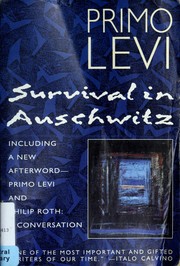
Survival in Auschwitz
A chemist deported from Turin records ten months in Auschwitz with a restraint that makes the horror impossible to look away from.
2,177-word summary · 10 min read
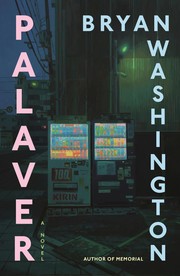
Palaver
A mother shows up uninvited at her estranged son's Tokyo apartment, and the two spend the weeks before Christmas talking their way toward something like…
2,465-word summary · 11 min read
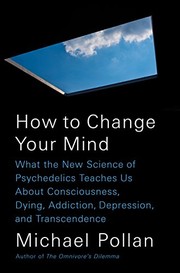
How to Change Your Mind
Pollan blends the history of psychedelic research, his own guided trips, and current neuroscience to ask what these drugs reveal about consciousness.
2,466-word summary · 11 min read
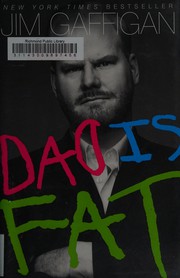
Dad Is Fat
A comic essay collection about raising five kids in a two-bedroom New York apartment, delivered in Gaffigan's dry, deadpan voice.
2,196-word summary · 10 min read

Yellow Crocus
In 1837 Virginia, an enslaved wet nurse is separated from her own son to raise a planter's daughter, and the two women build a love the law says cannot exist.
2,094-word summary · 9 min read

Women Who Run with the Wolves
A Jungian analyst reads fairy tales as maps to a woman's instinctual self, from La Loba to Bluebeard and Vasalisa.
2,331-word summary · 10 min read
The Princess Diarist
Built from diaries Fisher kept at nineteen while filming the first Star Wars movie, this 2016 memoir revisits her affair with Harrison Ford and the strange…
2,360-word summary · 10 min read