
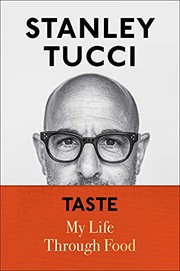
Taste: My Life Through Food
2,503-word summary 11 min read 304 pages in the book
- First published
- 2021
- Publisher
- Gallery Books
- Pages
- 304
- ISBN
- 9781982168018
Reading options
What's inside (9 sections)
I came to this book through the Negroni video, as I suspect a lot of people did. There was something disarming about an actor standing at a bar and talking about ice with complete seriousness. Taste, published in 2021, turned out to be the longer version of that pleasure. It is a memoir in which Stanley Tucci talks about what he ate, who cooked it, and how the people at the table made him. Recipes are scattered through the chapters, but this is not a cookbook in any ordinary sense. It is a life told through meals, and it works best when you read it slowly, one helping at a time.
A kitchen in Katonah
He grew up in Katonah, in Westchester County, New York, the son of first-generation Italian Americans whose families came from Calabria. His father taught art in high school. His mother cooked, and the book makes clear that she cooked without fuss and almost without failure. Dinner was a nightly event around the kitchen table, not a production but a fact of life, the kind of thing a child assumes will always happen.
The food was that of an Italian American household in the 1970s: veal cutlets, meatballs, ragù, pasta with garlic and oil, eggs poached in a rich tomato sauce. Alongside it sat the processed staples of the era, Velveeta and marshmallow fluff, because this was an American childhood too. Tucci remembers that the weekly food budget regularly ran out by Friday, and that the meals from those lean stretches are the ones he recalls most warmly. Scarcity, in his telling, produced attention. When there is not much on the table, you notice what is there.
He admits that eating at neighbours' houses as a child was sometimes a struggle. This is not snobbery, or at least he does not present it that way. It is the reaction of a boy whose mother's cooking had set an unreasonable standard, so that other people's dinners arrived as a disappointment before the first bite. The book returns to her again and again, and the claims he makes for her food are large ones. At one point he calls culinary creativity perhaps the most perfect art form, and he clearly means it.
There is a stretch about time in Italy as a teenager that I liked more than I expected. He writes about eating well there, and about the gap between the food he found in Italy and the version that had crossed the Atlantic with his grandparents. That gap becomes a whole argument later in the book, when he takes on the idea that Italians eat spaghetti Bolognese as a matter of course. He is patient with the question rather than scolding. What he wants is for people to notice that dishes have histories, and that a recipe is a record of where somebody came from.
Restaurant jobs, cheap rooms and the long way to acting
Before he was a famous face, Tucci spent years as a working actor in New York, and he paid rent by working in restaurants. The book is full of the cheap places he haunted and, in many cases, mourns. He names Caridad, a Cuban-Chinese restaurant on the Upper West Side that is now gone, and remembers the wonton soup and fried plantains he ordered there. He writes about dribbling melted butter over Maine lobster. These passages are the book at its most specific and most enjoyable: a man with an unfashionably good memory for a meal he can no longer go back to.
The restaurant work mattered twice over. It kept him fed while he chased roles, and it later gave him the vocabulary and the confidence to write a film about a kitchen. He had already written two cookbooks by the time this memoir appeared, The Tucci Cookbook and The Tucci Table, so writing about food was not new to him. What was new was the personal material. The cookbooks handed over recipes. This book hands over the stories the recipes came attached to, along with a good deal more of the life.
I should say that the tone here is light and dry rather than confessional. Even when the subject turns painful, he keeps the sentence clean and the joke close at hand. That is a real strength, and it is also the thing that makes some of the later chapters feel slightly distanced from the pain they describe.
Big Night and the problem of the timpano
In 1996 Tucci introduced a wide audience to his family's great culinary custom through Big Night, the film he co-wrote, co-directed with Campbell Scott and starred in. He played one of two Italian immigrant brothers running a struggling restaurant on the Jersey Shore in the 1950s, with Tony Shalhoub as the other brother. The plot turns on a dinner meant to impress the singer Louis Prima, and on the enormous dish the brothers prepare for it. He spent years getting the screenplay made, and he befriended chefs along the way both to learn how a restaurant kitchen actually runs and to look convincing behind the stove on camera.
The dish is a timpano, and it gets its own space in the memoir. Picture a drum of pastry stuffed with pasta and ragù made to the Tucci family recipe, with provolone, salami, pecorino, boiled eggs and meatballs layered in. It is the centrepiece of the film's feast, and in the memoir it is a family tradition served before the roast on Christmas Day. Both of his wives, Kate and Felicity, had to live with it. He prints the full recipe, which is an act of either generosity or provocation. I have no intention of making it, and I was relieved to find that reviewers and interviewers had reached the same conclusion. Its sheer size is the joke, and the book seems to know it.
Big Night is only one of the film stories here. He also writes about playing Paul Child, the husband of Julia Child, opposite Meryl Streep in Julie & Julia, and about an unfortunate sausage order during the French shoot that he tells as a disaster of a meal. Food on set is a recurring subject, and his verdict is not romantic. Studio catering and location meals get the same scrutiny he gives a family Sunday lunch, which means that quite a lot of famous people come in for a gentle roasting over what they ate and how they ordered it.
Marriage, children and the lasagne test
His first wife was Kathryn, always called Kate. He writes about meeting her, bringing her into the family and being brought into hers, becoming a stepfather and then having more children with her. The kitchen grows along with the household, and cooking for a crowd becomes an ordinary act of love rather than a performance. The story I keep returning to is the lasagne. Kate spent years trying to reproduce his mother's version, adjusting and asking for tips, until his mother finally tasted it and said, "I have nothing left to teach you." Then, Tucci writes, she started to cry. It is the best scene in the book, and it is about a recipe doing the work of a handover.
Kate died of breast cancer in 2009. He does not dwell on it, and the restraint is partly admirable and partly a gap. The book gives you the shape of that marriage rather than its texture, and a reader looking for a full account of grief in those years will not find one. He married Felicity Blunt in 2012. She is Emily Blunt's sister, and that connection pulls the British side of his life into the kitchen. He writes about cooking for a houseful of children, about Christmas meals in Britain, and about roast potatoes the way Felicity makes them. He also allows himself small acts of pedantry, including a correction about what counts as the classic English Christmas dessert. That made me smile and then wince a little, because he spends the rest of the book happily correcting other people's ideas about Italian food.
Underneath the family stories sits his belief that recipes are a form of inheritance. "The only way they can be lost is if we choose to lose them," he writes, and the sentence sits comfortably beside the scenes that illustrate it. He is drawn to the Italian wave of immigrants who put down roots in America and kept their connection to the old country through carefully tended gardens, crowded tables and traditions they refused to let go. Food is how that keeping works. A dish survives because somebody insists on making it again, slowly, in front of people who will remember it.
The recipes, and the body that receives them
The recipes are embedded in the narrative rather than gathered at the end, and they are deliberately various. There is a tomato sauce made from crushed tomatoes cooked for hours with fresh basil, in a quantity that calls for two enormous pots, a fire pit and, in his telling, a cellar. There are eggs poached in tomato sauce, the garlicky pasta his father made when money was short, a fish stew, a Negroni, a martini and a dish of pizzoccheri with what he calls "a fuck of a lot of butter." Some take three lines. Some take several pages.
He is interested in the rules behind dishes, and in the reasons those rules exist. He argues that particular pasta shapes belong with particular sauces, that a ragù from one part of Italy has no business dressing a pasta from another, and that spaghetti Bolognese is a far stranger thing than it looks. The pairing of southern pasta with a northern meat sauce was an invention tied to the idea of a unified country, he explains, which is why the dish is easier to find outside Italy than in it. This is the book at its most instructive, and the tone is that of a man at a table explaining something he cares about, not a lecturer reading a paper.
There is also a chapter called My Stomach, which is about irritable bowel syndrome and an impassioned plea for decent gluten-free pasta. "Perhaps some day a pill will be available to cure the scourge of gluten-intolerance," he writes. "Or just intolerance." That joke tells you a good deal about the voice. The body is never far from the subject here, even when the subject seems to be nothing more than a bowl of noodles. He writes about digestion and discomfort with the same attention he brings to a perfect tomato, and the effect is to make eating feel physical again rather than merely appreciative.
The chapter that comes last
The cancer revelation arrives near the end of the book, and it changes the reading of everything before it. A tumour was found at the base of his tongue. Treatment meant high-dose radiation and chemotherapy, a feeding tube, a mouth full of ulcers, almost no saliva and the loss of taste and smell. He writes that food tasted like "old, wet cardboard." He had already watched his first wife go through cancer treatment, so he knew the standards of care and was fearful in a precise way. What he dreaded most was not the disease but the prospect that eating, his great pleasure, would become a trial. He worried that "things would never return to the way they were, when life was edible."
He came through it. The cancer is gone, and he says it took around two years before he could return to his usual diet. He notes with something like wonder that his troubles with dairy, sugar and gluten seemed to vanish after the radiation. The closing pages are a catalogue of things he still finds delicious: roast potatoes, eggplant parmigiana the way his mother made it, Martinis, Marx Brothers films, sweetcorn rubbed with buttered bread. Read after that chapter, the famous Negroni video looks less like a celebrity gag and more like a man testing whether the world still tastes like anything. The book does not make that claim itself, but the connection is hard to miss.
This late turn is the strongest structural choice in the memoir. All those pages about sauces and family meals could have been mere appetite. Placed at the end, the illness retroactively gives them weight, because the reader now knows what it would mean to lose access to them. The book earns its final notes rather than announcing them.
What works, and where it drags
Taste is episodic and only loosely linear. A chapter might be a dish, a story, a person or a place, and the connections are often left for you to make. Reviewers called it a tad flimsy, a succession of anecdotes about going to another restaurant with famous friends and reporting what was eaten, and there is truth in that. He knows the risk himself and even flags the bragging before you can raise it, which is charming the first time and a little tired by the third. There are gaps too. His struggle to get an Equity card barely appears, and both marriages get less room than the meals that surrounded them.
There are also small slips. A claim about a British Christmas pudding is the sort of error a book this pleased with its own food knowledge invites, and it is the kind of thing his own corrections of Italian cooking would once have caught. The structure asks something of the reader as well. If you want a clean memoir arc, this keeps sliding sideways into a recipe or a digression about pasta shapes. If you want a cookbook, the recipes are too few and too casual to plan a week around. It sits awkwardly and deliberately between the two. One reviewer praised the way the vignettes fit together like antipasti instead of congealing like a badly made timpano, and that seems about right, though I found stretches where the anecdotes did blur into one another.
What I keep coming back to is the lasagne scene and the late chapter where food turns to cardboard. Between them they contain the book's whole case, which is not complicated. Food carries family, and a life without the ability to taste it is a life with something missing. He never delivers that as a speech. The early chapters do the showing, and the last ones lean on what has already been put on the table.
I would hand this to someone who cooks, or who grew up in a family that treated dinner as a real event rather than a chore. I would be careful with a reader who wants a tidy narrative or who has no patience for a man explaining, at length, how to boil tomatoes. The book knows it is a pleasure to sit at this table. For the most part it is.
FAQ
Is Taste a cookbook or a memoir?
It is a memoir with recipes scattered through the chapters. Tucci had already written two cookbooks, and here the dishes mostly serve as anchors for stories about his family, his marriages and his acting career.
When was Taste published and who published it?
Gallery Books, an imprint of Simon & Schuster, published it in 2021. The hardcover edition has 304 pages and the ISBN 9781982168018.
Does the book discuss his cancer?
Yes, but near the end. He describes a tumour at the base of his tongue, radiation and chemotherapy, months of being fed through a tube, and the loss of taste that made food seem like old, wet cardboard.
Similar books
Calypso
Sedaris buys a Carolina beach house, grieves his sister Tiffany, tends his aging father, and turns illness and marriage into dry family comedy.
2,835-word summary · 13 min read
Naked
Growing up odd in Carolina, working bad jobs, and learning to watch people closely and kindly.
2,020-word summary · 9 min read
Dress Your Family in Corduroy and Denim
Sedaris on snow days, rental houses, Dutch Christmas, and the family that made him funny.
3,098-word summary · 14 min read
Crying in H Mart
Japanese Breakfast singer Michelle Zauner remembers her Korean mother through food, grief, and growing up in Oregon.
2,337-word summary · 10 min read
Only Son
A brief, funny, melancholy debut about a boy whose father dies in 1982 Florida, and the man he becomes, still trying to read the mystery of that loss.
2,170-word summary · 10 min read
I Feel Bad About My Neck: and Other Thoughts on Being a Woman
In short, funny essays written just after her sixty-fifth birthday, Nora Ephron takes on aging, vanity, a White House summer, and the daily upkeep of looking…
2,099-word summary · 9 min read
Dad Is Fat
A comic essay collection about raising five kids in a two-bedroom New York apartment, delivered in Gaffigan's dry, deadpan voice.
2,196-word summary · 10 min read
A Year in Provence
Peter Mayle's first year in a Luberon farmhouse, told through mistral winds, difficult builders, long lunches and local rules nobody warned him about.
2,209-word summary · 10 min read
The Princess Diarist
Built from diaries Fisher kept at nineteen while filming the first Star Wars movie, this 2016 memoir revisits her affair with Harrison Ford and the strange…
2,360-word summary · 10 min read
Source Code
Bill Gates's first memoir retells his Seattle childhood, from a grandmother's Ritz crackers to nights sneaking out to code. It stops just before the MS-DOS…
2,473-word summary · 11 min read
Mother Mary Comes to Me
Arundhati Roy's memoir circles her mother, Mary Roy, a formidable Kerala school founder whose love and cruelty made her the writer she became and then resented…
2,413-word summary · 11 min read
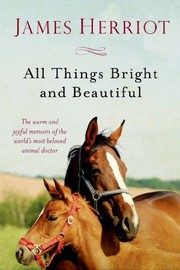
All Things Bright and Beautiful
Linked memoirs from a young vet in the Yorkshire Dales, moving between difficult farmers, beloved animals and the household above the surgery at Skeldale House.
2,004-word summary · 9 min read
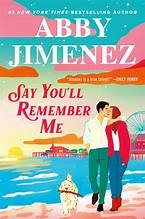
Say You'll Remember Me
A vet who writes off a sick kitten falls for the woman who saves it, then follows her into the hard, funny work of caring for a mother with dementia.
2,293-word summary · 10 min read

Too Much and Never Enough: How My Family Created the World's Most Dangerous Man
Mary L. Trump's 2020 memoir traces how a cold, zero-sum Queens household shaped her uncle, and uses family tax documents to challenge his self-made story.
2,059-word summary · 9 min read
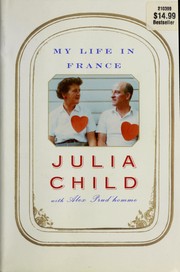
My Life in France
Julia Child's memoir of learning to cook in Paris, testing recipes for nine years, and becoming the teacher who changed how America thought about French food.
2,038-word summary · 9 min read
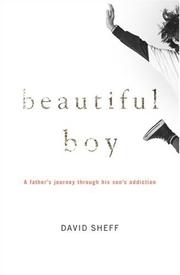
Beautiful Boy: A Father's Journey Through His Son's Addiction
David Sheff recounts watching his son Nic slide into meth addiction, and his own desperate, humbling search for how to help without destroying them both.
2,076-word summary · 9 min read
The Magnolia Story
How Chip and Joanna Gaines met, closed their first shop, nearly lost everything in a housing development, and built Fixer Upper.
2,994-word summary · 13 min read
Dry
A memoir of drinking, rehab and relapse, and the strange business of getting sober one morning at a time.
2,643-word summary · 12 min read

Dear Girls: Intimate Tales, Untold Secrets & Advice for Living Your Best Life
Ali Wong's debut collects fourteen letters to her daughters, covering sex, money, work, marriage, Vietnam, and being a working Asian American mother.
2,266-word summary · 10 min read
At Home: A Short History of Private Life
Bill Bryson tours his own Norfolk rectory room by room to explain how private life and the modern home got built.
2,334-word summary · 10 min read
Smoke Gets in Your Eyes: And Other Lessons from the Crematory
A young medieval history graduate takes a job at an Oakland crematory and becomes a mortician, confronting the physical reality of death and the funeral…
2,003-word summary · 9 min read
Scrappy Little Nobody
Anna Kendrick's essays trace her path from a Portland childhood and Broadway to Hollywood, with jokes, anxiety, and a refusal to pretend fame fixed her.
2,092-word summary · 9 min read
How to Cook Everything: Simple Recipes for Great Food
Bittman's 1998 doorstop taught a generation that dinner is a technique, not a recipe, with master recipes and variations instead of rigid instructions.
2,027-word summary · 9 min read
Seriously...I'm Kidding
DeGeneres strings show stories and home jokes into light life advice.
2,292-word summary · 10 min read
Open Book
Simpson replays pop fame, love and drink through recovery work.
2,552-word summary · 11 min read
My Horizontal Life: A Collection of One-Night Stands
Handler turns dating disasters and family chaos into brash comic essays about single life in Los Angeles.
2,304-word summary · 10 min read
How to Be a Woman
Moran mixes girlhood and work stories into plain feminist advice.
2,600-word summary · 12 min read
Animal, Vegetable, Miracle: A Year of Food Life
A family eats only local for a year from their Virginia farm.
2,270-word summary · 10 min read
Notes from a Small Island
Bill Bryson's 1995 farewell tour of Britain, funny and fond, from Dover to London, the north, Scotland and Wales.
2,301-word summary · 10 min read
In a Sunburned Country
Bryson revisits Australia by city walks and long trains, with reef trips, critter comedy, and explorer history.
2,387-word summary · 11 min read