
Reading options
What's inside (9 sections)
A book I nearly skipped
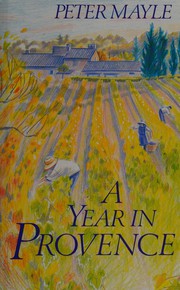
I nearly passed this one by, because it had the reputation of being the sort of book people buy at airports before a holiday in France. That reputation is not entirely wrong, and I will get to it later. What changed my mind was a friend who insisted that Peter Mayle's first book, published in 1989 by Hamish Hamilton, was funnier and sharper than its glossy reputation suggested. So I read it over a long weekend, and she was mostly right. It is a small book, around 197 pages in that first edition, and it moves at the pace of a good letter from someone who has just done something slightly mad.
The premise is almost aggressively simple. Mayle, a British advertising man who had spent years working in New York, gives up the commute and buys a old farmhouse in the south of France with his wife. The house sits in the Luberon, in the hills between Avignon and Aix. The book follows their first twelve months there, and the chapters march through the calendar month by month. There is no grand argument and no hidden puzzle. What there is instead is a sequence of encounters with weather, builders, truffles, dogs, meals and neighbours, told by a man who is clearly delighted to be out of an office.
The famous opening line is worth quoting because it sets the tone so exactly: "The year began with lunch." That is the whole book in miniature. The priorities have been rearranged, and the narrator is going to spend the next twelve months noticing what a life can look like when the main question each day is what to eat and who might turn up at the door.
The move and the first impressions
Mayle does not spend much time on the decision to leave. The move is already made by the time the story starts, which is a smart choice because the appeal of the book is not the dream but the collision between the dream and the reality. He and his wife arrive to find a house that needs a great deal of work, in a region whose rhythms they do not yet understand. The early chapters have the breathless quality of a diary kept by someone who cannot quite believe his luck even when the roof is leaking.
What struck me on rereading is how careful Mayle is to let the place be difficult. The mistral arrives and stays, and it is not romantic. It is a wind that gets into everything, that makes people short-tempered and that turns a pleasant terrace into somewhere you cannot sit. Rain arrives in a season when he expected sun, and the local farmers are worried rather than poetic about it. A reader looking for a postcard will find one or two, but they are always interrupted by something muddy or cold or inconvenient.
The house itself becomes a kind of character without ever being sentimentalised. Builders and plasterers come and go, and the work proceeds at a pace that the narrator slowly learns not to fight. When he asks when a job will be finished, the answer is "normalement," a word that he comes to understand as meaning roughly that the job will be done when it is done. Much of the comedy of the book comes from Mayle's gradual, painful adjustment to the fact that his British habits of scheduling and chasing simply do not travel. He arrives as a man who wants a completion date and leaves, if not a local, at least someone who understands why asking for one is faintly absurd.
A year of workmen, weather and truffles
The middle of the book is the strongest stretch, and it is built out of small disasters. A pool is installed and then has to be dealt with when it goes wrong. A wall is repaired. A garden is planned and partly ruined. Through it all, Mayle keeps a diary of the seasons and of the particular annoyance each one brings. The chapters have titles tied to the months, and that structure gives the whole thing a satisfying shape. You can feel the year turning.
The truffle episodes are the ones people remember, and they deserve their reputation. Mayle writes about the underground trade in these fungi with the pleasure of someone who has been allowed into a secret. There are secretive dealers, coded meetings, arguments about price and a good deal of suspicion about who is cheating whom. The truffle hunt is described as an event with its own rules, almost a sport, and the narrator is both an outsider and a participant. He is buying, so he is marked as a mark, but he is also paying attention and slowly learning how the game is played.
What makes these passages work is the combination of curiosity and self mockery. Mayle is willing to be the fool in his own story. He overpays, he misreads situations, he gets excited about things that turn out to be ordinary, and he reports all of it without trying to protect his dignity. That is a rarer quality in travel writing than it should be. Most writers who move somewhere exotic want you to know they are coping. Mayle wants you to know he is not, and that he is having a wonderful time anyway.
The weather keeps breaking in. Heat arrives and flattens everyone. A cold snap threatens the crops. Dogs appear and disappear and one of them, a large and ungovernable animal, becomes a recurring source of chaos. None of this is plotted in a conventional sense. The book advances by accumulation, and the pleasure is in the voice rather than the outcome. If you need a narrative with a climax, this is not that kind of book, and admitting that is only fair.
Meals, markets and the people next door
The other half of the book is about eating, and Mayle writes about food with an appetite that is genuinely infectious. Long lunches are described in loving detail. Restaurants are assessed by the character of the patron as much as by the cooking. Markets are visited in the early morning, and the narrator records what is in season and what it costs. A great deal of the book's famous charm comes from these passages, because they are so specific and so unhurried.
Yet it would be wrong to call the book purely gastronomic. The people Mayle meets are drawn with a comic sharpness that stops just short of caricature. There are the workmen with their own code of honour, the neighbours who appear at the gate with news or with a problem, the hunters who are out at dawn, and the local characters who seem to exist in a permanent state of mild dispute with one another. Mayle listens to them more than he lectures them, and his best pages are the ones where he simply reports a conversation and lets the reader enjoy the rhythms of it.
The relationship between the newcomers and the locals is the real subject, even when the surface is about a broken water pump. There is a genuine warmth here, but also a constant low level of friction. The Mayles are rich foreigners who have bought a place in a village where people have lived for generations. That fact is never far away, even when the book is at its most affectionate. Mayle is honest enough to show that his welcome depends partly on his money and partly on his willingness to be amused by the inconveniences that a local resident would simply find annoying.
This is also where the book's limitations start to show. The portrait of village life is affectionate but selective. We see the Markets and the long lunches and the eccentric characters, while the harder questions about who owns the land and who is priced out of it stay in the background. The book was published in 1989 and it helped to make the Luberon famous, which in turn helped to change the place it describes. That is not a charge that can be laid personally at Mayle's door, but a modern reader will feel the irony.
What the book is actually about
Underneath the anecdotes, A Year in Provence is a book about the difference between a dream and a daily life. Mayle arrives with a fantasy of the south, and what he gets is a life made of plumbing, weather and taboos nobody warned him about. The adjustment is the story. He learns that time works differently, that hospitality has rules, that a meal can be an event rather than a refuelling stop, and that being an outsider is a permanent condition rather than a temporary one.
The humour is the engine that carries this across. Mayle is very good at the long build to a small embarrassment, and he has an ear for the way people speak when they are being deliberately unhelpful. His own voice is that of a clever man who has decided to be pleasant about everything, and the slight strain in that decision is what makes the book funny. You can feel the advertising executive still taking notes even as he insists that none of it matters.
There is a quieter thread about marriage as well. The wife in the book is mostly referred to rather than given a separate interior life, but the two of them are clearly a team. They endure the builders and the cold together, and the shared joke of what they have done holds the story together. It is not a book that sets out to analyse the institution of marriage, but it shows a partnership working, which is more interesting than it sounds.
I should be honest about the way the chapters can blur together. Read straight through, a few of the builder anecdotes start to feel interchangeable, and not every meal needs a paragraph. The book is at its best when Mayle is encountering something for the first time and at its weakest when he is repeating a version of the same joke about how slow the workmen are. It is a short book, and even its repetition is relatively painless, but the unevenness is real.
The sequels and the afterlife
The book was popular enough to spawn a whole shelf. Toujours Provence followed in 1991, Encore Provence in 1999, and a later collection called French Lessons appeared in 2001. Each returns to the same territory and the same set of preoccupations, and the first book remains the freshest of them because the surprise is still intact. By the third, the reader knows the routine, and the jokes about local habits have to work harder.
There was also a wave of adaptations. BBC Radio 4 broadcast a version in 1991, and in 1993 BBC Television produced a series starring John Thaw and Lindsay Duncan, with appearances from Alfred Molina and James Fleet. The television version was not well received. It was eventually placed at number ten in a Radio Times list of the worst television programmes ever made, and the critic John Naughton called it a "smugathon" that achieved the near impossible of turning a John Thaw vehicle into something nobody liked. That is a brutal verdict, and watching the book's fine ear for speech flattened into a studio performance helps explain it.
The book's influence even produced a satire. Christopher Marsh published A Year in the Province in 2008, in which an Andalusian man talks his wife and three daughters into moving to Belfast. It is a neat reversal of the Mayle formula, and its existence is a measure of how quickly the original became a recognisable cultural type. Once a book gives rise to a parody, it has officially entered the vocabulary.
Who should read it now
This is a book for a certain mood. If you want a comic account of a foreigner making a mess of a new life, and you enjoy descriptions of long meals and stubborn tradesmen, it will likely charm you. If you are looking for a probing study of Provencal society, you will finish it feeling short-changed, because the people in it are mostly there to amuse or to feed the narrator. Both reactions are reasonable, and which one you have will depend less on the book than on what you want from it.
What I would say to a new reader is to go in expecting a collection of sketches rather than a novel and to read it slowly. The chapters are keyed to months, and they reward being taken a few at a time. The best of them, particularly the truffle chapters and the accounts of the mistral, have a durability that the smooth travel writing of the same period often lacks. I finished it wanting to book a flight, which is presumably what it was designed to make me do, and also wanting to check the price of a farmhouse in the Luberon, which is where the dream and the economics collide. That uneasy mixture of delight and suspicion is probably the most honest response the book can ask for.
FAQ
Is A Year in Provence a novel or a memoir?
It is a memoir. Peter Mayle chronicles his first twelve months after moving with his wife to a farmhouse in Provence, with chapters following the months of the year.
What happened with the television adaptation?
BBC Television made a series in 1993 starring John Thaw and Lindsay Duncan. It was poorly received and later placed at number ten in a Radio Times list of the worst television programmes ever made.
Are there sequels to A Year in Provence?
Yes. Mayle followed it with Toujours Provence in 1991, Encore Provence in 1999 and a later collection called French Lessons in 2001.
Similar books
More from Provence first, then related titles.
My Life in France
Julia Child's memoir of learning to cook in Paris, testing recipes for nine years, and becoming the teacher who changed how America thought about French food.
2,038-word summary · 9 min read
Taste: My Life Through Food
Stanley Tucci's memoir traces his life through food, from a Calabrian family kitchen in Katonah to film sets, marriage and a cancer fight that cost him his…
2,503-word summary · 11 min read
Notes from a Small Island
Bill Bryson's 1995 farewell tour of Britain, funny and fond, from Dover to London, the north, Scotland and Wales.
2,301-word summary · 10 min read
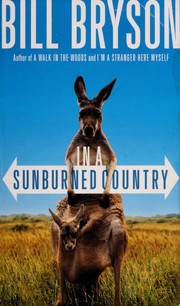
In a Sunburned Country
Bryson revisits Australia by city walks and long trains, with reef trips, critter comedy, and explorer history.
2,387-word summary · 11 min read
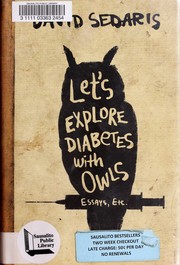
Let's Explore Diabetes with Owls
Sedaris gets French dental work, feeds a kookaburra in Australia, shops for a stuffed owl in London, and survives China, airports and a colonoscopy.
2,538-word summary · 11 min read
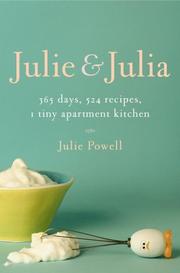
Julie and Julia: 365 Days, 524 Recipes, 1 Tiny Apartment Kitchen
Stuck at thirty in Queens, Julie cooks all 524 Julia Child recipes in a year and blogs it.
2,834-word summary · 13 min read
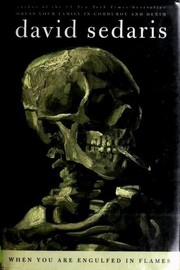
When You Are Engulfed in Flames
In twenty two essays Sedaris tries to quit smoking in Japan, buys a skeleton, fights spiders in Paris, and files dry reports from France on family, country…
2,974-word summary · 13 min read
Under the Tuscan Sun
Frances Mayes and her husband Ed restore an abandoned villa near Cortona, learning its stone walls, markets, and seasonal cooking one room and one meal at a…
2,619-word summary · 12 min read
Kitchen Confidential: Adventures in the Culinary Underbelly
Bourdain on rough kitchens, past drug use, Les Halles years, and why you should never order fish on Monday.
2,562-word summary · 11 min read
A Walk in the Woods: Rediscovering America on the Appalachian Trail
Bryson and friend Katz attempt the Appalachian Trail with blisters, bears, and laughs.
2,660-word summary · 12 min read
Me Talk Pretty One Day
Sedaris on French classes, family chaos, and learning to speak badly in two languages.
2,111-word summary · 9 min read

I Feel Bad About My Neck: and Other Thoughts on Being a Woman
In short, funny essays written just after her sixty-fifth birthday, Nora Ephron takes on aging, vanity, a White House summer, and the daily upkeep of looking…
2,099-word summary · 9 min read
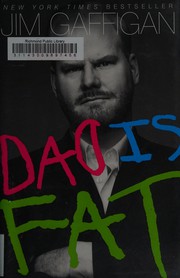
Dad Is Fat
A comic essay collection about raising five kids in a two-bedroom New York apartment, delivered in Gaffigan's dry, deadpan voice.
2,196-word summary · 10 min read
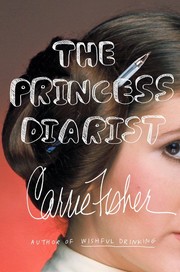
The Princess Diarist
Built from diaries Fisher kept at nineteen while filming the first Star Wars movie, this 2016 memoir revisits her affair with Harrison Ford and the strange…
2,360-word summary · 10 min read
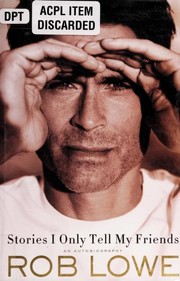
Stories I Only Tell My Friends
Rob Lowe's 2011 memoir runs from an Ohio lumberyard to the Oval Office, through Brat Pack fame, a public scandal, sobriety and a television comeback, told with…
2,234-word summary · 10 min read
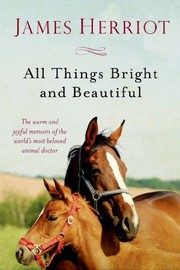
All Things Bright and Beautiful
Linked memoirs from a young vet in the Yorkshire Dales, moving between difficult farmers, beloved animals and the household above the surgery at Skeldale House.
2,004-word summary · 9 min read
Wishful Drinking
Carrie Fisher's 2008 memoir, drawn from her one-woman show, tells her story with sardonic jokes about Hollywood parents, Princess Leia, bipolar disorder, and…
2,341-word summary · 10 min read
84, Charing Cross Road
Over twenty years, letters between a cash-strapped New York writer and a London bookseller grow into a warm, funny friendship built on rare books and food…
2,343-word summary · 10 min read

Down and Out in Paris and London
Orwell's account of washing dishes in Paris hotels and tramping through London does not ask for pity, only for a clear look at how poverty actually works.
2,282-word summary · 10 min read
This Time Next Year
Two women give birth minutes apart on New Year's Day 1990, and one takes the other's lucky name. Thirty years on, their children meet again.
2,194-word summary · 10 min read
Dry
A memoir of drinking, rehab and relapse, and the strange business of getting sober one morning at a time.
2,643-word summary · 12 min read

Dear Girls: Intimate Tales, Untold Secrets & Advice for Living Your Best Life
Ali Wong's debut collects fourteen letters to her daughters, covering sex, money, work, marriage, Vietnam, and being a working Asian American mother.
2,266-word summary · 10 min read
At Home: A Short History of Private Life
Bill Bryson tours his own Norfolk rectory room by room to explain how private life and the modern home got built.
2,334-word summary · 10 min read
Wedding Night
Lottie marries an old flame days after a breakup, then flies to a Greek island while her sister quietly works to sabotage the honeymoon. A farce about memory,…
2,213-word summary · 10 min read
Travels with Charley
Steinbeck drives across America with his poodle Charley, looking for the country he remembers and finding a place that has changed.
2,039-word summary · 9 min read
Scrappy Little Nobody
Anna Kendrick's essays trace her path from a Portland childhood and Broadway to Hollywood, with jokes, anxiety, and a refusal to pretend fame fixed her.
2,092-word summary · 9 min read
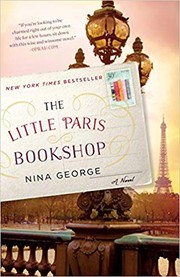
The Little Paris Bookshop
A Paris bookseller who prescribes novels as medicine finally opens a twenty one year old letter from his lost love and sails south through France to find her.
2,050-word summary · 9 min read
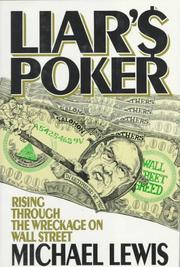
Liar's Poker
Michael Lewis recalls his years as a Salomon Brothers bond salesman in the 1980s, when bluffing paid better than analysis and the mortgage machine was just…
2,405-word summary · 11 min read
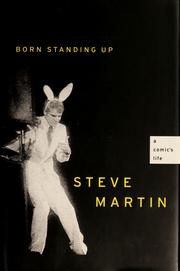
Born Standing Up: A Comic's Life
Steve Martin's memoir of how a shy Disneyland magician's assistant built a strange avant-garde act, and why he walked away from stand-up at his peak.
2,034-word summary · 9 min read

Seriously...I'm Kidding
DeGeneres strings show stories and home jokes into light life advice.
2,292-word summary · 10 min read