
Reading options
What's inside (8 sections)
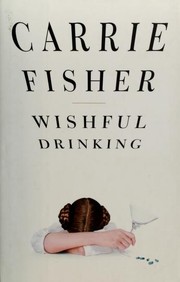
I picked up Wishful Drinking expecting a quick laugh and got something stranger: a very short book that somehow contains an entire Hollywood dynasty, a lifetime of pills and handlers, and one woman's habit of telling the truth about herself in the form of a joke. It was published in 2008 by Simon & Schuster, runs 163 pages in the hardback, and reads like someone talking fast into a microphone. Fisher had already been performing this material as a one-woman show, and the pace of the book owes a lot to the stage. I finished it in an evening, then spent longer than that looking up the family tree, because the people in these pages really did live the lives she describes.
Why this is a book and not just a show
The title refers to a book, and that is the edition cited here: the 2008 Simon & Schuster hardback, with 163 pages and the ISBN on the copyright page. It has no subtitle, which is worth saying because the show and the later HBO documentary get referred to by the same name. The book grew out of a one-woman stage show that Fisher developed with writer and director Joshua Ravetch. The show debuted at the Geffen Playhouse in Los Angeles, moved to Berkeley Repertory Theatre, played venues including Arena Stage in Washington and Seattle Repertory Theatre, and eventually reached Broadway at Studio 54 in the fall of 2009, where it ran until January 2010. HBO filmed it in 2010 with directors Fenton Bailey and Randy Barbato, and that version aired in December of that year.
The documentary caught the performance at a moment when Fisher was, by her own account, sober and steady enough to look back without flinching. It was filmed with minimal fuss, and reviewers noted that the best decision the directors made was to stay out of the way. Fisher had already spent years refining this material in front of live audiences, so the filmed version mostly consists of her talking and the audience laughing. A Boston Globe reviewer found the material about her parents and stepparents a little wearing while admitting that the Hollywood stories were outrageous and that Fisher had enough self-awareness to see how the whole show could look like a narcissistic screed. That tension, between the comic performance and the person underneath it, is the most interesting thing about every version of Wishful Drinking.
So the prose here is not a conventional memoir with a slow build and a tidy arc. It is a transcription of a performance, more or less, full of short paragraphs and one-line jokes and family photographs. The New York Times called it a funny, sardonic little memoir and then noted that it was pretty slight, padded out with big type and extra space between the lines. That seems exactly right. This is a small book in physical terms, and it is deliberately unserious on the surface. If you want a sweeping account of a turbulent life, you will not find it in these 163 pages. You will find a greatest-hits album of a life, told by someone who was very good at working a room.
A family tree with too many branches
A large part of the fun is Fisher's family, which is Hollywood royalty with the complications turned up high. Her mother was the actress and dancer Debbie Reynolds, all warmth and endurance and show-business discipline. Her father was the singer Eddie Fisher, a man whose career and private life were tangled together in the public eye. When Eddie Fisher left Debbie Reynolds for Elizabeth Taylor, it became one of the famous scandals of the era, and Elizabeth Taylor thus became Fisher's stepmother. Fisher tells these stories with the glee of someone who grew up watching adults behave badly in public and decided to make it material.
The tree keeps branching. Eddie Fisher later married Connie Stevens, who gave Fisher two half-sisters, Joely and Tricia Leigh. Debbie Reynolds married more than once as well. Fisher had a brother, Todd, and a house full of stepparents and step-siblings and cousins who appear and reappear through the book. She jokes about the sheer number of parents she accumulated and about the family gatherings that must have looked, from outside, like a episode of a particularly strange television show. What emerges underneath the jokes is a portrait of a child who grew up in a world where affection and publicity were thoroughly mixed together, and where the boundaries of a family were never quite fixed.
She is good on the particular sadness of having a famous mother who was also a working performer, and on the strange experience of watching your parents' romantic lives play out in newspapers. But she is also careful, in her way, not to be cruel. Debbie Reynolds comes across as a figure of real toughness, a woman who kept working and kept her children close through embarrassments that would have flattened someone else. Fisher's affection for her mother is the warmest thread in the book, and it is the one place where the jokes briefly get out of the way.
Leia, the bra, and the life in a white bikini
You cannot talk about Carrie Fisher without talking about Princess Leia. She was nineteen when she took the role in Star Wars, and it made her famous in a way that never quite wore off. In Wishful Drinking she looks back at the metal bikini, the identifying features of the character, and the odd fact that a woman can spend decades being recognized on the street for a costume she did not choose. She writes about the metal bikini with a mixture of embarrassment and ownership, since it was both the thing she most wanted to escape and the thing that paid the bills. The honesty is refreshing because she never pretends to be above it. She knows the role made her, and she knows it also narrowed how people saw her.
The most famous line in the book arrived in the form of an obituary she wrote for herself. After her death in December 2016, it was reprinted everywhere:
I want it reported that I drowned in moonlight, strangled by my own bra.
It is a perfect Fisher line, funny and sad and peculiarly specific, and it says a lot about how she treated her own legend. She had spent a lifetime being asked about the role, so she took control of the last word on it. In the book the line is a punchline. In the news after her death it became a kind of epitaph, which she probably would have found both flattering and ridiculous.
She also writes about the darker side of that fame: the way a single image can freeze a person in place, the way fans project their own affection onto you, and the way a woman in a galaxy far, far away can become a stand-in for a real person's hopes. She does not complain about it for long. She mostly makes jokes, then lets one plain sentence land and move on.
Bipolar, pills, and the wishful part
The title is a play on words that turns out to be more serious than it first sounds. Fisher was diagnosed with bipolar disorder, and she writes here about the medications, the doctors, the hospital stays, and the electroconvulsive therapy that were part of keeping her steady. She also writes about drinking and drug use, and about the long work of getting sober. The wishful part of the title is about the habit of believing that things will work out the way you want, a habit that can look like optimism and can also look like denial. Add the drinking and you have a person who spent years negotiating with her own chemistry in public.
What is striking is the tone she uses. She never asks for pity and she never pretends the illness was charming. She describes the strange logic of a mind that cycles, and the exhausting business of finding the right combination of pills, with the dry precision of someone who has had that conversation with a doctor many times. At the same time, she understands that her temperament fed her comedy. The speed and the dark turns and the refusal to sit still are part of what made her funny, and also part of what made her life hard. She does not try to solve that contradiction. She just puts it on the page and lets it stand.
The phrase wishful drinking works on a couple of levels that Fisher never fully unpacks, which is part of its charm. On one level it is a drinking joke, the kind of title a comedian writes on a napkin. On another, it names a way of thinking she knew well, the tendency to drink in the version of events you would prefer rather than the one in front of you. She had reason to know the difference, having grown up in a family where public stories about private disasters were carefully managed for years. The book keeps both meanings alive and declines to choose between them.
This is the section where readers looking for a recovery story will be frustrated, because Fisher resists the tidy arc. There is no single moment where everything changes and the music swells. Sobriety and treatment appear as ongoing, unglamorous work, and the book is content to live with the mess rather than explain it. That is honest, but it is also part of why the memoir feels slight. The pain is real and you can feel it under the lines, but it stays mostly under the lines.
Husbands, daughters, and the people she loved
Fisher was married briefly to the musician Paul Simon in the 1980s, and she writes about that marriage with the same mixture of affection and self-mockery she brings to everything. She describes the pull of a intense, creative, difficult man and the way a young woman can mistake turbulence for destiny. The marriage did not last, but the story stays in the book because it explains something about her pattern: she was drawn to people who were complicated and talented and not especially easy to love well.
Her daughter, Billie Lourd, was born in 1992, and Fisher writes about motherhood with a clear, unsentimental love. Billie's father was Bryan Lourd, a film agent with whom Fisher had a long, close relationship that was never a conventional marriage. She refers to him with real warmth, and the passages about their daughter are among the most straightforward in the book, largely because she drops the performer's instinct to turn everything into a bit. She also writes about her brother Todd and about the cousins and half-siblings who make up the extended family, and about the way a person can be surrounded by relatives and still feel oddly alone.
She also writes about what sobriety actually looked like in her later decades: the routine, the honesty about triggers, the refusal to pretend it was glamorous. Fisher became a candid public speaker about mental illness in the years after this book, and Wishful Drinking is where that voice first found a wide audience. She was not interested in being an inspiration, and she was suspicious of any story that turned a difficult life into a lesson. She wanted the laughter and the facts in the same room, and she trusted readers to sort them out.
There is a production-rights dispute with a producer named Jonathan Reinis that grew out of the stage show, and Fisher gives it a few pages. It is the least engaging part of the book, mostly because it involves money and contracts rather than people. It also arrived while the show was doing well on Broadway, which adds a sour note to what was otherwise a triumphant stretch. Fisher handles it the way she handles most unpleasant things: she makes a few sharp jokes and moves along.
What the reviewers liked and what they wanted more of
The reception was warm but not uncritical. The New York Times praised the book's wit and its sardonic voice while pointing out that it was thin and padded with photographs and white space. Salon's Rebecca Traister found a great deal to laugh at but wished Fisher had done something harder with the material, arguing that she gathered the glittering details of her public life around herself for comfort rather than pushing past them to show what was going on inside. That criticism seems fair to me. The book is extremely good at being funny and only occasionally willing to be vulnerable on purpose.
That does not make it a bad book. It makes it a specific one. Wishful Drinking is a performance captured on paper, and judging it as a full memoir is a bit like judging a stand-up set for not having enough quiet moments. It does what it set out to do, which is to take a life that was already heavily documented and tell it again in a way that belongs to Fisher rather than to the tabloids. The photographs and the big type and the short paragraphs are part of that design, not padding, even if the padding complaint has a point.
I would recommend it to anyone who likes funny, sharp memoirs and does not mind that the author keeps the deeper feelings at arm's length. I would be careful about handing it to someone who wants a thorough account of bipolar illness or addiction, because this is a comic book about those things, not a guide. What stays with you is the voice: fast, smart, a little wounded, and determined to get the last laugh. Fisher knew exactly how her life looked from the outside, and she decided to tell it from the inside anyway, with a wink and a drink and a line about moonlight.
FAQ
Is Wishful Drinking the book or the stage show?
It is both, but the 2008 Simon & Schuster book is the memoir cited here, based on the one-woman show Fisher developed with Joshua Ravetch. The show later ran on Broadway and became an HBO documentary.
What does the title mean?
It plays on wishful thinking and Fisher's history of drinking and addiction, describing the habit of believing things will turn out the way she wants.
Is Wishful Drinking a happy or a sad book?
It is written as comedy, and Fisher keeps the tone sardonic and quick. Reviewers noted that the pain is there under the jokes, but she keeps most of it out of view.
Similar books
Born Standing Up: A Comic's Life
Steve Martin's memoir of how a shy Disneyland magician's assistant built a strange avant-garde act, and why he walked away from stand-up at his peak.
2,034-word summary · 9 min read
Seriously...I'm Kidding
DeGeneres strings show stories and home jokes into light life advice.
2,292-word summary · 10 min read
The Princess Diarist
Built from diaries Fisher kept at nineteen while filming the first Star Wars movie, this 2016 memoir revisits her affair with Harrison Ford and the strange…
2,360-word summary · 10 min read
Dad Is Fat
A comic essay collection about raising five kids in a two-bedroom New York apartment, delivered in Gaffigan's dry, deadpan voice.
2,196-word summary · 10 min read
Stories I Only Tell My Friends
Rob Lowe's 2011 memoir runs from an Ohio lumberyard to the Oval Office, through Brat Pack fame, a public scandal, sobriety and a television comeback, told with…
2,234-word summary · 10 min read
Scrappy Little Nobody
Anna Kendrick's essays trace her path from a Portland childhood and Broadway to Hollywood, with jokes, anxiety, and a refusal to pretend fame fixed her.
2,092-word summary · 9 min read
Open Book
Simpson replays pop fame, love and drink through recovery work.
2,552-word summary · 11 min read
My Horizontal Life: A Collection of One-Night Stands
Handler turns dating disasters and family chaos into brash comic essays about single life in Los Angeles.
2,304-word summary · 10 min read
The Girl with the Lower Back Tattoo
Amy Schumer mixes raunchy jokes with frank essays on family, dating, body image, and the shooting that pushed her into gun control advocacy.
2,259-word summary · 10 min read
Are You There, Vodka? It's Me, Chelsea
Handler mines family, jail, dating, and travel for brash essays where oversharing is both joke and shield.
2,186-word summary · 10 min read
Furiously Happy: A Funny Book About Horrible Things
Jenny Lawson mixes blunt talk about depression with wild stunts and taxidermy to argue for grabbing joy on purpose.
2,963-word summary · 13 min read
Hyperbole and a Half
Stick-figure stories about dogs, cake, and depression that turn small mess into big laughs.
2,103-word summary · 9 min read
The Woman in Me
Britney Spears tells her own story from teen stardom to a thirteen year conservatorship, and how she fought to reclaim her voice and freedom.
2,505-word summary · 11 min read
Bossypants
Tina Fey moves from Pennsylvania childhood through improv and SNL to 30 Rock in this funny 2011 memoir. Expect backstage stories, jokes about work and…
2,301-word summary · 10 min read
I Feel Bad About My Neck: and Other Thoughts on Being a Woman
In short, funny essays written just after her sixty-fifth birthday, Nora Ephron takes on aging, vanity, a White House summer, and the daily upkeep of looking…
2,099-word summary · 9 min read

A Year in Provence
Peter Mayle's first year in a Luberon farmhouse, told through mistral winds, difficult builders, long lunches and local rules nobody warned him about.
2,209-word summary · 10 min read
Visions of Sugar Plums
A strange man named Diesel appears in Stephanie Plum's kitchen days before Christmas and pulls her into hunting a bail-jumping toy maker. A short, silly, warm…
2,193-word summary · 10 min read
Taste: My Life Through Food
Stanley Tucci's memoir traces his life through food, from a Calabrian family kitchen in Katonah to film sets, marriage and a cancer fight that cost him his…
2,503-word summary · 11 min read
Soul Music
A harpist from Llamedos brings rock music to Ankh-Morpork, and a primordial force takes hold of the city, pulling Susan Sto Helit and Death into a fight over…
2,406-word summary · 11 min read
Smokin' Seventeen
Stephanie's bonds office is a motor home on a construction site where dead bodies keep turning up, and the killer seems to know her name.
2,342-word summary · 10 min read
Sizzling Sixteen
Stephanie Plum has five days to raise nearly $800,000 when her cousin Vinnie is kidnapped over a gambling debt, and the only plan involves an alligator and two…
2,533-word summary · 11 min read
Second First Impressions
A risk-averse retirement-villa manager and the developer's tattooed son are thrown together at work, where her fear of the outside world meets his relentless…
2,073-word summary · 9 min read
Lords and Ladies
The elves are coming and Lancre is not ready. Pratchett's 1992 novel sends Granny, Nanny and Magrat into a cruel, glittering invasion that spoofs A Midsummer…
2,476-word summary · 11 min read
I Am America (And So Can You!)
Stephen Colbert's 2007 debut extends his Colbert Report pundit into print, a mock-conservative tour of American life with margin notes, stickers and Fun Zones.
2,635-word summary · 12 min read
Explosive Eighteen
Stephanie Plum flies home from a ruined Hawaii trip to find her seatmate murdered and a photograph that has the FBI, fake agents and a killer on her trail.
2,393-word summary · 11 min read
An Unquiet Mind: A Memoir of Moods and Madness
A clinical psychologist's memoir of bipolar disorder, written from both sides of the desk, about mania, lithium, the death of a lover and the cost of hiding a…
2,013-word summary · 9 min read

All Things Bright and Beautiful
Linked memoirs from a young vet in the Yorkshire Dales, moving between difficult farmers, beloved animals and the household above the surgery at Skeldale House.
2,004-word summary · 9 min read

Feet of Clay
A clay golem goes mad and a Patrician is poisoned as Vimes and the Watch untangle a murder plot in the nineteenth Discworld novel.
2,308-word summary · 10 min read
84, Charing Cross Road
Over twenty years, letters between a cash-strapped New York writer and a London bookseller grow into a warm, funny friendship built on rare books and food…
2,343-word summary · 10 min read
A Long Way Down
Four strangers meet on a London rooftop on New Year's Eve, each planning to jump, and end up making a pact to stay alive until Valentine's Day.
2,145-word summary · 10 min read