
Reading options
What's inside (9 sections)
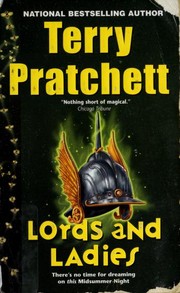
I picked this one up because I had heard it was the book where the elves finally arrive, and that it was the funniest of the witches stories. Both things turned out to be true, though not quite in the way I expected. It was published in 1992 by Victor Gollancz, the fourteenth Discworld novel and the fourth about Granny Weatherwax and her coven. It also wears its Shakespeare joke quite openly, since large parts of it are a broad, grinning spoof of A Midsummer Night's Dream. What I did not expect was how much of the book is about getting older, and about a woman who has spent her whole life being frightening working out what to do with the last of her strength.
The witches come home to Lancre after eight months away, following the events of the previous book in Genua. Granny Weatherwax, Nanny Ogg and Magrat Garlick arrive to find that King Verence has been busy. He announces that he and Magrat are to be married, and that all the arrangements have already been made in her absence. Magrat is stunned, and you can feel her mild panic at being turned into a bride before she has had time to think about it. Verence is a good man and genuinely fond of her, but he is also a king, and kings are used to making arrangements. That small mismatch between what Magrat wants and what everyone else has decided for her turns out to be one of the quiet engines of the whole story.
A wedding, and a circle in a field
Not long after the witches return, crop circles start appearing in the fields around Lancre. To Nanny and Granny this is a bad sign, and they recognise it straight away as a sign that circle time has come round again. Every so often, the universes that normally sweep past one another interlock, and for a short while things can pass between them. On the Discworld, the visitors are elves, and they are not the kind you would want to meet. They are beautiful and cruel, and they get their way through glamour, a kind of power that makes humans see them as kind and wonderful while quietly weakening the will to resist. Iron hurts them, and so does the magnetism of the standing stones on the moor known as the Dancers, which have kept them out for generations.
Granny and Nanny know all this, and they decide that Magrat is better off not knowing. That decision is the source of a lot of the trouble that follows. Magrat is not a fool, and being shut out of the conversation annoys her more than the danger itself. She leaves the coven, disavows witchcraft and moves into an apartment in Lancre Castle, where she can be near Verence but is otherwise at loose ends. Court life bores her, and she is unsure where she belongs now that she has walked away from the only role she had. I felt for her here. Her frustration is not petulance, it is the real discomfort of someone who has outgrown one version of herself and cannot yet see the next one.
While all this is going on, a party of wizards arrives from Unseen University for the wedding. Mustrum Ridcully, the Archchancellor, leads them, and he is a large, hearty man with a lively interest in Granny that goes back a long way. The Librarian comes too, and so does Casanunda, a dwarf with a reputation for being a lover and not much else. The wizard chapters are, I think, the weakest part of the book. They are full of the kind of joke that needs a whole shelf of earlier novels to land, and they interrupt a story that is getting properly strange out on the moor. I found myself skipping ahead a little to get back to the witches.
Diamanda and the new coven
Granny and Nanny discover that a group of local girls has started a coven of its own, led by Diamanda Tockley and including Agnes Nitt, who has a talent for singing and a habit of eating more than anyone thinks sensible. These girls have been dancing naked at the Dancers, which is exactly the sort of thing that can open a door when the door is already loose in its frame. The two older witches try to talk them out of it, and when that fails Granny challenges Diamanda to a contest. The two of them try to outstare the sun on the moor, each using power to hold the other in place, with Nanny drawing a protective circle around them. Granny is losing badly, and the only way out is to wait for sunset, which she will not survive. Nanny solves it by waving a bag of sweets at her grandson Pewsey, who runs across the circle and gets caught in a discharge of magic. Granny is freed, the boy is unharmed, and the watching crowd decides that Diamanda has won only technically, since she ignored his scream. She storms off in a fury.
That scene is funny, but it is also a neat piece of character work. Granny does not win by being stronger. She wins because Nanny is practical and a boy likes sweets, and because the crowd sees what matters. Pratchett keeps doing this in the book, using a joke to tell you something true about how these people think.
Diamanda, furious, runs through the Dancers into the world of the elves. She is captured and about to be hurt for their amusement when Granny goes after her and pulls her back. An elven arrow clips Diamanda on the way out, leaving her poisoned and unconscious, and an elf follows them through into Lancre. Nanny knocks it out with an iron poker before it can get its bearings. They carry Diamanda and the prisoner back to the castle, where Magrat treats the girl and Verence agrees to lock the elf in the dungeons. Magrat, worried and curious, inadvertently sets it free later. Granny has by this point started having memories of other lives she might have led in other worlds, and a growing sense that her own death is close. It is a strange, quiet thread running through a very loud book, and I wish it had been given more room.
A play that opens the door
Jason Ogg, the smith, and the Lancre Morris Men decide to put on a play for the wedding guests. They rehearse near the Dancers, and the elves, who are already close, murmur suggestions into the performance. The play turns into a story about a king being taken by the Queen of the Fairies, and when it is staged at the stone circle the belief of the audience does the rest. Belief is a real force on the Discworld, and the guests are persuaded to take the circle apart. The stones that have held the elves back for centuries come down, and the visitors pour through.
The timing is cruel. None of the three witches is in a position to stop it. Magrat has locked herself in her room after finding a letter Granny wrote to Verence about the wedding plans, and she is hurt that her friend has been arranging her life behind her back. Nanny is being romanced by Casanunda, which amuses her more than it should. Granny has been spirited into the woods by Ridcully, who has ideas of reviving the romance they might have had when they were younger. So the elves arrive at a castle with no witch in charge of it, and the real work of the second half of the book falls to the one person nobody has taken seriously.
Magrat finds Queen Ynci
With the castle overrun, Magrat is helped only by Shawn Ogg, the nervous, put-upon general dogsbody who does the work nobody else wants. He tries to get her to safety, but the elves catch him and break his arm. Magrat flees through the Long Gallery and comes across a portrait of Queen Ynci, one of the legendary founders of Lancre. Something in the picture steadies her. She finds a suit of armour said to have belonged to Ynci and puts it on, and the armour changes how she carries herself. She rescues Shawn, then rides out to fight, and the iron in the armour keeps the elves away. The joke, revealed later, is that Ynci was invented a few generations ago and the armour is basically a set of cookware. Magrat never learns this. It works on her anyway, which is the point.
I really liked this stretch of the book. Magrat has spent the series being the young one, the slightly awkward one, the witch who is unsure of herself. Here she becomes the person who actually gets things done. She remembers the old songs she learned as a child and realises that a lot of them are riddles warning about elves and fairies, which is a lovely bit of writing. She fights her way to the Dancers while the men around her either get captured or get in the way.
Granny, Ridcully and the King below
Granny and Ridcully lose their way in the woods while the elves close in. Granny, who has been feeling the presence of her own death, starts going in circles, and Ridcully eventually teleports off to fetch help, leaving her to be taken. Meanwhile Nanny and Casanunda go through a gateway into the home of the Elf King, who is the Queen's husband and thoroughly sick of her. Nanny finds him down in a hidden place beneath the hills, a horned and ancient figure who hates his wife for abandoning him underground. She cannot be sure he will help, since he might be perfectly content to stay where he is. What she does have is an iron horseshoe from Death's horse, Binky, which can pass through the magnetic stones that keep the elves in. No elf can touch it.
This is where the book starts pulling its threads together. The elves are no ordinary monster of the week. They are vain, immortal and bored, and the worst thing about them is that they are bored in a way that hurts other people for fun. Nanny understands this clearly, and her anger at them is the most straightforward feeling in the story. Granny understands it too, but she is busy with her own private calculation, and the book does not explain it to you until the end.
The Queen, the bees and the borrowed mind
At the Dancers, Magrat arrives at the same moment as the people of Lancre, who have been rallied by Shawn and Nanny. The Elf Queen wants to marry Verence to make her rule legitimate, and she deals with Magrat easily at first, using glamour to stop her in her tracks. Granny, captive in the elven camp, fights the Queen in her own mind and manages to free Magrat from the glamour before the effort costs her everything. Her body collapses, and the bees from her hives, which have been swarming all afternoon, pour over her and cover her like a coat. Magrat, released, attacks the Queen, who strips away her identity piece by piece looking for something to break. What she finds is a core of pure rage and courage, and Pratchett makes it plain that Granny has been building that rage deliberately all along. Every time she refused to explain things to Magrat, every time she kept a secret and let the girl seethe, she was forging a weapon. Magrat, still wearing Ynci's armour, beats the Queen back, and a projection of the Elf King appears on the horizon to send the elves home.
Granny looks dead. Nanny finds the box she was told to open, containing her will and a card that reads, in her blunt spelling, that she is not dead. The bees have done something nobody has managed before: Granny has borrowed the mind of the whole hive at once. Back at the castle there is one last problem, because Ridcully has laid her out in a room with a closed window. Magrat throws a candlestick through the glass, the bees come in, and Granny wakes up. It is a great scene, and it earns its place by being both a trick and a real piece of feeling.
The wedding, and what it all meant
Magrat and Verence are married by Ridcully, with Magrat wearing her torn dress over the armour of Queen Ynci. Nanny points out to her that Granny's letter, the one that made her so angry, also gave her the strength she needed in the end. Granny chides Nanny for bringing the Elf King into it, and the two of them argue about whether to tell Magrat that Ynci never existed. Before they can settle it, a unicorn confronts them, which is as good a note to end on as any. Granny and Ridcully make peace with their past, and the sense of death she had been feeling turns out to be connected to the deaths of some of her parallel selves as much as her own.
I finished the book thinking that the title is cleverer than it first looks. Lords and Ladies is what people call the elves because saying their real name might invite them in, and the book is full of people who get called something they are not. Magrat is not a warrior queen, and Ynci is not real, and Granny is not dead, and the elves are not the glittering nobles they appear to be. The person who understands this best is Granny, who spends the story manipulating everyone around her toward a result only she can see coming. That makes her admirable and a little unnerving at the same time, which is exactly how I like her.
It is not flawless. The wizard subplot drags, the density of names and in-jokes can be exhausting if this is your first Discworld book, and the arrival of the Elf King to settle things at the last moment feels like a convenient way out of a fight the witches were already winning. The parallel-world thread about Granny's mortality is interesting but never fully paid off. Still, the core of the book is excellent. Magrat's transformation is genuinely moving, the elves are properly nasty, and Pratchett gets a lot of comedy out of the idea that the stories we tell to frighten children might be instructions for survival. I would hand this to someone who already likes the witches and wants to see them at their strangest. I would warn them that the first hundred pages spend a lot of time on wizards before the elves get going.
FAQ
Do I need to have read the earlier Discworld books first?
No. It is the fourteenth Discworld novel and the fourth Witches story, but it explains its own elves, glamour and circle time as it goes. Knowing the earlier books makes the in-jokes land more easily.
Is Lords and Ladies a funny book or a frightening one?
It is mainly a comedy, and it spoofs A Midsummer Night's Dream in places, but the elves are genuinely cruel and the way they use glamour is meant to unsettle you.
Why do Granny and Nanny keep the elves a secret from Magrat?
They claim it is to protect her, but the secrecy drives her out of the coven. The ending reveals that Granny was also provoking her anger on purpose, so Magrat could withstand the Elf Queen.
Similar books
More from Discworld first, then related titles.
The Color of Magic
A failed wizard guides a tourist across a flat world on a turtle, with comic fantasy chaos.
2,032-word summary · 9 min read
The Light Fantastic
Rincewind and Twoflower fall off the world while wizards race a red star.
1,974-word summary · 9 min read
Equal Rites
A dying wizard passes his staff to a baby girl, and Granny Weatherwax escorts Esk to Unseen University in Pratchett's third Discworld book.
2,871-word summary · 13 min read
Mort
Death hires apprentice Mort in this 1987 Discworld comedy, where a spared princess splits reality and duty bends for love, with no Rincewind.
2,386-word summary · 11 min read
Sourcery
A dying wizard hides his soul in a staff, his eighth son becomes a sourcerer strong enough to break the world, and Rincewind is sent to stop him with a sock.…
2,404-word summary · 11 min read
Wyrd Sisters
Three Lancre witches rescue a murdered king's baby, hide Lancre's future, and trap a guilty duke with a play in Ankh-Morpork.
3,085-word summary · 14 min read
Pyramids
A prince raised by assassins comes home to a desert kingdom where the high priest rules and a spitefully huge pyramid starts bending time.
2,441-word summary · 11 min read
Guards! Guards!
A drunk captain, his last two guards, and an earnest recruit face a summoned dragon in Ankh-Morpork in Pratchett's funny eighth Discworld book.
2,307-word summary · 10 min read
Moving Pictures
When the alchemists invent the movies, a dropout and a waitress chase stardom in Holy Wood while a talking dog watches belief tear open the fabric of Discworld.
2,370-word summary · 11 min read
Reaper Man
Death gets fired and farms while Windle Poons refuses to die.
2,579-word summary · 11 min read
Witches Abroad
Three Lancre witches fly to Genua to stop a fairy godmother from forcing a servant girl into a storybook marriage, and find a city arranged around a happy…
2,651-word summary · 12 min read
Small Gods
God Om trapped as a tortoise must convince novice Brutha to save Omnia from its own church.
2,063-word summary · 9 min read
Men at Arms
The City Watch gets new recruits and a murder case when the Disc's only handgun turns up in Ankh-Morpork, in the fifteenth Discworld novel.
2,216-word summary · 10 min read
Soul Music
A harpist from Llamedos brings rock music to Ankh-Morpork, and a primordial force takes hold of the city, pulling Susan Sto Helit and Death into a fight over…
2,406-word summary · 11 min read
Feet of Clay
A clay golem goes mad and a Patrician is poisoned as Vimes and the Watch untangle a murder plot in the nineteenth Discworld novel.
2,308-word summary · 10 min read
Hogfather
Death fills in for a missing Father Christmas, Susan Sto Helit hunts the Hogfather, and the twentieth Discworld novel turns Santa into a management problem.
2,871-word summary · 13 min read
Night Watch
Vimes is thrown back in time and must train his young self through a revolution.
2,003-word summary · 9 min read
The Wee Free Men
Nine-year-old Tiffany Aching teams with the Nac Mac Feegle to rescue her brother from the Fairy Queen.
2,600-word summary · 12 min read
Going Postal
A hanged con artist must revive Ankh-Morpork's dead Post Office and outwit a murderous rival in Pratchett's 33rd Discworld novel.
2,228-word summary · 10 min read
Nettle & Bone
Marra, a princess in a convent, leaves to save her abused sister, but first she must finish three impossible tasks: a bone dog, a nettle cloak, moonlight in a…
2,061-word summary · 9 min read
The Unicorn Hunters
Arden trades Russian folklore for fifteenth-century Brittany in a standalone about a duchess, a forced marriage, and a unicorn hunt that hides a secret wedding.
2,559-word summary · 11 min read
The Knight and the Moth
Six of seven Diviners vanish, and the last one flees a cathedral with a mocking knight and a gargoyle who calls everyone Bartholomew. Gillig's gothic fantasy…
2,936-word summary · 13 min read
The Darkest Part of the Forest
In a town built around a sleeping horned boy in a glass coffin, a girl discovers she has been spending her nights as a faerie king's knight and remembers none…
2,012-word summary · 9 min read
I Am America (And So Can You!)
Stephen Colbert's 2007 debut extends his Colbert Report pundit into print, a mock-conservative tour of American life with margin notes, stickers and Fun Zones.
2,635-word summary · 12 min read
Quicksilver
Saeris Fane steals from the desert queen's reservoirs until a gateway flings her into the frozen fae world, where Kingfisher needs her alchemist magic.
2,311-word summary · 10 min read
Hounded
A two-thousand-year-old druid runs a bookshop in Arizona, hides from an Irish god who wants his sword back, and talks to his dog.
2,159-word summary · 10 min read
The Once and Future Witches
Three estranged sisters bring witchcraft back to an 1893 city where magic hides in nursery rhymes and the fight for the vote is also a fight for power.
2,132-word summary · 9 min read
An Enchantment of Ravens
Isobel, a mortal artist in the fairy town of Whimsy, paints a portrait of the autumn prince and falls in love with him, breaking the laws of her craft.
2,087-word summary · 9 min read
The Bane Chronicles
Eleven stories across five centuries follow Magnus Bane from a ban in Peru to his first date with Alec in this illustrated Shadowhunter companion.
2,470-word summary · 11 min read
Cold Days
Back from the dead as the Winter Knight, Harry Dresden must follow Mab's order to kill an immortal and defend Demonreach on Halloween night.
2,361-word summary · 10 min read