
Reading options
What's inside (8 sections)
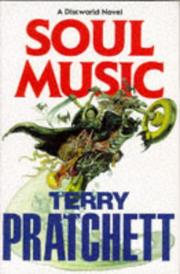
I came to this book through Death. I had already read Mort and Reaper Man, so I knew the shape of Pratchett's polite, clipped skeleton with his terrible puns and his pale horse, and when I saw that Soul Music was the third of the Death stories I wanted to find out what happened when he walked away from his job for a while. What I got instead is a book about a guitar, a Welsh harpist, and a force that wants to become a legend. Victor Gollancz published it in 1994, and the edition I keep picturing is the 286-page hardcover with the Josh Kirby cover that borrows heavily from Meat Loaf's Bat Out of Hell. It is the sixteenth Discworld novel. It stands on its own, though you will get more out of it if you already know why Susan Sto Helit looks the way she does.
A harpist arrives with no permit
The book opens in Llamedos, which is "sod 'em all" spelled backwards and is Pratchett's Wales, complete with rain, valleys, and a habit of doubling every L in speech. There lives a young harpist named Imp Y Celyn, whose name is a plain translation of "bud of holly" and therefore a nod to Buddy Holly. He has won a harp at the eisteddfod, and he has decided he is going to be famous. The first problem is that he has no money, and the second is that in Ankh-Morpork you cannot legally make music without paying the Musicians Guild, so playing in the street means being moved along or fined.
He is not alone for long. He meets Lias Bluestone, a troll who plays percussion on rocks he has tuned, and Glod Glodsson, a dwarf who blows a horn. Both are unlicensed too, and they call themselves the Band with Rocks In, a name that started as a joke about Lias's kit and then stuck. This is where the book's sense of humour starts doing its work, because the names keep arriving thick and fast. Imp will take to calling himself Buddy, Lias will rebrand himself Cliff after Cliff Richard, and a long run of copycat bands will later come up with Suck, Trollz, Boyz from the Wood, and a group called Amp. I laughed at most of these and groaned at a few. Your tolerance for that sort of thing will decide a lot about whether this book is for you.
When Buddy's harp gets destroyed, he walks into a shabby pawn shop run by a thin slice of an old woman and comes out with a guitar she practically pushes on him. He notices a chalk mark on it, a single one, but he does not think much about it until the guitar starts doing things. The instrument holds the awareness of something the book calls Music with Rocks In, a primordial force that was around before the universe and may well have had a hand in making it. It wants an audience. It wants to be played. And it is very good at getting its own way once somebody starts strumming.
Susan, who would rather not be noticed
While all of this is gathering in the city, Death is in a bad way. His adopted daughter Ysabell and his former apprentice Mort, who married each other and raised a child, are dead, killed in a coach crash. Their daughter Susan Sto Helit was told the truth about her grandfather when she was small and then had it taken away, so she has grown up with the facts buried somewhere she cannot reach. She attends the Quirm College for Young Ladies, where the menu offers such delicacies as Dead Man's Fingers and Eyeball Pudding and the gymnastics mistress is keen on eurhythmics. I enjoyed Quirm enormously, mostly because the school is so determinedly ordinary. It is a place of floral clocks and good manners, and Susan fits in by being as unremarkable as she can manage.
The trick is that she is not unremarkable at all. She has inherited the family habit of slipping out of other people's awareness when she wants to be left alone. Teachers forget she is in the room. Servants look straight through her. It is a useful gift for a teenager who does not want awkward conversations, and Pratchett uses it for both jokes and quiet ache. Susan is a girl who has learned to disappear because being noticed has always meant being handed somebody else's problems.
Death decides he cannot bear the reminders of his daughter and son-in-law, so he takes an unscheduled sabbatical and leaves his post empty. This is a bad idea in a world where death is a job that has to be done. Reality starts to push back, and the push lands on Susan. She begins to remember what she was told as a child, finds herself doing bits of her grandfather's work, and starts seeing the dead when she would much rather be doing homework. Her memories of a swing he built for her, of Binky the pale horse, of the raven called Quoth who lives in his house, all come back in pieces. There is a lovely moment when she and Death are riding and the horse is going so fast that the light ahead of them shifts blue and the light behind them shifts red. It is a joke about physics, and it is also a small, clean piece of writing.
The music gets out of the bag
Susan first becomes properly aware of Buddy when she sees that he is due to die in a riot at the Mended Drum. She tries to get close enough to stop it, but the crowd is seized by the music before anything can happen, and the riot turns into something else entirely. From that night on, Buddy's life is no longer powered by his own life force. The music is keeping him going. He plays better than he has ever played, and when he is not playing he seems barely there at all, a young man whose edges have been rubbed away.
The woman who owns the pawn shop reappears later, and the guitar turns out to be one of a set, or one piece of a very old orchestra, which is where the book starts to sound grander than the jokes suggest. Meanwhile the effect spreads. People who hear the band start forming their own groups, copying the haircuts and the clothes and the attitudes. Garages fill up with rehearsals. A club called the Cavern becomes the place to be seen. A dwarf band calls itself We're Certainly Dwarfs, and somebody paints "Born to Rune" on a jacket. The wizards at Unseen University find themselves tapping their feet and saying things they did not plan to say. Ponder Stibbons, who is the only one trying to think clearly, wonders whether there is a background noise to the universe, something everywhere at once, and mutters about morphic resonance. Ridcully interviews Buddy and cannot work out what the young man is rebelling against. I liked these chapters, partly because Pratchett is so good at watching institutions try to absorb a trend they do not understand.
Less amusing, and more interesting, is Mr Clete from the Musicians Guild. He is described in terms that put me in mind of something dug out of amber, and he becomes more and more unhinged as he fails to shut the band down. For once the obstruction is more than a levy or a licence. The guild has genuine power and genuine spite, and Clete's frustration gives the comedy a hard edge. If the music can protect the band from a man like him, you start to wonder what else it can do.
There are also fine small jokes about the songs themselves, which is where a lot of the book's invented detail lives. "Pathway to Paradise" gets a sign in music shops warning people not to play it. "Great Fiery Balls" ends with a piano exploding. "Sto Helit Lace," "Don't Tread on My New Blue Boots," and "Good Gracious Miss Polly" are all one step away from songs you know. And late in the book, when Buddy plays an old folk tune called "Sioni Bod Da" on his repaired harp, the joke lands as something warmer, because for a few minutes Imp Y Celyn is back inside the star they have made.
The road, the manager, and the free concert
CMOT Dibbler becomes the band's manager, which is terrible news for the band and very good news for Dibbler. He hires a troll named Asphalt as a roadie, books the group into ever larger venues, and keeps careful track of profits he has no intention of sharing. The tour is where the book both speeds up and starts to sag a little. Every town brings another crowd, another band name, and another variation on the same joke about young people dressing alike. I found the first few stops funny and the later ones a bit much, and I noticed myself skimming passages I would have happily read twice a chapter earlier.
Buddy keeps fading through it all. Susan tries to pull him back, partly because it is the right thing to do and partly, though she will not say it out loud, because she has feelings for him. That is the sweetest thread in the book. Pratchett never makes a speech about it. He just lets Susan notice things about Buddy, and lets Buddy be too far away to notice her. It works because it is left small. A bigger romance would have flattened the strange, thin tone of the whole thing.
The music eventually asks for a free concert, and Dibbler agrees once he has worked out how much money he can make from hot dogs, badges, and the rest of the merchandise. A huge crowd gathers, with all the copycat bands playing, and the whole thing feels like it is heading for a celebration. It isn't. The music has decided that the best way to become an immortal legend is to have its band die at the height of things, in a coach crash into a gorge, with no survivors. That is the point at which the book stops being a comedy about pop groups and becomes something stranger. The coach is fleeing fans, the Musicians Guild, Dibbler, Susan, and Death, all of them chasing for different reasons.
Death takes a hand
Death has been brought back to his senses by Albert, his long-suffering butler, and he does not like what he sees. There is a memorable scene in which he demands clothes from a wizard, borrowing a coat from the Dean, and rides off after the coach on Binky. The scene nods hard at The Terminator and at Don McLean's "American Pie," and I enjoyed the way Pratchett lets those references sit on top of the actual story without explaining themselves. You can miss them and still follow the chase. Catching them adds a layer, not a homework assignment.
Susan gets the band out of the coach, but the music is not finished. It begins to reshape events so that the band is dead anyway, and she starts to feel herself and the others slipping out of the timeline. There is a short, frightening stretch where her hand turns transparent and the world seems to be closing over the people she has just saved. It is the closest the book comes to horror, and it arrives so late that it genuinely surprised me.
Death arrives and plays an empty chord on the guitar. That stops the music cold, because death is the one thing the music cannot rewrite. But it cannot restart the lives the music has taken, and Death says plainly that only a musician like Buddy can bring the sound back. The music makes a bargain. It will let Buddy live in exchange for a chord that sets it playing again somewhere else. Death takes the guitar and destroys it, which is his way of making sure the deal cannot be undone by accident.
What the last page does
The new morning is quieter. In the rewritten timeline the band's coach did crash, and Mr Clete is the only person who dies in it. Nobody else remembers what really happened except Susan, who carries both versions of the day around with her. She goes back to Quirm College with a steadiness she did not have before, and the next morning she runs off to find Buddy, because in this version of events he never came to Ankh-Morpork at all. He is working nearby. The book ends with that, a girl running toward someone she has chosen to find, and I think it is a good ending for a novel that has spent three hundred pages asking what it means to be seen.
I do want to be fair about the weak parts. The density of jokes is the main one. There are chapters where every sentence seems to be carrying a pun about a band or a song, and the effect dulls after a while. Readers who do not recognise the Buddy Holly, Blues Brothers, Meat Loaf, and Beatles references will still follow the plot, but a lot of the surface will pass them by. The wizard half of the book, with Hex and Ponder and Ridcully, is slower than the band half, though Ponder's background-radiation idea is a nice piece of science jokes meeting old magic. And the ending is very neat, tidying away a guitar that is older than the universe with one chord from a skeleton. It is satisfying, but it is also a little too tidy for a story that has spent so long revelling in mess.
Even so, I finished it liking Susan more than I expected to. In Soul Music she is not the combat-ready granddaughter who will turn up in later books. She is a schoolgirl who can vanish from a room and does not know why her family history keeps coming back to her. That is a better story than the guitar might suggest. Take the rock and roll jokes as the surface and watch what happens underneath them, because the part about a young woman learning to be noticed is the part that lasts.
FAQ
Do I need to have read the earlier Discworld books first?
No. It is the sixteenth Discworld novel and the third Death story, but it introduces Susan Sto Helit and explains her family background as it goes.
Is Soul Music a funny book or a serious one?
It starts as a comedy about an unlicensed rock band and then turns stranger, with a coach chase, a rewritten timeline, and a quiet story about Susan learning to be noticed.
What exactly is the music with rocks in?
It is a primordial force held in Buddy's guitar that existed before the universe, and it wants an immortal legend built from the band that plays it.
Similar books
More from Discworld first, then related titles.
The Color of Magic
A failed wizard guides a tourist across a flat world on a turtle, with comic fantasy chaos.
2,032-word summary · 9 min read
The Light Fantastic
Rincewind and Twoflower fall off the world while wizards race a red star.
1,974-word summary · 9 min read
Equal Rites
A dying wizard passes his staff to a baby girl, and Granny Weatherwax escorts Esk to Unseen University in Pratchett's third Discworld book.
2,871-word summary · 13 min read
Mort
Death hires apprentice Mort in this 1987 Discworld comedy, where a spared princess splits reality and duty bends for love, with no Rincewind.
2,386-word summary · 11 min read
Sourcery
A dying wizard hides his soul in a staff, his eighth son becomes a sourcerer strong enough to break the world, and Rincewind is sent to stop him with a sock.…
2,404-word summary · 11 min read
Wyrd Sisters
Three Lancre witches rescue a murdered king's baby, hide Lancre's future, and trap a guilty duke with a play in Ankh-Morpork.
3,085-word summary · 14 min read
Pyramids
A prince raised by assassins comes home to a desert kingdom where the high priest rules and a spitefully huge pyramid starts bending time.
2,441-word summary · 11 min read
Guards! Guards!
A drunk captain, his last two guards, and an earnest recruit face a summoned dragon in Ankh-Morpork in Pratchett's funny eighth Discworld book.
2,307-word summary · 10 min read
Moving Pictures
When the alchemists invent the movies, a dropout and a waitress chase stardom in Holy Wood while a talking dog watches belief tear open the fabric of Discworld.
2,370-word summary · 11 min read
Reaper Man
Death gets fired and farms while Windle Poons refuses to die.
2,579-word summary · 11 min read
Witches Abroad
Three Lancre witches fly to Genua to stop a fairy godmother from forcing a servant girl into a storybook marriage, and find a city arranged around a happy…
2,651-word summary · 12 min read
Small Gods
God Om trapped as a tortoise must convince novice Brutha to save Omnia from its own church.
2,063-word summary · 9 min read
Lords and Ladies
The elves are coming and Lancre is not ready. Pratchett's 1992 novel sends Granny, Nanny and Magrat into a cruel, glittering invasion that spoofs A Midsummer…
2,476-word summary · 11 min read
Men at Arms
The City Watch gets new recruits and a murder case when the Disc's only handgun turns up in Ankh-Morpork, in the fifteenth Discworld novel.
2,216-word summary · 10 min read
Feet of Clay
A clay golem goes mad and a Patrician is poisoned as Vimes and the Watch untangle a murder plot in the nineteenth Discworld novel.
2,308-word summary · 10 min read
Hogfather
Death fills in for a missing Father Christmas, Susan Sto Helit hunts the Hogfather, and the twentieth Discworld novel turns Santa into a management problem.
2,871-word summary · 13 min read
Night Watch
Vimes is thrown back in time and must train his young self through a revolution.
2,003-word summary · 9 min read
The Wee Free Men
Nine-year-old Tiffany Aching teams with the Nac Mac Feegle to rescue her brother from the Fairy Queen.
2,600-word summary · 12 min read
Going Postal
A hanged con artist must revive Ankh-Morpork's dead Post Office and outwit a murderous rival in Pratchett's 33rd Discworld novel.
2,228-word summary · 10 min read
A Dirty Job
Grieving San Francisco secondhand shopkeeper Charlie Asher inherits the Death job, collecting souls into vessels while raising little baby Sophie as Minty…
2,454-word summary · 11 min read
I Am America (And So Can You!)
Stephen Colbert's 2007 debut extends his Colbert Report pundit into print, a mock-conservative tour of American life with margin notes, stickers and Fun Zones.
2,635-word summary · 12 min read
Redshirts
Ensigns realize they die to serve a bad TV show's narrative.
2,152-word summary · 10 min read
Mostly Harmless
Arthur makes sandwiches on Lamuella while Ford steals a Guide Mk II that wipes Earths across realities.
2,059-word summary · 9 min read
The Pelican Child
Twelve short stories by Joy Williams, where talking dogs, bleak comedy, and the nearness of death mark a late-career stylist at work.
2,415-word summary · 11 min read
Dad Is Fat
A comic essay collection about raising five kids in a two-bedroom New York apartment, delivered in Gaffigan's dry, deadpan voice.
2,196-word summary · 10 min read

When the Moon Hits Your Eye
The Moon turns into cheese, and a loose collection of stories follows how institutions, billionaires, pastors and ordinary people respond to the impossible.
2,002-word summary · 9 min read
Visions of Sugar Plums
A strange man named Diesel appears in Stephanie Plum's kitchen days before Christmas and pulls her into hunting a bail-jumping toy maker. A short, silly, warm…
2,193-word summary · 10 min read

The River Has Roots
A fairy-tale novella in which a village on the edge of Faerie, a river that turns a girl into a swan and a harp that sings an accusation retell The Bonny Swans.
2,025-word summary · 9 min read
Still Life with Woodpecker
An environmentalist princess and an outlaw bomber fall in love, then argue about freedom, sacrifice, and a pack of Camel cigarettes.
2,061-word summary · 9 min read
Smokin' Seventeen
Stephanie's bonds office is a motor home on a construction site where dead bodies keep turning up, and the killer seems to know her name.
2,342-word summary · 10 min read