
Reading options
What's inside (10 sections)
The sentence that became the title
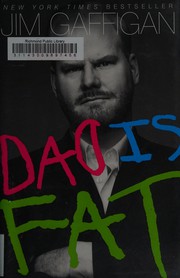
The title of this book came from a four- or five-year-old. Gaffigan's eldest son wrote his first complete sentence on a dry-erase board, and it was the four words you now see on the cover. In an interview Gaffigan recalled the moment: "He showed it to me," he said, "and I laughed, and then I put him up for adoption." That joke tells you almost everything about the book's temperature. It is a collection of essays about raising five children, published by Crown in 2013, and it treats parenthood as a situation you survive by making fun of it before it makes fun of you.
I came to it knowing Gaffigan only from his stand-up, particularly the bits about Hot Pockets and bacon. I expected the same voice transferred to the page, and in a sense that is exactly what I got. What I did not expect was how often the essays stop being jokes and become something closer to a diary of exhaustion. The book is funny, but the funniest lines keep landing next to a plain admission of how tired and outnumbered he is. That combination is the reason it stayed on the bestseller list for three months.
A house outnumbered
The premise is simple. Gaffigan and his wife Jeannie are raising five young children in a two-bedroom apartment in New York City. There is no large house, no settled rhythm, no sense that the parents have ever got ahead of the day. The publisher's description calls the book a cry for help from a man who has realised he and his wife are outnumbered in their own home, and that phrase is only half a joke. The essays keep returning to the arithmetic of the situation. Five children, two bedrooms, two adults, and a supply of patience that never quite covers the demand.
The chapter titles give you the shape of it. "How to put five kids to bed in a two-bedroom apartment" is followed later by "Negotiating with terrorists" and "My former bed." "No such thing as a free babysitter" sits near "Naps are payday loans." Gaffigan is a comic who works a single topic until it gives up its last angle, and the table of contents shows that habit in miniature. He does not write one essay about bedtime and move on. He writes about bedtime, then about the negotiation, then about what happens to the space the parents used to call their own.
The book also reaches back into his own childhood, and those pieces have a different texture. "My dad, the professional wrestler" and "The pharaoh and the slave" are less about his children than about the family he came from, a large Irish Catholic one in Indiana. Reading them, you can see where the rhythm comes from. The jokes are not imported from the stage. They are the way this family has always talked.
That background explains a lot about the comedy. Gaffigan grew up one of six children, went to a small Catholic school, and later played football at Georgetown before moving to New York to work in advertising. He did not arrive at parenthood as someone with a theory about it. He arrived as the youngest in a loud family who had watched his own father run a household, and then found himself doing it in a much smaller space with a wife who was also a writer and performer. The essays about his father are the ones where the tone drops slightly, and you sense that the jokes are a way of keeping something else at bay.
Food, and the comedy of appetite
Gaffigan's most famous routines are about eating, so it is no surprise that food runs through the book. "We need bread," "You win, McDonald's," "Eat the coleslaw!" and "How sweet it is" are all here, and they show him working the same territory as his stage material. The difference is that on the page he can linger. A bit about a fast-food meal becomes a small argument about appetite, denial, and the strange bargaining a parent does with a child over what goes into their body.
"Get married, have kids, get fat" is the chapter that best sums up his view of the subject. It is not a Health book, and it is not trying to be. Gaffigan writes about food the way a lot of parents actually talk about it: as a source of pleasure, a source of guilt, and a daily negotiation he is usually losing. There is a famous bit about a Hot Pocket that built much of his reputation, and the essays have the same curiosity about why certain foods are so hard to resist. He is less interested in judging the food than in studying the person who eats it.
This is also where his clean style helps. He does not need profanity to make a line land, and the restraint gives the food writing a slightly absurd, almost innocent quality. When he describes a four-year-old eating a taco, the point is not that the child is messy. The point is that there is no practical difference between eating a taco and throwing a taco on the floor. That observation is silly, and it is also exactly right.
Babies, toddlers, and the small print
The middle of the book is dominated by the physical business of early parenthood. "Newbornland," "Circumcision," "The invasion," "Toddlerhood," and "The narcissist's guide to babies and toddlers" walk through the stages in the order a parent experiences them, which is to say in an order that feels less like progress than like a series of new problems replacing solved ones. Gaffigan is very good on the way a baby takes over a household without asking permission, and on the way adults quietly reorganise their whole lives around a person who cannot yet hold up their head.
"The narcissist's guide to babies and toddlers" is one of the sharpest pieces. The joke works because it is rooted in a real observation: a small child has no idea that anyone else exists, and the adults around them are happy to organise the day as though that were reasonable. There is a tenderness under it. Gaffigan is not annoyed at his children for being children. He is amused at himself for having signed up for this and then being surprised by the terms.
"A critical analysis of children's literature" and "No further questions" move the same instinct into different rooms. He reads the books his children are read and listens to the questions they ask, and he treats both as evidence of how strange the world looks from three feet off the ground. These essays are shorter and lighter than the ones about sleep and food, and the variation is welcome. The collection has a rhythm of its own, alternating big subjects with small ones.
The marriage and the wider family
Jeannie is present throughout, though often as the person who has to keep things running while Jim turns it into material. "Losing my religion" and "No such thing as a free babysitter" touch on the marriage without ever becoming confessional. Gaffigan is a clean comic in more than one sense. He keeps his family's private life at a distance and writes about the shared problem rather than the private grievance. That restraint may frustrate readers who want more of Jeannie's own voice, but it is also why the book never feels mean.
The wider family gets its own space. "Are you done yet?" and "My other family" deal with relatives, and "Six kids, Catholic" is exactly the kind of joke you would expect from a man with five children and a background like his. "Cousins," he writes in the book's description, are "celebrities for little kids," and he has a good eye for the way children assign status to people who have done nothing to earn it. The essays about his parents are quieter and, to my ear, more moving than the ones about his children. You can hear him measuring his own parenting against what he grew up with and finding it wanting in new ways.
Why the jokes land
Gaffigan's comedy depends on a particular voice. He has described an "inside voice," a high-pitched commentary that talks back to his own jokes, and something of that exists on the page. A serious sentence will turn on itself, or a moment of genuine feeling will be interrupted by a wisecrack before it can become sincere. The timing is different in prose, but the mechanism is the same, and it keeps the essays from settling into complaint.
His style is observational and deliberately narrow. He picks one subject and stays with it until the reader can see it from every side, which is why a short essay on a taco or a nap can carry more weight than expected. "Naps are payday loans" is a good example. The comparison is silly, but once you have it you cannot stop applying it, and the essay is really about borrowing rest from a future self who will never be repaid. That is the book at its best: a joke that turns into a way of seeing.
The audiobook, which Gaffigan reads himself, has its own case. A reviewer at Audiofile said his performance strikes the right balance between his near-deadpan delivery and the energy needed to keep a beleaguered parent engaged. Having heard both, I think the book works in either form, though the jokes that depend on his timing obviously gain from his voice. On the page they have to earn their place as sentences.
The "inside voice" is a useful key here. He has said he began developing it as a teenager, disarming people by speaking for them in their presence, and later used it to answer hecklers in clubs. In the essays it becomes a second reader in the room, a sceptical little voice that asks whether the joke he just made was actually fair. That is what keeps the book from curdling. The voice that made the mess is also the one that points at it.
Where the collection drags
This is a book by a comedian, and it has a comedian's tolerance for repetition. Several essays circle the same point about being tired, outnumbered, and secretly fond of the junk food he claims to fight. By the third or fourth variation the joke has lost some of its force, and I found myself skimming a few of the shorter pieces. The book runs almost three hundred pages, and a tighter edit would have helped. That is not the same as saying it needed fewer jokes. It needed fewer versions of the same joke.
There is also a limit to the persona. The exhausted dad who cannot get a moment alone is a carefully built character, and the essays occasionally feel written from inside that character rather than from the life behind it. Readers looking for something raw about parenting, or for a real account of what a marriage goes through when five children arrive, will not find it here. The book is a comedy first, and its honesty is the honesty of a comic who has decided which parts of his life are fair game.
None of that changes who it is for. Parents of young children will recognise the material immediately, and the recognition is the point. Readers without children may find the subject narrow, and readers who dislike observational comedy will probably find the whole thing too much like a long stage set. I would hand it to a friend who is in the middle of the years it describes, and not to someone looking for a general book about family life.
The voice after the book
Dad Is Fat debuted at number five on the New York Times bestseller list and stayed there for three months, which is a fair measure of how well the subject found its audience. Gaffigan followed it with Food: A Love Story in 2014, and the two books share the same method: take one enormous subject, shrink it to the scale of a single appetite or a single bedtime, and keep talking until something true comes out. The television series that came later, about a couple raising five kids in a two-bedroom apartment, drew on the same material and the same house.
What I took away was not a set of tips. There is no advice here and no programme. It is a book about the feeling of being permanently behind in your own home, told by someone who has turned that feeling into a way of talking. When he writes about a child's first sentence, or a mother's bread, or the small horror of being asked to negotiate with a four-year-old, he is describing something parents know and rarely hear said out loud. That is a modest thing for a comedy book to do, and it is the reason I still have it on the shelf.
FAQ
What is Dad Is Fat about?
It is a 2013 collection of comic essays about raising five children in a two-bedroom New York apartment, mixed with memories of Gaffigan's own childhood. Crown published it.
Where did the title come from?
Gaffigan's eldest son wrote the phrase as his first complete sentence on a dry-erase board when he was about four or five, and Gaffigan used it for the book.
Is Dad Is Fat appropriate for children?
It is an adult book about parenting, though Gaffigan is known for clean comedy. The jokes are written for grown-ups rather than for the children he describes.
Similar books
Taste: My Life Through Food
Stanley Tucci's memoir traces his life through food, from a Calabrian family kitchen in Katonah to film sets, marriage and a cancer fight that cost him his…
2,503-word summary · 11 min read
All Things Bright and Beautiful
Linked memoirs from a young vet in the Yorkshire Dales, moving between difficult farmers, beloved animals and the household above the surgery at Skeldale House.
2,004-word summary · 9 min read
Wishful Drinking
Carrie Fisher's 2008 memoir, drawn from her one-woman show, tells her story with sardonic jokes about Hollywood parents, Princess Leia, bipolar disorder, and…
2,341-word summary · 10 min read
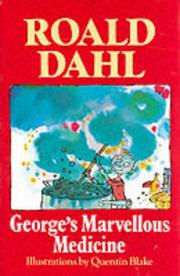
George's Marvellous Medicine
George stirs a brew of dozens of household chemicals and gives it to his grumpy grandmother, and the medicine works far better than anyone planned.
2,014-word summary · 9 min read
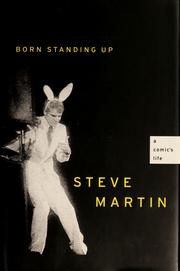
Born Standing Up: A Comic's Life
Steve Martin's memoir of how a shy Disneyland magician's assistant built a strange avant-garde act, and why he walked away from stand-up at his peak.
2,034-word summary · 9 min read
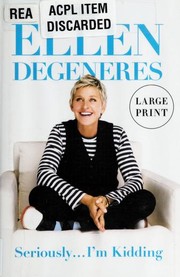
Seriously...I'm Kidding
DeGeneres strings show stories and home jokes into light life advice.
2,292-word summary · 10 min read
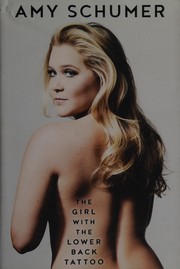
The Girl with the Lower Back Tattoo
Amy Schumer mixes raunchy jokes with frank essays on family, dating, body image, and the shooting that pushed her into gun control advocacy.
2,259-word summary · 10 min read
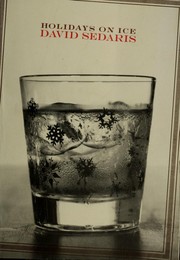
Holidays on Ice
Six Christmas pieces, from a Macy's elf stint to a feral family newsletter. Sedaris at his sharpest and most sentimental.
2,410-word summary · 11 min read
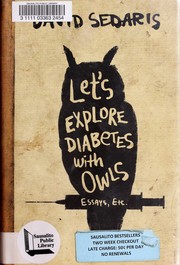
Let's Explore Diabetes with Owls
Sedaris gets French dental work, feeds a kookaburra in Australia, shops for a stuffed owl in London, and survives China, airports and a colonoscopy.
2,538-word summary · 11 min read
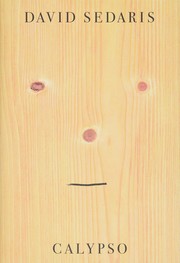
Calypso
Sedaris buys a Carolina beach house, grieves his sister Tiffany, tends his aging father, and turns illness and marriage into dry family comedy.
2,835-word summary · 13 min read
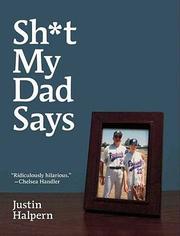
Sh*t My Dad Says
A comedy writer moves home and writes down his blunt fathers funniest lines with love.
1,961-word summary · 9 min read
Furiously Happy: A Funny Book About Horrible Things
Jenny Lawson mixes blunt talk about depression with wild stunts and taxidermy to argue for grabbing joy on purpose.
2,963-word summary · 13 min read
A Heartbreaking Work of Staggering Genius
After losing both parents to cancer, Dave Eggers raises his eight year old brother Toph in California with humor, chaos and self doubt.
2,326-word summary · 10 min read
Nothing to See Here
A struggling young woman spends one summer caring for twins who burst into flame when upset, in this warm oddball novel.
2,167-word summary · 10 min read
Let's Pretend This Never Happened: A Mostly True Memoir
The Bloggess turns a strange Texas childhood and anxious adult life into a funny, warm memoir about family.
2,479-word summary · 11 min read
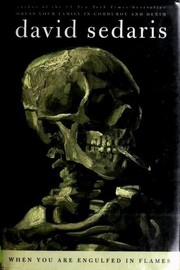
When You Are Engulfed in Flames
In twenty two essays Sedaris tries to quit smoking in Japan, buys a skeleton, fights spiders in Paris, and files dry reports from France on family, country…
2,974-word summary · 13 min read
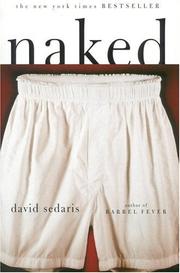
Naked
Growing up odd in Carolina, working bad jobs, and learning to watch people closely and kindly.
2,020-word summary · 9 min read
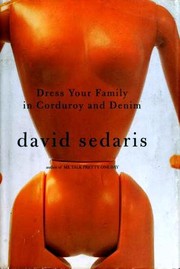
Dress Your Family in Corduroy and Denim
Sedaris on snow days, rental houses, Dutch Christmas, and the family that made him funny.
3,098-word summary · 14 min read
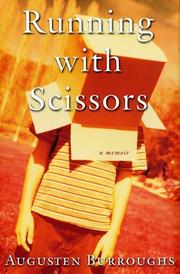
Running with Scissors
A boy sent to live with his mother's psychiatrist grows up in a chaotic house with no rules.
2,036-word summary · 9 min read
Marley & Me
A young couple learns marriage, parenthood, and goodbye through thirteen years with Marley, their wild and loving Labrador.
2,167-word summary · 10 min read
Me Talk Pretty One Day
Sedaris on French classes, family chaos, and learning to speak badly in two languages.
2,111-word summary · 9 min read
Born a Crime
Noah's memoir of growing up mixed-race under apartheid, raised by a fearless mother in Soweto.
1,980-word summary · 9 min read
Bossypants
Tina Fey moves from Pennsylvania childhood through improv and SNL to 30 Rock in this funny 2011 memoir. Expect backstage stories, jokes about work and…
2,301-word summary · 10 min read
The Rest of Our Lives
A law professor drives his daughter to college, then heads west instead of home, testing a private promise he made twelve years ago.
2,238-word summary · 10 min read
The Nix
A stalled novelist and community college professor goes looking for the mother who left him and finds a radical activist whose rock thrown at a governor made…
2,214-word summary · 10 min read
The Long Haul
Greg Heffley's summer road trip goes sideways with a towed boat, a live pig, and a family in a purple van.
2,311-word summary · 10 min read
Only Son
A brief, funny, melancholy debut about a boy whose father dies in 1982 Florida, and the man he becomes, still trying to read the mystery of that loss.
2,170-word summary · 10 min read
I Feel Bad About My Neck: and Other Thoughts on Being a Woman
In short, funny essays written just after her sixty-fifth birthday, Nora Ephron takes on aging, vanity, a White House summer, and the daily upkeep of looking…
2,099-word summary · 9 min read
A Year in Provence
Peter Mayle's first year in a Luberon farmhouse, told through mistral winds, difficult builders, long lunches and local rules nobody warned him about.
2,209-word summary · 10 min read
Visions of Sugar Plums
A strange man named Diesel appears in Stephanie Plum's kitchen days before Christmas and pulls her into hunting a bail-jumping toy maker. A short, silly, warm…
2,193-word summary · 10 min read