
Diary
2,042-word summary 9 min read 272 pages in the book
- First published
- 2003
- Publisher
- Doubleday
- Pages
- 272
- ISBN
- 9780385509473
Reading options
What's inside (9 sections)
The strangest book in Palahniuk's early run
I read Diary after finishing the three or four Palahniuk books everyone hands you first, and it felt like stumbling into a different writer's room. Fight Club had rage and Fight Club had rules. Choke had a con artist with a moral ache. Diary, published in 2003, has a woman writing to her comatose husband in the second person while her life comes apart on an island full of people who may or may not be trying to kill her. It is stranger and quieter than the books around it, and it is the one I keep coming back to.
The conceit is the hook. The entire novel is presented as a diary, and the "you" of the narration is Peter Wilmot, the husband lying in a hospital bed after a suicide attempt that was probably not a suicide. Misty Marie Wilmot, the woman writing, addresses him directly. She tells him what happened while he was away. She tells him about the house, the guests, her painting, their daughter, the police. The second person is disorienting for a page or two and then becomes intimate in a way that a normal first person would not. You are not watching Misty. You are being spoken to by her, and you are also the person she is angry at.
That choice matters because so much of the plot depends on withheld information. Misty does not know what her husband did or why. She discovers it in pieces, the way a person might find notes hidden in the walls of a house. The diary form lets Palahniuk dribble out clues without ever stepping outside Misty's limited view. It is a neat trick, and for a while it works beautifully.
How Misty ended up on Waytansea Island
Misty grew up in a trailer park in Tecumseh Lake, Georgia, raised by a mother who drifted through hippie ideals and left her with a hunger for something bigger. She got into art school, which is where she met Peter. He was determined to get her pregnant, and he succeeded. They married while they were still young, had a daughter named Tabitha, and eventually moved to Waytansea Island, where Peter's family had roots. His father Harrow, whom everyone calls Harry, was supposed to be dead.
Waytansea was once a quaint place. Now it is overrun with tourists, and the family money is gone. Misty works as a waitress in a hotel. Peter took up contracting, remodeling houses for the people who come to the island. The marriage has shrunk into something small and bitter. Misty's artistic ambitions have been postponed indefinitely, first by pregnancy and then by the daily grind of a life she did not choose. When the book opens, she is living in the wreckage of a dream she barely remembers having.
Then Peter is found in the family car, apparently having tried to kill himself. He survives but does not wake up. The diaries begin here. At first Misty writes to fill the silence. Later she writes because she is trying to work out what her husband was trying to tell her.
The messages in the walls
The strangest and best thread in Diary concerns Peter's work as a contractor. Before he fell into his coma, he built hidden rooms into the houses he was remodeling, and he covered the walls of those rooms with writing. Vile writing, according to everyone who finds it. Messages scrawled in a hand that Misty eventually learns to read. The homeowners are suing her because of what Peter left behind, and the lawsuits are part of what keeps the family trapped on the island.
Misty is not alone in trying to decode the messages. Angel Delaporte, a wealthy man who has come to live on the island, is fascinated by graphology, the study of handwriting. He and Misty go from house to house looking at what Peter wrote. Angel believes the writing is a warning. He turns out to be right, and the reason he knows as much as he does is that Peter was in love with him. The marriage Misty thought she understood was not the whole story.
This is where Palahniuk's dark humor comes in. The hidden rooms are absurd, the lawsuits are absurd, the idea of deciphering a dead man's graffiti as a murder clue is absurd, and yet Misty treats all of it with utter seriousness. The comedy and the dread sit on top of each other. A lesser book would wink at the reader. Diary never does. It stays inside Misty's panic and lets the strangeness speak for itself.
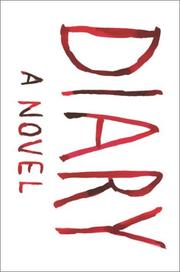
The writing also gives the book its cover image. The first edition dust jacket was printed with a hidden message inside, in white letters running vertically up a black background: WHERE DO YOU GET YOUR INSPIRATION? It is a question the novel keeps asking and answering in uglier ways. Where does any artist get the material that makes their work valuable? On Waytansea Island, the answer turns out to be suffering.
The island's old story
As Misty digs, she uncovers a pattern that has repeated on the island for generations. Two dead artists, Maura Kincaid and Constance Burton, lived on Waytansea under circumstances much like hers. Both left clues in the island's library books, small messages written for the women who would come after them. The librarian, Mrs. Terrymore, erases the messages whenever she finds them, which tells you which side she is on. Misty comes to believe she is the reincarnation of these women, drawn to the island by an old piece of jewelry that belonged to her in another life.
The pattern goes like this. A young artist is lured to Waytansea. She gets pregnant and has her child inside the community. In middle age her husband dies, then all her children, and the grief unlocks a period of extraordinary creativity. The islanders put that work on display, and something about it is mesmerizing to the people who see it. The display ends in fire. The insurance money keeps the remaining islanders comfortable for four generations, and then the whole thing starts again with a new artist.
It is a wild premise, and Palahniuk sells it partly by keeping it concrete. It is not a vague curse. It is a business arrangement with a schedule. Houses, jewelry, a hotel exhibition, an insurance claim. The ordinariness of the mechanics makes the horror more convincing. There is no supernatural fog here, just a group of people who have worked out how to turn one woman's misery into an endowment.
Misty's mother-in-law Grace carries a diary that turns out to be the writing of Constance Burton, not her own. Grace dies in the hotel fire near the end, along with Harrow and more than a hundred others. She was one of the people who knew the plan all along. Her small, annoying habits, the way she wastes Misty's money and influences Tabbi, turn out to be part of a long performance.
The poisoning and the fire
The book's most sickening turn involves Dr. Daniel Touchet, the island's only doctor, who has delivered most of the younger residents and also prepares bodies for funerals. When Misty gets a migraine, he gives her capsules that he says contain green algae, white willow bark, and a little bee pollen. When she injures her knee, he orders her to stay in her room for three weeks, which conveniently gives her time to paint. Angel has the pills tested. They contain powdered lead with traces of arsenic and mercury, all traditional ingredients in artists' paints, all linked to accidental poisoning.
The doctor is not trying to heal her. He is dosing her so that her mind will loosen and her work will become stranger and more valuable. The whole island is invested in her output. This is the point where the novel stops being a mystery about a missing husband and becomes a horror story about a community that has decided one woman's body is a resource.
Tabitha, or Tabbi, plays her own part. For most of the book she is the sweet, loving child Misty believes her to be. It is later revealed that Tabbi faked her own death, that Misty was told she had drowned, and that the fake grief was meant to push her mother toward more art. When Misty finds out the truth, she also learns that Tabbi smokes, flirts with boys, and is not the innocent child she appeared to be. The reveal is cruel, and it is meant to be. Palahniuk is interested in what people will do to each other when a payout is waiting.
The ending brings everything together at a hotel exhibition of Misty's work. The paintings have a mesmerizing effect on the crowd. A fire starts, set by Tabbi, and more than a hundred people die because they cannot look away from the art. The insurance money leaves the surviving islanders rich. Peter's hidden writing was his attempt to warn Misty, and his suicide attempt was actually a murder attempt by his own father, who wanted to stop him from spoiling the plan. Detective Clark Stilton, the only member of the Seaview County Hate Crimes Task Force, investigates a group called the Ocean Alliance for Freedom, which is really just Harrow committing arson and murder under a made-up name. Stilton dies in the fire. Whether Peter wakes up is never confirmed, though Misty's descriptions suggest he does not survive.
What works and what does not
The best thing about Diary is its voice. Misty's entries are funny, frightened, and furious, often in the same paragraph, and the second person keeps the reader off balance. Palahniuk also understands how to make a slow reveal feel earned. The messages in the walls, the library books, the jewelry, the pills: each detail seems like clutter until it snaps into place. By the last third, the book is moving fast, and the accumulative effect is genuinely grim.
The weaknesses are real, though. The second person that makes the book distinctive can also make it exhausting. There are long stretches where every sentence is addressed to a man who cannot answer, and the rhythm begins to feel like a gimmick. Misty's voice is also so deliberately odd that some of her reactions read as puzzles to be solved rather than feelings to be shared. I found myself admiring the construction more than I cared about the outcome, which is not always the way you want to feel during a horror novel.
The plot is also more complicated than it needs to be. The reincarnation angle, the graphology, the hate crime task force, the fake terrorist group, the hidden rooms, and the poisoning all pile up, and a few of them feel like they are there because the book wanted one more twist. The names of the main characters were chosen in a fan contest on Palahniuk's website before publication, which is a fun bit of trivia but also explains why some of them feel like in-jokes rather than people. Still, the core idea of an artist exploited for the work her grief produces is strong enough to hold all of it together.
Why I keep coming back
Diary is not an easy book to recommend. It is nastier than the books Palahniuk is famous for, and it asks you to spend two hundred and seventy-two pages inside a mind that is being poisoned, lied to, and used. But it is also the most formally inventive thing he wrote in that period, and the question on the dust jacket turns out to be sincere. Where does inspiration come from? On Waytansea Island it comes from a woman who was told she had already lived this life before, and who finally decides to stop being a character in someone else's plan.
Read it if you like books that take a strange idea and refuse to soften it. Skip it if you want a plot that tidies itself up at the end. Palahniuk never wrote a book quite like it again, which is either a shame or a mercy depending on your taste.
FAQ
Is Diary based on a true story?
No. It is a 2003 novel by Chuck Palahniuk. Some character names came from a fan contest held on his website before publication.
Why is Diary written in the second person?
The diary is addressed to Misty's comatose husband Peter. The 'you' puts the reader in his position while Misty recounts what has happened.
What genre is Diary?
It is a horror novel with strong dark humor and satire. It also uses psychological elements, and the audio version is narrated by Martha Plimpton.
Similar books
Lullaby
A reporter discovers that a poem in a children's book kills anyone who hears it, and his attempt to destroy every copy turns into a road trip through grief,…
2,147-word summary · 10 min read
Haunted
Writers lock in for three months and trade worse stories as food runs out.
2,576-word summary · 11 min read
Survivor
Tender Branson, last Creedish survivor, confesses into a flight recorder as his plane dives, from servant to agent-made celebrity messiah in Palahniuk's 1999…
2,683-word summary · 12 min read
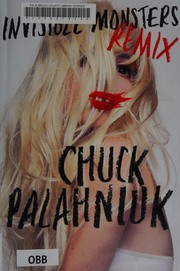
Invisible Monsters Remix
A veiled model, a bold friend, and a scam-filled road trip remake Palahniuk's 1999 satire of beauty in shuffled Remix order.
2,665-word summary · 12 min read
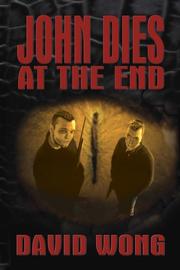
John Dies at the End
Two slacker friends, a drug called soy sauce, and a portal to something that wants every universe.
2,382-word summary · 11 min read
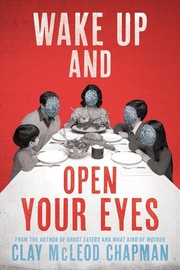
Wake Up and Open Your Eyes
A Brooklyn father drives to Richmond to find his parents lost in a cable news trance, in Chapman's splatterpunk horror about possession spread through…
2,381-word summary · 11 min read
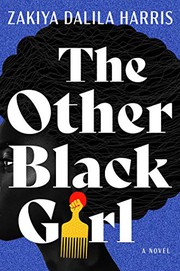
The Other Black Girl
An editorial assistant at a white publishing house hopes for a friend when another Black woman is hired, then starts receiving notes telling her to leave.
2,244-word summary · 10 min read
Infinite Jest
A film that kills its viewers, a tennis academy, a halfway house for addicts, and a future America where corporations name the years, all tangled together.
2,084-word summary · 9 min read
The Sisters Brothers
Two hired killers ride from Oregon to Gold Rush California to murder a prospector, and find their trade, their brotherhood, and the frontier myth coming apart.
2,095-word summary · 9 min read
The Zombie Survival Guide: Complete Protection from the Living Dead
Max Brooks's deadpan survival manual explains the Solanum virus, the only ways to destroy the living dead, fortifying a home, and the outbreaks history quietly…
2,650-word summary · 12 min read
White Noise
Jack Gladney teaches Hitler studies, flees a chemical cloud with his family, and chases a drug for dread in DeLillo's funny and bleak 1985 novel of…
2,768-word summary · 12 min read
The Sirens of Titan
A ruined playboy is herded from Mars to Titan while a stranded robot waits for a spare part.
2,663-word summary · 12 min read
Pride and Prejudice and Zombies
Austen's courtship plot survives intact while Elizabeth and Darcy battle zombies, from the Netherfield ball to a duel with Lady Catherine.
2,526-word summary · 11 min read
Bunny
Lonely MFA Samantha joins pastel Bunnies who make more than art.
2,110-word summary · 9 min read
American Psycho
Patrick Bateman hides violent urges behind suits and reservations in Ellis's 1991 satire of 1980s Manhattan wealth, brands, and moral blankness.
2,837-word summary · 13 min read
Cat's Cradle
Jonah researches the atom bomb and finds ice-nine and Bokononism on San Lorenzo.
2,583-word summary · 11 min read
World War Z
A UN researcher collects survivor accounts from Patient Zero in China to Yonkers and the Redeker Plan, charting the zombie war.
2,248-word summary · 10 min read
Dracula
Count Dracula sails for England in letters and diaries, and Van Helsing leads the hunt to stop him.
2,860-word summary · 13 min read
Choke
A medical dropout fakes choking in restaurants to pay for his mother's care while stuck in a colonial park and sex addiction meetings.
2,044-word summary · 9 min read
Fight Club
An insomniac office worker and Tyler Durden build underground clubs that grow into Project Mayhem.
2,036-word summary · 9 min read
Universality
Natasha Brown's short second novel turns a lockdown fracas over a gold bar into a sharp satire of money, identity and public argument.
2,302-word summary · 10 min read
The True True Story of Raja the Gullible (and His Mother)
A gay philosophy teacher in Beirut revisits six decades of Lebanese history, family trauma, and his thorny bond with his mother.
2,274-word summary · 10 min read
The Sandman, Vol. 4: Season of Mists
Dream travels to Hell and is handed the key to its gates, then every god and demon arrives to argue who should rule.
2,351-word summary · 10 min read
The Pelican Child
Twelve short stories by Joy Williams, where talking dogs, bleak comedy, and the nearness of death mark a late-career stylist at work.
2,415-word summary · 11 min read
The Gashlycrumb Tinies
Edward Gorey's 1963 alphabet book marches twenty-six children through a series of very bad endings, in thirteen rhyming couplets and a handful of unnervingly…
2,200-word summary · 10 min read
Battle Royale
A Japanese dystopian thriller about a class of students forced to kill one another on an island, and the three who refuse to play the game.
2,266-word summary · 10 min read
Witchcraft for Wayward Girls
In 1970 Florida, a girl sent to a maternity home for unwed mothers finds a spellbook, and the real horror turns out to be what the adults do to her and her…
2,077-word summary · 9 min read
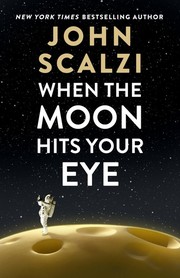
When the Moon Hits Your Eye
The Moon turns into cheese, and a loose collection of stories follows how institutions, billionaires, pastors and ordinary people respond to the impossible.
2,002-word summary · 9 min read
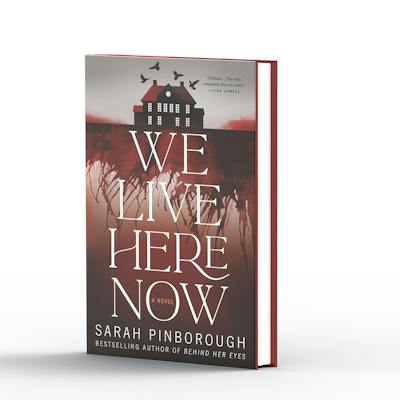
We Live Here Now
After a near-fatal fall, a woman moves with her husband to a remote Dartmoor house where strange events happen only when she is alone, and a raven watches from…
2,016-word summary · 9 min read
Through the Woods
Five horror comics in which sisters vanish into the snow, a bride finds a secret in the walls, and a walk through the woods turns fatal.
2,513-word summary · 11 min read