
Reading options
What's inside (9 sections)
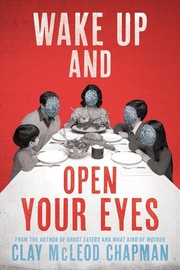
I picked this up on the say-so of a friend who knows my taste better than I do, and who warned me, half joking, that it was the angriest book she had read in years. She was not wrong. Wake Up and Open Your Eyes is a 2025 novel from Quirk Books, published on 7 January, and it runs to 384 pages. It is shelved as horror, and it is, but it is the sort of horror that comes with a fist raised. Chapman writes what people call splatterpunk, and here he uses the splatter as a way to talk about something he is plainly furious about: the way a far-right cable news channel and the personality cult around it pulled a man's parents away from him. By the last page I felt battered, and I was also fairly sure I had been argued at as much as told a story.
That is not a complaint exactly. It is the deal this book strikes from the first page, and if you go in accepting the deal there is a lot to admire. If you want your social commentary slipped in sideways, you have been warned in advance.
Noah's drive out to Richmond
The story begins with Noah Fairchild, a young father living in Brooklyn. For years he has watched his parents, polite Southern people, drift into the orbit of a far-right cable news channel and the cult of personality that gathers around it. This is not a sudden rupture. It is a slow drift, one program at a time, one repeated talking point at a time, until the parents he grew up with are harder to locate than the strangers staring back at him from the screen. Chapman spends real pages on this before anything supernatural occurs, and that patience matters. The possession at the center of the novel only lands because we have first been shown exactly what was lost.
Then comes the voicemail. Noah's mother leaves a message saying that the "Great Reawakening" has arrived. After that, she stops answering her phone. Anyone who has had a parent go quiet in a way that does not feel ordinary will recognize the specific dread of that moment. Noah does not sit on his hands. He gets in the car and drives from Brooklyn to Richmond, Virginia, to see what has happened to his family.
What he finds is a house in ruins, with his parents locked in a trance in front of the television. He tries to snap them out of it. His mother attacks him, and she attacks him brutally. That scene sets the temperature for everything that follows. There is no gentle easing in, no stretch of calm to prepare you. The book arrives at full force and stays there.
I found the Richmond opening the strongest part of the novel. A son walking into the home he grew up in and finding it wrecked is a frightening image on its own, without any demonic element added. Putting the horror inside a family living room, with a mother who used to be gentle now turning on her own child, gives the book its most durable scare. Chapman understands that the familiar is scarier than the strange.
What the television is doing to people
The force at work here is demonic, and it travels through screens. Viewers fall prey to it, and the longer they watch, the stronger it gets. That is the whole mechanism, stated plainly. It is not a virus with a complex transmission chain or a curse with a buried origin story. Chapman keeps the rule simple so that he can keep the violence moving.
The result is that families across the country are tearing each other apart, literally. That word matters. This is not a book about people disagreeing at Thanksgiving and storming out of the room. The possession turns love into attack, and the people closest to the viewer become the ones most likely to be hurt. The television does more than occupy attention. It rewires the person watching so that the bonds that once held a family together become the very things that get severed, messily and at length.
Chapman has said and the publisher has framed the book in the company of Pontypool and Jordan Peele, which tells you the register he is aiming for: social dread delivered through a genre frame. The screen is the culprit, but the screen is also a mirror. What comes out of it is a version of the country watching it, exaggerated until it can no longer be mistaken for anything but a choice. I thought this part of the idea worked better than the execution sometimes managed, but the idea itself is sharp.
The phrase "Great Reawakening" is doing deliberate work. It echoes the language of real conspiratorial media, the sort of capital-letter phrase that circulates until it sounds like a prophecy rather than a slogan. Chapman is not inventing a vocabulary out of nothing. He is borrowing one that readers will recognize from their own news feeds and then making it literal. When a character repeats the phrase in the novel, it carries the weight of every real instance the reader has heard before.
There is a neatness to the idea that the possession grows with exposure. It means that the longer a person stays tuned in, the less able they are to leave, which turns the act of watching into a kind of trap. Chapman is writing about an audience that has been captured by something it cannot quite put down, and the demonic force gives that capture a body. I liked that the rule is simple enough to hold in your head while the book races around. I less liked how often the rule is used to explain away a character's sudden turn, since a possession can arrive as a convenient answer to behavior the book has not earned.
Noah and Marcus, the two who are left
Inside Noah's Richmond family, only two people are untouched by the possession: Noah himself and his young nephew Marcus. That is the pair the book follows once the opening scare has done its work. The two of them set out to fight their way back to the relative safety of Brooklyn, which means crossing a country full of people who used to be neighbors, friends, and relatives.
This is the adventure spine of the novel, and it is where the splatterpunk label earns its keep. Getting from Virginia to New York means passing through hordes of the possessed. Chapman keeps throwing bodies in the way, and because the possessed are people the characters know, every fight carries a second weight. Noah is not cutting a path through anonymous monsters. He is fighting his way past the people who used to invite him in for dinner.
Marcus being young and unaffected gives the book something it badly needs, which is a reason for Noah to keep going that has nothing to do with ideology. Their bond is the emotional engine here. I wanted more quiet time with the two of them, to be honest. Every time the book pauses to let them breathe, it is promptly interrupted by another wave of violence, and I found myself wishing Chapman had trusted the relationship enough to let it sit still for a chapter.
Still, the uncle and nephew pairing gives the chaos a shape. Without Marcus, this could read as one man's tantrum dressed up as an apocalypse. With him, there is something at stake that is smaller and more convincing than the fate of the nation, and the book is better for it.
A country pulling itself apart
Noah's family is not a special case. The same thing is happening across the country, and Chapman keeps widening the lens to show it. Families are turning on one another. Neighborhoods are collapsing into scenes of mutual destruction. The further Noah and Marcus travel, the clearer it becomes that the Richmond house was one example of a national pattern rather than an isolated tragedy.
The scale is part of the design. This is an apocalypse novel, and it wants the grand gesture. Chapman is working with a premise that invites excess: a demonic signal riding on television waves, a population gathered around their screens, a country already primed to see itself as divided. The book pushes all of those elements as far as they will go. At its best, the result is a ugly, unflinching picture of what happens when the things people watch start telling them who to hate.
At other moments the widened lens feels like it is there mainly to justify another set piece. Once you have established that the whole country is coming apart, additional scenes of neighbors attacking neighbors can start to feel repetitive rather than revealing. I noticed myself skimming some of the middle stretches, not because they were badly written but because they were making the same point with more blood. The book has a limited set of notes and it plays them hard.
The argument underneath the gore
It would be a mistake to read this as a straight possession yarn. The demonic force is a device, and the real target is the political polarization Chapman sees in the country. His parents' drift toward a cable channel and its cult of personality is the seed of the whole premise, and the "Great Reawakening" language ties the fictional panic directly to real conspiratorial thinking. The television transmits a demon, but it also transmits a worldview, and the book is interested in both.
This is satire with the volume turned all the way up. Chapman is not interested in subtlety here. The novel wears its thesis on its sleeve, and it expects the reader to argue with it rather than nod along politely. I respected that. A writer who has something to say about the media diet of the country and chooses to say it through a splatterpunk apocalypse is making a choice about audience, and it is an honest one. He is writing for readers who already feel the same frustration and want to see it given a monstrous shape.
The drift of Noah's parents is a small version of the national one. A polite Southern couple easing toward a channel and the figure at its center is meant to stand in for a much larger movement, and Chapman keeps the two scales in view at once. When the possession sweeps the country, it is hard not to read it as the logical end of that drift, taken to a violent extreme. That is the book's smartest connection, the way it treats a private family loss and a public political rupture as the same event seen from different distances.
The risk of that approach is that the argument can flatten into a lecture, and the book does not always escape it. When a character spells out the connection between what they watch and who they have become, the scene stops being horror and starts being a position paper. Those moments pulled me out of the story. They also make it clear what Chapman thinks he is writing about, which is fair enough. He has never pretended otherwise.
Where the big swing misses
I should be straight about the reception, because it matches my own mixed feelings. Publishers Weekly judged that Chapman "takes a big swing and misses," arguing that the attempt to dramatize American political polarization through splatterpunk ends up heavy-handed. That is a fair summary of the book's central problem. The ambition is visible on every page, and so is the lack of distance from the material.
The heaviness shows up in two ways. First, the thesis is stated and restated until there is little left for the reader to discover. Second, the violence is as relentless as the premise promises, which is to say very relentless indeed. There is a point early on when a character is attacked and it reads as shocking and terrible. By the later chapters, another brutal confrontation arrives and my response had dulled. When gore is constant, it stops functioning as shock and starts functioning as texture, and that is a real loss for a book that depends on shock.
This is not the book for a reader who wants their commentary subtle or their horror rationed. If you need a few pages of quiet between set pieces, you will not find them here. I also think the book is at its weakest when it mistakes volume for force, piling on destruction where a single well placed scene would have done more work. The 384 pages could have carried a tighter story with the same argument.
What stays with you after the noise
I finished this book tired, which I suspect is the intended effect. Chapman wants the reader to feel something close to what Noah feels: surrounded by people who have been turned against one another by a signal they cannot stop watching. The horror and the politics are fused on purpose, and the book never pretends to be neutral about either.
What I will remember is not the mountain of violence but the opening, a son driving across state lines because his mother left a strange voicemail and would not pick up the phone. That is a small, human situation, and Chapman grounds the whole escalating nightmare in it. The book is cruder than it needs to be and louder than it needs to be, but that first image is genuine, and it carries more weight than most of the wreckage that follows.
I would hand this to a reader who likes their horror angry and their satire blunt, someone who has seen the same political drift in their own family and wants to see it turned into something monstrous. I would think twice before giving it to someone looking for a restrained chiller or a story that trusts them to draw the conclusion. Wake Up and Open Your Eyes has something to say and says it at a shout, and whether that is a strength or a flaw depends largely on how much shouting you can take.
FAQ
What kind of book is Wake Up and Open Your Eyes?
It is a splatterpunk social horror novel in which a demonic possession spreads through television screens. The violence is graphic and frequent, and the publisher pitches it in the company of Pontypool and Jordan Peele.
What is the 'Great Reawakening'?
It is the phrase Noah's mother uses in the voicemail that sends him to Richmond, and it names the demonic event sweeping the country. Chapman chose wording that deliberately echoes real conspiratorial media.
Who is this book best suited to?
It suits readers who want angry, blunt satire with their horror and who do not mind relentless violence. Readers looking for subtle commentary or a measured pace will likely find it too much.
Similar books
Lullaby
A reporter discovers that a poem in a children's book kills anyone who hears it, and his attempt to destroy every copy turns into a road trip through grief,…
2,147-word summary · 10 min read
Battle Royale
A Japanese dystopian thriller about a class of students forced to kill one another on an island, and the three who refuse to play the game.
2,266-word summary · 10 min read
The Other Black Girl
An editorial assistant at a white publishing house hopes for a friend when another Black woman is hired, then starts receiving notes telling her to leave.
2,244-word summary · 10 min read
Nightmares and Dreamscapes
King's 1993 collection runs from a man buried alive in a Cadillac to a town of dead rock stars, mixing horror, science fiction and dark humor across 816 pages.
3,232-word summary · 14 min read
The Strain
A silent Boeing 777 lands at JFK with almost everyone aboard dead, and a CDC team finds an old vampire war following it into New York.
2,272-word summary · 10 min read
The Regulators
A suburban Ohio street turns into a violent Western set in this Richard Bachman novel, a mirror to Desperation in which an autistic boy hosts a creature called…
2,259-word summary · 10 min read
Sleeping Beauties
In a West Virginia town, a strange sickness puts every woman to sleep inside a cocoon, and the men left behind must decide what to do.
2,337-word summary · 10 min read
Everything's Eventual: 14 Dark Tales
Fourteen Stephen King stories shuffled by the deal of a card deck, from the haunted room of 1408 to quiet tales of grief that sting as much as the monsters.
2,000-word summary · 9 min read
This Present Darkness
A pastor and reporter face demons over Ashton while angels answer prayer.
2,384-word summary · 11 min read

If It Bleeds
Holly Gibney faces an outsider plus three more tales of dread.
2,219-word summary · 10 min read
Four Past Midnight
Four novellas about a plane lost in time, a writer haunted, and horrors small and large.
2,584-word summary · 11 min read
Horns
Accused of killing Merrin Williams, Ig Perrish wakes with horns that force strangers to confess their darkest sins.
2,264-word summary · 10 min read
Revival
Jamie Morton shadows preacher Jacobs from boyhood healings to electric cures that open a door best left shut.
2,037-word summary · 9 min read
NOS4A2
Vic McQueen's bike finds lost things through a bridge, pitting her against Manx's Rolls-Royce ride to Christmasland.
2,060-word summary · 9 min read
Later
Boy Jamie Conklin sees dead people who must answer truthfully, pulling him into NYPD cases and a drug crew's greed.
2,009-word summary · 9 min read
The Running Man
Out of work in a broken 2025, Ben Richards enters a televised manhunt where each hour alive pays cash.
2,922-word summary · 13 min read
The Dark Half
A Maine novelist buries his violent pen name George Stark, then faces murders that carry his own fingerprints.
2,956-word summary · 13 min read

Rosemary's Baby
A young couple's dream apartment in the Bramford turns dark when helpful neighbors and a trusted doctor take over Rosemary's pregnancy.
2,665-word summary · 12 min read
Bird Box
A mother and two small children risk a blindfolded river trip after sight itself turns deadly.
3,229-word summary · 14 min read
Thinner
A Connecticut lawyer escapes punishment after a fatal crash, then an old Romani father lays a wasting curse on him and the pounds start falling off.
2,502-word summary · 11 min read
The Dead Zone
Coma waker Johnny sees futures in touch and faces demagogue Stillson.
2,132-word summary · 9 min read
Doctor Sleep
Grown Dan Torrance gets sober in New Hampshire and helps gifted Abra Stone face the True Knot.
2,841-word summary · 13 min read
The Outsider
Coach Terry Maitland's DNA and witnesses point to an impossible murder, until Ralph Anderson and Holly Gibney trace it to El Cuco.
2,586-word summary · 11 min read
Hidden Pictures
Nanny Mallory sees Teddy drawings predict a murder in New Jersey.
2,332-word summary · 10 min read
The Shining
The Shining retold: Jack winters at Overlook with Wendy and Danny, REDRUM, hedge maze chase.
2,011-word summary · 9 min read
Wayward
With Ethan Burke now sheriff, Wayward Pines runs on cameras, fear and a founder's private plan, until a murder forces him to choose between order and the truth.
2,252-word summary · 10 min read

Universality
Natasha Brown's short second novel turns a lockdown fracas over a gold bar into a sharp satire of money, identity and public argument.
2,302-word summary · 10 min read
State of Terror
A new secretary of state and her team unpick a web of attacks across Pakistan, Afghanistan, and Iran in this 2021 political thriller.
2,307-word summary · 10 min read
John Dies at the End
Two slacker friends, a drug called soy sauce, and a portal to something that wants every universe.
2,382-word summary · 11 min read

Forever Odd
Six months after Stormy's death, Odd Thomas tracks a kidnapped friend to a decaying hotel and faces a cultist who wants his gift.
2,308-word summary · 10 min read