
Reading options
What's inside (8 sections)
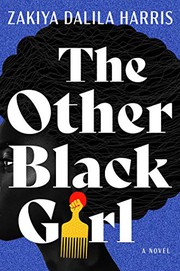
The first sign that another Black woman had reached the thirteenth floor of Wagner Books was a smell. Not a person, not an email from human resources, but the cocoa butter scent of Brown Buttah hair grease drifting over a cubicle wall. I loved that Zakiya Dalila Harris opens her 2021 debut this way. Before anyone says a word about diversity or tokenism or office politics, Nella Rogers is sniffing the air and hoping. She has spent two years as the only Black employee at a prestigious New York publisher, and the possibility of a colleague who shares her hair care routine feels like rescue. Everything that follows, including the parts that turn strange and frightening, grows out of that very ordinary hope.
The girl in the next cubicle
Nella is twenty six, an editorial assistant to the demanding Vera Parini, and tired of being the person everyone looks at when race comes up. Wagner Books is the kind of place where white Ivy League graduates take low editorial salaries as the price of admission, where the assistants eat leftovers at their desks while their bosses retreat to restaurants and summer houses. Nella has asked for a promotion and been told, in one of the book's sharpest little wounds, that she should put half the effort she puts into her extracurricular diversity meetings into her core requirements. She smiles and says thank you, because that is what you do.
Then Hazel-May McCall arrives. Harris describes her in close detail, from the locs thick as bubble tea straws to the marigold pantsuit and red ankle boots, and Nella watches her through the gap in her cubicle partition with something like a crush. Hazel is from Harlem, confident, funny, and instantly easy with the senior staff. Nella offers to show her the ropes, expecting the quick kinship she has been promised her whole life. Instead she gets a lesson in how quickly a welcome can curdle. Maisy Glendower hires Hazel, and soon Hazel is the one Vera wants to talk to, the one who gets the interesting manuscripts, the one whose jokes land in meetings.
There is a wonderful minor character named Sophie, a cubicle floater who drifts from assistant to assistant announcing other people's business. When Sophie whispers that she thinks the new candidate might be Black, Nella chides her for whispering the word at all. That exchange is funny and uncomfortable in the same breath, and it sets the tone for the first third of the novel. Everyone here is performing something, and Nella is the only one who does not know the script has been written for her.
Outside work, Nella has two anchors. Malaika is the friend who helps her translate the daily slights Nella tries to talk herself out of, and Owen is the white boyfriend who loves her and still cannot quite see what a day at Wagner costs her. Harris is careful with both relationships. Malaika gets to be funny and impatient rather than a wise oracle, and Owen's limitations are ordinary rather than villainous. The question of whether she feels guilty for loving a white man quietly threads through the book's reading group questions, and the novel lets it sit there without answering it. Nella's insecurities about not being Black enough, about not joining a sorority, about not knowing how to tie the scarves other Black women seem to know how to tie, turn up long before Hazel weaponizes them.
Shartricia and the notes
Vera asks Nella to read a novel by Wagner bestseller Colin Franklin called Needles and Pins. Its only Black character, Shartricia Daniels, is a pregnant opioid addict assembled from stereotypes, and Nella knows a caricature when she sees one. Hazel encourages her to say so, which makes Nella's eventual decision to speak up at a meeting feel like a small victory. She says the character is a problem. Colin takes it as an accusation of racism, leaves the room, and comes back shaken. Vera makes Nella write an apology. Then another one.
Vera eventually reconciles with Nella, but only after making her apologize to Colin all over again, as if the right measure of a Black assistant's professionalism is how gracefully she can be made to swallow an insult. Nella learns to code switch in that office in ways she never had to name. She edits her tone, she softens her face, she decides which version of her own anger is allowed into a meeting. Harris's reading group guide asks where code switching ends and selling out begins, and the novel keeps returning to that line without drawing it for us.
In a marketing meeting later, Hazel defends Shartricia, arguing that the character will connect with readers. Nella sits there as the lone dissenter and feels the floor shift under her. The person she hoped would be her ally has used her own language against her, and done it fluently enough that the white colleagues nod along. This is the book at its best. Harris understands that a workplace can use a Black woman's critique as evidence of her difficulty, then reward the woman who says the same thing more palatably.
That night Nella finds a card on her desk. LEAVE WAGNER. NOW. She laughs it off and pockets it, because she has learned to keep evidence even when she does not know what it is for. More notes follow. One turns up in her bag with a phone number. Nella calls and leaves a rambling message, then starts tracking pens and conversations and who was alone with Vera. She cannot tell whether Hazel is protecting her or steering her, and Harris keeps that uncertainty tight. The reader is stuck in Nella's head, which is exactly where the threat works.
What the house remembers
Harris cuts away from Nella to tell two older stories, and this is where the novel starts to show its second shape. In a prologue set in December 1983, Kendra Rae Phillips boards a train out of New York with money hidden in her bag and a body consumed by an itch she cannot stop scratching. A conductor recognizes her from the papers and she pastes on a bright smile, because concealment has become her survival skill. Kendra was a brilliant Black editor at Wagner, the woman who shaped Diana Gordon's novel Burning Heart into a bestseller. At a party, Kendra rages against the white gatekeepers who doubted the book while Diana tries to make her enjoy the moment. Then Kendra gives an interview that torches her own career, and she vanishes from public life. The publisher's reading guide points to an old magazine spread from the 1980s titled A New Era in Publishing?, in which Diana and Kendra posed as the industry's successful Black women. Looking at that photograph now, Nella sees what the glossy caption left out. One woman stayed and became the face of the achievement. The other disappeared into rumor and an itch she could not scratch.
The other story belongs to Shani Edmonds, a writer at a magazine in Boston who is building a career covering Black communities. After a work gathering, she confides in a colleague named Eva that the white staff mine Black stories and congratulate themselves for it. Eva repeats every word to the editor. Shani is fired and loses the article she had been preparing. A Harlem organizer named Lynn Johnson finds her and introduces her to the Resistance, a network that tracks Black women whose personalities seem to change once they move through white institutions. Lynn calls these women OBGs, other Black girls, and she believes the change is spreading.
The Resistance has an initiation question, an absurd choice between Stacey Dash and Ben Carson if an asteroid wiped out Black people except one. It is meant as a test of how deeply someone has absorbed the logic of respectability. I laughed at it and then felt sick, which is the reaction Harris seems to want. The group is onto something real, but its members are also building a story that explains everything a little too neatly. Shani's pain makes her see clearly and makes her vulnerable at the same time.
Hazel at the microphone
The two threads braid together at a reading called Young, Black 'n' Lit, held at a salon owned by Hazel's boyfriend's sister. Nella gives up a long awaited meeting with a literary agent to attend, partly because Richard Wagner, the head of the house, will be there. Hazel takes the microphone and announces that Richard has donated ten thousand dollars and promised more diverse hiring and a review of Wagner's publishing record. The room erupts. Nella sits there recognizing a version of the initiative she once tried to build inside the company and got nowhere with. The money is real and will help young writers. The performance of it is also real, and it puts Hazel, not Nella, at the center of the story.
Shani is in the crowd. She photographs Hazel and sends the picture to Kendra Rae, who recognizes a woman who has been using another name. In one of the book's most unsettling scenes, Shani tries to meet Nella outside a restaurant to warn her. Lynn stops the plan, Shani drops her phone, and a woman pulls her into a car while Nella watches from a window and cannot follow. A caller using Shani's abandoned phone later sends Nella an old photograph of Hazel, proof that the name and the face have both changed.
Nella goes looking herself. At Hazel's October hair party, while Malaika keeps the room busy, she searches a bedroom and finds a folder of photographs and notes. There are entries for women in other cities, observations about how they speak and what they want, and a file on Nella tracking her from her first months at Wagner with an estimate of how long the change might take. Richard's handwriting covers the pages. Beside Nella's photograph is a note that more jars of the hair product are being prepared for her. That scene made my skin crawl, partly because the surveillance is so banal. It looks like a personnel file.
The offer
Hazel catches Nella searching the room and stops pretending. The hair grease, she explains, is a social lubricant. It makes Black women amenable in the presence of white people and removes the guilt they feel about it. Hazel says she was changed herself, that the process made her life easier, and that Nella has already absorbed enough of it to be noticed. She says Nella can be free of the constant labor of fighting, if she will only stop fighting. Harris reported that she wrote the line about wanting to be free while the deaths of George Floyd and Breonna Taylor were in the news and she was revising the book during the pandemic. You can feel that urgency in the scene. The temptation is not a villain's potion. It is relief, offered by someone who genuinely believes relief is the same thing as survival.
Nella resists, then says yes under Hazel's pressure. Hazel immediately sees that she has not been using the product regularly and tells her to leave Wagner. The novel closes this chapter with Nella in a bathroom after a meeting with Jesse Watson, a writer whose polished ease now strikes her as another sign of the same change. The ending refuses to give us the clean rejection we want. In the epilogue, the pattern turns up somewhere else. Shani, now at a magazine called Scope, has written an exposé but cannot get it published because her editor has left. The replacement, a polished Black woman named Delilah Henson with syrup sweet hair product and a practiced smile, asks Shani what it is really like there. Shani recognizes the invitation. The story has moved offices, and it has started again.
What stayed with me
I admired this book enormously and I was also impatient with it at times. Harris is brilliant on the microaggressions of an office where everyone thinks they are the reasonable one. She is especially good on hair, on the way a Black woman's appearance becomes a workplace issue that no white colleague would ever have to think about. The dialogue is quick, and Nella's habit of cataloguing small humiliations is both funny and sad.
The trouble is that the novel sometimes feels like two books stitched together. The office satire is sharp and specific. The later horror plot arrives with less preparation, and several secondary characters are thinner than they should be. I wanted more time with the Resistance and a clearer sense of how the change is actually carried out. The book borrows from Get Out and The Stepford Wives and Nella Larsen's Passing, and it never fully settles into one of those modes. A Hulu adaptation followed in 2023, and it changes things, as adaptations do, but the core argument here belongs to the novel.
Harris has said she wanted Nella to fail, and that her failure could look like a kind of success, a way of finally being in control. That is a hard ending to sit with, and I think it is the right one for the argument she is making. When the thing that is hurting you arrives in a jar that your grandmother also used, you do not get to identify the enemy by sight.
FAQ
When was The Other Black Girl published?
Atria Books published it on June 1, 2021. The hardcover runs 368 pages with ISBN 9781982160135.
What does OBG mean in the novel?
It stands for Other Black Girl, the name the Resistance gives to Black women who adapt themselves to white dominated workplaces. The book treats the label as both a warning and a trap.
Does the book have a happy ending?
No. Nella gives in to Hazel's pressure and accepts the hair product, and the epilogue shows the same pattern starting with another woman at a different magazine.
Similar books
Wake Up and Open Your Eyes
A Brooklyn father drives to Richmond to find his parents lost in a cable news trance, in Chapman's splatterpunk horror about possession spread through…
2,381-word summary · 11 min read
Lullaby
A reporter discovers that a poem in a children's book kills anyone who hears it, and his attempt to destroy every copy turns into a road trip through grief,…
2,147-word summary · 10 min read
Whisper Network
Four women at a Dallas sportswear company decide to name their boss in an anonymous spreadsheet of bad men, and the office turns on itself.
2,152-word summary · 10 min read
Universality
Natasha Brown's short second novel turns a lockdown fracas over a gold bar into a sharp satire of money, identity and public argument.
2,302-word summary · 10 min read
Diary
A waitress writes to her comatose husband from an island where hidden messages in walls hint at a repeating plan.
2,042-word summary · 9 min read
Battle Royale
A Japanese dystopian thriller about a class of students forced to kill one another on an island, and the three who refuse to play the game.
2,266-word summary · 10 min read
We Live Here Now
After a near-fatal fall, a woman moves with her husband to a remote Dartmoor house where strange events happen only when she is alone, and a raven watches from…
2,016-word summary · 9 min read
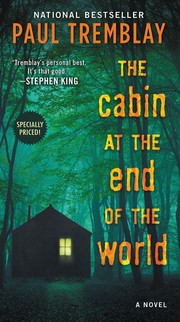
The Cabin at the End of the World
A family vacation in a New Hampshire cabin turns into an impossible choice when four strangers arrive demanding a sacrifice to stop the apocalypse.
2,571-word summary · 11 min read
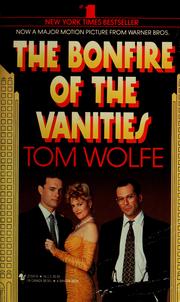
The Bonfire of the Vanities
Tom Wolfe's first novel follows a Wall Street bond trader whose life unravels after a hit-and-run in the Bronx, in a satire of 1980s New York money, race and…
2,268-word summary · 10 min read
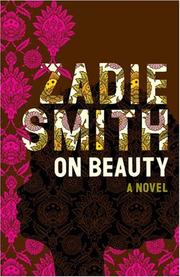
On Beauty
A Rembrandt scholar and his liberal family collide with a conservative rival's household in a Massachusetts college town, in Zadie Smith's comic, argumentative…
2,869-word summary · 13 min read
Nightmares and Dreamscapes
King's 1993 collection runs from a man buried alive in a Cadillac to a town of dead rock stars, mixing horror, science fiction and dark humor across 816 pages.
3,232-word summary · 14 min read
Hidden Bodies
Joe Goldberg flees to Los Angeles chasing the woman who robbed him, falls for a wealthy grocery heir, and finds the bodies he buried in New York resurfacing in…
2,247-word summary · 10 min read
The Strain
A silent Boeing 777 lands at JFK with almost everyone aboard dead, and a CDC team finds an old vampire war following it into New York.
2,272-word summary · 10 min read
The Regulators
A suburban Ohio street turns into a violent Western set in this Richard Bachman novel, a mirror to Desperation in which an autistic boy hosts a creature called…
2,259-word summary · 10 min read
Never Flinch
Holly Gibney works two cases at once: a killer promising fourteen deaths and a threat against a feminist writer's lecture tour. King braids them into a…
2,245-word summary · 10 min read
Intensity
A college student survives a brutal home invasion, then follows a killer's motor home in a bid to save the teenage girl he holds captive.
2,290-word summary · 10 min read
Ace of Spades
Two Black seniors at an elite academy are celebrated by day and hunted by an anonymous texter in this YA thriller about institutional racism.
2,066-word summary · 9 min read

Night Film
A disgraced journalist investigates the death of a reclusive horror director's daughter, following a red coat through hospitals, secret clubs, and a family…
2,690-word summary · 12 min read

James
Percival Everett retells Huckleberry Finn from Jim's side, giving him a library, a hidden school, and a voice the novel lets loose.
2,211-word summary · 10 min read
The Troop
A Boy Scout troop on a Canadian island takes in a stranger who cannot stop eating, and the worm inside him turns a camping trip into a war.
2,457-word summary · 11 min read
When No One Is Watching
Sydney Green watches her Brooklyn block's Black residents vanish one by one in Cole's Edgar-winning thriller about gentrification as a crime scene.
2,165-word summary · 10 min read
The Zombie Survival Guide: Complete Protection from the Living Dead
Max Brooks's deadpan survival manual explains the Solanum virus, the only ways to destroy the living dead, fortifying a home, and the outbreaks history quietly…
2,650-word summary · 12 min read
Razorblade Tears
Two ex-con fathers, one Black and one white, hunt their murdered sons' killers in a Richmond that never gave the boys a fair shake.
2,880-word summary · 13 min read
Everything's Eventual: 14 Dark Tales
Fourteen Stephen King stories shuffled by the deal of a card deck, from the haunted room of 1408 to quiet tales of grief that sting as much as the monsters.
2,000-word summary · 9 min read
This Present Darkness
A pastor and reporter face demons over Ashton while angels answer prayer.
2,384-word summary · 11 min read
The Last House on Needless Street
A lonely man, a cat and a mysterious neighbor pull you into a house full of buried trauma.
2,627-word summary · 12 min read
The Chalk Man
Childhood chalk codes lead to a murder that follows friends thirty years later.
2,350-word summary · 10 min read
Relic
A museum beast kills during an exhibition while an agent investigates.
2,066-word summary · 9 min read

If It Bleeds
Holly Gibney faces an outsider plus three more tales of dread.
2,219-word summary · 10 min read
Haunted
Writers lock in for three months and trade worse stories as food runs out.
2,576-word summary · 11 min read