
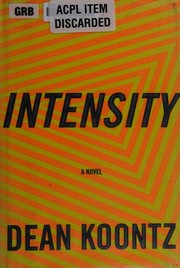
Reading options
What's inside (7 sections)
I picked this one up on a friend's recommendation. He said it was the fastest few hundred pages he had read in years, and he said it with the look of someone who had stayed up far too late. I was curious and skeptical at the same time. The idea of a thriller that never lets up sounds like a recipe for a book that exhausts you by chapter four, and I had read enough Koontz to know he likes big feelings and close calls. What I found was a book that mostly delivers on that promise, with one stretch in the middle that I think could have been shorter. It first appeared in the UK under Headline in November 1995, then came to the States through Alfred A. Knopf in early 1996. The first US hardcover runs 308 pages and covers roughly one long, frantic day in the life of a woman who never asked to be part of any of this.
Chyna at the Templeton house
Chyna Shepherd is twenty six, a graduate student who grew up with a mother who neglected and hurt her. She has never had much practice being part of a family. When her friend Laura Templeton invites her to spend a long weekend with the Templeton clan out in the California hills, Chyna accepts because the house offers the one thing she has always wanted: people who act glad she is there. The opening chapters take their time letting her notice the small comforts. Someone leaves a light on for her. Someone asks what she wants for breakfast. Someone teases her gently at the table. Koontz is careful to show why this place matters before he tears it apart, and that patience pays off. By the time the violence starts, you understand exactly what Chyna has to lose.
The destruction arrives at night. Edgler Foreman Vess comes through the house with a calm, methodical patience, and he kills the family one by one while Chyna hides and listens. She finds Laura tied up and has to leave her to go for help, promising she will come back. When Laura screams, Chyna grabs a knife and runs upstairs, but she is too late. Vess has killed Laura and is loading her body into his motor home. Chyna climbs aboard in the dark, finds her friend's corpse, and then the vehicle pulls away before she can get out. That is the engine of the whole book. She is now trapped with a killer who does not know she is there, with no weapon worth mentioning and no plan beyond staying alive until the next stop.
What struck me in these chapters was how unglamorous Chyna's fear is. She throws up. She counts seconds between sounds. She talks to herself in a whisper to keep from making noise, and she is embarrassed afterward, as though someone might judge her for it. Her skill with guns comes up later, but early on she is mostly a scared young woman making do with whatever happens to be in reach. Koontz writes that kind of practical panic well, and it kept me from rolling my eyes at the situations he puts her in.
A ride with the wrong man
The motor home sequence is the part I would hand to someone who says they do not like this sort of book. Chyna hides in a back room and waits for a chance. When Vess stops at a gas station, she slips out and tries to use a payphone. While she is there she hears him boasting to the clerks about a young girl he keeps prisoner in his basement, a teenager named Ariel. Then he kills the clerks. Chyna does not scream or run. She takes one of the clerk's cars and follows him, which is a strange choice, and it is exactly the sort of decision that makes the book work. She is not thinking like a normal person anymore. She is thinking about the girl in the basement.
The gas station itself is a small masterpiece of dread. Chyna is inches away from a phone and people who could help, and she cannot take the ordinary way out, because Vess is standing a few feet away. Koontz draws out the seconds while she decides what to do. I found myself willing her to pick up the phone and call the police, even though I knew it would get someone killed. That is the effect he wants. The book keeps putting a reasonable option in front of her and then taking it away, until following a murderer becomes the only sensible thing left.
She catches up to Vess on a road through a state park and deliberately crashes her car into a redwood tree. While he gets out to look, she climbs back onto the motor home. He catches a glimpse of her, and this is where the book takes its most interesting turn. Instead of killing her on the spot, he decides to let her live for a while because she has surprised him. He is fascinated by her. That small decision, made almost casually, is what keeps Chyna alive for the rest of the story, and it gives the chase its odd, intimate quality. She is more than prey to him now. She has become a puzzle he wants to watch.
The chapters switch back and forth between Chyna's point of view and Vess's, and those shifts are where the pacing trick Koontz was attempting becomes clear. Just as you settle into her version of events, you are dropped into his, and he is almost always thinking about what she will do next. It is a clever way to keep a book moving, though it also means you spend a lot of time in the company of a killer. He is good company in the most uncomfortable sense. I found myself reluctant to leave those chapters even when I wanted Chyna to be safe.
In the basement
Vess's remote house is where the novel shows its hand. Chyna slips inside and finds Ariel DeLane, a teenager who has been held for months and has withdrawn into a catatonic state. The girl barely responds to anything. Before Chyna can get her out, Vess attacks in the kitchen, punches her unconscious, and chains her to a table. He talks while she is trapped, and the details he offers are grim. He tortured animals as a boy. He burned his parents to death at nine after they caught him with the neighbor's cat, and the death was ruled an accident. He stabbed his grandmother a couple of years later because she did not keep the bathroom clean to his liking. He killed his adoptive parents by fire in his twenties for the insurance money. Koontz based the character partly on the real killer Edmund Kemper, and it shows in the flat, transactional way Vess describes his early crimes.
Ariel is a hard character to write, since most of her time on the page is spent staring at nothing, and Koontz gives her a slow, partial return. She draws a little. She responds to a voice. The moments where she seems to come back for half a second are handled with care, and they made her feel like a person instead of a hostage shaped like a plot device. When she finally moves in the scene on the highway, it reads as the result of all those tiny efforts rather than a sudden miracle.
Vess calls himself a homicidal adventurer, and his whole philosophy is wrapped up in the title. He believes life is about collecting intense experiences, and that killing is simply the purest way to feel something fully. It is a thin philosophy when you say it out loud, and I think that is part of the point. The frightening thing about him is not the ideas. It is his complete lack of interest in anyone else's suffering. He offers Chyna a bargain: help him drag Ariel out of her silence, and he will let her live. It is a cruel test, and it gives Chyna something to do besides run. For a while she has to play along, sitting with Ariel and talking to her, while Vess watches from the edges of the room.
Chyna gets free by working her hands loose and slamming her chair into a wall until it comes apart. She releases Ariel from the room in the basement. Getting out of the house is another problem, because Vess keeps a pack of Doberman Pinschers trained to kill anyone trying to come or go. She puts on his own dog training clothes, sprays the dogs with ammonia, and makes it back to the motor home with Ariel in tow. It is a clever bit of improvisation, and it is the moment the book turns from a chase into something closer to a two person siege. I liked that the solution came from paying attention to the house rather than from a sudden burst of heroics. Chyna survives because she notices things, which is the same skill that got her into the motor home in the first place.
The sheriff in the police car
Just when Chyna thinks she has a chance, she flags down what looks like a helpful police car. The driver is Vess. It turns out he is the local sheriff, a detail the novel plants carefully and then springs with real force. He is not merely a hunter in the woods. He has a badge, a radio, and the law on his side, and he knows every road in the county. Chyna rams his car, he rolls clear, and he uses a shotgun to disable the motor home so that it tips over. She and Ariel get out into the open, but he catches up and knocks her down.
The finish is a little over the top, and I say that as someone who enjoyed it. Ariel, who has been almost silent for the whole book, moves enough to distract Vess. Chyna pulls a lighter from her pocket and sets fire to the gasoline soaking his boot. She rolls away as the pool of fuel ignites, and Vess burns to death while she watches. A passing motorist stops to help the two women. Months later Chyna has adopted Ariel and is seeing a decent man. The ending is tidier than the rest of the book, but after all that noise I was willing to let it be tidy.
There is a small detail here that I keep coming back to. Chyna carries the lighter because she quit smoking, or was trying to, and the book has tucked that fact away earlier. It is a cheap bit of setup, but it works. The most ordinary object in her pocket becomes the thing that saves both of them. Koontz is at his best with that kind of physical logic, where a plan depends on a boot, a dog, a chair, a lighter, instead of on a speech.
What works and what drags
Koontz said he wanted to subvert the idea that a thriller needs slow patches between the exciting parts, and on the whole he succeeds. The chapters alternate between Chyna and Vess, and every switch raises the stakes. The book moves from one problem to the next with very little air. When it slows down, it is usually because Koontz is letting Chyna think through a fear or letting Vess explain himself, and those passages are shorter than you might expect. Read in a weekend, it produces exactly the breathless effect he was aiming for.
The book's title gives away its design. Koontz wrote it as an experiment in sustained intensity, and you can feel the seams if you look for them. Every chapter ends on a problem that the next chapter has to solve, and the points of view trade off so that neither character is ever idle for long. It is a strong set of handcuffs to put on a story, and I admire how often he escapes them. When the book does stall, it is usually because he is trying to explain Vess rather than show him, and the explanation never matches the creepy force of the man himself.
The trouble is that the pace leaves little room for the people to breathe. Chyna's history with her mother arrives in a few heavy blocks, and I wanted more of the smaller moments that made the Templeton house worth losing. Vess's interior chapters are gripping, but they also risk making him more interesting than the person trying to stop him, which is a familiar problem with books about memorable killers. There is also a long stretch after the escape from the house where the pattern repeats itself: Vess appears, Chyna improvises, they survive, and he appears again. It works each time, but I felt the repetition before the novel was done and found myself skimming a little.
One more thing worth knowing before you start. The book was made into a two part TV movie in 1997 for Fox, starring Molly Parker, John C. McGinley, and Tori Paul. Viewers later noticed strong similarities between the plot and the French film High Tension, and its director, Alexandre Aja, admitted he had read the novel. Koontz publicly declined to sue, saying he did not want to be associated with the film. That is a strange footnote, but it tells you how vivid this particular story is. If you want a thriller that keeps its foot down from the first page, this one earns its reputation, even if it leaves a few things messy on the floor behind it.
FAQ
When was Intensity published?
It first appeared in the UK through Headline in November 1995, then came to the US from Alfred A. Knopf in January 1996. The first US hardcover runs 308 pages with ISBN 9780679425250.
Who is Edgler Vess?
He is the serial killer at the center of the novel, a man who calls himself a homicidal adventurer and kills for the sheer intensity of the experience. Koontz based the character partly on the real killer Edmund Kemper.
Does the girl in the basement survive?
Yes. Chyna frees the catatonic teenager Ariel from Vess's basement, and the two escape after Vess burns to death. Chyna adopts Ariel in the months that follow.
Similar books
Hidden Bodies
Joe Goldberg flees to Los Angeles chasing the woman who robbed him, falls for a wealthy grocery heir, and finds the bodies he buried in New York resurfacing in…
2,247-word summary · 10 min read
The Last House on Needless Street
A lonely man, a cat and a mysterious neighbor pull you into a house full of buried trauma.
2,627-word summary · 12 min read

Watchers
A lonely veteran and a shy woman shelter a genius dog while a lab-made killer hunts them.
2,823-word summary · 13 min read

Th1rt3en
A former con artist turned defense lawyer takes a celebrity murder trial while a serial killer sits on the jury, steering the verdict.
2,254-word summary · 10 min read

You Are Not Alone
A lonely New Yorker witnesses a subway suicide and falls in with the dead woman's friends, where a makeover and a framed murder hide a hidden mastermind.
2,588-word summary · 12 min read

We Live Here Now
After a near-fatal fall, a woman moves with her husband to a remote Dartmoor house where strange events happen only when she is alone, and a raven watches from…
2,016-word summary · 9 min read

The Obsession
After a childhood in the shadow of her serial killer father, photographer Naomi Carson puts down roots in a coastal town, only to face a copycat killer…
2,230-word summary · 10 min read

The Maid's Diary
A cleaner who snoops through her wealthy clients' lives finds a secret that could destroy them, while a detective investigates a bloody waterfront house with…
3,459-word summary · 15 min read

The Lies I Tell
A con artist returns to Los Angeles to ruin the man who took her family's home, while a journalist who has hunted her for ten years closes in.
2,201-word summary · 10 min read

The Cellar
Abducted in her small English town, sixteen-year-old Summer is locked in a cellar with three other girls. Their captor calls himself Clover and wants a perfect…
2,551-word summary · 11 min read
The Cabin at the End of the World
A family vacation in a New Hampshire cabin turns into an impossible choice when four strangers arrive demanding a sacrifice to stop the apocalypse.
2,571-word summary · 11 min read

Pretty Things
A grifter and an heiress collide at a decaying Lake Tahoe mansion in Janelle Brown's sharp novel about social media, deception and the stories people tell to…
2,725-word summary · 12 min read
When She Returned
Eleven years after vanishing from a California parking lot, Kate Bennett reappears in Montana with an infant, and her family learns that coming home may not…
2,338-word summary · 10 min read
The Regulators
A suburban Ohio street turns into a violent Western set in this Richard Bachman novel, a mirror to Desperation in which an autistic boy hosts a creature called…
2,259-word summary · 10 min read

The Flight Attendant
A flight attendant wakes in a Dubai hotel beside a dead man she may have killed, and spends the rest of the novel lying to everyone who could help her.
2,496-word summary · 11 min read

The Anniversary
Alex Finlay's standalone revisits May 1 in a Nebraska town for ten years as two former classmates close in on the May Day Killer.
2,237-word summary · 10 min read
Never Flinch
Holly Gibney works two cases at once: a killer promising fourteen deaths and a threat against a feminist writer's lecture tour. King braids them into a…
2,245-word summary · 10 min read

What She Knew
Rachel lets her eight-year-old son run ahead in a Bristol park, and the nine-day search turns her into a suspect in the public eye.
2,952-word summary · 13 min read

Rules of Prey
Minneapolis detective Lucas Davenport hunts a killer who leaves a new rule at every scene and treats murder as a game of wits.
1,914-word summary · 9 min read
The Troop
A Boy Scout troop on a Canadian island takes in a stranger who cannot stop eating, and the worm inside him turns a camping trip into a war.
2,457-word summary · 11 min read

Still Missing
A realtor is abducted at a Vancouver Island open house and held for more than a year. Told through therapy sessions, the novel follows her escape and the hunt…
2,466-word summary · 11 min read

Saving Noah
A seventeen-year-old swimmer confesses to molesting two girls he coached, and his mother must decide what unconditional love is worth.
2,976-word summary · 13 min read

3rd Degree
The third Women's Murder Club novel follows a San Francisco terror cell and a three-day killing schedule, and it costs the club a member.
2,685-word summary · 12 min read

The Ex
Cassie thinks her new boyfriend's ex is the woman harassing her, but Freida McFadden's thriller keeps rearranging who the ex actually is.
2,103-word summary · 9 min read

The End of Her
A sleep-deprived mother of twins faces a stranger's accusation that her husband murdered his first wife in Shari Lapena's domestic suspense novel.
2,383-word summary · 11 min read
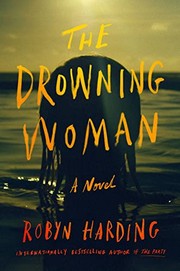
The Drowning Woman
Living in her car in Seattle, Lee saves a wealthy stranger from drowning. The friendship that follows draws her into abuse, murder, and a plan to disappear.
2,578-word summary · 11 min read

The Widow
A widow of a suspected criminal faces reporters and police while hiding what her marriage really cost.
2,599-word summary · 12 min read

The Therapist
A couple moves to a gated street where the previous therapist was murdered in their house.
2,437-word summary · 11 min read
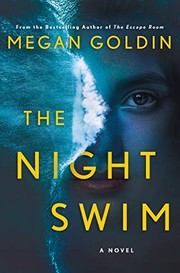
The Night Swim
A true crime podcaster covers a rape trial while probing an old drowning in a small town.
2,260-word summary · 10 min read
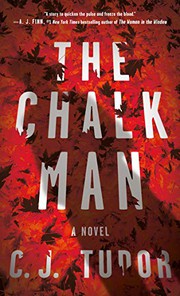
The Chalk Man
Childhood chalk codes lead to a murder that follows friends thirty years later.
2,350-word summary · 10 min read