

Innamorata
2,464-word summary 11 min read 560 pages in the book
- First published
- 2026
- Publisher
- Del Rey
- Pages
- 560
- ISBN
- 9780593722596
- Series
- The House of Teeth (#1)
Reading options
What's inside (8 sections)
I picked this up because Ava Reid keeps doing something I appreciate: she takes a shape I think I know, a marriage plot or a retold fairy tale, and then she makes the seams show until the whole thing feels dangerous. A Study in Drowning did that to me, and Lady Macbeth did it from a colder angle. Innamorata, published by Del Rey on 17 March 2026, is the first volume of a duology called The House of Teeth, and it is a 560-page dark gothic fantasy that asks what a person owes the dead when the living have forgotten how to keep promises. What surprised me most was how quiet the opening moves are. For a book with necromancy in its bones, a lot of the early tension comes from two cousins and a pile of unsent words.
An island where the dead used to walk
The story is set on Drepane, an island kingdom where the dead once walked the earth in plain sight. Seven noble houses ruled there, and their power came from the arcane secrets of necromancy. This is not a world where magic is a rumour in a dusty book. It was a system of government, something lords used to command and to frighten one another, and its methods were passed down as closely guarded family knowledge.
Then a conqueror's blade brought those houses low. The libraries were burned. The lords were killed. The eldritch magic that had held the island together was extinguished, at least from the public world. Reid does not spend pages describing the war itself, and that is part of the book's design. The conquest lives in the aftermath, in the burned shelves and the empty halls and the things people no longer dare to say aloud. You feel the loss more than you see it.
This is a duology, and Innamorata is the first volume, published in 2026 by Del Rey. Knowing that changes how you read the world building. The burned libraries are a standing promise that the missing knowledge will matter again. The name of the surviving house is worth sitting with too. Teeth are what remain after everything else has been stripped away, and they are also what you use to bite back. Reid is not subtle about that, but she does not need to be. The image of a family reduced to teeth, still able to draw blood, tells you most of what you need to know about the tone before the first order is given.
Only one house has any real standing left, and that is the House of Teeth. Its legacy survives in two living descendants. One is Marozia, beautiful and openly favoured, who carries the title of heiress and moves through the light of the court. The other is her cousin, Lady Agnes, who is uncanny in a way that makes people uneasy. Those two women are the whole political situation in miniature. One is legible and admired. The other is watched, and not entirely understood.
The silence and the heiress
Agnes has not spoken a word in seven years. Reid treats that silence as a weapon rather than a wound, which matters for how you read every scene the two women share. Agnes works from the shadows while Marozia shines, and the arrangement looks, at first, like a kind of partnership. Marozia has the face and the title. Agnes has the patience and the mind. The power dynamic between them is strange and specific, and the book keeps returning to it.
Seven years is a long time to refuse language, and Reid never lets the choice feel like a quirk. In a court built on rumour and display, a woman who will not speak is a woman no one can quote, and therefore a woman no one can fully predict. That is why the silence reads as a weapon. Marozia's beauty is also a kind of armour, but it is armour everyone can see. Agnes's advantage is the opposite: it is the part of her that people cannot get hold of. The two cousins are each armed, just in ways the court has different ways of fearing.
Some of the best early momentum comes from scenes in which Agnes writes to Marozia. Reid deliberately keeps the reader outside those actual words. We are shown the consequences instead, the way one cousin behaves toward the other afterward, the small shifts in manner and mood. It is a bold choice and it does two things at once. It makes Agnes's interior life genuinely private, and it makes you lean forward trying to read the room the way the court does. You never get the letter. You get the person who wrote it, and the person who received it, and the space between them.
That gap is where a lot of the book's feeling lives. I found myself trusting Reid's restraint here. A lesser writer would have given us the letters and explained the bond. Holding them back makes the relationship feel like property of the characters rather than of the reader, which suits a story about secrets that people kill to keep.
A dead grandmother and a set of orders
Do not mistake Agnes for the quiet one in the background. She is the true bearer of the House of Teeth's legacy, and her grandmother, recently dead, has left her a set of instructions. They are not gentle. Agnes must recover the stolen secrets of death magic. She must avenge her family's fallen honour. Most urgently of all, she must find a way to raise her grandmother from the dead.
That last command is the engine of the plot, and it explains the cold logic underneath Agnes's choices. Grief here is not a mood that characters sit with. It is a task list with a deadline, handed down by someone who is now a corpse and still, apparently, giving orders. Reid is interested in the cruelty of inheritance, in the way the dead continue to govern the living long after they stop being able to answer for what they asked.
Agnes chooses a marriage plot as her route into power. She arranges the betrothal of her beloved cousin Marozia to Prince Liuprand, heir to the conquering House of Berengar. The reason is practical and ruthless: the prince's castle holds a forbidden library, and that library is where the stolen secrets of death magic are likely to be found. Marozia is the door. Agnes is the hand that opens it. There is real cruelty in the calculation, because Marozia is not a pawn who consents to being told what her life is for. She is a person Agnes loves, and also a person Agnes uses.
The bargain with Liuprand sets up a particularly sharp moral problem. Marozia is the beloved cousin, the one person Agnes is presumably protecting, and yet the route to her grandmother's restoration requires handing that cousin over to the family that destroyed them. Reid keeps both truths in view. Agnes is not written as a woman who has forgotten how to love; she is written as a woman who has decided that love can be spent, like any other resource, in service of a dead relative's instructions. That is a cold idea, and the book is willing to sit inside it for a long time before it starts to punish her for it.
The slow, steady investigation that follows is one of the book's strengths. Agnes moves through the prince's grotesquely grand castle with the patience of someone who has had seven years of practice saying nothing. The scale of the place is part of the point. It is a monument to the family that won, built over the ruins of the family that lost, and every corridor is a reminder of what was taken.
The prince who speaks to her soul
The complication is the one Agnes can least afford. Liuprand, the golden prince, speaks to her soul. Reid gives this a literal, uncanny weight rather than treating it as a polite way to say attraction. He reaches the part of Agnes that her silence was built to protect, and a passion grows between them that is as treasonous as it is powerful. She is the last heir of the House of Teeth. He is the heir of the house that destroyed it. Their feeling for each other threatens to poison the kingdom's roots and to tear a kingdom that is already shattered into two.
And there is the final order from her grandmother, the gravest of them all: Agnes must not fall in love. Read that command alongside the task of raising the dead and it becomes clear what kind of book this is. The death magic and the romance are not separate strands that occasionally touch. They are the same argument, fought on two fronts. To bring her grandmother back, Agnes has to stay hard and exacting. To love Liuprand, she would have to become something her family's code has no room for.
Nathalie DeFelice, writing for The Nerd Daily, put the matter plainly: it is not Agnes's mind that betrays her but her heart. That is a sharp reading of the book's design, and it matches what happens. Agnes can outthink everyone around her. She cannot outthink the way Liuprand makes her feel. The consequences DeFelice describes are tragic and ruinous for everyone involved, and there is no happily ever after waiting to soften the turn. Reid is willing to let the marriage plot curdle into something closer to a doom.
This is where the book's title earns its place. Innamorata is a word about being in love, but here love is the thing that ruins the machinery. The passion is not a reward for Agnes's cleverness. It is the penalty for it.
Small hands, large consequences
One of the more interesting structural choices is the cast of viewpoints. The book is built from the perspective of Agnes and several figures on the periphery of the great players, so that small actions are shown working their way up into consequences felt by many. We are not locked inside the grand narrative of houses and heirs. We see the people who carry messages, notice absences, and make the small decisions that gather into disasters.
That approach suits the world Reid has made. A court where everyone is watching everyone else means that a glance or a delayed letter can travel. The periphery is not decorative here; it is how power actually moves.
It also changes the rhythm of the book. Just as you settle into Agnes's calculating viewpoint, Reid cuts to someone who sees only a fraction of what she sees, and who must act on incomplete information. Those shifts keep the political intrigue from feeling like a single clever person solving a puzzle. The consequences of Agnes's choices land on people who never agreed to be part of her plan, and Reid makes you watch them absorb the damage. It is a patient way to build dread, because you keep waiting for the other shoe to drop on someone who had no idea a shoe was involved.
When the ending arrives, it lands with the force of all those little accumulations rather than a single grand reveal. DeFelice said the ending left her speechless, and that it deliberately opens the question of what happens next. It is a hook into the second volume of the duology, but it also works as a cold acknowledgment that the death of a house and the rise of a forbidden love do not resolve cleanly in one book.
I found the ending bracing, though I can see why some readers will find it unsatisfying. It refuses the comfort of a settled score. The dead are not properly honoured, the living are not properly rewarded, and the kingdom is still broken. For a book willing to sit with that, the lack of closure is the point.
What readers argue about
Reception for Innamorata was sharply divided, and the split is worth understanding before you commit 560 pages. Booklist gave it a starred review, praising the haunting atmosphere, the morally tangled characters, and the idea of love becoming doom. DeFelice scored it nine out of ten for The Nerd Daily and called it an incredibly thoughtful read about the darkest parts of humanity, while warning that it is dark, at times dubious, and that its trigger warnings need to be taken seriously. That is a fair caution. This is a book that includes necromancy, political cruelty and a romance with a great deal of damage in it.
It is worth adding that the divided reception has less to do with craft than with expectation. Reid is writing a book in which desire is a trap and the machinery of revenge keeps grinding long after anyone has decided they want it to stop. If you come looking for a heroine whose agency grows steadily stronger, you are likely to read Agnes's slide as a failure of the writing. If you come for a gothic study of how love wrecks people who have spent years building themselves against it, the same slide will look like the point. I fell closer to the second camp, but I understand the first.
Publishers Weekly was far less convinced, calling the novel disappointing and saying it gets off to a strong start but quickly loses focus. That review argued that the instalust between Agnes and Liuprand overshadows the necromancy intrigue, stripping Agnes of agency and turning her into a complacent figure pushed by forces outside her control. It also faulted flat, fairy-tale-like characterisations and a story it found short of both direction and, ironically, teeth.
I think there is something to the agency complaint, even if I do not fully agree with it. The early Agnes, the one who engineers a betrothal and rationally works her way toward a forbidden library, is a formidable figure. When the romance takes over, Reid does let that sharpness blur, and the woman who planned so carefully starts to be carried by feeling. Whether you call that a tragic fall or a loss of narrative nerve depends on what you came for. Readers drawn to lush, cruel gothic atmosphere will find plenty here. Readers who want a plot that holds its nerve straight through may find the romantic turn frustrating.
For my part, the atmosphere carried me. Reid writes a world where love is a kind of treason and the dead are still issuing commands, and she is willing to leave the story unresolved so the cost stays visible. That is a difficult thing to pull off, and even when the middle sags, the ambition is never in doubt.
FAQ
Is Innamorata a standalone novel?
No. It is the first volume of The House of Teeth duology, and the ending deliberately leaves the larger story open for a second book.
Does the book have a happy ending?
No. The Nerd Daily reviewer Nathalie DeFelice describes a tragic, ruinous outcome for everyone involved and notes there is no happily ever after.
What kind of reader will enjoy this book?
Readers drawn to lush, cruel gothic atmosphere and morally tangled characters tend to respond well, while those wanting a plot that holds its nerve may find the romantic turn frustrating.
Similar books
More from The House of Teeth first, then related titles.
The Knight and the Moth
Six of seven Diviners vanish, and the last one flees a cathedral with a mocking knight and a gargoyle who calls everyone Bartholomew. Gillig's gothic fantasy…
2,936-word summary · 13 min read
Two Twisted Crowns
Elspeth and Ravyn hunt Providence Cards to free the kingdom while Elm courts danger and the Nightmare bargains.
2,052-word summary · 9 min read
One Dark Window
Elspeth Spindle hides a monster in her head and joins a treasonous hunt for twelve magic cards to save mist-locked Blunder.
3,040-word summary · 14 min read

Forced Bonds
The Sanctuary's shield is down and the Resistance is inside. Oli must complete her bond group, including the hostile Nox, before the war costs her everything.
2,316-word summary · 10 min read
Wings
A homeschooled fifteen-year-old grows a blue flower from her back and learns she is a faerie sent to guard a hidden gate. Pike's debut makes plant lore feel…
2,506-word summary · 11 min read

Water Moon
A woman inherits a Tokyo pawnshop that trades in regrets, finds her father gone and one glowing bird freed, and crosses into another world to learn what her…
2,087-word summary · 9 min read
The Lunatic Cafe
Anita Blake takes a missing-shapeshifter case into St. Louis werewolf politics while Jean-Claude and Richard both press their claim on her.
2,327-word summary · 10 min read
The Girl of Fire and Thorns
Rae Carson's debut follows Elisa, an insecure princess born with a godstone in her navel, who is married to a foreign king and must grow into the leader a…
2,331-word summary · 10 min read

The Darkest Part of the Forest
In a town built around a sleeping horned boy in a glass coffin, a girl discovers she has been spending her nights as a faerie king's knight and remembers none…
2,012-word summary · 9 min read
The Cask of Amontillado
A drunken nobleman follows a friend into his family catacombs to taste a cask of amontillado. Poe's 1846 tale turns a wine joke into one of literature's most…
2,916-word summary · 13 min read

The Buffalo Hunter Hunter
A 1912 diary found in a Montana parsonage recounts a Blackfeet man's unraveling after a dying creature's blood turns him undead, in a novel of history and…
2,731-word summary · 12 min read
The Binding
In an alternate Victorian England, binders remove unbearable memories into books, and a young apprentice discovers his own past was erased from him.
2,036-word summary · 9 min read
Temple of the Winds
In Sword of Truth book four, a magical plague sweeps the Midlands and prophecy demands that Richard enter the Temple of the Winds, but only through an…
2,962-word summary · 13 min read
Spark of the Everflame
A village healer stops taking the powder that keeps her strange powers quiet. After a dying king names her his heir, Diem Bellator faces a choice between a…
2,293-word summary · 10 min read
Shadowland
Ever Bloom cannot touch Damen without risking his life. As she hunts for a cure, a mysterious surfer named Jude arrives and her loyalty to Damen is tested.
2,301-word summary · 10 min read
Nightbane
Isla Crown has thirty days to defend Lightlark after Grim threatens to destroy it, while memories of the year she spent with him return.
2,353-word summary · 10 min read

Magic Study
Sentenced to die in Ixia, Yelena returns to the land she was stolen from to learn the magic that made her an outlaw.
2,542-word summary · 11 min read

Magic Bleeds
The fourth Kate Daniels novel finds Kate investigating a magical plague in Atlanta while her relationship with Curran fractures and an ancient enemy tied to…
2,236-word summary · 10 min read
Evernight
A girl raised among vampires falls for a human boy at a Gothic boarding school, unaware that he hunts her kind.
2,200-word summary · 10 min read
Brida
A young Irishwoman convinced she has a spiritual Gift seeks out a forest Magus and a Dublin witch, and learns that her gift is to bridge the visible and…
2,012-word summary · 9 min read
Blood of the Fold
In Sword of Truth book three, Richard Rahl takes command of Aydindril while a zealot army and an emperor who walks in dreams threaten everything he loves.
2,321-word summary · 10 min read
Alchemised
A memory-wiped alchemist wakes a prisoner of the regime that won Paladia's civil war, and her captor is the former rival who wants what remains inside her head.
2,596-word summary · 12 min read
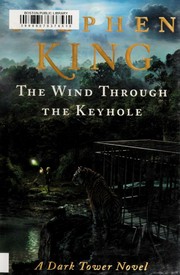
The Wind Through the Keyhole
Sheltering from a killing storm, Roland tells his ka-tet a tale of his youth, then a boy's fairy tale that mirrors his own loss.
2,504-word summary · 11 min read

The Paper Magician
A graduate magician is assigned to paper magic instead of metal, then must face a woman who tears out her mentor's heart.
2,454-word summary · 11 min read

Quicksilver
Saeris Fane steals from the desert queen's reservoirs until a gateway flings her into the frozen fae world, where Kingfisher needs her alchemist magic.
2,311-word summary · 10 min read
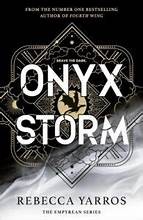
Onyx Storm
A quest south with Violet Sorrengail, a dragon rider racing to cure Xaden before he turns venin. Yarros trades the academy for islands, irids and a costly war.
2,368-word summary · 11 min read

Magic Strikes
Drafted into the Order of Merciful Aid, Kate Daniels investigates the beating of her friend Derek and finds a hidden tournament where rakshasas fight in human…
2,012-word summary · 9 min read
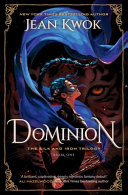
Dominion
Jean Kwok opens a trilogy in a world of four Dominions, where a memoryless refugee bonds with a tyger queen and uncovers a royal past.
2,213-word summary · 10 min read
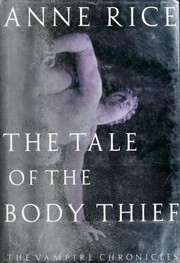
The Tale of the Body Thief
Lestat trades bodies with a psychic thief for one day of mortality and ends up trapped, sick, and hunting his own vampire body.
2,069-word summary · 9 min read

Magic Burns
A magic flare hits Atlanta, and mercenary Kate Daniels must recover stolen maps, find a missing witch, and keep a teenage girl alive while Celtic gods try to…
2,021-word summary · 9 min read