
Reading options
What's inside (8 sections)
The girl who wanted to know
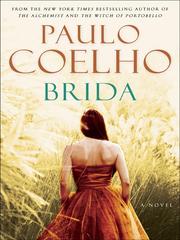
Brida O'Fern is twenty-one and lives in a remote Irish village. She has a boyfriend named Lorens, a steady life and a restless mind. What she wants is to understand magic. She believes she has a Gift, something unusual that she cannot yet name, and she is convinced that the answer to what it is lies somewhere outside the village. Coelho's third novel, first published in Portuguese in 1990, is the story of what she finds when she goes looking.
The book is short and lyrical, built from brief chapters that mix philosophical aphorisms with magical realism. It was published a year after The Alchemist, and it shares that book's faith in a universe that is constantly trying to tell you something. The difference is that Brida is about a woman who wants to understand the signs rather than simply follow them. She is not a seeker crossing a desert. She is a young woman with a question, and the novel treats the question seriously.
I picked it up because Coelho's earlier books are on the site, and because the premise, a person convinced she has a Gift she cannot identify, is a good one. The book's answer is both mystical and practical. Brida's Gift turns out to be the capacity to be a bridge between the visible and the invisible, and the key to using it is love. That is a very Coelho conclusion, and the novel earns it more than I expected.
The Magus
Brida seeks out the Magus, an old man who lives in the forest and is master of the Tradition of the Sun. This is knowledge of the divine through nature and the visible world, the idea that the cosmos itself is a revelation. The Magus is roughly twice her age, and he recognizes immediately that Brida is his Soul Mate, his Other Half. He says nothing about it. Instead he tests her.
The test is unnervingly simple. He leads her into the forest and leaves her alone through the night. Brida is frightened, and in that fear she discovers that faith is what carries her through. The Magus is pleased and accepts her as a pupil. From then on he teaches her to overcome fear and to read nature as a text. His central lesson is that a person must have enough courage to make mistakes, because disappointment, defeat and despair are the tools God uses to show the way.
The forest test works because Coelho does not tell us what Brida is supposed to feel. She is simply alone, in the dark, with an old man who has walked away. Her fear is practical and immediate. She does not suddenly become brave. What she finds is that something carries her through the night, and later, when the Magus explains it, she understands that he call it faith. This is a much quieter account of a mystical initiation than the term suggests. There is no vision, no voice, no sign. There is only a young woman who gets through until morning.
That experience shapes everything that follows. Brida keeps returning to the idea that the tools of spiritual life are ordinary things: fear, mistakes, waiting. When the Magus teaches her to read nature, he is not asking her to see visions in every leaf. He is asking her to pay attention, which is a discipline rather than a gift. The novel is at its most convincing when it treats mysticism as a form of attention rather than a power.
That line is typical of the book. Coelho writes sentences that are meant to be remembered, and he is not embarrassed by their simplicity. Some readers find this kind of wisdom cheap. I think the novel does enough with the idea of mistake as a spiritual instrument to make it more than a slogan. Brida's whole journey depends on being wrong about things. She is wrong about the Magus, wrong about Wicca, wrong about what her Gift is, and each error moves her forward.
Wicca and the moon
In Dublin, Brida finds an occult bookshop and meets Wicca, a poised and enigmatic witch who embodies the Tradition of the Moon. Where the Magus represents outward worship, nature and the light, Wicca represents introspection, memory, past lives and the feminine energy of transformation. She is intrigued that the Magus sent Brida to her, and she teaches her four things: to travel into past lives, the doctrine of Soul Mates, the four rings of revelation that map a woman's path, and reincarnation.
The four rings are virgin, saint, martyr and witch, and they describe stages of a woman's spiritual life. Brida's visions through Wicca's rituals show her earlier incarnations, including a life as a witch. The novel is explicit that the Magus was once connected to Wicca herself, and it is clear that these two teachers represent different halves of a single tradition. The book's structure keeps returning to the contrast between sun and moon, forest and city, outward and inward. Brida's resolution is not to choose one but to weave them together.
The four rings are the book's most specific contribution to its material. Virgin, saint, martyr and witch are not stages of moral worth in Coelho's telling. They are ways a woman's life can be shaped by what she gives and what is taken from her. Brida's visions of her own past lives give the scheme a personal dimension. She is not studying an abstract system. She is watching herself in other centuries, making the same mistakes and learning the same lessons. One of the figures from those lives, named in the Spanish account, is Loni, and another is Talbo. The details matter less than the recognition: Brida sees that she has always been who she is.
This is where Coelho's prose is at its best. He writes about ritual and vision with a kind of calm conviction, and he trusts the reader to accept that these things are happening within the story's terms. There is no attempt to prove that magic is real. The novel simply operates on the assumption that it is, and that the interesting question is what a person does with it.
The two loves
The emotional structure is a triangle, though it is less a rivalry than a question about what kind of love matters. Brida is drawn to the Magus, who recognizes her and understands her Gift. Lorens, her boyfriend, is a scientist who represents reason and ordinary life. He waits for her without fully understanding what she is doing, and the novel treats his patience as a form of love that is no less real for being unglamorous.
Coelho's point, made through the Magus's own behavior, is that a person can meet more than one Other Half in a lifetime. The Magus watches Brida's growth from a distance and struggles with his own forbidden love for her. In the end he chooses to release her rather than possess her, trusting her path. That decision is the book's moral center. It is possible to recognize a soul mate and still let them go, because maturity means choosing rather than collecting.
Brida herself arrives at similar conclusions. She learns that finding one important thing in your life does not mean you have to give up all the others, and that choosing a path means missing out on others. These are not original observations, but they are placed well. They arrive after she has done the work, which makes them feel earned rather than canned.
The book's ending is quiet. Brida takes part in a ritual under Wicca in which she uses her Gift and aligns herself with the rhythms of the universe. She realizes that love transcends time and physical boundaries. She steps into her future transformed, carrying faith and love, while the Magus watches with a mixture of pride and loss. Wicca is satisfied at having unlocked her potential. Lorens remains part of her grounded life. Nobody gets everything, and nobody is destroyed by that.
The ending is deliberately unresolved in practical terms. We do not learn exactly what Brida will do with her life, or whether she and Lorens will stay together, or whether she will see the Magus again. What we get is her transformed relationship to her own Gift. She understands that she is a bridge, that love is the key, and that she does not have to renounce one part of herself to keep another. That is the kind of ending Coelho favors: the external story stops, and the internal one is just beginning.
I should be honest that this can feel like an evasion. A novel that has spent two hundred pages promising revelation owes the reader a slightly clearer account of what the revelation is. But the vagueness is also part of the book's argument. A Gift that could be stated in a paragraph would not be much of a mystery, and Brida's whole journey begins with the conviction that the answer cannot be found in a sentence.
The real Brida
One of the stranger facts about the book is its origin. In 1989, on the Camino de Roma in the Pyrenees near Lourdes, Coelho met a thirty-year-old Irish woman named Brida O'Fern who was initiated into the Order of the Golden Dawn and the Rite of Memphis-Misraim. She told him her story and eventually allowed him to write it. The novel's protagonist carries her name, though she is younger in the book. The Spanish Wikipedia entry, which documents this, also notes that a Brazilian television novela based on the book was abandoned partway through production.
That background explains some of the book's texture. The details of the Traditions of the Sun and Moon are specific enough to suggest they came from a real conversation rather than from research. The magical system is not elaborate, but it has a lived-in quality. Coelho is less interested in how magic works than in what it feels like to someone who has spent her life sensing that she is different.
What the book does well
The best thing about Brida is its treatment of doubt. Brida is not a wholly convinced seeker. She is curious and skeptical at once, and the book lets both impulses be present. When she is left alone in the forest, her faith is not a confident certainty. It is the thing she discovers she has because she has nothing else. That is a more interesting account of faith than the assertion of it.
The prose is also pleasing. Coelho writes in short, clear sentences with a rhythm that carries you through the philosophical passages. A line like "Nothing in the world is ever completely wrong, even a stopped clock is right twice a day" is the kind of thing that would be unbearable in a longer book. Here it works because the chapters are short and the aphorisms are spaced out. He knows how much of this a reader can take.
The weakness is that the story itself is thin. Brida's journey consists of being taught two versions of the same truth by two teachers and then choosing a path. There is very little external conflict, and the novel's length, barely over two hundred pages, is the right size for it. Readers looking for a plot with stakes will not find one. Readers who want a book about a young woman asking what her life is for will find a patient and often beautiful answer.
I finished it thinking about the Magus's decision to let Brida go. It is the most human thing in a book full of cosmic language. He knows exactly what he is losing and he lets her walk away anyway, because he believes she has to. That is a better definition of love than the mystical one the book keeps arriving at, and I suspect Coelho knew it. It is the last thing the novel has to say, and it is the best.
FAQ
Is Brida a sequel to The Alchemist?
No. It is a standalone novel published in 1990, a year after The Alchemist, and it shares Coelho's interest in a universe full of signs. The two books are thematically linked but not connected by plot.
What are the Tradition of the Sun and the Tradition of the Moon?
The Magus teaches knowledge of the divine through nature and the visible cosmos, while Wicca teaches introspection, memory, past lives and feminine transformation. Brida's path requires both rather than a choice between them.
Where did the story come from?
In 1989 Coelho met an Irish woman named Brida O'Fern on the Camino de Roma. She was initiated in esoteric orders and told him her story, eventually permitting him to write the novel.
Similar books
By the River Piedra I Sat Down and Wept
Pilar, 29, meets her childhood friend again in Madrid and finds a rumored miracle worker. One winter week through the Pyrenees to the river Piedra, and the…
2,845-word summary · 13 min read
Forced Bonds
The Sanctuary's shield is down and the Resistance is inside. Oli must complete her bond group, including the hostile Nox, before the war costs her everything.
2,316-word summary · 10 min read
Wings
A homeschooled fifteen-year-old grows a blue flower from her back and learns she is a faerie sent to guard a hidden gate. Pike's debut makes plant lore feel…
2,506-word summary · 11 min read
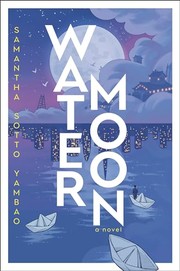
Water Moon
A woman inherits a Tokyo pawnshop that trades in regrets, finds her father gone and one glowing bird freed, and crosses into another world to learn what her…
2,087-word summary · 9 min read
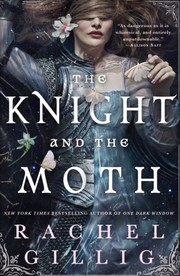
The Knight and the Moth
Six of seven Diviners vanish, and the last one flees a cathedral with a mocking knight and a gargoyle who calls everyone Bartholomew. Gillig's gothic fantasy…
2,936-word summary · 13 min read
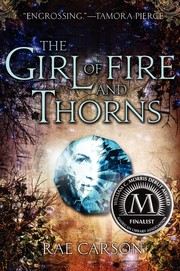
The Girl of Fire and Thorns
Rae Carson's debut follows Elisa, an insecure princess born with a godstone in her navel, who is married to a foreign king and must grow into the leader a…
2,331-word summary · 10 min read
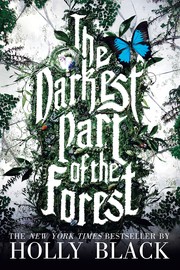
The Darkest Part of the Forest
In a town built around a sleeping horned boy in a glass coffin, a girl discovers she has been spending her nights as a faerie king's knight and remembers none…
2,012-word summary · 9 min read
The Binding
In an alternate Victorian England, binders remove unbearable memories into books, and a young apprentice discovers his own past was erased from him.
2,036-word summary · 9 min read
Temple of the Winds
In Sword of Truth book four, a magical plague sweeps the Midlands and prophecy demands that Richard enter the Temple of the Winds, but only through an…
2,962-word summary · 13 min read
Spark of the Everflame
A village healer stops taking the powder that keeps her strange powers quiet. After a dying king names her his heir, Diem Bellator faces a choice between a…
2,293-word summary · 10 min read
Shadowland
Ever Bloom cannot touch Damen without risking his life. As she hunts for a cure, a mysterious surfer named Jude arrives and her loyalty to Damen is tested.
2,301-word summary · 10 min read
Nightbane
Isla Crown has thirty days to defend Lightlark after Grim threatens to destroy it, while memories of the year she spent with him return.
2,353-word summary · 10 min read
Magic Study
Sentenced to die in Ixia, Yelena returns to the land she was stolen from to learn the magic that made her an outlaw.
2,542-word summary · 11 min read
Magic Bleeds
The fourth Kate Daniels novel finds Kate investigating a magical plague in Atlanta while her relationship with Curran fractures and an ancient enemy tied to…
2,236-word summary · 10 min read
Katabasis
Kuang sends a Cambridge doctoral magician into the underworld to fetch the supervisor she killed, all for a letter of recommendation. Academic satire turns…
2,374-word summary · 11 min read
Blood of the Fold
In Sword of Truth book three, Richard Rahl takes command of Aydindril while a zealot army and an emperor who walks in dreams threaten everything he loves.
2,321-word summary · 10 min read
Beauty: A Retelling of the Story of Beauty and the Beast
Robin McKinley's debut retells Beauty and the Beast through a plain, book-loving girl whose nightly refusals of the Beast's proposals slowly become something…
2,100-word summary · 9 min read
The Paper Magician
A graduate magician is assigned to paper magic instead of metal, then must face a woman who tears out her mentor's heart.
2,454-word summary · 11 min read
Quicksilver
Saeris Fane steals from the desert queen's reservoirs until a gateway flings her into the frozen fae world, where Kingfisher needs her alchemist magic.
2,311-word summary · 10 min read
Pyramids
A prince raised by assassins comes home to a desert kingdom where the high priest rules and a spitefully huge pyramid starts bending time.
2,441-word summary · 11 min read
Onyx Storm
A quest south with Violet Sorrengail, a dragon rider racing to cure Xaden before he turns venin. Yarros trades the academy for islands, irids and a costly war.
2,368-word summary · 11 min read
Magic Strikes
Drafted into the Order of Merciful Aid, Kate Daniels investigates the beating of her friend Derek and finds a hidden tournament where rakshasas fight in human…
2,012-word summary · 9 min read
Innamorata
A mute necromancer heiress engineers a royal marriage to reach a forbidden library, then falls for the prince she plans to use.
2,464-word summary · 11 min read
Dominion
Jean Kwok opens a trilogy in a world of four Dominions, where a memoryless refugee bonds with a tyger queen and uncovers a royal past.
2,213-word summary · 10 min read

Magic Burns
A magic flare hits Atlanta, and mercenary Kate Daniels must recover stolen maps, find a missing witch, and keep a teenage girl alive while Celtic gods try to…
2,021-word summary · 9 min read

Blood Bonds
Oleander is chained in a Resistance camp, and her five Bonds have to find her before Silas Davies finishes what he started in this third Bonds that Tie book.
2,018-word summary · 9 min read

The Siren
Saved from a shipwreck in 1930, Kahlen becomes a siren who sings men to their deaths for the Ocean, until a boy in a college library makes her want a life she…
2,369-word summary · 11 min read

The Rose & the Dagger
Shahrzad is pulled from her Caliph husband and left in a desert camp of rebels, needing to break his curse and end a war before it ends her.
2,520-word summary · 11 min read

We Hunt the Flame
In a fractured Arabia-inspired world, a disguised huntress and a prince-assassin race to find a magic-restoring book and confront an ancient evil.
2,195-word summary · 10 min read
Blue Moon
Ever Bloom tries to save her immortal boyfriend, Damen, from a mysterious illness while a new student named Roman quietly takes control of her school and her…
1,998-word summary · 9 min read