
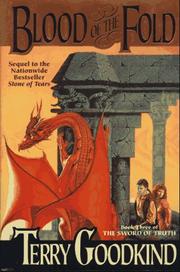
Blood of the Fold
2,321-word summary 10 min read 464 pages in the book
- First published
- 1996
- Publisher
- Tor Books
- Pages
- 464
- ISBN
- 9780312890520
- Series
- Sword of Truth (#3)
Reading options
What's inside (8 sections)
I picked up Blood of the Fold because I had finished the first two Sword of Truth books back to back and wanted to see how Richard Rahl would handle actually being in charge. This is the third novel, published by Tor in 1996, and the first edition is a hefty hardcover of about 464 pages. It picks up almost immediately after Stone of Tears, with Richard and Kahlan reunited in that strange place between worlds, and it does not waste much time on gentle settling in. Within a few chapters he has dissolved an alliance, threatened an assembly of dignitaries, and started a war of nerves with an emperor who can talk to people in their sleep. I found it a forcing, often uncomfortable read, and the discomfort turned out to be the point.
Richard takes Aydindril
The book opens with Richard back in the real world, in Aydindril, the capital of the Midlands. He has just learned that the woman he loves, Kahlan Amnell, the Mother Confessor, is alive, and that the two of them were pulled apart by magic. The relief does not last. The Imperial Order, led by Emperor Jagang, keeps pushing deeper into the Midlands, and the Midlands themselves are a loose alliance that argues instead of acting. Richard decides that the only way to stop the advance is to stop being a guest in someone else's house and become the ruler.
So he goes to the D'Haran embassy and claims the loyalty of the troops there as their new Lord Rahl. This is where the book starts showing its machinery. The D'Harans are bound to Lord Rahl by an old spell, cast thousands of years earlier by one of Richard's ancestors. The bargain is simple enough: the D'Harans protect Lord Rahl with their swords, and Lord Rahl protects them with his magic, as long as they accept that he is the genuine article. A mriswith attack in the room, and the strange, focused way Richard fights, convince General Reibisch and the soldiers that this really is the man they have been waiting for.
A few details stuck with me from this stretch. On his way through the city Richard gives a silver coin bearing the Palace of the Prophets' mark to a little girl selling honey cakes with her grandmother, and the two of them recognise him as the Seeker and promise to keep quiet. He is set on by Galtero, a member of the Blood of the Fold, and saved by four Mord-Sith, Cara, Raina, Berdine and Hally, along with two guards named Ulic and Egan. Hally does not survive the fighting that follows, which is a blunt reminder that Goodkind will kill off a likeable character to prove a point about danger. Then Richard convenes the Midlands assembly in the Confessors' Palace and tells them the alliance is finished. They can join D'Hara willingly or be conquered. He also announces that Galea has already joined and that he intends to marry its new queen. The dignitaries are not allowed to leave until they surrender, and the Duke and Duchess of Kelton are furious.
It is a strong opening stretch for the simple reason that Richard is finally doing something instead of reacting. He is blunt, sometimes bullying, and clearly terrified that hesitation will cost lives. Goodkind lets the reader feel the weight of the choice. This is a man who has spent two books learning rules, and now he has to govern.
A new Prelate and the hunt for banelings
While Richard is rearranging the political map, the Old World gets its own storyline. At the Palace of the Prophets a funeral is held for Nathan and Annalina, who were thought dead. Sister Verna takes up the office of Prelate, which she does not want and does not feel ready for, and she soon discovers that Annalina is not dead at all but has fled with Nathan. The Palace also has a problem it cannot name out loud: Sisters of the Dark are moving freely inside it, preparing the place for Jagang, who is the dreamwalker of the ancient prophecies. Sister Simona, locked away in the infirmary and dismissed as mad, is the one who worked out who Jagang really is. Warren, freed from his Rada'Han, discovers he is a prophet and blurts out a prophecy about a false prioress and the end of the Palace of the Prophets.
The other half of this thread is the Blood of the Fold itself. Tobias Brogan is its Lord General, and he has spent years hunting people he calls banelings, anyone with some form of the gift. He believes the Creator has sanctioned his campaign, and his sister Lunetta, who can spot lies and work magic through a talisman, tells him what he wants to hear. Brogan and Lunetta interrogate people in the Nicobarese palace, and they begin to suspect that Kahlan, officially dead, is alive and hiding under another identity. Their hunt leads them to her and to Adie, and the two women are collared and taken to the Palace of the Prophets, where Jagang wants both the prophecies and the palace's life extending spell.
This is the part of the book I found hardest to sit with. Brogan and Lunetta catch the Duchess of Kelton, Cathryn Lumholtz, in a spell of their own. Lunetta uses magic drawn from a talisman to bind her will, Galtero rapes her, and Brogan kills her husband and makes it look like a mriswith did it. They then weave a spell around the duchess so that Richard will desire her and lower his guard. Brogan does the same thing to Berdine, one of the Mord-Sith, after she is knocked out in a fight. When Berdine is sent to Richard with the duchess, the trap nearly works. Richard heads off the duchess's knife in his bedroom, and a mriswith turns up and kills her, calling him a skin brother. It is only when he notices what has been done to her body that he understands the spell, and that understanding lets him reach Berdine. He lets her strike him with her agiel, trusting the bond of Lord Rahl to hold, and the older magic proves stronger. Berdine's possession breaks, and the three Mord-Sith swear to him again.
I want to be fair about this material. Goodkind is clearly trying to show how ugly the Blood of the Fold and Jagang's people are, and the scene where Richard saves Berdine is meant as proof that his rule rests on protection rather than fear. It is also true that the book lingers on the mutilation and the assaults in a way that feels less like moral indictment and more like shock for its own sake. The women in these passages are treated as objects that men mark, break and pass around, and even a reader who understands the villains are supposed to be monsters may find the repetition exhausting. I did. The Berdine rescue genuinely moved me, but I did not need quite so much cruelty to get there.
Through the Sliph
Once Richard learns that Kahlan has been taken to the Old World, he does not hesitate. He uses the Sliph, an ancient way of travelling, to get there almost at once. The Sliph is one of those ideas the series uses when ordinary travel would slow things down, and Goodkind never explains it fully. It works, and that has to be enough.
At the Palace of the Prophets Richard has the ability to become invisible, courtesy of a mriswith cape, and he uses it to move through the building. The trouble is that the same ability fools him into letting the mriswith Queen out. She slips away through the Sliph and heads back to Aydindril, which means that his rescue attempt creates a fresh problem in the world he just left. He pulls himself together, destroys the Palace of the Prophets so that Jagang cannot get his hands on what is stored there, frees Kahlan, and races back through the Sliph with her. He has no idea the queen is already nesting in the Wizard's Keep.
The Palace sequence is the most purely enjoyable part of the novel for me. There are fire traps set by Zedd, Annalina and Nathan, there are hollow claims of divine instruction, and there is the slow realization that the institution meant to guard prophecy has been hollowed out from within. Verna, who began the book as a reluctant new Prelate, ends up imprisoned by Sisters of the Dark who want to find out whether the Rahl bond can be broken, using her as their test case. Warren's prophecy about ending the Palace turns out to be literal. Goodkind is good at this sort of institutional decay, and the Palace of the Prophets is a better setting than much of the political manoeuvring in Aydindril.
Passion rules reason
Every Sword of Truth novel offers a Wizard's Rule, and this one gives us the Third Rule: "Passion rules reason." Goodkind explains it as the danger of letting emotion take control of judgment, with consequences for the person acting and everyone nearby. The book even points to the moment where Richard breaks it. His urgency to reach Kahlan is completely understandable, but it is that urgency that lets the mriswith Queen loose. He means well and still makes things worse.
I liked that the rule is not presented as a clever slogan pasted onto events. It grows out of a mistake Richard actually makes, and the mistake has a body count attached to it further down the line. I was less convinced by the way characters sometimes stop to state the theme outright, as if they suspected the reader might miss it. The series has always had this habit, and Blood of the Fold is one of its more insistent examples. A short conversation about the rule can slow a chase, and the point lands anyway.
The same idea sits underneath Jagang's power. He appears in dreams, and to different people he presents himself as either the Creator or the Keeper. Brogan believes he is following the Creator, while other characters see a different face of the same presence. Faith becomes something a ruler can use against people who already believe. That is a sharper piece of writing than some of the book's other themes, and it made Brogan's unravelling more interesting to me than his army. He starts out sounding reasonable, grows certain that the Creator has gone mad, and eventually decides that he himself is the new Creator. His own sister begins to doubt the whole mission. By the end his certainty has eaten him.
The queen in the Keep and the battle for the city
Back in Aydindril, Richard finds the mriswith Queen nesting inside the Wizard's Keep. She is laying eggs that would hatch a new brood of the creatures in the New World, and he smashes them before that can happen. Kahlan is with him by now, and together they fight the queen and kill her. It is a grim, close-quarters struggle that benefits from the earlier tension, because the reader has been waiting for this creature to meet him again since she slipped through the Sliph.
While that is going on, Richard's D'Harans are losing a battle in the city against the Blood of the Fold and the mriswith. The arrival of Lord Rahl and the Mother Confessor changes the fight. Richard takes command, leads his soldiers forward, and the tide turns. The surviving members of the Blood of the Fold swear the oath that puts them under Lord Rahl's protective magic, which is also the thing that finally frees them from Jagang's hold over their dreams. It is a neat piece of closure for the political thread, and it gives the oath a practical purpose instead of leaving it as ceremony.
What I appreciated here is that Goodkind pays off things he set up early. The bond with the D'Harans, first explained in that first chapter confrontation, matters again when Brogan tries to break the Mord-Sith away from Richard. The mriswith that threatened Richard in the street come back as the queen's brood. The Sliph that carried him to the Palace becomes the route the queen uses to follow him home. The book is more carefully built than its sometimes blunt dialogue suggests.
What stayed with me
Blood of the Fold is a book of two halves that pull against each other. One half is a story about a man learning to rule, with real attention to what makes people loyal and what makes a promise worth keeping. The other is a parade of cruelties that sometimes feels designed to shock rather than to mean anything. I finished it glad that I had read it and impatient with parts of it, which is probably the honest reaction for a third volume that is both the series at its most confident and at its most excessive.
If you have come this far in the Sword of Truth books, you will find plenty to keep you turning pages. The pace is stronger than Stone of Tears, the political stakes are clearer, and Richard's decision to take command gives the story a spine. If you are new to the series, start with Wizard's First Rule, because almost none of this will make sense without the earlier books. And if you are someone who will be put off by graphic sexual violence used as a marker of evil, be warned that this book leans on it heavily. I would still hand it to a reader who likes epic fantasy with real consequences and a hero who makes mistakes, but I would say plainly that the cruelty is there and that you have to decide for yourself whether it earns its place.
FAQ
Is Blood of the Fold the third Sword of Truth book?
Yes. Tor published it in 1996 as book three, following Stone of Tears and preceding Temple of the Winds, and the first hardcover runs about 464 pages.
Do I need to have read the earlier books before this one?
Yes. The story resumes immediately after Stone of Tears and assumes you already know Richard, Kahlan, Zedd, the Mord-Sith and the threat from Emperor Jagang.
What is the Wizard's Third Rule?
It is 'Passion rules reason,' the idea that emotion can override judgment. Richard breaks it when his hurry to reach Kahlan lets the mriswith Queen escape.
Similar books
More from Sword of Truth first, then related titles.
Wizard's First Rule
Woods guide Richard joins Kahlan and wizard Zedd to find the Boxes of Orden before Darken Rahl, learning why people believe lies.
2,220-word summary · 10 min read

Stone of Tears
After the veil tears, Richard seeks training from the Sisters while Kahlan holds a fracturing Midlands and Zedd hunts the missing Stone.
2,483-word summary · 11 min read
Temple of the Winds
In Sword of Truth book four, a magical plague sweeps the Midlands and prophecy demands that Richard enter the Temple of the Winds, but only through an…
2,962-word summary · 13 min read

Jade City
On an island where jade grants power, two clans fight over the mineral, the family name, and the right to decide what loyalty costs.
2,403-word summary · 11 min read
This Kingdom Will Not Kill Me
A grocery delivery driver wakes in a fantasy capital she knows from an unfinished trilogy, only to discover she cannot die.
2,339-word summary · 10 min read
The Girl of Fire and Thorns
Rae Carson's debut follows Elisa, an insecure princess born with a godstone in her navel, who is married to a foreign king and must grow into the leader a…
2,331-word summary · 10 min read

Magic Study
Sentenced to die in Ixia, Yelena returns to the land she was stolen from to learn the magic that made her an outlaw.
2,542-word summary · 11 min read
Kushiel's Dart
Born with a scarlet mote in her eye, Phèdre nó Delaunay is sold into servitude, trained as a courtesan and spy, then thrown into a conspiracy that threatens…
2,789-word summary · 12 min read
Golden Fool
FitzChivalry Farseer returns to Buckkeep as a servant and a grieving Skillmaster, teaching Prince Dutiful while court intrigue, the Piebalds and a…
2,583-word summary · 11 min read
Fool's Fate
Prince Dutiful must kill a dragon to secure his betrothal, and FitzChivalry Farseer is caught between the Fool and Chade over Icefyre's fate.
2,247-word summary · 10 min read
The Lady of the Lake
Ciri is trapped by the Aen Elle while Geralt winters in Toussaint, and the Witcher saga closes with the siege of Stygga and a fog-bound farewell.
2,445-word summary · 11 min read
Dominion
Jean Kwok opens a trilogy in a world of four Dominions, where a memoryless refugee bonds with a tyger queen and uncovers a royal past.
2,213-word summary · 10 min read
Blood Song
Anthony Ryan's Blood Song follows Vaelin Al Sorna from the Sixth Order's brutal training to the war that earns him the name Hope-Killer, in the first Raven's…
2,479-word summary · 11 min read
The Blinding Knife
Kip trains to join the Blackguard while the Prism hides his true identity, loses his colors, and fights a war against a rogue drafter who wants to birth a god.
2,049-word summary · 9 min read

Magician's Gambit
Garion and his companions cross haunted Maragor and the caves beneath Rak Cthol to recover the Orb of Aldur.
2,391-word summary · 11 min read
Homeland
Drizzt Do'Urden is born into the cruel drow city of Menzoberranzan, where his father teaches him to fight and to doubt everything his family believes.
2,303-word summary · 10 min read
Enchanters' End Game
Garion marches toward Torak while Ce'Nedra leads the West's army in the final Belgariad volume, where prophecy and war meet.
2,557-word summary · 11 min read

The Rose & the Dagger
Shahrzad is pulled from her Caliph husband and left in a desert camp of rebels, needing to break his curse and end a war before it ends her.
2,520-word summary · 11 min read
The Queen of the Tearling
Nineteen-year-old Kelsea leaves the woods to take her throne, ends a shipment of human captives, and draws the Red Queen's revenge.
2,357-word summary · 10 min read
Fool's Errand
FitzChivalry Farseer has lived in exile for fifteen years. When Prince Dutiful vanishes before his betrothal, Fitz returns to Buckkeep to find him, with a wolf…
2,606-word summary · 12 min read

We Hunt the Flame
In a fractured Arabia-inspired world, a disguised huntress and a prince-assassin race to find a magic-restoring book and confront an ancient evil.
2,195-word summary · 10 min read
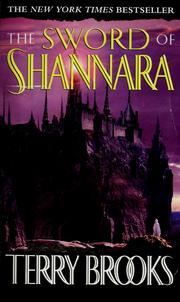
The Sword of Shannara
A young half-Elf and a company of companions set out to recover a magic sword before the Warlock Lord destroys the Four Lands.
2,474-word summary · 11 min read
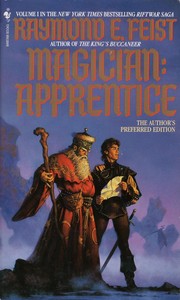
Magician: Apprentice
An orphan kitchen boy and a smith's son grow up in a frontier castle just as invaders from another world open a rift and begin a war that will change both of…
2,114-word summary · 9 min read
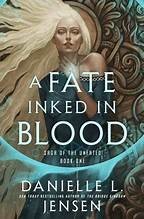
A Fate Inked in Blood
In Norse-inspired Skaland, a fish gutter hiding a goddess's blood is claimed by a jarl, bound by oath, and guarded by the son she cannot want.
1,971-word summary · 9 min read

When the Moon Hatched
An assassin who hears air takes a job that throws her to dragons and a hunter.
2,083-word summary · 9 min read
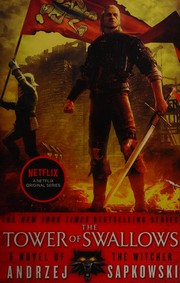
The Tower of the Swallow
Ciri flees as a bandit while Geralt gathers allies to find her.
2,580-word summary · 11 min read

The Emperor's Soul
Forger Shai must stamp a new soul for the dying emperor in 100 days.
2,313-word summary · 10 min read

Shadow's Edge
Kylar fakes death as a king killer while Vi hunts him for the Godking.
2,245-word summary · 10 min read
Pawn of Prophecy
Farm boy Garion learns sorcerers watch him as an old Orb wakes.
2,331-word summary · 10 min read
New Spring
Moiraine and Lan hunt the newborn Dragon before the Black Ajah finds him.
2,475-word summary · 11 min read