
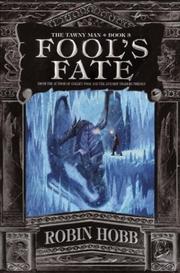
Fool's Fate
2,247-word summary 10 min read 631 pages in the book
- First published
- 2003
- Publisher
- Bantam Books
- Pages
- 631
- ISBN
- 9780553801545
- Series
- The Tawny Man (#3)
Reading options
What's inside (9 sections)
I came to Fool's Fate as the closing book of The Tawny Man, and it reads like a book written by someone who knew a door was shutting. It is long, it is crowded, and its final stretch asks you to hold several different consequences in the air at once. It is also the novel where Robin Hobb finally pays off the bond between FitzChivalry Farseer and the Fool that had been building since the Farseer trilogy. The book was first published in 2003, and the Bantam hardcover runs 631 pages. It is the third of The Tawny Man, after Fool's Errand and The Golden Fool.
A betrothal with a dragon attached
The story starts with a political problem that has a monster built into it. At the Narwhal Clan motherhouse, Prince Dutiful of the Six Duchies and Elliania, of the Outislanders' Narwhal clan, are formally betrothed. The catch is a condition: Dutiful must kill the dragon Icefyre before the marriage can stand. The two young people are drawn to each other, which makes the condition more painful rather than less. Their futures have been arranged by adults betting that a dragon's death will buy peace.
FitzChivalry Farseer is along for this as Tom Badgerlock, the servant identity he has worn since returning to Buckkeep. He travels with Dutiful's coterie of Wit and Skill users, and with Elliania's retinue, bound for the island of Aslevjal where Icefyre sleeps beneath the ice. The party arrives to find the Fool waiting for them. Fitz had left him behind in the previous book precisely to keep him from dying, and his reappearance is both a relief and a signal that the Fool has been moving his own pieces.
The central disagreement is stark. Chade, Fitz's old mentor and the Six Duchies' spymaster, is determined that the dragon be killed, because the marriage will secure the peace he has spent years arranging. The Fool wants to save Icefyre. That puts Fitz in the middle of a conflict between the two people who have shaped him most, and it is a measure of how far the series has come that neither man is simply wrong. Around them hangs the figure of the Black Man, a name spoken with superstition and reverence by the Outislanders, whose role becomes clear only later.
Dutiful is a more interesting prince than the setup suggests. He is young, uncertain, and aware that his marriage is being used as a tool, and his growing affection for Elliania is handled with a lightness the rest of the book rarely allows. The coterie around him, with its Wit and Skill gifts, gives Hobb a way to put ordinary decency on display. These are people chosen for what they can do, but the scenes that linger are the ones where they simply look after one another. It is a quiet counterweight to the grand design the adults keep imposing on them.
A man in pieces
It is hard to say much about Fool's Fate without talking about the state Fitz is in when it begins. Years of using the Skill, of being used by it, and of living with the Wit as a shameful secret have left him damaged. His face bears scars; his body is not what it was; he moves through the court as a servant who happens to be a prince's uncle and a former assassin. Hobb never lets him be simply heroic. He is a man who has spent his life being useful to other people's plans and is not at all sure there is anything left of him that he owns.
That is the book's real subject, and it is why the long, slow interior passages matter as much as the plot. Fitz thinks about his bastardy, about the throne he gave up, about Nighteyes the wolf, about the family that does not quite know he is alive. The Wit, once a source of shame, has become a way of seeing the world that the court cannot match. When he uses it to sense what is around him, Hobb gives the prose a texture the court scenes, for all their intrigue, do not have.
Hobb also keeps returning to the gap between the life Fitz is living and the life he could claim. He is a bastard who was trained as an assassin, a prince who refused a crown, and a man who has been declared dead more than once. Each of those identities is still somewhere in him, and none of them quite fits the servant in a worn cloak who stands in the shadows at Buckkeep. The book's slow passages are not padding. They are the sound of a man sorting through what is left after years of being used.
His relationship with the Fool is the axis of the book. The Fool is a White Prophet, a figure who sees possible futures and positions people to bring them about. Fitz is the person he has spent years steering, the one he calls his Catalyst. The Fool's refusal to explain himself has strained the friendship for two novels, and Fool's Fate is where the cost of that secrecy finally comes due. The emotional weight of the book rests on a bond that is part friendship, part manipulation, and part something neither man can name comfortably.
The Pale Woman
The best and most unsettling character in the book is the Pale Woman. When Fitz and the Fool are investigating a disappearance on Aslevjal, they fall into a snow chasm and land in her underground domain. She is the power behind the Outislanders' loyalty, and she has achieved it by kidnapping and Forging Elliania's mother and sister, breaking their wills so that Elliania will do what she is told. Forging, in this world, is a kind of psychic annihilation, and the book does not shy away from what it means.
The Pale Woman wants Fitz for her own purposes. She tries to make him her Catalyst, first by seduction and then by force. What makes her frightening is her calm certainty. She does not hate Fitz. She simply regards him as material to be shaped, and she is patient enough to wait for him to agree. When he refuses, she chains the Fool to a memory stone and threatens to Forge him slowly unless Fitz kills Icefyre. It is a cruel, pieces-of-the-board bargain, and it works because Hobb has spent two books making us understand exactly what the Fool means to Fitz.
Fitz agrees, is thrown out of the Pale Woman's domain, and finds his way back to the camp, where Burrich has arrived, having learned that he survived. Burrich is one of the important people in Fitz's life, the man who raised him and who has always stood between him and the Farseer world. His presence here is a quiet kind of grace, and it makes what happens later hurt more.
The dragon he chooses not to kill
The climax of Fool's Fate is a decision rather than a fight, and it is the best thing in the book. As Fitz prepares to detonate Chade's explosives and kill Icefyre, he realizes that the dragon's death will look like an attack by the Six Duchies on the Outislands. Chade's careful peace would collapse into a war neither country wants. Fitz chooses to trust the Fool's prophecy instead and frees the dragon. Tintaglia, the dragon from the Liveship Traders books, arrives, and the two ancient creatures are reunited.
That choice is Fitz at his best. He has been a killer for most of his life, following orders and doing the hard thing because someone else decided it was necessary. Here he refuses the role, and he does it on instinct and trust rather than any certainty that he is right. It is a small, decisive act of moral independence, and it reframes the whole quest. The betrothal survives because he declines to make the sacrifice it demanded.
The aftermath is busy. The Pale Woman unleashes a dragon of her own, made of memory stone and embodying the ancient Kebal Rawbread. It attacks Icefyre and Tintaglia and wounds the latter. Burrich is mortally hurt in the fighting, but he uses the Wit to hold the stone dragon still long enough for Swift to kill it with a wizardwood arrow. The Forged Outislanders return to themselves. Icefyre and Tintaglia unite and begin to usher in a new age of dragons. It is a lot of resolution for one chapter, and Hobb has to move quickly to get all the pieces down. Burrich's death in particular is given less space than it deserves.
Bringing the Fool back
The emotional center of the novel comes after the dragon business. Fitz finds the Fool dead and tortured in the Pale Woman's domain, and he brings him through the Skill Pillars to the Quarry. There he heals the Fool's body with the Wit and draws his consciousness back from the Rooster Crown, a wizardwood relic that has been holding it. It is one of the most intimate passages in all of Hobb's work: Fitz pouring himself into a friend who is not supposed to be saveable, using the very powers that have cost him so much.
In the Quarry, the Fool extracts Fitz's memories from Girl-on-a-Dragon, another wizardwood artifact, and Fitz feels whole for the first time in years. It is a strange, moving piece of closure, and it depends on knowing what those memories cost him. The Black Man then reveals that he is also a White Prophet from the age of the Elderlings, and he and the Fool decide to return to the place where they were raised in order to change it for the better. The Fool says farewell to Fitz and removes their Skill bond. The last link between them is severed deliberately, by the person who spent years forging it.
I found that separation harder to take than any of the fights. The Fool has been a source of irritation and mystery for three books, and his goodbye is both an apology and a recognition that Fitz no longer needs a handler. Hobb does not wring it out. The scene is brief, which is partly why it lands.
The month he lost
Fitz does not go home cleanly. Passing through the Skill Pillars too many times in quick succession leaves him lost in the Skill, and he encounters an entity that helps him remember who he is and find his way back to Buckkeep. He discovers he has been gone for a month. The sequence is strange and a little abrupt, but it belongs. The Skill has always been a place where identity can be rewritten, and Fitz has paid in that currency often enough that the cost feels earned.
Back at Buckkeep, Nettle has become the head of Dutiful's coterie, with one of her brothers joining her. She and Fitz begin to know each other properly. She knows he fathered her, but she still considers Burrich her father, which is a quiet, generous decision on her part. Fitz finally tells Patience, Molly, and Burrich's children that he is alive. Molly grieves Burrich, and she and Fitz slowly rekindle what they had before he disappeared. They marry. It is a domestic ending for a story that has been about dragons and prophecies, and I think that is exactly what the series has been aiming at all along.
That homecoming is earned rather than handed over. Fitz has spent years believing that the people he loves are better off without him, and the book makes him do the awkward work of explaining his survival to them. The scenes with Molly are not rapturous. They are careful, a little shy, and shadowed by the man she has just buried. Giving Fitz an ordinary life after all the prophecy feels like the only reward the story could offer that he would actually accept.
What it gets right and where it strains
The great strength of Fool's Fate is that it makes the Fitz and Fool relationship the point. Everything else, the dragon, the betrothal, the Pale Woman, the politics, is built around two people who have spent years failing to say what they mean to each other. When the bond is removed at the end, it feels like a real loss rather than a plot device. That is a remarkable thing to pull off in the third book of a trilogy that sits inside a larger cycle.
The weaknesses are real too. The final act is crowded, with several major resolutions arriving in quick succession, and the dragon politics are compressed more than they should be. The Pale Woman is a compelling antagonist but her defeat is handled abruptly, as if Hobb realized she had used up her pages. Burrich's death is powerful and then rushed past. Readers who want a tidy, evenly paced conclusion will find this uneven, and the book makes almost no attempt to stand alone. You need the earlier Farseer and Tawny Man books, or large parts of it will be noise.
Read it last, and read it with the Fool in mind. The plot is a machine for getting Fitz to a place where he can choose for himself, and the choice matters because of who he has been carrying all these years. It is not a comfortable ending, but it is an honest one.
FAQ
Do I need to read the earlier Robin Hobb books before Fool's Fate?
Yes. It is the third volume of The Tawny Man and assumes you know FitzChivalry Farseer, the Skill and the Wit, and the events of Fool's Errand and The Golden Fool.
Why does the ending of Fool's Fate feel so busy?
Hobb resolves the dragon plot, Burrich's death, the Fool's recovery and Fitz's return to Buckkeep in quick succession, which leaves some threads feeling compressed.
Does Fitz marry Molly in this book?
Yes. After he reveals that he is alive and Molly grieves Burrich, the two slowly rekindle their relationship and marry.
Similar books
More from The Tawny Man first, then related titles.
Fool's Errand
FitzChivalry Farseer has lived in exile for fifteen years. When Prince Dutiful vanishes before his betrothal, Fitz returns to Buckkeep to find him, with a wolf…
2,606-word summary · 12 min read
Golden Fool
FitzChivalry Farseer returns to Buckkeep as a servant and a grieving Skillmaster, teaching Prince Dutiful while court intrigue, the Piebalds and a…
2,583-word summary · 11 min read
This Kingdom Will Not Kill Me
A grocery delivery driver wakes in a fantasy capital she knows from an unfinished trilogy, only to discover she cannot die.
2,339-word summary · 10 min read

Secrets of the Dragon Sanctuary
Kendra is replaced by a plant copy and held by the Society, while Seth steals a unicorn horn so the family can enter a dragon sanctuary.
2,590-word summary · 12 min read

Lioness Rampant
Alanna searches for the Dominion Jewel with the Shang Dragon, then returns to Tortall to face Duke Roger at Jonathan's coronation.
2,478-word summary · 11 min read

Magician's Gambit
Garion and his companions cross haunted Maragor and the caves beneath Rak Cthol to recover the Orb of Aldur.
2,391-word summary · 11 min read
Enchanters' End Game
Garion marches toward Torak while Ce'Nedra leads the West's army in the final Belgariad volume, where prophecy and war meet.
2,557-word summary · 11 min read

The Queen of the Tearling
Nineteen-year-old Kelsea leaves the woods to take her throne, ends a shipment of human captives, and draws the Red Queen's revenge.
2,357-word summary · 10 min read
The Sword of Shannara
A young half-Elf and a company of companions set out to recover a magic sword before the Warlock Lord destroys the Four Lands.
2,474-word summary · 11 min read
Pawn of Prophecy
Farm boy Garion learns sorcerers watch him as an old Orb wakes.
2,331-word summary · 10 min read
The Farthest Shore
Archmage Ged and Prince Arren sail to the far west to stop Cob, whose bid for endless life drains magic across Earthsea in Le Guin's sad 1972 third volume.
2,800-word summary · 12 min read
Dragons of Autumn Twilight
Old friends reunite at the Inn of the Last Home, guard a glowing Blue Crystal Staff, face black dragon Khisanth, and free slaves at Pax Tharkas in this 1984…
2,803-word summary · 12 min read
The Eyes of the Dragon
In the kingdom of Delain, a jailed prince and his younger brother face a magician whose long plot for the throne turns on a napkin clue.
2,018-word summary · 9 min read
The Magician's Land
Exiled from Fillory, Quentin takes a teaching job at Brakebills, joins a crew of magical thieves, and must help rebuild a dying world to finish the trilogy.
2,204-word summary · 10 min read

Jade City
On an island where jade grants power, two clans fight over the mineral, the family name, and the right to decide what loyalty costs.
2,403-word summary · 11 min read
The Girl of Fire and Thorns
Rae Carson's debut follows Elisa, an insecure princess born with a godstone in her navel, who is married to a foreign king and must grow into the leader a…
2,331-word summary · 10 min read
The Everlasting
A broken scholar is sent into the past to live the legend of Sir Una Everlasting, only to find that the story demands her death and that he is writing the lie.
2,464-word summary · 11 min read
Temple of the Winds
In Sword of Truth book four, a magical plague sweeps the Midlands and prophecy demands that Richard enter the Temple of the Winds, but only through an…
2,962-word summary · 13 min read
Keys to the Demon Prison
The fifth and final Fablehaven book sends Kendra and Seth Sorenson across secret preserves to keep the last keys to the demon prison out of rival hands.
2,251-word summary · 10 min read
Dragon Rider
A silver dragon, a sharp-tongued brownie and a lonely orphan boy cross deserts and seas to find the dragons' lost homeland, pursued by a golden killer made by…
3,188-word summary · 14 min read
Blood of the Fold
In Sword of Truth book three, Richard Rahl takes command of Aydindril while a zealot army and an emperor who walks in dreams threaten everything he loves.
2,321-word summary · 10 min read
The Lady of the Lake
Ciri is trapped by the Aen Elle while Geralt winters in Toussaint, and the Witcher saga closes with the siege of Stygga and a fog-bound farewell.
2,445-word summary · 11 min read
Six Crimson Cranes
A princess who loses her voice when a curse turns her six brothers into cranes must work in secret, trust a dragon, and speak a name she does not know.
2,214-word summary · 10 min read
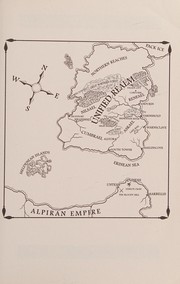
Blood Song
Anthony Ryan's Blood Song follows Vaelin Al Sorna from the Sixth Order's brutal training to the war that earns him the name Hope-Killer, in the first Raven's…
2,479-word summary · 11 min read

The Blinding Knife
Kip trains to join the Blackguard while the Prism hides his true identity, loses his colors, and fights a war against a rogue drafter who wants to birth a god.
2,049-word summary · 9 min read

Homeland
Drizzt Do'Urden is born into the cruel drow city of Menzoberranzan, where his father teaches him to fight and to doubt everything his family believes.
2,303-word summary · 10 min read

Grip of the Shadow Plague
A plague turns Fablehaven's creatures of light into shadows while Kendra hunts an artifact in Arizona and Seth races to find the cause.
2,131-word summary · 9 min read
The Ship of the Dead
Magnus and his crew sail to the edges of the Norse worlds to stop Loki from launching Naglfar, the ship of the dead.
2,426-word summary · 11 min read

The Rose & the Dagger
Shahrzad is pulled from her Caliph husband and left in a desert camp of rebels, needing to break his curse and end a war before it ends her.
2,520-word summary · 11 min read
Magician: Apprentice
An orphan kitchen boy and a smith's son grow up in a frontier castle just as invaders from another world open a rift and begin a war that will change both of…
2,114-word summary · 9 min read