
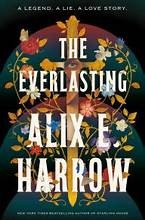
The Everlasting
2,464-word summary 11 min read 320 pages in the book
- First published
- 2025
- Publisher
- Tor Books
- Pages
- 320
- ISBN
- 9781250799081
Reading options
What's inside (9 sections)
I picked this up knowing almost nothing about it beyond the cover, and I was about a hundred pages in before I understood that the book was playing a trick on me. It looks at first like a retelling of a legend, the kind of fantasy that digs up a forgotten heroine and gives her the story she deserved. Then the ground shifts. It becomes a book about a man writing that legend, then a book about a woman trapped inside it, then something stranger about who gets to decide what a story means. I finished it in a couple of sittings and spent a while afterwards turning it over, because Harrow builds this thing out of loops and it keeps folding back on itself.
Let me be plain about the setup, because the legend matters. In the world of the book there is a foundational myth about a figure called Sir Una Everlasting. She is an orphan, found beneath a yew tree as a child. She draws a sword called Valiance. She helps a ruler named Queen Yvanne found the nation of Dominion, and then she dies for her. That is the version everyone knows, the one sung and taught, the story that gives the country its sense of itself. Harrow writes this material with the warmth of someone who loves a good founding myth, and for a chapter or two I settled in expecting a straightforward fantasy about a girl with a sword and a queen she loved.
The scholar who receives a manuscript
The book leaves that legend behind and moves forward centuries to a man named Owen Mallory. Owen is a scholar at Cantford College, which sounds like a quiet sort of place until you learn what he carried there. He was a marksman once, in a war, and he is badly damaged by it. The detail that stayed with me is the way his commanding officer, a colonel, slit his throat. Owen had tried to desert. The colonel caught him, cut his throat, and left him for dead. He survived, and the story never lets you forget that his body remembers what his mind would rather bury. His throat is a kind of wound that keeps speaking.
Owen's life at Cantford is scholarly and small. He is given a manuscript to translate, a text called The Death of Una Everlasting. This is the hinge of the whole novel. A scholar is asked to render an old story into current language, to do the patient academic work of making a dead text readable. Owen sets about it, and that is when the summons comes.
Rolfe and the mission to write by living
The person who calls Owen in is the Minister of War, Vivian Rolfe. Rolfe is a formidable presence, and Harrow gives her a cold, administrative kind of power. She does not ask Owen to translate the manuscript. She tells him, in effect, to stop studying the story and start living it. The mission is to go into the past and write the tale of Una Everlasting not by recording it but by becoming part of it.
The scene where this is sealed is odd and memorable. Rolfe stabs Owen's hand with a letter opener and pins it to the book. There is blood, the book, the physical joining of the man to the text. It is a strange little piece of stage business, and I thought about it long after. It makes the bargain bodily. Owen is not taking a scholarly sabbatical; he is being marked, in the most literal way, as the instrument that will produce this story. From that moment the novel stops being about translation and becomes about complicity.
I want to flag something here, because it shapes everything after. The book is narrated in the second person for much of its length. It tells you, the reader, what happens as though you were the one going through it. This is a bold choice and it does real work, binding you to Owen's confusion because you are being addressed as him. It also, and I will come back to this, becomes tiring. For a long stretch I found myself having to remember who "you" were from one paragraph to the next, and the device turns what should be simple action into something slightly slippery.
Meeting the real Una
Owen lands in the past and finds that the woman behind the legend is not at all the figure he expected. The real Una is world-weary. She is not a bright-eyed savior waiting to draw a sword and found a nation. She is tired, guarded, and carrying a heavy guilt. Harrow does something smart here by letting Owen's expectations collide with the actual person. He has come to write a heroic tale, and instead he has to follow a woman who has no interest in being a hero.
They meet in a winter forest, and from there Owen accompanies her on the quest that the legend will later flatten into a few lines. Una is seeking the last dragon, at a place called Cloven Hill. The plan is to kill it and take the grail. In the legend this is the shining moment, the deed that proves the heroine worthy. In the telling it is colder and messier. Owen travels with her, watches her, and writes their story as they go. That act of writing while living is the whole point of his mission, and Harrow keeps it in front of us. You are never allowed to forget that Owen is composing the thing that will become scripture.
The bond that forms between the two of them is the emotional center of the book. Owen, the broken soldier, and Una, the reluctant savior, recognize something in each other. I liked that the novel earns this rather than declaring it. They are both people who have been used by a story larger than themselves, and the closeness grows out of that shared damage. By the time the loops start, I was genuinely invested in whether they could get out.
The Black Bastion and Una's guilt
The guilt Una carries concerns the Black Bastion. It was besieged, and it was full of civilians. Una burned it. This is the deed that the public story either omits or spins into something noble, and it is the private wound that the real Una cannot put down. Harrow handles this material with care. She does not let the legend's gloss erase what happened. The people inside the Bastion were not soldiers. They were ordinary people caught in a war, and Una killed them.
This matters because the book is, underneath the time travel and the dragons, about what a story does to the ugly parts of a life. The myth of Sir Una Everlasting needs her to be clean. The real Una is not clean. Owen's task is to write the clean version, and every time he writes, he is participating in the erasure of the thing that actually happened. That tension is the best thing in the novel. It asks whether a story can be true if it requires a person to be something they are not.
I should mention the prose here, because Harrow's writing is one of the reasons the book works as well as it does. It is lyrical, full of close attention to cold forests, old stone, and the weight of a sword. There is a real pleasure in the sentences. That pleasure also feeds the criticism, since a book this dense and this committed to its own music can start to feel like it is admiring itself. I had moments where the beauty of a passage slowed the plot to a stop, and I found myself wanting the next thing to just happen.
Cavallon Keep and the loop of deaths
The action comes to a head at Cavallon Keep. Owen, now living the story he was sent to write, shouts a warning and shoots hidden archers with his revolver. That revolver is one of the lovely anachronisms the book plays with: a modern weapon in a legendary past, the tool of a man who should not be there. The scene is tense and well staged. And then it goes wrong in the way it keeps going wrong. Ancel the Good stabs Una as Queen Yvanne drinks from the grail.
That is the pattern. Each loop through these events ends with Una's death. Owen keeps reliving the stretch, trying to change the outcome, and each attempt brings him back to the same loss. Harrow builds the repetitions so that they accumulate weight. At first a loop is a surprise, then a routine, then a kind of grief. You start to feel what Owen feels, which is the awful exhaustion of someone who knows exactly how a scene will end and cannot stop it.
The reason for the loops is a piece of quiet cruelty. Owen comes to understand that Rolfe has been playing Queen Yvanne all along. The Minister of War is not a distant observer of this founding myth; she is an active participant in it, and she is using Owen to manufacture a martyr's story. Una has to die for the legend to work, because a nation needs a dead heroine more than a living, complicated woman. Owen's whole mission, the one he thought was scholarship, was to produce that death on demand. The realization lands hard because it re-colors everything that came before. Every scene of him writing was a scene of him being used.
This is where the second-person narration and the loops met for me in a frustrating way. The structure asks you to endure the same defeat again and again, and the "you" address keeps you right inside it. I understood the design, and I respect it, but there is a stretch in the middle where the repetition felt less like mounting dread and more like the book was stalling. Not every reader will have the patience for it.
Nine years outside the story
Eventually Owen and Una do something the loop did not account for. They flee it. The novel then jumps forward into a life they build together as fugitives, and this is the section I loved most. They live nine years free of the cycle. They have two children. For the first time, the two of them get to be ordinary people rather than figures in a myth. Harrow gives this stretch a warmth and a domestic texture that the earlier loops never had, and it is a genuine relief. After so much repetition, watching them just live is its own kind of payoff.
There is a discovery during this period that re-frames the whole quest. The sword Valiance, the blade that the legend treats as a sacred object, turns out to be a replica. The real thing is not what everyone thinks. Harrow uses this to pick at the foundation of the myth one more time. If the sword is a copy and the heroine was supposed to die, then almost every element of the story people tell about Dominion is a construction, and the construction has an author.
That author is revealed to be Rolfe. In a turn that recontextualizes her cold interest in the whole business, Rolfe is Una's mother. Una, it turns out, was born from a dragon's heart seed. That detail ties back to the dragon of Cloven Hill and gives the book's fantasy machinery a strange, bodily logic. The woman who sent Owen into the past to write a martyr's death is the woman who made the martyr in the first place.
The ending is violent and a little wild, and I will not pretend it is tidy. Owen presses his head into Rolfe's knife, an act that breaks the loop. Una kills Rolfe. She buries Owen and plants the seed in his chest. And then, centuries later, he is reborn from the yew tree, the same kind of tree under which the legend found the orphan who would become Sir Una Everlasting. The last movement closes the circle. The man who came to write a story ends up inside it in the most complete way possible, and the story itself goes on without him.
I had to read those final pages twice. Part of that was genuine confusion about the mechanics, since Harrow is not especially interested in explaining how the time magic works. Part of it was that the ending is moving in a way the rest of the book had been holding back. The circular structure, the yew, the seed, the way a story outlives the people who made it, all of it arrives at once.
What works, and what wears out
Let me gather the honest verdict. The things this book does well are real. The prose is lovely and exact, the loops are intricate, and the idea at its core is strong: a story required a woman to die, and a man was sent to make sure she did. Harrow is good on the way legends flatten people, and she is good on the guilt of the person who knows the true version and writes the false one anyway. The nine years in the fugitive life gave me a payoff the repeated deaths had been promising.
The complaints are real too. The repeated deaths, which are the book's central device, can feel exhausting rather than clever after the third or fourth pass. The second-person narration is a daring choice that costs some readers their footing, and I was one of them for a good stretch. There are places where the lyricism slows the story to a crawl, and the time magic is loose enough that I never fully understood the rules. A reader who wants a clean, propulsive fantasy with a heroine who simply wins will likely find this book too willing to circle its own wound.
I would hand it to someone who likes their fantasy willing to argue with itself, someone who enjoys an unreliable legend and does not mind a novel that keeps changing shape. I would be careful with a reader who wants a straightforward quest or a tidy ending. This is a book about how a story can swallow a person, and it is willing to make you feel the swallowing. That is its ambition, and for all the places it fumbles, I would rather read an ambitious book that sometimes trips than a safe one that never tries. If you can settle into the loops and forgive the occasional excess, there is something here that stays with you, long after the last page folds back to the yew tree.
FAQ
What is The Everlasting about?
It is a 2025 fantasy novel in which scholar and former marksman Owen Mallory is sent into the past to live and write the founding legend of Sir Una Everlasting, only to discover that the legend requires her death.
Is The Everlasting part of a series?
No, it is a standalone novel by Alix E. Harrow, published by Tor Books in 2025. It shares an interest in stories and portals with her earlier work but stands on its own.
Why is the narration in The Everlasting so unusual?
Much of the book is told in the second person, addressing the reader as the person living through Owen's loops. Harrow uses it to bind the reader to his confusion, though the device can be disorienting across the repeated deaths.
Similar books
The Girl of Fire and Thorns
Rae Carson's debut follows Elisa, an insecure princess born with a godstone in her navel, who is married to a foreign king and must grow into the leader a…
2,331-word summary · 10 min read
Golden Fool
FitzChivalry Farseer returns to Buckkeep as a servant and a grieving Skillmaster, teaching Prince Dutiful while court intrigue, the Piebalds and a…
2,583-word summary · 11 min read
Fool's Fate
Prince Dutiful must kill a dragon to secure his betrothal, and FitzChivalry Farseer is caught between the Fool and Chade over Icefyre's fate.
2,247-word summary · 10 min read
Lioness Rampant
Alanna searches for the Dominion Jewel with the Shang Dragon, then returns to Tortall to face Duke Roger at Jonathan's coronation.
2,478-word summary · 11 min read
Magician's Gambit
Garion and his companions cross haunted Maragor and the caves beneath Rak Cthol to recover the Orb of Aldur.
2,391-word summary · 11 min read
Fool's Errand
FitzChivalry Farseer has lived in exile for fifteen years. When Prince Dutiful vanishes before his betrothal, Fitz returns to Buckkeep to find him, with a wolf…
2,606-word summary · 12 min read
The Magician's Land
Exiled from Fillory, Quentin takes a teaching job at Brakebills, joins a crew of magical thieves, and must help rebuild a dying world to finish the trilogy.
2,204-word summary · 10 min read
Water Moon
A woman inherits a Tokyo pawnshop that trades in regrets, finds her father gone and one glowing bird freed, and crosses into another world to learn what her…
2,087-word summary · 9 min read
This Kingdom Will Not Kill Me
A grocery delivery driver wakes in a fantasy capital she knows from an unfinished trilogy, only to discover she cannot die.
2,339-word summary · 10 min read
The Unicorn Hunters
Arden trades Russian folklore for fifteenth-century Brittany in a standalone about a duchess, a forced marriage, and a unicorn hunt that hides a secret wedding.
2,559-word summary · 11 min read
Spark of the Everflame
A village healer stops taking the powder that keeps her strange powers quiet. After a dying king names her his heir, Diem Bellator faces a choice between a…
2,293-word summary · 10 min read
Keys to the Demon Prison
The fifth and final Fablehaven book sends Kendra and Seth Sorenson across secret preserves to keep the last keys to the demon prison out of rival hands.
2,251-word summary · 10 min read
Katabasis
Kuang sends a Cambridge doctoral magician into the underworld to fetch the supervisor she killed, all for a letter of recommendation. Academic satire turns…
2,374-word summary · 11 min read
The Wind Through the Keyhole
Sheltering from a killing storm, Roland tells his ka-tet a tale of his youth, then a boy's fairy tale that mirrors his own loss.
2,504-word summary · 11 min read
The Lady of the Lake
Ciri is trapped by the Aen Elle while Geralt winters in Toussaint, and the Witcher saga closes with the siege of Stygga and a fog-bound farewell.
2,445-word summary · 11 min read
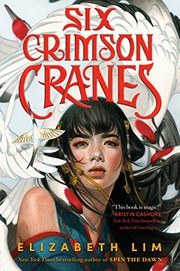
Six Crimson Cranes
A princess who loses her voice when a curse turns her six brothers into cranes must work in secret, trust a dragon, and speak a name she does not know.
2,214-word summary · 10 min read
Dominion
Jean Kwok opens a trilogy in a world of four Dominions, where a memoryless refugee bonds with a tyger queen and uncovers a royal past.
2,213-word summary · 10 min read
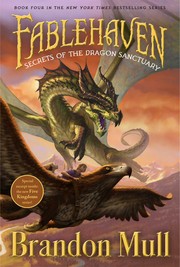
Secrets of the Dragon Sanctuary
Kendra is replaced by a plant copy and held by the Society, while Seth steals a unicorn horn so the family can enter a dragon sanctuary.
2,590-word summary · 12 min read
The Time Paradox
When his mother falls ill with a fairy disease, Artemis Fowl travels back in time to find the extinct lemur that can cure her and confronts his younger self.
2,601-word summary · 12 min read
Enchanters' End Game
Garion marches toward Torak while Ce'Nedra leads the West's army in the final Belgariad volume, where prophecy and war meet.
2,557-word summary · 11 min read

The Rose & the Dagger
Shahrzad is pulled from her Caliph husband and left in a desert camp of rebels, needing to break his curse and end a war before it ends her.
2,520-word summary · 11 min read
The Queen of the Tearling
Nineteen-year-old Kelsea leaves the woods to take her throne, ends a shipment of human captives, and draws the Red Queen's revenge.
2,357-word summary · 10 min read
The Sword of Shannara
A young half-Elf and a company of companions set out to recover a magic sword before the Warlock Lord destroys the Four Lands.
2,474-word summary · 11 min read
Pawn of Prophecy
Farm boy Garion learns sorcerers watch him as an old Orb wakes.
2,331-word summary · 10 min read
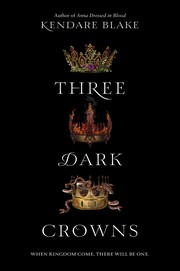
Three Dark Crowns
Three triplet queens must kill each other for the crown, but love and gifts get in the way.
2,134-word summary · 9 min read
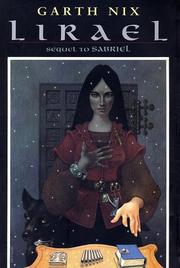
Lirael
A Sightless Clayr girl and a prince afraid of Death join the Dog and Mogget to stop necromancers from waking the Destroyer Orannis at the Red Lake while old…
2,692-word summary · 12 min read
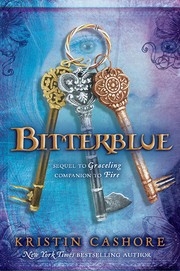
Bitterblue
Eighteen-year-old Queen Bitterblue sneaks out to learn why Monsea still suffers after Leck, facing court lies, ciphers, and trials in Cashore's rich third…
2,686-word summary · 12 min read
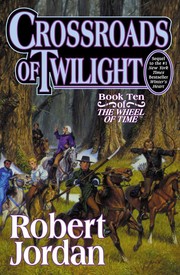
Crossroads of Twilight
Rand cleansed saidin and the whole world felt it. Book ten follows each faction as they react, stall, and choose sides.
2,264-word summary · 10 min read
Winter's Heart
Trapped in Far Madding without the Power, Rand baits his betrayers while Mat plots escape from Ebou Dar and Elayne fights for Caemlyn.
2,906-word summary · 13 min read
The Time of Contempt
Geralt and Yennefer shelter Ciri as mages split and war breaks over the Thanedd coup.
2,355-word summary · 10 min read