
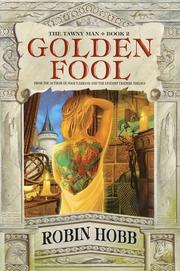
Golden Fool
2,583-word summary 11 min read 520 pages in the book
- First published
- 2002
- Publisher
- Bantam Books
- Pages
- 520
- ISBN
- 9780553801514
- Series
- The Tawny Man (#2)
Reading options
What's inside (8 sections)
I picked this up straight after finishing Fool's Errand, still uneasy about the place that book left its characters, and I expected more of the same. I got something quite different. Golden Fool pulls the story off the frozen coast and into the corridors of Buckkeep, trading bleak open spaces for the close, watchful pressure of a court that is never quite at peace. FitzChivalry Farseer is still grieving the death of his wolf and wit-partner Nighteyes, and that loss sits behind everything he does here. What surprised me was how much of the book is taken up with rooms, disguises, and conversations conducted in front of the wrong audience. It took me a while to settle into it.
A word on the title, because it trips people up. The book is listed both as Golden Fool and as The Golden Fool, the British editions generally using the longer form. The Bantam edition I worked from calls it Golden Fool and labels it book two of The Tawny Man. It first appeared in 2002, between Fool's Errand and Fool's Fate, and the Bantam hardcover runs to about 520 pages. None of this is trivia, because the novel assumes you already know who Fitz is, what the Skill and the Wit are, and why the death of a wolf matters so much. I would not start here.
A grieving Skillmaster at Buckkeep
Fitz is in a bad way when this book opens. Nighteyes is dead, and his grief has not softened into anything he can live with comfortably. He is asked to take the post of Skillmaster to Prince Dutiful, and he accepts reluctantly. The reason he gives himself is that he is almost Dutiful's father. That is not a figure of speech. Dutiful was conceived by King Verity using Fitz's own body fifteen years earlier, through the Skill, and the boy is therefore both Skilled and Witted, with a claim on Fitz that no one else at court can quite explain.
Fitz is an awkward choice for the job, and he knows it. He barely has control of his own Skill, and now he is meant to teach it to a prince while keeping him safe from its particular temptations. The Skill is addictive. It offers connection and power, and it can swallow a person who reaches for it too eagerly. The Wit is worse, at least in the Six Duchies of this moment, because it is hunted and hated. Add to that the political pressure around the throne, with the Piebalds threatening to push the Six Duchies toward civil war, and you have a boy who needs protection from three directions at once. Fitz sets himself to the task without any confidence that he is the right man for it.
That reluctance is the book's engine for a long stretch. Hobb is interested in what a person owes to a child they did not raise but somehow made possible. Fitz does not warm to Dutiful quickly, and the teaching goes badly at first. There are sessions that end in frustration, and there is always the sense that a more gifted instructor would be doing this better. I found those chapters honest rather than dull. The idea of a hero who is simply not good at the job in front of him is a refreshing change, and it keeps the fantasy element grounded in something recognisable.
Lord Golden and his servant Tom Badgerlock
Fitz moves through Buckkeep under the name Tom Badgerlock, a servant with no history worth asking about. The Fool is nearby in the person of Lord Golden, a decadent noble with fine clothes, a soft voice, and a habit of being exactly where he should not be. The two of them are playing parts, and the parts require them to be seen together constantly. Rumours start to circulate about the nature of their relationship. It says a great deal about this court that the rumours are the least of Fitz's worries.
The rumours wear on him anyway, and this is where the book finds its sharpest personal conflict. Fitz wants answers from the Fool about who he really is and what he is doing here. The Fool will not give them, not because he enjoys being mysterious, but because the answers belong to a future he is trying to steer. Fitz pushes. The Fool deflects. Eventually they have a large fight, and for a stretch of the book they barely speak to each other.
I had mixed feelings about this. On one hand it is the most human thing in the novel, a friendship strained by one man's need to know and another man's inability to tell. On the other hand, the secrecy goes on so long that it starts to feel like a machine for generating quarrels. The Fool knows things, Fitz asks, the Fool refuses, Fitz withdraws, and then the cycle begins again. Hobb clearly intends the distance between them to hurt, and it does, but there are moments when I wanted one of them to say a plain sentence and move on. The payoff, when it comes, is worth some of that waiting, but not all of it.
What works is the way the disguise plot keeps the fantasy machinery tied to ordinary social life. Fitz cannot simply walk into a room and demand information. He has to be invited, or ignored, or mistaken for a servant. A conversation at dinner carries as much weight as a magical confrontation, because a wrong word in front of the wrong noble can undo months of careful work. The court is a place where everyone is performing, and Fitz's particular performance is to look like a man with nothing to hide.
Thick, the Piebalds, and a mortal wound
The book takes a darker turn when Fitz settles into a secret room once used by Chade, the old spymaster. There he meets Thick, a young man with mental limitations who works in the household and who turns out to be stronger in the Skill than anyone Fitz has ever encountered. Thick dislikes Fitz at first, and the feeling is mutual. Their early scenes are prickly and occasionally funny, and they give the book a texture it badly needs. Hobb writes Thick without sentimentality. He is not a magical simpleton inserted to deliver a lesson. He is a person with his own habits and resentments who happens to be astonishingly powerful in a way no one has bothered to measure.
The reason Thick matters to the plot is that he has been used. Without fully understanding what he was doing, he has been giving information about Fitz to the Piebalds, the movement that wants the Witted recognised and is willing to kill to get its way. Fitz follows that thread back into Buckkeep town. What follows is a hard, practical sequence in which he hunts down the people who have been using Thick and takes his revenge on them. He kills three of the Piebalds, among them a man named Laudwine and Laudwine's wit-beast. This is not clean heroic violence. It is a man protecting those around him by doing something brutal, and the book does not dress it up.
Fitz himself is badly hurt in the same stretch. He takes a mortal injury while rescuing Civil Bresinga, a young man who had been coerced into serving the Piebalds. That rescue is important, because it shows Fitz acting to save someone who has done him harm rather than simply striking back. It also puts him in a position he cannot get out of alone, which is how the next section of the book gets its energy. Hobb is willing to let her protagonist be saved by other people, and that willingness is one of the quiet strengths of this novel.
I should flag a limitation here. A reader coming to Golden Fool without the earlier books will find the Piebalds and the politics of the Wit confusing, and this section in particular assumes a great deal of prior knowledge. Hobb is not writing an introduction to her own world. She is writing the middle volume of a trilogy, and it reads like one.
A coterie made in an emergency
With Fitz dying, the people around him do something they have not done before. Dutiful, the Fool, Thick, and Chade work together through the Skill to save his life. The attempt succeeds and, in succeeding, binds them into something new: Dutiful's coterie. This is one of those fantasy ideas that could feel like a convenient label, but Hobb earns it. The four of them have been thrown together by circumstance, and the act of pulling Fitz back is the moment they become a group with a purpose.
Two things come out of the crisis. Chade's own ability with the Skill manifests for the first time, which is a genuine surprise given how long he has lived at the edges of power. And Fitz is cured of a collection of old injuries, including damage he carried away from Regal's dungeon years earlier. That cure is more than a physical repair. Fitz has been living inside the memory of what was done to him, and having it lifted changes how he moves through the world. He then begins training the coterie in earnest, with the same mixed results that marked his early lessons with Dutiful. Some of them learn quickly. Some do not. The group is a collection of difficult people, which is what makes it interesting.
This is the part of Golden Fool I enjoyed most. The fantasy is not on display for its own sake. It is a way of describing trust between people who have been trained to distrust one another. Chade the spymaster, Thick the household oddity, the Fool the perpetual outsider, and Dutiful the boy who is not quite what anyone expected: none of them is an obvious companion for the others. The Skill forces a kind of intimacy that ordinary conversation cannot, and Hobb uses it to build relationships rather than to stage a spectacle.
The training montage that follows is uneven. There are good scenes in which the coterie's limitations matter, and there are longer stretches where the repetition of practice, argument, and partial progress slows the pace. I found myself skipping lightly over some of these pages. The book is long, and it uses its length. That is both a strength and a complaint.
Elliania's impossible condition
While Fitz is busy with the Skill, the court is working on a different problem. Queen Kettricken wants to betroth Dutiful to Elliania, the Narcheska of the Outislanders, as a way of forging a lasting alliance between the Six Duchies and the islands across the water. Her own marriage to Verity once did exactly that, and she is trying to repeat the achievement for the next generation. The arrangement looks sensible from a distance. Up close, it is a nest of competing interests, and Fitz begins to see wheels turning inside other wheels as the various parties manoeuvre for advantage.
Elliania is not a decorative princess. She arrives with the confidence of someone who knows her own worth and intends to drive a hard bargain. Her price for marrying Dutiful is that he must undertake a quest to slay Icefyre, one of the last true dragons. The demand is close to impossible, and it is clearly meant to be. Whether it is a test, an insult, or a genuine condition is something the book keeps in play for a while, and the uncertainty gives the political plot some genuine tension. Fitz's job is to protect Dutiful while he works out what Elliania is really after and how much of the arrangement is a trap.
This strand brings the novel's two halves together. The private magic of the coterie and the public business of the court turn out to be the same problem seen from different angles. A prince who cannot control the Skill is no use to an alliance, and an alliance built on a lie will not hold. Hobb keeps the stakes political rather than military. No army is marching yet. The danger is that a fragile peace, built after the Red Ship War, might be broken by a marriage negotiation gone wrong. I liked that choice. It gives the book a different texture from the earlier volumes, and it makes the impending dragon hunt feel less like a standard quest and more like the failure of a very expensive diplomatic exercise.
The Fool's foresight and the cost of secrecy
Near the end, Fitz and the Fool reconcile. The fight that has kept them apart finally gives way to honesty, and the Fool reveals something that changes the weight of everything that follows: he has foreseen his own death on the quest that lies ahead. That knowledge explains the secrecy, or at least explains some of it. He has been steering events toward an outcome in which he does not survive, and he has been unwilling to let Fitz argue him out of it.
The revelation lands because the book has spent so long on the argument between them. If the Fool had simply announced this in the first chapter, it would be a piece of information. Coming after hundreds of pages of evasion and hurt feelings, it feels like a confession. It also reframes his behaviour throughout the novel, from the performance as Lord Golden to the refusal to answer Fitz's questions. He has been trying to protect a friend who would try to protect him back, and the only way he could see to do it was to keep the friend at a distance.
The book ends by pointing forward rather than wrapping up. The dragon quest is set in motion, Elliania's condition stands, and the coterie is only beginning to function. Golden Fool is a middle volume, and it has the habits of one. Questions are opened rather than closed, several plot lines are left deliberately unresolved, and the reader is expected to go straight on to Fool's Fate. On its own terms that is fair. The title even suggests a person caught between identities rather than a story with a neat ending. Still, I finished it wanting more of a payoff than the arrangement of pieces for the next book. If you prefer a novel that arrives somewhere, this one may leave you unsatisfied.
That is my main criticism, along with the secrecy cycle and the slow middle. None of it ruins the book. It does mean that Golden Fool asks for patience and for goodwill carried over from the earlier volumes. Read it as part of a continuous story and it makes excellent sense. Read it as a single novel and it can feel evasive and overlong.
What kept me with it was the attention to people who are usually treated as supporting material. Thick, Civil Bresinga, Chade in his quiet rooms, even the minor nobles whose conversations fill the court scenes: Hobb gives them small, concrete lives. The magic is vivid, but it is the least surprising thing here. The surprise is that a book about spies, disguises, and a dying wolf can make a conversation between two guarded friends feel like the most important thing in the room. That is what I took away from it, and it is why I would recommend it to anyone who has already fallen for Fitz and the Fool.
FAQ
Do I need to have read the earlier Robin Hobb books before Golden Fool?
Yes. It is the second volume of The Tawny Man and assumes you know FitzChivalry Farseer, the Skill and the Wit, and the death of Nighteyes at the end of Fool's Errand.
Why is the book sometimes called The Golden Fool?
British editions use the longer title The Golden Fool, while the Bantam edition calls it Golden Fool. Both refer to the same 2002 novel, book two of The Tawny Man.
Does Golden Fool resolve the story?
No. It ends by arranging Prince Dutiful's quest to slay the dragon Icefyre and leaves several threads open for Fool's Fate, the third volume.
Similar books
More from The Tawny Man first, then related titles.
Fool's Errand
FitzChivalry Farseer has lived in exile for fifteen years. When Prince Dutiful vanishes before his betrothal, Fitz returns to Buckkeep to find him, with a wolf…
2,606-word summary · 12 min read
Fool's Fate
Prince Dutiful must kill a dragon to secure his betrothal, and FitzChivalry Farseer is caught between the Fool and Chade over Icefyre's fate.
2,247-word summary · 10 min read
This Kingdom Will Not Kill Me
A grocery delivery driver wakes in a fantasy capital she knows from an unfinished trilogy, only to discover she cannot die.
2,339-word summary · 10 min read

Lioness Rampant
Alanna searches for the Dominion Jewel with the Shang Dragon, then returns to Tortall to face Duke Roger at Jonathan's coronation.
2,478-word summary · 11 min read

Magician's Gambit
Garion and his companions cross haunted Maragor and the caves beneath Rak Cthol to recover the Orb of Aldur.
2,391-word summary · 11 min read
Enchanters' End Game
Garion marches toward Torak while Ce'Nedra leads the West's army in the final Belgariad volume, where prophecy and war meet.
2,557-word summary · 11 min read

The Queen of the Tearling
Nineteen-year-old Kelsea leaves the woods to take her throne, ends a shipment of human captives, and draws the Red Queen's revenge.
2,357-word summary · 10 min read
The Sword of Shannara
A young half-Elf and a company of companions set out to recover a magic sword before the Warlock Lord destroys the Four Lands.
2,474-word summary · 11 min read
Shadow's Edge
Kylar fakes death as a king killer while Vi hunts him for the Godking.
2,245-word summary · 10 min read
Pawn of Prophecy
Farm boy Garion learns sorcerers watch him as an old Orb wakes.
2,331-word summary · 10 min read
The Magician's Land
Exiled from Fillory, Quentin takes a teaching job at Brakebills, joins a crew of magical thieves, and must help rebuild a dying world to finish the trilogy.
2,204-word summary · 10 min read

Jade City
On an island where jade grants power, two clans fight over the mineral, the family name, and the right to decide what loyalty costs.
2,403-word summary · 11 min read
The Girl of Fire and Thorns
Rae Carson's debut follows Elisa, an insecure princess born with a godstone in her navel, who is married to a foreign king and must grow into the leader a…
2,331-word summary · 10 min read
The Everlasting
A broken scholar is sent into the past to live the legend of Sir Una Everlasting, only to find that the story demands her death and that he is writing the lie.
2,464-word summary · 11 min read
Temple of the Winds
In Sword of Truth book four, a magical plague sweeps the Midlands and prophecy demands that Richard enter the Temple of the Winds, but only through an…
2,962-word summary · 13 min read
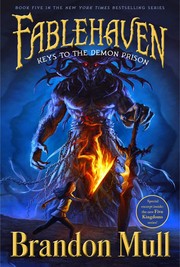
Keys to the Demon Prison
The fifth and final Fablehaven book sends Kendra and Seth Sorenson across secret preserves to keep the last keys to the demon prison out of rival hands.
2,251-word summary · 10 min read
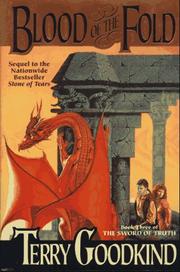
Blood of the Fold
In Sword of Truth book three, Richard Rahl takes command of Aydindril while a zealot army and an emperor who walks in dreams threaten everything he loves.
2,321-word summary · 10 min read
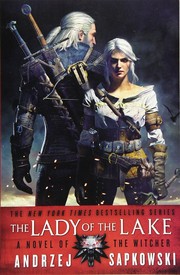
The Lady of the Lake
Ciri is trapped by the Aen Elle while Geralt winters in Toussaint, and the Witcher saga closes with the siege of Stygga and a fog-bound farewell.
2,445-word summary · 11 min read
Blood Song
Anthony Ryan's Blood Song follows Vaelin Al Sorna from the Sixth Order's brutal training to the war that earns him the name Hope-Killer, in the first Raven's…
2,479-word summary · 11 min read

The Blinding Knife
Kip trains to join the Blackguard while the Prism hides his true identity, loses his colors, and fights a war against a rogue drafter who wants to birth a god.
2,049-word summary · 9 min read

Secrets of the Dragon Sanctuary
Kendra is replaced by a plant copy and held by the Society, while Seth steals a unicorn horn so the family can enter a dragon sanctuary.
2,590-word summary · 12 min read

Homeland
Drizzt Do'Urden is born into the cruel drow city of Menzoberranzan, where his father teaches him to fight and to doubt everything his family believes.
2,303-word summary · 10 min read

The Rose & the Dagger
Shahrzad is pulled from her Caliph husband and left in a desert camp of rebels, needing to break his curse and end a war before it ends her.
2,520-word summary · 11 min read
Magician: Apprentice
An orphan kitchen boy and a smith's son grow up in a frontier castle just as invaders from another world open a rift and begin a war that will change both of…
2,114-word summary · 9 min read
Beyond the Shadows
Kylar Stern bargains with the Wolf, hunts a legendary sword, and faces a goddess wearing the face of the woman he loves in the Night Angel finale.
2,467-word summary · 11 min read
The Tower of the Swallow
Ciri flees as a bandit while Geralt gathers allies to find her.
2,580-word summary · 11 min read
The Emperor's Soul
Forger Shai must stamp a new soul for the dying emperor in 100 days.
2,313-word summary · 10 min read
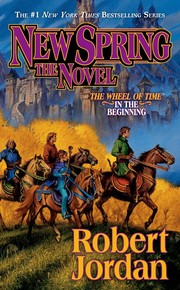
New Spring
Moiraine and Lan hunt the newborn Dragon before the Black Ajah finds him.
2,475-word summary · 11 min read
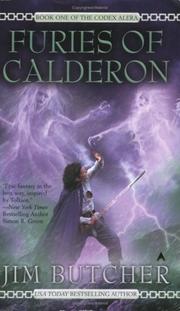
Furies of Calderon
Furyless Tavi defends Calderon Valley when the Marat return and lords scheme.
2,587-word summary · 11 min read
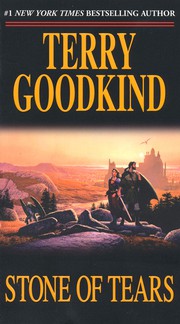
Stone of Tears
After the veil tears, Richard seeks training from the Sisters while Kahlan holds a fracturing Midlands and Zedd hunts the missing Stone.
2,483-word summary · 11 min read