
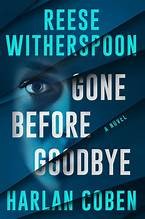
Gone Before Goodbye
2,648-word summary 12 min read 352 pages in the book
- First published
- 2025
- Publisher
- Grand Central Publishing
- Pages
- 352
- ISBN
- 9781538774700
Reading options
What's inside (9 sections)
I picked this one up mostly out of curiosity about the pairing. Reese Witherspoon is a name I associate with acting and producing, with book clubs and screen roles, not with writing novels. Harlan Coben is the opposite: a writer I associate with standalone thrillers that turn over neatly and keep you up late. Putting the two of them together sounded like it could go a number of ways. What they produced, a 352-page book from Grand Central Publishing released on 14 October 2025, leans firmly toward the Coben end of things. It is a brisk conspiracy story with a bereaved surgeon at its centre, and while it does not always land as a thriller, it spends genuine time on the question of what it means to keep talking to someone who is dead.
The book opens somewhere that feels far away from Baltimore. In a refugee camp in North Africa, an American army surgeon named Marc Adams is in the middle of heart surgery when armed militants burst in. The operation is cut short. That is essentially all we get of Marc in the opening, and it is enough, because the book is not really his story. It is the story of the people left behind when a man like Marc dies in a place like that. A year on, the narrative moves to Baltimore and to Marc's widow, Maggie McCabe, and from there the book becomes something else entirely.
I want to say plainly how the structure works, because it shapes the whole reading experience. The first chapter gives us Marc in the camp. Everything after that belongs to Maggie, who is trying to get through a ceremony she does not want to attend. The shift is abrupt, and it is meant to be. One minute you are in a war zone with a scalpel in hand, the next you are in a doctor's life after the war has taken its toll. The connection between the two halves of the book is grief, and the bridge between them is a piece of technology that I found more interesting than the plot it gets used in.
A ceremony she does not want to attend
Maggie has lost her medical licence. That detail matters more than it first appears, because it tells you that her life as a surgeon is over before the story proper begins. She is not a doctor working through a crisis. She is a woman who used to be a doctor, and who now has to lean on other people to get through a public event. The event in question is a ceremony at Johns Hopkins, where she is meant to present an award in her mother's name. She dreads it. You can feel her dreading it in every sentence she spends on the lead-up.
What gets her through the preparation is something the book calls a griefbot. It is a lifelike artificial intelligence app, built by her sister Sharon, and Maggie uses it to rehearse what she will say at the podium. This is the idea I keep coming back to after finishing the book. Witherspoon and Coben are clearly interested in the way technology now offers to stand in for the dead, and they give that interest a physical form here: an app you can talk to, which answers in a voice and with a manner that resembles someone you have lost. Maggie practices her speech on it. The app, in turn, talks her into actually going to the ceremony.
That little exchange is quietly sad. A woman who cannot face a room full of people lets a piece of software persuade her to show up. The griefbot is not presented as spooky or as a villain. It is a tool, built with love by a sister, and it works well enough to be unsettling. I found myself wondering how much of what Maggie says at that podium is her own and how much has been shaped by rehearsing with something designed to sound like the people she misses. The book raises that question without fully answering it, and that restraint is one of its better qualities.
Already replaced at the podium
When Maggie actually gets up to speak, she discovers she has already been replaced. I will not pretend the reveal landed for me the way it is probably meant to, because the book has spent so long on her dread that the payoff feels more like a plot mechanism than an emotional climax. Still, it works to launch the next stretch of the story, because being pushed out of that ceremony leaves Maggie available for the stranger who approaches her afterward.
That stranger is Evan Barlow, a former professor of hers and now a celebrity plastic surgeon. He tracks her down and offers her work. An anonymous client, he says, will pay millions for surgery that stays off the record. The numbers involved are large enough to make the decision easy in the way these things are always made easy in thrillers. Maggie finds ten million dollars in her account and a private plane waiting to take her to a palace in Rublevka, outside Moscow. The speed of it all is part of the genre's pleasure, and also part of the problem I will get to later. People in this book move around the world with a freedom that real people do not have, and the money simply appears.
At the palace, Maggie does her job. She gives the billionaire Oleg Ragoravich a new face, and she performs a breast augmentation on his mistress, Nadia. These are not minor procedures, and the book lingers on the physicality of the work in a way that signals Maggie's old competence returning. She is good at this. Even without a licence, even in a palace outside Moscow, she can still operate. For a few pages the story stops being about a conspiracy and becomes about a surgeon doing what she knows how to do, and those are among the more grounded passages in the book.
Then the patient vanishes from her care. One moment Oleg is her responsibility, and the next he is gone, and Maggie is on the run. That is the hinge of the plot. Everything before it is setup, everything after it is pursuit.
From Moscow to Dubai and Bordeaux
Once Maggie is on the run, the book turns into a chase, and the trail runs through some very recognizable places. Kirkus, whose review I partly agree with, follows it through Dubai and Bordeaux on the way to an illegal heart transplant. The geography gives the story a glossy, international feel, the sense that Maggie has been dropped into a world where money and medicine operate outside any normal rules. I enjoyed the movement while I was reading it, though I noticed that the cities mainly function as backdrops. Dubai and Bordeaux are names on an itinerary more than places with any texture.
The most useful companion Maggie picks up is her father-in-law, a biker-bar owner whom everyone calls Porkchop. He is the book's gesture toward warmth and humour, the gravelly figure who can be counted on when the institutions have failed. I have a soft spot for this kind of character, and Porkchop is drawn with enough care to avoid being a pure caricature. He is not a trained doctor or a spy. He is a man who owns a bar and who happens to be family, and that ordinary quality is what makes him work. When the world of billionaires and private planes closes in, Porkchop is the one person who feels like he could actually exist.
The illegal heart transplant is where the medical thriller element comes into its own. The book has a surgeon's attention to what a transplant involves, and that attention gives the chase a stake beyond mere survival. This is a woman fleeing shadowy figures, certainly, but she is also someone who understands exactly what kind of crime is being committed in front of her, and who has the training to know how bad it is. That combination of knowledge and helplessness is the engine of the later chapters.
The charity and the machine
The conspiracy reaches back further than the palace in Rublevka. It traces to WorldCures Alliance, the charity that Maggie founded with Marc and with their friend Trace Packer. It also traces to THUMPR7, an artificial heart prototype the three of them developed together. This is where the book's two halves finally join. The Marc who was killed in a rebel attack and the Trace who disappeared with the device are not separate tragedies. They are pieces of the same story, and Maggie has been living inside that story without knowing the full shape of it.
I found this part of the book more satisfying than the chase, because it gives the earlier scenes a reason to have happened. The refugee camp where Marc dies, the charity the three friends built, the prototype they worked on: all of it feeds into what Maggie uncovers. The artificial heart is a good object for this kind of novel. It is medical, it is valuable, and it raises the exact questions the book keeps circling about what counts as a person and what can be replaced. A machine that keeps a body alive sits neatly beside an app that imitates the dead. Witherspoon and Coben may not fully develop that connection, but the objects are well chosen.
Trace's disappearance is the thread that dangles longest. He vanishes with THUMPR7, and the book treats that absence as a wound that never quite closes. The same is true of Marc, who is more of an idea in this novel than a presence, and of Nadia, whose role in the palace scene suggests more than the plot delivers. These are the questions Kirkus singled out as failing to catch fire, and I think that is a fair reading. The book sets up mysteries around its secondary figures that it does not fully pay off, and a reader who comes for the puzzle may find the loose ends irritating.
Where the grief lands
For all my complaints about the thriller mechanics, the book is strongest when it stays with Maggie's loss. The griefbot is the clearest example. It is a smart choice to make artificial intelligence a comfort rather than a threat. Most stories about a lifelike app would push toward the uncanny, toward a machine that wants something or a glitch that reveals a hidden agenda. This book does something gentler and stranger. The app helps. It gives Maggie a place to say the words she cannot say to a real person, and it nudges her toward a room she is afraid to enter.
There is real pathos in that, and the review in the Los Angeles Times picked up on the same quality, noting that the treatment of grief and artificial intelligence is where the book finds its feeling. I would go a step further and say that the grief material is the only part of the novel I completely believed. When Maggie is rehearsing a speech with a piece of software, or when she is trying to work out which parts of her own reaction are genuine, the book has a weight that the car chases and secret surgeries never match. The artificial heart and the artificial companion are doing the same thematic work from different angles, and that symmetry is the most elegant thing here.
The title itself points at this. Gone Before Goodbye is a phrase about someone leaving before there is a chance to say a proper farewell. That is exactly Marc's situation, cut down in a refugee camp while the operation was still underway, and it is exactly the situation the griefbot is built to soften. The book understands that the worst part of a sudden loss is the conversation that never happened, and that a person might reach for almost anything to fill that silence.
Where the thriller loses its grip
I should be honest about what did not work, because there is a fair amount of it. Kirkus called this maybe not the most thrilling thriller, and I understand the complaint. The book has all the right ingredients: a vanished patient, a secret procedure, a charity with a hidden agenda, a prototype worth killing for. What it lacks, for me, is the sense that any of it is truly dangerous until the very end. The pace is brisk, but the stakes feel borrowed from other, better thrillers. Maggie moves from one extraordinary situation to the next with a smoothness that flattens the tension.
The questions around Marc, Trace and Nadia are the biggest disappointment. Each one is set up as a mystery worth solving, and each one resolves in a way that feels smaller than the setup promised. Nadia in particular is given a striking introduction and then mostly left as a loose thread. When the book finally explains how the conspiracy connects to the charity and the artificial heart, the answer is serviceable rather than surprising. I kept waiting for the turn that would make all the earlier pieces snap into place, and it never quite arrived.
There is also a problem of scale. The private plane, the ten million dollars, the palace outside Moscow, the transplant in Bordeaux: these details stack up until the story starts to feel like a travel brochure with a murder in it. The book is at its best in small rooms, with one person talking to another or to a machine. The bigger it goes, the thinner it gets. That is a common failure of the genre, and it is worth naming here because this particular book has the ingredients to avoid it. A more patient writer might have stayed with Maggie in Baltimore and let the conspiracy creep in slowly. Here it arrives all at once, fully formed, and the reader is asked to keep up rather than to wonder.
None of this makes the book a waste. It is competent, it moves, and it has a genuinely affecting idea at its centre. But the pairing that drew me in initially is not really visible in the finished work. This reads like a Harlan Coben book with a strong interest in grief and technology, and whatever Witherspoon brought to the collaboration is hard to isolate. That may be an unfair thing to want from a co-written novel, but it is what I found myself looking for.
What I would tell a friend about it
I would hand this to someone who wants a clean, quick thriller and who does not mind that the emotional material is more convincing than the plot. It is the kind of book you can finish in a couple of sittings, and the griefbot idea alone is worth the time. I would be more careful recommending it to someone who reads a lot of Coben and expects his best, because the twist here feels softer than his usual work, and the secondary mysteries do not pay off.
What stays with me is not the palace or the transplant or the chase through Dubai. It is the image of a woman practising a speech with an app that sounds like the people she has lost, trying to find the right words before she has to stand up and say them in public. That scene is small, and it is the honest centre of the book. The rest is a thriller, competently assembled and occasionally exciting, that keeps reaching for a bigger meaning it only half earns. When it stays close to Maggie and her strange, tender conversations with a machine, it is a better novel than it has any right to be.
FAQ
Who wrote Gone Before Goodbye?
It is Reese Witherspoon's first novel, written with thriller author Harlan Coben and published by Grand Central Publishing in October 2025.
What is a griefbot in the book?
It is a lifelike AI app built by Maggie's sister Sharon. Maggie uses it to rehearse what she will say at a ceremony, and it talks her into attending.
Is Gone Before Goodbye part of a series?
No, it is a standalone novel. The story centres on Maggie McCabe and a conspiracy tied to the charity WorldCures Alliance and the artificial heart THUMPR7.
Similar books
Before the Fall
A private jet falls off Martha's Vineyard. A painter and a small boy survive, then face grief and the news cycle.
2,185-word summary · 10 min read
The Atlantis Gene
A geneticist and an intelligence operative chase two kidnapped boys through a global conspiracy about human evolution and a weapon built to cull humanity.
2,369-word summary · 11 min read

State of Terror
A new secretary of state and her team unpick a web of attacks across Pakistan, Afghanistan, and Iran in this 2021 political thriller.
2,307-word summary · 10 min read
Zero Day
Army investigator John Puller is sent alone to a West Virginia coal town to solve a colonel's murder, and finds a much larger secret buried nearby.
3,434-word summary · 15 min read

Six Years
A professor who promised to forget the woman he loved sees her husband's obituary and discovers that the wedding, the marriage, and the woman herself may never…
2,076-word summary · 9 min read
When No One Is Watching
Sydney Green watches her Brooklyn block's Black residents vanish one by one in Cole's Edgar-winning thriller about gentrification as a crime scene.
2,165-word summary · 10 min read

The Woods
Twenty years after two teenagers were murdered and two vanished at summer camp, prosecutor Paul Copeland identifies a fresh corpse as one of the missing.
2,490-word summary · 11 min read
Tell No One
Harlan Coben's Tell No One fully retold: Beck, his wife's murder eight years back, a tell no one email, and a run from police. A 2001 Delacorte standalone with…
3,579-word summary · 16 min read
Inferno
Dan Brown's Inferno retold: Robert Langdon wakes in Florence with lost memory, follows Dante's clues with Sienna Brooks from Palazzo Vecchio to Venice and…
2,395-word summary · 11 min read
The Da Vinci Code
Dan Brown's The Da Vinci Code retold: a Louvre murder, Sophie Neveu, the Grail cryptex, and the chase to Rosslyn.
2,590-word summary · 12 min read

Angels & Demons
Dan Brown's Angels & Demons explained: a murdered physicist, the Illuminati, four missing cardinals, and Robert Langdon racing through Rome to stop an…
2,548-word summary · 11 min read
Wayward
With Ethan Burke now sheriff, Wayward Pines runs on cameras, fear and a founder's private plan, until a murder forces him to choose between order and the truth.
2,252-word summary · 10 min read
The Moonlight Child
On a cold January night, Sharon Lemke sees a child washing dishes in a neighbour's kitchen and decides she cannot ignore it.
2,169-word summary · 10 min read
The 5th Horseman
Two linked cases pull Lindsay Boxer and the Women's Murder Club into a hospital full of strange deaths and a luxury-car murder spree.
2,609-word summary · 12 min read
Make Me
Reacher drifts into a quiet Midwestern town and finds a missing investigator, a trail of killers, and a deep web secret.
2,352-word summary · 10 min read

You Are Not Alone
A lonely New Yorker witnesses a subway suicide and falls in with the dead woman's friends, where a makeover and a framed murder hide a hidden mastermind.
2,588-word summary · 12 min read

These Silent Woods
A father and his eight-year-old daughter live off-grid in the Appalachian woods, hiding from a past he cannot outrun. When their yearly supply run fails, their…
2,274-word summary · 10 min read

The Winter People
A century-old ritual for calling back the dead connects a Vermont farmhouse, a girl who came back from the well and a modern investigation into a…
2,037-word summary · 9 min read
The Secret of Secrets
Robert Langdon travels to Prague with Katherine Solomon, a scientist whose work on consciousness has made her a target. A dream, a bomb and a killer called the…
2,251-word summary · 10 min read
The Running Grave
In the seventh Cormoran Strike novel, Robin goes undercover inside a Norfolk cult while Strike digs into a child's death from decades earlier.
2,615-word summary · 12 min read
The Midnight Line
A West Point class ring in a Wisconsin pawnshop sends Jack Reacher across the Midwest, from a biker's lie to a wounded veteran hiding from the opioid trade.
2,590-word summary · 12 min read
The Maid's Diary
A cleaner who snoops through her wealthy clients' lives finds a secret that could destroy them, while a detective investigates a bloody waterfront house with…
3,459-word summary · 15 min read
The Keeper of Lost Causes
Jussi Adler-Olsen introduces Carl Mørck and Department Q, a Copenhagen cold-case unit in a basement, and a missing politician whose file refuses to stay closed.
2,759-word summary · 12 min read
The Hard Way
A man Reacher sees drive a ransom-laden Mercedes pulls him into a retired colonel's hunt for his missing wife and stepdaughter.
2,637-word summary · 12 min read

The Girl in the Ice
A young socialite is found frozen beneath the ice in a south London park, and DCI Erika Foster returns to work to lead the case. Grief, privilege and three…
2,492-word summary · 11 min read

The Cellar
Abducted in her small English town, sixteen-year-old Summer is locked in a cellar with three other girls. Their captor calls himself Clover and wants a perfect…
2,551-word summary · 11 min read
Not Quite Dead Yet
A drifting twenty-seven-year-old is told she will die within a week and decides to solve her own attempted murder instead of taking surgery with a ten percent…
2,010-word summary · 9 min read
Never Go Back
Reacher returns to his old military unit to find Major Susan Turner jailed and two invented cases hiding an opium smuggling ring.
2,245-word summary · 10 min read
Jack & Jill
A senator is killed with a nursery-rhyme calling card as a child is murdered near Alex Cross's home. The third Alex Cross novel pulls him toward two cases, one…
2,646-word summary · 12 min read
Fractured
In Karin Slaughter's second Will Trent novel, a mother kills the wrong man in an Atlanta mansion, and a GBI agent with a hidden reading difficulty finds a…
2,219-word summary · 10 min read