
Reading options
What's inside (10 sections)
The detail that hooked me
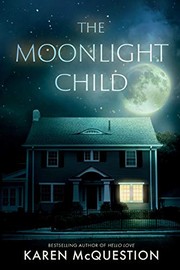
I picked this one up because of a single domestic image in the description: a woman steps outside on a cold January night to watch a lunar eclipse, glances toward the house behind her backyard, and sees a little girl washing dishes in the kitchen window at an hour when no child should be awake. No thunder, no screaming, no body in the driveway. Just a window, a light, and a small figure doing chores. Karen McQuestion's novel was published in 2020 by Nightsky Press and runs a little over three hundred pages, and it turns that one unsettling glimpse into a book about neighbours, foster care, and the trouble of being believed. The premise is the sort that makes you check your own back fence on the way to bed.
What surprised me is that the book is less interested in shock than in persistence. The question is not whether Sharon Lemke saw something, but what she is willing to do about it after everyone around her has a reasonable explanation ready. That is a more interesting engine than a string of scares, and it is why the novel held me even when I could see its machinery.
McQuestion has written across several kinds of fiction, including novels for young readers and stories about small towns and families, and that range shows here. She is not writing a horror novel, and there is no threat that announces itself as a monster. The chill comes from the possibility that the ordinary world has a locked room inside it, and that you have been standing next to the door for years. The genre label on the audio edition puts it under mysteries and thrillers, but the tone is closer to a novel of neighbourhood unease that happens to pick up speed.
Sharon at the window
Sharon is the woman at the window, and the house behind her backyard belongs to the Flemings. She knows the family, or knows them in the way neighbours know each other, through glimpses and routines rather than confidences. When she sees the child at the sink, the first thought is not that a crime is happening. It is that the Flemings do not have a child of that age. And even if they did, why would she be washing dishes so late?
That double question is the whole beginning of the book, and it is neatly built. The first half of it rules out the innocent explanation. The second half makes the innocent explanation feel even more necessary, because a child doing housework in the middle of the night is the kind of thing you want to explain away. Sharon could let it go. The novel is honest about how easy that would be, and it gives her no special training or authority that would push her forward. She is a neighbour with a view and a memory, which turns out to be both more and less than enough.
The lunar eclipse matters more than it might at first. It gives her a reason to be outside at that hour, and it gives the scene a strange, still light. McQuestion is good at these small physical details, the ones that make a scene feel observed rather than arranged. The cold, the hour, the angle through the glass: each one does a little work in convincing you that this is something a person could actually see.
Niki and the second pair of eyes
The story changes shape when eighteen-year-old Niki comes to live with Sharon. Niki is a former foster child, and the novel uses that background carefully. She arrives not as a helper recruited for the plot but as a young woman with her own history, and part of what she brings is a different way of reading the house next door. Where Sharon sees an odd sighting, Niki recognises patterns. She notices suspicious activity at the Flemings' house as well, and the fact that two people are now watching makes it harder for either of them to dismiss what they see.
This is the strongest idea in the book, and I wish it had been pushed further. The pairing gives the novel a natural argument. Sharon has the standing of a homeowner and the caution of an adult who knows how easily a complaint can be dismissed. Niki has reason to distrust official reassurance and a personal stake in the welfare of a child who may be in the same kind of trouble she once survived. Their perspectives do not simply agree. They rub against each other, and the friction is where the book's best pages live.
It also lets McQuestion write about foster care without turning it into a lesson. Niki's past is not presented as a scar that explains everything she does. It is a set of habits, a wariness about institutions, and a sharp attention to the gap between what adults say and what they do. That gap is the novel's real subject. A child might be in trouble in an ordinary-looking house, and the people whose job it is to notice have many ways of deciding that everything is fine.
The book is better at this than at nearly anything else it attempts. Niki's age matters too. She is old enough to have been through the system and young enough that no one in the story quite knows what to do with her, and that in-between position gives her a clear view of both sides. Sharon, by contrast, has spent a life being the kind of person other people trust, and she has to learn how quickly that trust can become a reason to stop looking. Watching them trade certainty back and forth is the most convincing part of the partnership.
When the system is slow
The two women call social services, and the response is not swift. This is where the book earns its suspense. Nothing dramatic happens at first, and the absence of drama is the point. There are forms, queues, the careful language of agencies, and the slow grinding of a process that treats a late-night light in a neighbour's kitchen as one report among many. McQuestion understands the particular frustration of knowing something is wrong and watching an institution decline to act quickly enough.
When the official route stalls, Sharon and Niki decide to investigate on their own. That turn is familiar territory for readers of domestic suspense, and the novel does not pretend otherwise. What makes it work is the scale. There is no warehouse, no hidden cellar, no criminal network. There is a backyard, a window, and a family that may be very good at keeping up appearances. The stakes feel personal because the setting is so ordinary. If something is happening here, then it could be happening behind any fence on any quiet street.
I found this section both gripping and a little uneasy, because the book is asking us to cheer on two private citizens who have decided they know better than the authorities. On one level that is the pleasure of the genre. On another, it sits close to a real anxiety about neighbours who watch one another too closely. The novel does not really sit with that tension, and I think it loses something by not doing so.
What the novel does well
McQuestion writes clean, uncluttered sentences and keeps the point of view close to the two women. The result is a book that moves quickly without feeling rushed, and the pages turn because you want to know what the next glimpse through the window will reveal. She is especially good on the small dignities of ordinary life. Groceries, drives, a cup of coffee, the awkwardness of calling a neighbour: these are not filler. They are the texture that makes the intrusion of something wrong feel genuinely intrusive.
The title earns its place. Moonlight suggests a softened, partial kind of seeing, and the whole book is about the difficulty of acting on incomplete information. The child at the window is glimpsed, not known. The suspicious activity is a pattern assembled from fragments. The women are asked, again and again, to decide whether what they saw adds up to something. That is a better use of a pretty title than the book always deserves, and it gives the story a consistent mood.
The book is also, quietly, about who gets believed. Sharon is older and settled, and people are predisposed to take her seriously. Niki has been in the system, and her history cuts the other way in some rooms. Watching the two of them navigate that difference is more absorbing than the mystery itself at times, and it is the part of the story I would have liked to see expanded.
Where the book strains
The convenience of Niki's arrival bothered me. She appears at exactly the moment Sharon needs a second witness and a partner who will take the next step, and the timing has a visible seam. A more patient novel would have let Sharon be alone with the uncertainty longer, or let Niki come for reasons that had nothing to do with the mystery. As it is, the plot leans on her a little too hard, and her foster-care background sometimes reads as a device for giving her the right instincts.
The procedural side is thin. Agencies move slowly because the book needs them to, and the investigation advances through coincidences and lucky breaks more often than through careful deduction. Readers who want a tightly argued puzzle will likely be frustrated. There are also one or two figures in the Fleming household who feel like types rather than people, their functions visible from the first scene. McQuestion writes better when she is at a kitchen table with her two leads than when she is arranging the family behind the window.
A second frustration is tonal. The book wants the slow institutional response to be both a realistic obstacle and a villain, and it never quite chooses. When the agency is merely slow, the women's decision to take matters into their own hands feels brave. When the agency is painted as indifferent, the same decision feels like the only option left. Those are different stories, and the novel moves between them without much fuss. I noticed the seam, but I also noticed that I kept reading, which says something about how well the central image works.
That said, I do not think these flaws sink the book. It is a short, direct novel, and it knows what kind of reading it is offering. The plainness of the prose keeps the weaknesses from feeling pretentious. When the story works, it works because you can picture the street and the window and the two women standing in the cold, and that is enough.
The ending, in broad terms
Without spoiling the shape of the reveal, the investigation moves toward a reckoning with what the Flemings have been hiding, and the child at the centre of it stops being a figure in a window and becomes a person with a name and a history. The emotional payoff is aimed at Niki as much as at Sharon, and the book closes by suggesting that the habit of noticing is worth the trouble it causes. I found the resolution satisfying in its feelings even where I found the mechanics easy to see coming.
What lingered with me was not the answer but the question that started it. How many times does a person look through a window, register that something is off, and then talk themselves out of it? The book's best moment is the one where Sharon decides she will not do that. Everything after it is a consequence of that small, stubborn choice, and the novel is at its best when it remembers how ordinary the courage looked at the start.
Who this is for
If you like suspense that takes place in ordinary houses rather than exotic ones, this will suit you. It is a good pick for a reader who enjoys domestic thrillers with an emotional core, and the foster-care thread gives it more weight than a standard neighborhood mystery. The audiobook, released the following year, is another way in, and the story has travelled widely, with translations into many languages and a film option. Those facts say something about the premise, which is simple enough to cross borders quickly.
It is not for everyone. Readers who need meticulous police procedure or a puzzle that plays completely fair will find gaps here. Readers who are uncomfortable with vigilante plots may find the second half uneasy. But if the image of a child washing dishes in a lit kitchen at the wrong hour bothers you, this book understands exactly why, and it stays with that feeling for three hundred pages. That is a modest achievement, and it is a real one.
FAQ
Who are the two main characters in The Moonlight Child?
Sharon Lemke is the neighbour who spots the child at the window. Niki is an eighteen-year-old former foster child who comes to live with Sharon and notices the same strange activity at the Flemings' house.
Is The Moonlight Child a horror novel?
No. It is a suspense novel about neighbours and a possible hidden child, published in 2020 by Nightsky Press. The unease comes from ordinary domestic details rather than supernatural threats.
Does the book deal with foster care?
Yes. Niki's experience in foster care shapes how she reads the situation next door, and the book uses it to explore why children in trouble are so often overlooked.
Similar books
The Best of Friends
Three lifelong friends discover their teenage sons were hiding more than anyone knew after a night that leaves one dead, one in a coma and one silent.
2,040-word summary · 9 min read
Keep It in the Family
Mia and Finn renovate a long empty house and find seven children hidden in the attic.
2,270-word summary · 10 min read
Pieces of Her
After her mother kills a mall shooter with shocking skill, Andy Oliver uncovers a hidden 1980s past of radicals and wealth.
2,791-word summary · 12 min read
All the Little Houses
In 1980s Longview, Texas, social queen Charleigh and daughter Nellie guard mean-mom secrets when a new family threatens their empire.
2,206-word summary · 10 min read
You Are Not Alone
A lonely New Yorker witnesses a subway suicide and falls in with the dead woman's friends, where a makeover and a framed murder hide a hidden mastermind.
2,588-word summary · 12 min read

Six Years
A professor who promised to forget the woman he loved sees her husband's obituary and discovers that the wedding, the marriage, and the woman herself may never…
2,076-word summary · 9 min read
The Girls in the Garden
Clare moves her daughters to a gated London garden where the community feels safe; at the midsummer party, twelve-year-old Pip finds her sister bleeding in the…
1,973-word summary · 9 min read

Girl, Forgotten
A rookie US marshal guards a judge with a stalker and ends up reopening the 1982 prom-night murder of the judge's pregnant daughter.
2,111-word summary · 9 min read
The Boy from the Woods
Wilde, found feral in a New Jersey forest in 1986, hunts for a missing teenager while a senator's secrets tear a wealthy town apart.
2,270-word summary · 10 min read
The Reappearance of Rachel Price
Bel films a doc when her missing mother walks back after years.
2,254-word summary · 10 min read
Every Last Secret
A wealthy wife tracks a possible affair, but dinners, therapy, and a sudden death expose buried secrets across two polished suburban marriages and force her to…
2,687-word summary · 12 min read
Bring Me Back
Finn lost Layla at a French rest stop twelve years ago. Now engaged to her sister Ellen, he faces sightings, emails and Russian dolls that reopen everything.
2,912-word summary · 13 min read
What Lies Between Us
Nina keeps mother Maggie locked upstairs for years, trading lies about sisters and deaths that unravel fast.
2,062-word summary · 9 min read
The Other Mrs.
A Chicago family inherits a house on a Maine island, then a neighbor is found murdered. Kubica's 2020 thriller builds to a final reframe.
2,267-word summary · 10 min read
The Cousins
Three cousins work at their rich grandmother island resort while digging into why their parents were cut off.
2,565-word summary · 11 min read
The Chain
Rachel must kidnap another child to save kidnapped Kylie, entering a chain where parents pass crime forward.
2,021-word summary · 9 min read
Reconstructing Amelia
A grieving lawyer mother reopens her teen daughter's alleged suicide at an elite Brooklyn school, uncovering bullying and secrets.
2,032-word summary · 9 min read
The Storm
A struggling innkeeper, a returning murder suspect, and a true crime writer collide as another hurricane bears down on the Alabama coast.
2,349-word summary · 10 min read
The First Time I Saw Him
Five years after Owen vanished, Hannah and Bailey have rebuilt in California until Owen walks into her exhibition and danger returns.
2,407-word summary · 11 min read
The Family Remains
Lucy returns to London as bones on the Thames reopen the Chelsea mansion deaths.
2,304-word summary · 10 min read
Such a Clever Girl
Fifteen years after the Tanners vanished, Aubrey returns at 30 as a new disappearance forces three women to face old secrets.
2,203-word summary · 10 min read
I Found You
A man with no memory on a beach, a vanished husband, and a 1993 holiday collide in a seaside town.
2,990-word summary · 13 min read
Anatomy of an Alibi
Two Louisiana women swap lives for twelve hours to spy on a husband, then he turns up murdered and only one of them has an alibi.
2,278-word summary · 10 min read
Invisible Girl
A missing teen, a strained marriage and a doxxed loner collide in London.
1,996-word summary · 9 min read
Watching You
A new wife in Bristol fixates on a charismatic neighbor while a teen boy logs every move before a murder.
2,363-word summary · 11 min read
The Good Sister
Twin sisters share a careful arrangement until a plan to have a baby pulls old family secrets into view.
3,255-word summary · 14 min read
The Good Daughter
Twenty eight years after a home invasion shattered her family, a lawyer witnesses a school shooting that reopens old wounds.
2,505-word summary · 11 min read
Not a Happy Family
After a bitter Easter dinner, Fred and Sheila Merton are found dead and their three adult children each hold a motive.
3,764-word summary · 17 min read
Daisy Darker
A family gathers on a tidal island for an 80th birthday and someone starts killing to a nursery rhyme.
1,917-word summary · 9 min read
The Locked Door
Surgeon Nora Davis hides serial killer father while patients die.
2,465-word summary · 11 min read