
Reading options
What's inside (8 sections)
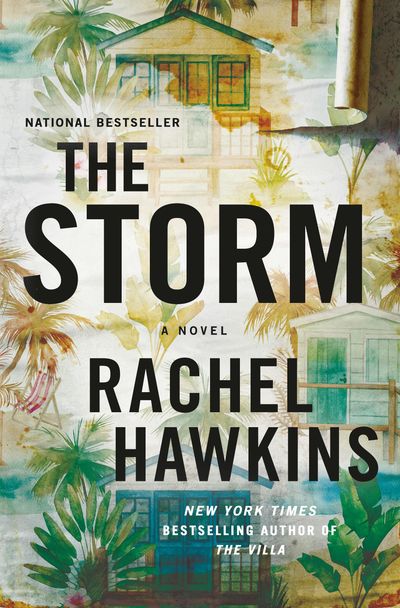
I have followed Rachel Hawkins through her whole gothic thriller run. The Wife Upstairs gave Jane Eyre a true crime paint job. The Villa locked two families in an Italian house with a body count. The Heiress let a North Carolina mansion rot from the inside. So when Macmillan listed The Storm for early January 2026, a Gulf Coast motel, a forty year old murder, and a hurricane on the cover radar, I preordered without reading a single review. The edition cited here is the St. Martin's Press hardcover, published in January 2026, running 288 pages. It landed as a national bestseller and a January Indie Next Pick, with People calling it a gripping page turner ripped from the juiciest headlines and Real Simple naming it an ideal curl up by the fire read.
I finished it in two evenings. At 288 pages it barely gives you time to settle, which turns out to be both the pleasure and the limit of the thing. Hawkins writes beach noir with a historian's sense of place and a soap writer's sense of timing. The Rosalie Inn feels real enough to book. The 1984 murder feels sordid enough to have headlined real papers. And the incoming storm gives every bad decision a countdown clock. Readers who want a thick knotty puzzle may find it light. Readers who want to sweat through a fast one while the wind picks up should check in immediately.
The Rosalie Inn is falling apart and so is Geneva
The book opens on June 21, 2025, with a countdown running in the chapter heading. Forty three days left. Geneva Corliss, who goes by Gen, wakes before dawn in her Airstream to a text from her best friend and assistant manager Edie. The air conditioning is out in room 217 again. Guests are sweating before seven in the morning. The repair guy is not answering. Gen's brain is already doing what she calls its usual spin cycle. How to get more guests. Whether their social media is hopeless. How to pay another housekeeper. Whether to just put a huge For Sale sign on the whole thing and walk away, and what she would even do next with every credit card maxed.
That opening litany tells you nearly all you need about Gen. She grew up at the Rosalie, a big pink century old inn on the Gulf in St. Medard's Bay, Alabama, the kind of place with white gingerbread trim, rocking chairs, and baskets of begonias out front. Her parents ran it. Her grandparents ran it before them. When Gen and her ex boyfriend Chris took it over, Chris refused to actually live in a hotel, so they bought an Airstream and parked it a short walk down the beach behind some scraggly pines. Now Chris is gone, back across the country, and Gen is the steward of a family legacy she cannot afford. The inn has stood for almost a hundred years through storms that flattened newer buildings. Gen loves it the way you love a relative who keeps borrowing money.
Hawkins fills this opening with small town texture. Edie blew into St. Medard's Bay a few years back from Natchez, Mississippi, purple hair after a turquoise phase, an eyebrow ring, flannel shirts in brutal heat. Gen hired her out of the coffee shop on the main drag and now cannot run the place without her. There is Cap, the old fisherman who haunts the dawn beach without ever seeming to catch anything. There are free dinner certificates for Shrimp 'N' Shells to calm overheated guests and shell wind chimes tangling over the porch. Within twenty pages I could draw the property from memory.
Gen's money panic is the quiet engine under everything. She maxed out every card keeping the inn afloat. The mortgage is massive. Chris walked away treating the place as a bad investment, while for Gen it is a family trust she never asked to hold. When she walks to work each morning with the Gulf on her right and the dunes on her left, she cannot see the postcard anymore. She sees flaking shutters and paint that failed one winter after a fresh coat.
The crime that put St. Medard's Bay on the map
St. Medard's Bay is famous for three things. The deadly hurricanes that regularly sweep into town. The Rosalie Inn, which has survived every one of them. And Lo Bailey, the local girl infamously accused of murdering her lover, political scion Landon Fitzroy, during Hurricane Marie back in 1984. That triangle, weather and hotel and blood, is the whole novel in miniature. Hawkins states it plainly in the setup and then spends 288 pages proving how tightly those three strands braid.
The 1984 strand reaches back to a night when a monster storm gave everyone in town an alibi and a motive at once. Landon Fitzroy came from the kind of family whose name opens doors across the county. Lo Bailey was the local girl who got close enough to him to become a headline. When Landon died during Hurricane Marie, Lo took the blame in the public mind whether or not a court ever settled it, and she has carried that stain for forty years. The Rosalie stood through that storm like all the others, and like all the others it kept its guests and its secrets in equal measure. Multiple mysterious deaths across the inn's century give the walls a memory that Gen feels but cannot monetize.
What I appreciated is how Hawkins treats the old crime as town lore rather than a cold file. People in St. Medard's Bay have opinions about Lo the way people in small towns hold opinions about weather. Certain. Contradictory. Passed down like recipes. The inn's survival mythology sits right beside the murder mythology, and both shape how locals see themselves.
The dual timeline structure lets Hawkins cut between that humid past and the sweating present. Publishers Weekly praised how she orchestrates the twists in each story line, and Booklist pointed to her use of multiple timelines and characters as a strength. Both verdicts track with my read. The past chapters carry the dread. The present chapters carry the bills. Each makes the other worse in the best way. Knowing people died in rooms Gen now rents by the night changes the temperature of every maintenance complaint.
A writer and a ghost check in together
The plot ignites when Gen hears a writer is coming to town to research the crime that made St. Medard's famous. Her first thought is not justice. It is revenue. A successful true crime book could put the Rosalie on the map for a whole new crowd, and Gen is drowning badly enough to see opportunity where others might see ghoulishness. That mercenary flash is one of my favorite character touches in the book. Gen loves the inn sincerely and will exploit its ghosts shamelessly. Grief and marketing can share a desk.
Then comes the surprise. August Fletcher does not arrive alone. With him is none other than Lo Bailey herself, back in her hometown after decades away. Lo says she has returned to clear her name once and for all. Gen, who needs the book to happen and the inn to survive it, welcomes them both with the desperate hospitality of a woman who cannot afford principles. But the closer Geneva gets to Lo and August, the more she wonders if Lo came back to settle old scores instead.
This triangle is the novel's center and Hawkins plays it with patience. August is professional appetite wrapped in charm. He needs access and the kind of local trust Gen can broker. Lo is harder to read by design. Forty years of being a headline have taught her exactly how much to show. Gen keeps discovering that her financial interest in the project clouds every judgment she makes about both of them, and Hawkins never lets you forget it.
The scenes of the three of them together have a lovely unease. Polite questions with barbs inside. Tours of the inn that double as interrogations. Gen keeps telling herself she is managing the situation. Readers will see a woman out of her depth handing microphones to people who know exactly what to do with them.
Two timelines and one incoming hurricane
As summer heats up, another monster storm starts twisting its way toward St. Medard's Bay, and Hawkins uses it the way golden age mystery writers used snowed in manors. The forecast is a clock. Every chapter brings the weather closer and the choices narrower. Gen learns, as the jacket copy warns, that some people can be just as destructive and as deadly as any hurricane. The truth about what happened to Landon Fitzroy may not be the only secret Lo is keeping, and the storm does not care which secrets get buried with the town.
The braiding of past and present tightens toward the back third. Without spoiling specifics, the 1984 chapters reframe what the town thought it knew about Lo and Landon, while the present chapters force Gen to decide how far she will go to protect the inn. The two lines rhyme without repeating. Young women with limited options. Men with names that shield them. Buildings that outlast the people who bled in them. Hawkins is interested in how little the power map changes across forty years, even as the costumes and phones do.
Pace is the point here and Hawkins commits. Short chapters. Clean cliffhangers. A pulpy forward drive that Booklist correctly tagged as an appeal factor for fans of Sally Hepworth and Laura Dave. The 288 page count means no subplot overstays. I read the last hundred pages standing in my kitchen because sitting still felt wrong.
The storm chapters themselves deliver. Hawkins grew up in the state she writes about, and her weather has weight and noise. Shutters, surge talk, the particular dread of watching a cone of uncertainty narrow onto your zip code. She never lets the hurricane become mere metaphor. It floods actual rooms and ruins actual plans. Gen's innkeeping brain keeps working the disaster even while her survival brain screams, a detail that felt painfully true. People with responsibilities do not get to experience catastrophe cleanly. They experience it as logistics with terror inside.
What works and what feels thin
Honest criticism first, because this site promises it. The Storm is breezy in a way that sometimes undercuts its gothic ambitions. BookPage called it a beachy gothic and a suspensefully breezy read, and that second adjective does quiet work. Gen's voice is wry and warm. Edie is a delight. The banter sparkles. All of that makes the book fun, and all of it slightly softens the dread the premise promises.
Related to that, some characters stay sketches. August charms but rarely surprises. Chris exists mostly as a guilty text thread and a symbol of abandonment. Cap is atmosphere with a fishing pole. Even Lo, who needs opacity for the plot, can feel assembled from headline parts rather than lived in. Gen and Edie carry the human load, and they carry it well, but the ensemble around them thins when leaned on. At 288 pages there is simply little room for second tier interiority, and Hawkins spends her budget on momentum.
The short length cuts both ways. I admired the discipline. No sag, no filler subplot about a podcast or a documentary crew overstaying. But a few late revelations arrive fast enough to feel announced rather than earned. One truth about the Fitzroy family lands with a speed that made me flip back to check the setup. The setup was there, to Hawkins's credit. I just wanted more air around it, one more quiet scene to let the implication settle before the wind took it. The People pull quote about headlines is apt. This reads like the juiciest version of events, which thrills and occasionally glosses.
None of this spoiled my time. It only marks the borders. If you want a dense literary puzzle with deep ensemble work, look to longer books. If explicit content is a concern, note this one stays moderate. The heat here is flirtation and tension rather than graphic scenes, and the violence is more menacing than gory. If you dislike dual timelines or storm-as-clock structures, both are load bearing here and neither lets up.
Who should check in
The right reader for The Storm is easy to picture. You like Hawkins's voice from the earlier books. You enjoy true crime frameworks without wanting actual gore. You find hurricanes narratively irresistible. You prefer your suspense quick, humid, and character led rather than procedural. Real Simple pitched it as a curl up by the fire read, which sounds odd for a beach book until you realize the fire is the point. This is comfort suspense, sharp enough to hold attention and smooth enough to finish in a weekend.
It also works as an entry point. Nothing in the plot requires the earlier novels, and at 288 pages the commitment is small. Fans of the author's young adult work will find the adult edges here but nothing punishing. Book clubs should have plenty to argue about. Did Lo get a fair shake in 1984. Did Gen exploit her guests' ghosts. When does saving a family business stop excusing the compromises. Those questions have no clean answers and Hawkins does not force any.
I closed the book thinking about buildings. The Rosalie survives every storm and absorbs every sin, still pink, still standing, still renting rooms where people died. Gen's devotion to it is admirable and a little sick, the way family devotions often are. Hawkins understands that a motel can be a relative, a burden, and a witness all at once. The storm passes, as storms do. What it exposes is the actual subject. Wood rots. Paint fails. People keep what they can and bury the rest. Then they reopen for the season and hope the next crowd never asks about the stains.
FAQ
When was The Storm published?
St. Martin's Press published it in January 2026. The hardcover runs 288 pages with ISBN 9781250341884.
Is The Storm part of a series?
No. It is a standalone in the same vein as The Villa and The Heiress, with new characters and no continuing story.
What is the Rosalie Inn?
A fictional century old pink hotel on the Alabama Gulf Coast that survived every hurricane in town history and anchors both timelines.
Similar books

The Best of Friends
Three lifelong friends discover their teenage sons were hiding more than anyone knew after a night that leaves one dead, one in a coma and one silent.
2,040-word summary · 9 min read
Keep It in the Family
Mia and Finn renovate a long empty house and find seven children hidden in the attic.
2,270-word summary · 10 min read
The Cousins
Three cousins work at their rich grandmother island resort while digging into why their parents were cut off.
2,565-word summary · 11 min read

Pieces of Her
After her mother kills a mall shooter with shocking skill, Andy Oliver uncovers a hidden 1980s past of radicals and wealth.
2,791-word summary · 12 min read
The First Time I Saw Him
Five years after Owen vanished, Hannah and Bailey have rebuilt in California until Owen walks into her exhibition and danger returns.
2,407-word summary · 11 min read

Such a Clever Girl
Fifteen years after the Tanners vanished, Aubrey returns at 30 as a new disappearance forces three women to face old secrets.
2,203-word summary · 10 min read

All the Little Houses
In 1980s Longview, Texas, social queen Charleigh and daughter Nellie guard mean-mom secrets when a new family threatens their empire.
2,206-word summary · 10 min read
The Good Sister
Twin sisters share a careful arrangement until a plan to have a baby pulls old family secrets into view.
3,255-word summary · 14 min read

Six Years
A professor who promised to forget the woman he loved sees her husband's obituary and discovers that the wedding, the marriage, and the woman herself may never…
2,076-word summary · 9 min read

The Girls in the Garden
Clare moves her daughters to a gated London garden where the community feels safe; at the midsummer party, twelve-year-old Pip finds her sister bleeding in the…
1,973-word summary · 9 min read

Girl, Forgotten
A rookie US marshal guards a judge with a stalker and ends up reopening the 1982 prom-night murder of the judge's pregnant daughter.
2,111-word summary · 9 min read
The Lost Man
A man is found dead at a lone grave in the Queensland outback, his car stocked and kilometres away. His brother works out the last day and the family behind it.
2,036-word summary · 9 min read

The Boy from the Woods
Wilde, found feral in a New Jersey forest in 1986, hunts for a missing teenager while a senator's secrets tear a wealthy town apart.
2,270-word summary · 10 min read

Vanishing Acts
A search-and-rescue worker's perfect life cracks when her past and her father catch up.
2,799-word summary · 12 min read
The Reappearance of Rachel Price
Bel films a doc when her missing mother walks back after years.
2,254-word summary · 10 min read

We Begin at the End
Thirteen-year-old Duchess Day Radley shields her little brother Robin after their mother dies, as freed killer Vincent King returns and sick chief Walk tries…
2,956-word summary · 13 min read
The House at Riverton
In 1999, ninety eight year old maid Grace Bradley tapes the truth about a 1924 shooting at Riverton Manor, poet Robbie Hunter, two sisters and a lie held for…
2,433-word summary · 11 min read
Long Bright River
Philadelphia officer Mickey patrols Kensington amid the opioid crisis, hunts a killer of vulnerable women, and searches for her missing addict sister Kacey…
2,986-word summary · 13 min read

Every Last Secret
A wealthy wife tracks a possible affair, but dinners, therapy, and a sudden death expose buried secrets across two polished suburban marriages and force her to…
2,687-word summary · 12 min read
Bring Me Back
Finn lost Layla at a French rest stop twelve years ago. Now engaged to her sister Ellen, he faces sightings, emails and Russian dolls that reopen everything.
2,912-word summary · 13 min read
What Lies Between Us
Nina keeps mother Maggie locked upstairs for years, trading lies about sisters and deaths that unravel fast.
2,062-word summary · 9 min read

The Other Mrs.
A Chicago family inherits a house on a Maine island, then a neighbor is found murdered. Kubica's 2020 thriller builds to a final reframe.
2,267-word summary · 10 min read

The Chain
Rachel must kidnap another child to save kidnapped Kylie, entering a chain where parents pass crime forward.
2,021-word summary · 9 min read

Reconstructing Amelia
A grieving lawyer mother reopens her teen daughter's alleged suicide at an elite Brooklyn school, uncovering bullying and secrets.
2,032-word summary · 9 min read
What Lies in the Woods
Naomi returns after Olivia vanishes to face what happened in the woods at eleven.
2,213-word summary · 10 min read
The Soulmate
A cliffside fall leaves a wife doubting her husband as old abuse and buried secrets surface.
2,126-word summary · 9 min read

The Life We Bury
A college junior interviews a dying convict for class and reopens a 30-year-old murder case in Minnesota.
2,708-word summary · 12 min read
The Last House Guest
A year after her best friend dies in Littleport, Maine, a local woman finds a hidden phone that reopens the case.
2,596-word summary · 12 min read
The Family Remains
Lucy returns to London as bones on the Thames reopen the Chelsea mansion deaths.
2,304-word summary · 10 min read
Strangers in the Villa
A strained couple in a Spanish villa takes in guests who refuse to leave.
2,208-word summary · 10 min read