
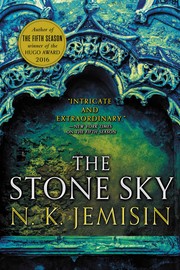
The Stone Sky
2,934-word summary 13 min read 464 pages in the book
- First published
- 2017
- Publisher
- Orbit
- Pages
- 464
- ISBN
- 9780316229241
- Series
- The Broken Earth (#3)
Reading options
What's inside (8 sections)
I finished The Obelisk Gate on a Sunday and told myself I would wait a month before the last book. By Tuesday I was back at the library site holding The Stone Sky by N.K. Jemisin, published in 2017 by Orbit, 464 pages in the edition cited here. It is book three of The Broken Earth, after The Fifth Season and The Obelisk Gate, and it won the Hugo Award for Best Novel in 2018. I wanted to know where Essun and Nassun would land, and I was a little scared to find out.
What surprised me was how tender this one feels next to the first two. The world is still ending. Ash still falls. People still count grain and close gates. But the center is a mother and a daughter trying to decide if the world should be fixed or left to break. That gave every shake and council fight a weight I did not expect.
Spoilers follow. I will walk through the main threads in order. I will keep some specifics general where my memory is soft, because I would rather be honest than pretend I remember every tunnel and vote count.
Essun fading north and Nassun walking south with Schaffa
When this book opens, Castrima is in trouble. The hidden comm in the geode took damage in the fight with Rennanis, and the air and water systems no longer hold the way they did. People who lived under stone and crystal light have to pack and move north across desert that wants to kill them. Essun is with them, but barely.
Essun is dying in slow pieces. She used the Obelisk Gate with Alabaster, and the cost sits in her body. One arm has gone to stone. Her skin flakes in places. Her jaw aches. Lerna, the healer from Tirimo who has stayed near her, tells her plainly that she does not have years. She may not have many months. She hears this and keeps working anyway, because her daughter is still out there and the moon is still gone and someone has to try to pull it back.
I felt for her in these early pages in a way that hurt. She is not noble in a clean way. She snaps. She shuts people out. She loves hard and shows it badly. With Lerna she tries to be softer. They share a tent and small meals and tired jokes. She learns she is pregnant, which lands like a stone in a thin pond, and she does not know what to do with the news while her body is turning hard. Lerna stays steady, and I liked him for that, even when I worried the book would use him only to make Essun sadder.
Nassun is south with Schaffa, and her thread is colder. She has killed her father Jija after years of fear and hiding, and the shock has settled into anger. Jija murdered her brother Uche for being an orogene and tried to shape Nassun into something she is not. Nassun loved him and hated what he believed. Now he is gone, and she is free in the worst way, with power growing fast and no parent left who feels safe.
Schaffa stays with her. He was her teacher and Damaya's Guardian long ago, a man made to control orogenes through training and an iron piece in his brain. That piece is damaged now. He is weaker, forgetful in flashes, more human in manner and more fragile in body. He cares for Nassun with a focus that scared me. He feeds her. He guards her sleep. He teaches her to reach for obelisks and to listen for the hum under the world. He agrees to help her reach Corepoint, the city on the far side of the planet where the Gate can be worked without the central control obelisk that Essun used.
Their walk takes them through dead towns and cold camps and finally toward ruins near the southern ice where old transit still works. Nassun practices in secret at first, then openly with Schaffa watching. A cracked bowl. A warm rock. A shake that stops too cleanly. She learns fast because she has to. She also learns that Schaffa will back her even if her plan means ruin, and that kind of loyalty felt both moving and wrong to me.
That part stayed with me.
Essun hears that Nassun means to open the Gate from Corepoint, and she knows what that likely means for a young body. She gathers a small group and starts after her. Hoa goes with her. So does Lerna for a while. The trip is not heroic. It is thirst and blisters and bad air and people arguing about rations. Essun keeps pushing even as her arm stiffens and her breathing thins. She wants to reach her daughter before her daughter tries to move the moon alone.
Father Earth speaking hate through stone
Between the travel chapters, Father Earth speaks.
Jemisin gives the planet short chapters in a sour and funny voice. Father Earth hates people for what was done to it long ago. It hates orogenes as tools of that crime. It hates stills for fearing and killing what they do not grasp. It mocks comm rules and stone lore and prayers. It remembers the moon being torn away and the long cold that followed, and it blames human hands for that wound.
I loved those breaks at first. They cut the dread with spite. One page of planet talk after forty pages of hunger felt like cold water.
By the fourth or fifth break, I wanted to get back to Essun or Nassun. The point had landed. The planet is awake and angry and tired of being used. More pages of blame did not add much after that. Still, those chapters do work you need later. They set up why the core feels the way it does when Nassun passes through it, thick with heat and old grief, and why Father Earth tries to bargain and threaten rather than just crush.
The core scenes near the end are strange in a good way. Nassun and Schaffa ride old transit down through rock toward Corepoint, straight through the middle of the world. Down there the magic that feeds orogeny feels close and loud. Nassun sees how Guardians were tied to that flow through iron in their heads, kept alive for years beyond normal span, kept loyal through pain and care mixed together. She sees that Father Earth can pull that iron out and let a Guardian fade fast. When that happens to Schaffa, her choice sharpens from idea to need. Save him now, whatever the cost, or watch him slip.
That need drives her toward a terrible plan.
Obelisks and the Gate that can move the moon
Obelisks have hung over the whole trilogy, huge crystals drifting far above the clouds, ignored by most people as sky trash from old times. Here they come down close, in a manner of speaking.
We learn they were built to pull power from deep in the earth and store it, node by node, until enough force could be aimed at once. Linked together through a strong orogene, they form the Obelisk Gate, a kind of engine that can catch the moon and drag it back into a near orbit. That return would steady the seasons and end the endless Fifth Seasons that have punished the Stillness for thousands of years. Used another way, the same engine could crack the world open or change all flesh into stone.
Essun knows the first use because Alabaster showed her. She linked obelisks in book one to tear the continent, and in book two she learned to touch them with more care. Now every link costs her. Nosebleeds. Blackouts. Fingers that will not bend. Hoa stays close when she reaches up, and his presence steadies the link the way a hand on a shoulder steadies a lift. She practices catching one obelisk, then two, then more, trying to build enough strength to finish what Alabaster started without dying before she reaches Corepoint.
Nassun learns the second use through instinct and pain. She can feel the obelisks answer her too. Young as she is, her control is raw and strong. Schaffa urges her on, not from cruelty but from belief that she deserves to shape the world that hurt her. Other stone eaters whisper around them, some cold, some kind, all with plans. Nassun listens and sorts and keeps her own counsel more than Schaffa sees.
I had to reread two passages about links and nodes to follow who held what. Jemisin keeps the mechanics loose. Silver lines. A sense of heat moving. A pull behind the eyes. Even the characters admit they lack good words for what they feel. That looseness helped in emotional scenes, where touch and strain matter more than rules, and lost me in two technical scenes where I wanted a clearer map of which obelisk did what.
One image did stick. Essun with her stone arm raised, sweat freezing in her hair, trying to hold a link while Hoa eats rock nearby to clear the air. It felt physical in a way many magic climaxes do not.
Hoa and the fall of Syl Anagist
Hoa gets his own past here, told in first person breaks that run against the present story.
Long ago, before the Seasons, there was Syl Anagist, a city of high skill and cold pride. Its people learned to draw power from the earth itself, a living flow they treated as fuel. To manage that flow they made tuners, people shaped from the genes of a captive group, kept apart and trained to sense and move the deep magic with rare care. Obelisks were raised as batteries and tools, charged in part by captive minds kept in torment to feed them power. Hoa was the lead tuner, loved by his circle, trusted by his makers, blind for a while to the full price.
The night before the Gate was to be turned to full use, Hoa and the other tuners saw the truth of those batteries. Rows of used up people. Minds thinned to keep the charge steady. Hoa chose to turn the Gate against Syl Anagist rather than let that use go on. What followed broke more than a city. Father Earth seized the obelisks and tried to wipe life clean. The tuners fought back enough to stop a full wipe, but the force flung the moon out into a long cold loop and changed the tuners themselves into stone eaters, folk who eat rock and pass through it and live far beyond human years. One tuner who stayed flesh became the first of what people now call orogenes.
I found these history chapters the hardest to read straight through and the hardest to forget after. The ideas are big and the names come fast. New terms pile on old ones. I put the book down twice in this stretch and came back the next day.
And yet the payoff is real. Once you know Syl Anagist, Father Earth's hate reads less like weather and more like memory. Orogenes read less like cursed children and more like descendants of tools who were never freed. Hoa reads less like a odd boy and more like an old maker trying to mend. When he tells Essun he loves her, in his plain and awkward way, it lands because you know what he did and what it cost him to stay near people after.
Hoa carries Essun's group through stone when walking would kill them. He fights his own kind when they split over Nassun. He loses parts of himself and keeps going. He narrates much of the trilogy, we learn, speaking to Essun across time so she will know herself after change. That frame could have felt cute. To me it felt mournful, like someone talking to keep a friend awake.
The choice at Corepoint and what the moon costs
Mother and daughter meet at the edge of the world, more or less, with the Gate humming and Father Earth pressing close.
Nassun gets there first with Schaffa fading. Father Earth pulls at her, offering an end to pain if she will aim the Gate to break what remains. Nassun, wild with grief, decides instead to turn all people into stone eaters like Hoa, deathless and hard, so no child will be hunted for orogeny again. It is a child's wish made with god tools, kind at the root and awful in scale, and Schaffa backs her because he cannot bear to lose her and she cannot bear to lose him.
Essun arrives worn thin, stone up past her elbow, breathing hard, Lerna already lost to a stone eater attack on the way. She sees what Nassun means to do and tries to take the Gate to pull the moon home instead. For pages they wrestle without touching, two wills on the same engine, obelisks swinging into line far above. Nassun has youth and fury. Essun has practice and love that has learned patience the hard way.
Essun lets go.
She sees that holding on will kill Nassun outright, the way using the central control burned Alabaster from inside. So she releases her hold and gives her daughter the Gate, knowing it will turn her own flesh fully to stone. She speaks to Nassun in that last stretch with plain care, mother to daughter, not teacher to student. Nassun, faced with that giving, changes course. She takes the linked obelisks and aims them as her mother taught through story and blood, to catch the moon and set it back in its path.
The moon returns. The Seasons that ruled for ages start to ease. The sky clears by slow degrees. Crops have a chance. Comms have a chance.
Essun turns to stone on the rock, still and cold. Nassun lives, burned out and grieving and young, carried away from Corepoint by people who owe her more than they can say. Deep in a cave, Hoa waits near a geode where stone softens and shifts. Essun comes out new, a stone eater herself, with her memory thin and her manner familiar. Hoa talks to her, telling her life back to her piece by piece. They set out together to help rebuild, not as saviors on high but as workers who know the price.
I cried at that last meeting and I am not ashamed to say so. After three books of hunger and hate, a small kindness felt huge.
What strains and what stays with me
Let me be plain about faults, because I love this trilogy and still tripped in places.
The pace sags in the middle third. Desert walking takes many pages. Castrima packs and argues and packs again. History lessons from Hoa pause the chase for long runs. I read in long sittings and started to skim descriptions of packs and ash and sore feet. In short sittings this may bother you less. For me the book picked up each time it returned to two people in a room, Essun and Lerna talking low, Nassun and Schaffa sharing bread, Hoa watching Essun sleep.
The terms crowd. Orogeny, orogenes, stills, Guardians, obelisks, stone eaters, nodes, comms, Seasons, Rifting, tuners, Syl Anagist, Corepoint, Father Earth. Most get explained in context, but when four appear in one paragraph I had to slow down. New readers who skip the first two books will feel lost fast. Even with book two fresh, I paused to remind myself who Steel was among stone eaters and what Corepoint was for.
Second person for Essun and third for Nassun plus first for Hoa past takes adjustment. I liked the second person in book one for how it showed distance from self. Here, tired as I was, I twice had to check whose head I was in after a Hoa break. The shifts do pay off at the end, when Hoa speaks straight and the pieces join, but the road there asks patience.
Some threads end fast. Lerna's death hits and passes in a rush, with little time to mourn before the next attack. The Rennanis fight that forces Castrima out feels brief after so much build. Readers who want full war pages will not get them. This book cares more about two families, Essun with Nassun and Schaffa with Nassun and Hoa with Essun, than about armies.
Who is this for. If you want cozy fantasy with warm halls and jokes, look elsewhere. This is bleak for long runs, with dead children and hard votes about food and cold. If you stayed with The Fifth Season for its anger and The Obelisk Gate for its grief, this close will feel right. It answers big questions about the moon and the obelisks and stone eaters while keeping the answers tied to people, not maps.
What stays with me after a week is not the engine. It is Nassun choosing mercy after being given mercy, and Essun choosing her daughter over her plan. It is Hoa waiting in the dark talking to stone until stone answers. It is the idea that a world built on hurt can still be mended if the mending starts with the hurt, not with pride. I closed the book tired and glad I had walked all the way with it, and I reached for the first book again the next morning to see how early the signs were set.
FAQ
Is The Stone Sky the last book in The Broken Earth series?
Yes. It came out in 2017 from Orbit as The Broken Earth book 3 after The Fifth Season and The Obelisk Gate, and it won the Hugo Award for Best Novel in 2018.
Do I need to read the first two books before The Stone Sky?
Yes, start with The Fifth Season. Essun, Nassun, Schaffa, Hoa, obelisks and the Rifting all carry over, and this book opens in motion.
What is the Obelisk Gate?
It is a network of old obelisks that can move great power and shift the moon. Essun and Nassun fight over whether to use it to heal the world or end it.
Similar books
More from The Broken Earth first, then related titles.
The Fifth Season
A hiding orogene hunts her missing daughter across a breaking continent while three lives turn out to be one.
3,876-word summary · 17 min read
The Obelisk Gate
Essun travels south to find safety and her daughter while Nassun stays with her father and learns fear. The Hugo-winning second Broken Earth book widens…
2,789-word summary · 12 min read
The Bone Clocks
A teenage runaway, a Cambridge con artist, a war reporter and a dying novelist circle a hidden war between immortals across sixty years, with Holly Sykes at…
2,125-word summary · 9 min read
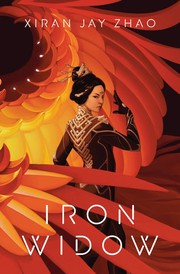
Iron Widow
Wu Zetian enlists to avenge her sister, kills her pilot, and becomes an Iron Widow in a mecha Huaxia where the machines are built to kill women.
2,444-word summary · 11 min read

Archenemies
Nova steals for the Anarchists while Adrian hides his Sentinel identity, and a serum that erases prodigy powers puts them both at risk.
2,485-word summary · 11 min read
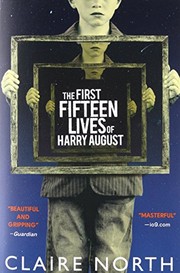
The First Fifteen Lives of Harry August
Harry August dies and is born again into the same life, again and again, until a warning from a child tells him the world is ending faster with each pass.
2,189-word summary · 10 min read
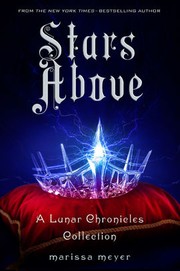
Stars Above: A Lunar Chronicles Collection
Nine Lunar Chronicles stories fill in the histories of Cinder, Wolf, Thorne, Cress, Winter, and Jacin, and end with a wedding after the war.
2,230-word summary · 10 min read
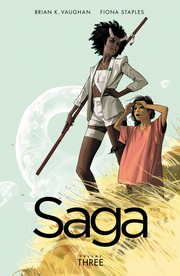
Saga, Volume 3
Marko, Alana, and Hazel hide on the planet Quietus with the reclusive author who inspired their romance, while assassins and a prince close in.
1,989-word summary · 9 min read
Pestilence
Firefighter Sara Burns shoots the Horseman Pestilence and discovers he cannot die. Taken captive, she rides with him as his plague sweeps the world.
2,508-word summary · 11 min read
Severance
Candace keeps office routine as fever empties New York, then joins survivors.
2,340-word summary · 10 min read
A Swiftly Tilting Planet
Charles Wallace rides time with a unicorn to stop a dictator before birth.
2,193-word summary · 10 min read
Y: The Last Man, Vol. 1: Unmanned
Yorick Brown and his monkey Ampersand survive a plague that kills every Y-chromosome mammal and cross a collapsed America.
2,525-word summary · 11 min read
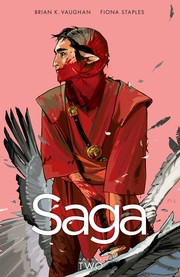
Saga, Volume 2
Alana and Marko flee with baby Hazel while exes, princes, and ghosts close the net.
2,028-word summary · 9 min read

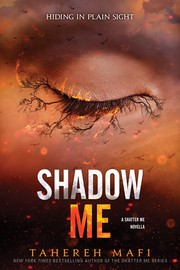
Shadow Me
Kenji Kishimoto narrates for the first time as he joins Nazeera on a quiet mission after Restore Me, carrying painful secrets into Defy Me.
2,512-word summary · 11 min read
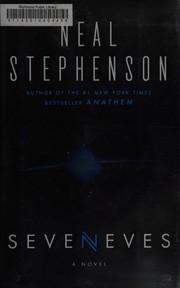
Seveneves
Stephenson 880-page William Morrow epic, May 2015: the Moon shatters, the Cloud Ark fails, seven women restart humanity, and heirs meet survivors on Earth.
2,389-word summary · 11 min read
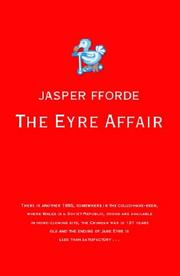
The Eyre Affair
Literary detective Thursday Next chases a villain who kidnaps Jane Eyre from her own novel in an alternate 1985 England.
1,929-word summary · 9 min read
A Wind in the Door
Meg must save Charles Wallace from a cosmic sickness by naming and loving what she fears, helped by a cherubim called Progo.
2,214-word summary · 10 min read
Hard-Boiled Wonderland and the End of the World
A Tokyo encoder who rents out his subconscious and a newcomer in a walled Town turn out to share one fate about memory.
2,406-word summary · 11 min read
Gideon the Ninth
Swordswoman Gideon guards necromancer Harrow in a deadly Emperor trial.
2,232-word summary · 10 min read
Fairest
Queen Levana's rise from scarred princess to Lunar ruler fills the gap between Cress and Winter.
2,983-word summary · 13 min read
Dragonflight
A kitchen drudge with hidden mind talent Impresses a golden queen and must unite a starved dragon Weyr against Thread. First of Pern.
2,821-word summary · 13 min read
Cell
A cell signal turns callers into violent phoners, and a father walks north through ruins to find his son.
2,103-word summary · 9 min read
Winter
Scarred Princess Winter joins Cinder and her crew to stop Queen Levana's forced wedding and war between Luna and Earth.
3,179-word summary · 14 min read
Saga, Volume 1
Alana and Marko flee a galaxy-wide war with baby Hazel, hunted by both sides.
2,200-word summary · 10 min read
Cress
Imprisoned hacker Cress joins Cinder Scarlet Wolf Thorne to stop Levana's wedding to Kai.
2,534-word summary · 11 min read
Scarlet
Scarlet searches for her grandmother with Wolf while escaped Cinder fights Levana in the Lunar Chronicles sequel.
2,756-word summary · 12 min read
Good Omens: The Nice and Accurate Prophecies of Agnes Nutter, Witch
An angel and demon team up to stop the apocalypse and save Earth.
1,958-word summary · 9 min read
Cinder
Cyborg mechanic Cinder discovers she is Lunar royalty while plague and Queen Levana threaten New Beijing.
3,553-word summary · 16 min read
A Wrinkle in Time
Meg Murry, Charles Wallace and Calvin tessar past Mrs Whatsit, Mrs Who and Mrs Which to Camazotz to free Mr Murry from IT.
2,055-word summary · 9 min read