
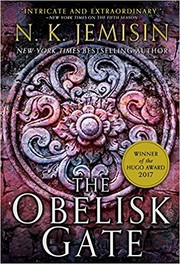
The Obelisk Gate
2,789-word summary 12 min read 448 pages in the book
- First published
- 2016
- Publisher
- Orbit
- Pages
- 448
- Series
- The Broken Earth (#2)
Reading options
What's inside (9 sections)
I did not plan to read The Obelisk Gate so fast after The Fifth Season. I told myself I would take a break and read something light. Then one rainy Sunday I found myself back in the Stillness because I could not stop thinking about Essun and her missing daughter. This is The Obelisk Gate by N.K. Jemisin, published in 2016 by Orbit, 448 pages in the edition cited here. It is book two of The Broken Earth, after The Fifth Season, and it won the Hugo Award for Best Novel. I went in expecting a bridge book. What I got felt stranger and sadder and more personal.
My copy is full of bent corners. I kept marking pages where Jemisin switches voice or drops a small detail about how people live during a Fifth Season. The world is still broken open from the Rifting that Alabaster caused at the end of book one. Ash fills the sky. Crops fail. Comms close their gates or die open. And in the middle of that, a mother keeps walking south because she has nowhere else to go.
Spoilers follow. I will walk through the main threads in order. I will keep some specifics general where my memory is soft, because I would rather be honest than pretend I remember every tunnel and council vote.
Where the Stillness stands after the Rifting
When this book opens, the continent has not healed. The Rifting tore a fresh wound up the middle of the land and threw enough ash and gas into the air to start a Season that could last years. Father Earth, as people in this world call the restless ground itself, feels awake in a way that makes even orogenes nervous. Orogenes are people who can move heat and force through rock and flesh. Stills, people without orogeny, fear them and need them at the same time.
Essun is still Essun. If you read book one, you know she lived as Damaya as a child in the Fulcrum and as Syenite as a young adult. Now she is older, tired, and living under her third name while the world ends. She lost her son Uche to murder by her husband Jija. Her daughter Nassun is gone with Jija, taken south. Alabaster, her old lover and fellow orogene of terrible strength, is dying from what he did to the world.
I found the opening chapters heavy in a good way. Jemisin does not rush to explain. She lets you sit in hunger and cold and bad air. People count stored grain. They argue about who eats. They watch the sky. A comm called Castrima, hidden underground, becomes the center of hope because rumor says it has food and shelter and a strange mix of orogenes and stills living together. Essun hears that rumor and starts moving toward it with Hoa, the stone eater boy who follows her.
Hoa puzzled me at first. Stone eaters are living stone folk who move through rock and eat rock and do not age the way people do. Hoa looks like a child but talks like something much older. He is steady and odd and kind in a way that does not always make sense. Essun does not fully trust him, and I did not either, but I liked having him near her. He notices things she misses.
Essun on the road south
The travel part of Essun's story takes up a lot of pages. She walks with a small group for a while, then alone with Hoa, then with others she meets on the road. They pass dead comms and living ones that will not open. They trade work for food. They sleep in shifts. Orogeny helps, but it also marks her. If stills learn what she is, she could be killed on the spot.
What stayed with me was how practical survival feels here. Jemisin writes about coughing from ash, about wrapping cloth over mouths, about checking water for grit. Essun has to decide when to use her power to still a shake and when to let a shake run so no one notices her. That choice comes up again and again. Each time she holds back, the ground reminds her it does not care about her plans.
She also keeps thinking about her children. Not in long speeches. In small flashes. How Nassun liked to sit close. How Uche laughed. How Jija looked at their son before he killed him. Grief sits inside her work. She tries to keep moving because stopping would mean feeling all of it at once.
Along the way she starts noticing the obelisks more. Obelisks are huge floating crystals left from long ago, hanging in the sky or drifting far above the clouds. Most people ignore them because they have always been there. Essun, tied as she is to Alabaster and to old Fulcrum training, begins to feel them pull at her sessions. She can sense them when she reaches out with orogeny. Something in them answers back, faint and strange.
I will admit the road chapters tested me. There are pages of walking and camping and short talks with strangers who do not last long. One night around a fire felt much like the night before. I kept waiting for Castrima. When strangers tell stories about the underground comm, I leaned in, because at least that promised change. Jemisin seems to know the pace sags, because she spaces out small scares and small kindnesses to keep you going.
Nassun with her father Jija
Nassun's chapters hurt to read. She is young, maybe eight or ten in feeling if not in exact years, and she is traveling with her father Jija after he murdered her brother for being an orogene. Jija loves her, in his way, but his love has a hard edge. He believes orogeny is wrong and dirty. He does not know, or does not want to know, that Nassun shares the same power.
Jija takes her south toward a comm where he hopes they can start over. He teaches her to hide, to work, to be useful. He tells her stories about how the world should be. Nassun listens and nods and hides the part of herself that moves when the ground shakes. Every time she stills a tremor in her sleep or feels heat shift under her skin, fear spikes. She loves her father and fears him. That knot drives her whole thread.
Her power grows whether she wants it or not. She learns to sense nodes and faults the way other children learn paths through woods. She practices when Jija sleeps or looks away. Sometimes she fails and has to cover it fast. Jemisin writes those moments with care. A cracked cup. A warm stone. A shake that stops too neatly. Small things that could get a child killed.
Then Schaffa comes back into the story, or someone like him. Schaffa was the Guardian who trained Damaya in book one, cold and controlled and fond in a broken way. Guardians are made or chosen to control orogenes, tied to them through strange implants and training. Here a Guardian finds Nassun and takes an interest in her schooling. He offers lessons that Jija cannot give. He talks about control and purpose and what orogenes are for. Nassun, starved for someone who does not flinch at what she is, listens.
I found these scenes among the strongest in the book. Jija trying to be a good father while holding hate for what his daughter is. Schaffa offering calm teaching with something off underneath. Nassun caught between them, trying to please both. It reminded me of being a kid and knowing two adults wanted different things from me and not knowing which one would keep me safe.
Castrima and the cost of sharing
Essun does reach Castrima, and the comm is not what road stories promised. It is real, hidden in a giant geode, with gardens under crystal light and store caverns and rules that try to hold orogenes and stills together. No one there pretends life is easy. They vote on sharing. They count mouths. They argue about who works where. Leadership falls on people who did not ask for it and do it anyway.
Ykka, who leads Castrima, stood out to me. She is an orogene, strong willed, funny in a dry way, tired of explaining why her people deserve to live. She pushes the idea that orogenes and stills must share rule or die apart. Some stills agree. Some do not. Some orogenes do not trust stills at all after years of being collared and killed. Meetings run long. Voices rise. Old slights surface fast when food is short.
Essun finds a place there, but not a soft one. She is asked to teach young orogenes. She is asked to help keep the great geode stable. She is asked to sit in councils even though she hates councils. She does some of it well and some of it badly. Her temper flares. Her grief leaks out. People notice.
What I liked was how Jemisin shows safety as work. Castrima is not a paradise that solves hate. It is a bet that people can live together if rules are clear and food holds. When storage runs low, the comm holds a vote on who eats and who does not, or who stays and who must leave. Those scenes made my stomach turn because no choice feels clean. Jemisin does not let anyone off easy, not Ykka, not Essun, not the reader.
There is also a quiet thread about love and use. People in Castrima form bonds, share beds, share childcare, share guard duty. Essun, who has lost so much, has to learn to accept help without seeing it as debt. That learning is slow. Some days she pushes people away. Some days she lets Hoa sit near her and says little. I found that more moving than any battle.
Obelisks, stone eaters and Father Earth
The middle and late parts of the book widen the old history. We learn more about where obelisks came from and what they might be for. Without giving away the full shape, I can say they tie to orogeny in a way the Fulcrum never taught. They store power and memory. They respond to certain orogenes. Essun, with Alabaster dying and guiding her in harsh bursts, starts to touch them on purpose.
Her training scenes with Alabaster are strange and tender and upsetting. He is weak in body and strong in will. He scolds her. He urges her. He shows her how to reach up instead of down, to catch an obelisk instead of only stilling shakes. The first times she tries, little happens or too much happens. She gets nosebleeds and headaches. She sleeps badly. Hoa watches and sometimes steps in, and his presence changes what she can do.
Stone eaters get more page time here, and I still do not fully grasp them, in a way I mean as praise. Hoa eats stone. Others of his kind appear, taller and colder, with names and aims that do not line up with human plans. They talk about Father Earth as a living angry force that must be soothed or fought or outlasted. They talk about the moon, lost long ago, and what its return might mean. Some of their talk sounds like myth. Some sounds like science remembered wrong.
Father Earth as a voice breaks in through short chapters. Those chapters read like hate mail from the planet. Short lines. Bitter humor. Blame aimed at people for what was done to it. I loved those breaks at first. By the third or fourth, I felt the point had landed and the pages could have been spent on Essun or Nassun. Still, they add mood. The ground is not just ground here. It holds grudges.
If you like clear magic rules, this book may frustrate you. Orogeny starts with simple ideas about heat and pressure and grows into talk of silver lines and nodes and obelisk links that no one fully explains. I had to reread two or three passages to follow how Essun caught and held a link. Jemisin keeps some terms loose on purpose, I think, because even the characters do not have full words for what they feel. That looseness worked for me in emotional scenes and lost me in technical ones.
What drags and what lands
Let me be plain about faults, because this is a favorite series and still not smooth all the way through.
The middle sags. Travel takes many pages with similar camps and similar warnings. Castrima councils circle. Nassun practices in secret, hides it, practices again. I felt the loop, especially in the second third. If you read in short sittings, you may feel it less. I read in long sittings and started skimming descriptions of ash and packs and sore feet.
The tone stays bleak. Death sits close. Children suffer. Good plans fail for lack of food or trust. Hope shows up in small doses, a shared meal or a lesson that goes right, then fades. I needed those small wins to keep going. Readers who want warmth or humor will find little here. Ykka gives some bite and Hoa gives some calm, but no one lifts the book for long.
The terms can crowd the story. Orogeny, orogenes, stills, Guardians, obelisks, stone eaters, nodes, comms, Seasons, Rifting, Father Earth. Most get explained in context, but when three or four appear in one paragraph, I had to slow down. New readers who skip book one will feel lost fast. Even with book one fresh, I paused to remind myself who Schaffa was and what a node meant in practice.
And yet the core lands hard. A mother walking toward a rumor while her daughter learns to lie to stay alive. That split broke my heart in a way few fantasies have. Essun is prickly and tired and often wrong about people, but her love for Nassun never feels false. Nassun is scared and smart and trying to be good in a world that calls her bad. When their threads echo each other, a lesson learned south and a lesson learned north, I felt the design click.
The last stretch pulled me back fully. Essun tries for more with the obelisks than she has ever tried. Nassun makes a choice about her training that scared me. Castrima faces attack and hunger at once, and the vote about sharing turns from talk to action. None of it feels neat. Some wins cost too much. Some losses open new paths. I closed the book sad and unwilling to wait long for book three.
Should you read it. If you liked The Fifth Season and want more of Essun and Nassun and Hoa, yes, at once. If you struggled with the second person voice or the hard tone in book one, know this book stays in closer third for much of its length and stays hard. Give yourself time. Read with food nearby and light on. Let the slow middle pass without guilt. The people are worth it, and the ideas about power and care and who gets to live will stay with you after the ash settles.
Why this middle book matters to me
I keep thinking about one small scene, not a battle. Essun sits with young orogenes in Castrima and tries to teach them to feel heat without fear. She fumbles the words. She starts over. One child gets it for a second and smiles before fear closes her face again. Essun does not praise too loudly because she knows loud praise can break a shy try. She just nods and lets them try again.
That scene sums up why I stayed through the slow miles. Jemisin cares about how power is taught, not just how it blows apart mountains. Who teaches. Who learns. What fear does to learning. Nassun learning in secret from Schaffa while Jija sleeps nearby is the dark mirror of that Castrima lesson. Both girls, young and older, are being shaped by teachers with aims of their own.
The Broken Earth asks what we owe each other when the world ends again and again. The Obelisk Gate answers with work, shared food, hard votes, and mothers who keep moving. It is not a light book. It is not a fast book all the way through. But it deepened every thread from book one for me, and it left me worried for Essun and Nassun in the best way, the way that means I already have the next book on my shelf.
FAQ
Is The Obelisk Gate the second book in The Broken Earth?
Yes. It came out in 2016 from Orbit as The Broken Earth book 2, after The Fifth Season, and it won the Hugo Award for Best Novel.
Do I need to read The Fifth Season first?
Yes, start there. Essun, Nassun, orogeny, Guardians and stone eaters all carry over, and this book opens in motion.
Who are Essun and Nassun?
Essun is a mother and orogene searching south after the Rifting, and Nassun is her young daughter staying with her father Jija and learning what her power means.
Similar books
More from The Broken Earth first, then related titles.
The Fifth Season
A hiding orogene hunts her missing daughter across a breaking continent while three lives turn out to be one.
3,876-word summary · 17 min read
The Stone Sky
A dying mother and her angry daughter pull at the Obelisk Gate while the lost moon returns to end the Seasons.
2,934-word summary · 13 min read

The Blinding Knife
Kip trains to join the Blackguard while the Prism hides his true identity, loses his colors, and fights a war against a rogue drafter who wants to birth a god.
2,049-word summary · 9 min read

Inkdeath
The final Inkworld novel sends Mo into the land of the dead, leaves Meggie choosing between two boys, and ends the Adderhead's immortality with three written…
2,062-word summary · 9 min read
Hounded
A two-thousand-year-old druid runs a bookshop in Arizona, hides from an Irish god who wants his sword back, and talks to his dog.
2,159-word summary · 10 min read
Dawnshard
Rysn sails toward forbidden Akinah to save her dying larkin and finds a Dawnshard guarded by the Sleepless.
3,229-word summary · 14 min read
The Field Guide
Three siblings move into a creepy Maine estate, anger a brownie, and find a forbidden guide to the fairy world in the first Spiderwick book.
2,033-word summary · 9 min read

Magic Burns
A magic flare hits Atlanta, and mercenary Kate Daniels must recover stolen maps, find a missing witch, and keep a teenage girl alive while Celtic gods try to…
2,021-word summary · 9 min read
Year One
A plague released in Scotland kills most of humanity, and the survivors discover magic, build a town, and wait for a child who may save them.
2,029-word summary · 9 min read
The Once and Future Witches
Three estranged sisters bring witchcraft back to an 1893 city where magic hides in nursery rhymes and the fight for the vote is also a fight for power.
2,132-word summary · 9 min read
Secrets of the Dragon Sanctuary
Kendra is replaced by a plant copy and held by the Society, while Seth steals a unicorn horn so the family can enter a dragon sanctuary.
2,590-word summary · 12 min read

Lioness Rampant
Alanna searches for the Dominion Jewel with the Shang Dragon, then returns to Tortall to face Duke Roger at Jonathan's coronation.
2,478-word summary · 11 min read

Blood Bonds
Oleander is chained in a Resistance camp, and her five Bonds have to find her before Silas Davies finishes what he started in this third Bonds that Tie book.
2,018-word summary · 9 min read
Witches Abroad
Three Lancre witches fly to Genua to stop a fairy godmother from forcing a servant girl into a storybook marriage, and find a city arranged around a happy…
2,651-word summary · 12 min read
The Time Paradox
When his mother falls ill with a fairy disease, Artemis Fowl travels back in time to find the extinct lemur that can cure her and confronts his younger self.
2,601-word summary · 12 min read

The Siren
Saved from a shipwreck in 1930, Kahlen becomes a siren who sings men to their deaths for the Ocean, until a boy in a college library makes her want a life she…
2,369-word summary · 11 min read

The Golem's Eye
Two years after The Amulet of Samarkand, Nathaniel is a rising bureaucrat, Bartimaeus is his unwilling servant again, and something made of clay is tearing…
2,299-word summary · 10 min read
Magician's Gambit
Garion and his companions cross haunted Maragor and the caves beneath Rak Cthol to recover the Orb of Aldur.
2,391-word summary · 11 min read
Homeland
Drizzt Do'Urden is born into the cruel drow city of Menzoberranzan, where his father teaches him to fight and to doubt everything his family believes.
2,303-word summary · 10 min read
Enchanters' End Game
Garion marches toward Torak while Ce'Nedra leads the West's army in the final Belgariad volume, where prophecy and war meet.
2,557-word summary · 11 min read
Nettle & Bone
Marra, a princess in a convent, leaves to save her abused sister, but first she must finish three impossible tasks: a bone dog, a nettle cloak, moonlight in a…
2,061-word summary · 9 min read
Grip of the Shadow Plague
A plague turns Fablehaven's creatures of light into shadows while Kendra hunts an artifact in Arizona and Seth races to find the cause.
2,131-word summary · 9 min read

The Rose & the Dagger
Shahrzad is pulled from her Caliph husband and left in a desert camp of rebels, needing to break his curse and end a war before it ends her.
2,520-word summary · 11 min read

The Queen of the Tearling
Nineteen-year-old Kelsea leaves the woods to take her throne, ends a shipment of human captives, and draws the Red Queen's revenge.
2,357-word summary · 10 min read
Hogfather
Death fills in for a missing Father Christmas, Susan Sto Helit hunts the Hogfather, and the twentieth Discworld novel turns Santa into a management problem.
2,871-word summary · 13 min read
Fool's Errand
FitzChivalry Farseer has lived in exile for fifteen years. When Prince Dutiful vanishes before his betrothal, Fitz returns to Buckkeep to find him, with a wolf…
2,606-word summary · 12 min read

We Hunt the Flame
In a fractured Arabia-inspired world, a disguised huntress and a prince-assassin race to find a magic-restoring book and confront an ancient evil.
2,195-word summary · 10 min read
The Sword of Shannara
A young half-Elf and a company of companions set out to recover a magic sword before the Warlock Lord destroys the Four Lands.
2,474-word summary · 11 min read
The Magician
Sophie and Josh flee to Paris with Nicholas Flamel, where John Dee, Machiavelli, and an awakened god close in on the missing pages of the Codex.
2,162-word summary · 10 min read
The Hazel Wood
Alice Proserpine has spent her life running from bad luck. When her mother vanishes, she follows a trail of fairy-tale clues to her grandmother's estate and…
2,064-word summary · 9 min read