
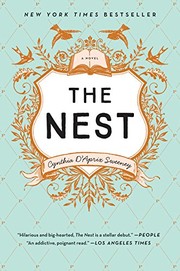
The Nest
2,854-word summary 13 min read 368 pages in the book
- First published
- 2016
- Publisher
- Ecco
- Pages
- 368
- ISBN
- 9780062414229
Reading options
What's inside (9 sections)
I picked up The Nest because a friend kept describing it as the book about rich siblings fighting over money, and I wanted to see if there was more heart in it than that pitch suggests. I had seen it around since it came out as a 2016 debut from Ecco, listed at 368 pages, and I finally gave in on a slow weekend when I wanted something set in New York with family mess at the center. What I got was exactly that, plus a lot of time spent inside the heads of four grown Plumb siblings who made very different choices and still ended up stuck in the same place. Spoilers from here on, because this is a summary and the fun is in how each plan falls apart.
The setup is simple and does a lot of work. The Plumb siblings grew up with money nearby but not exactly in hand. Their father set up a joint trust fund they all call the nest, meant to be shared and meant to arrive when the youngest hit a certain age. Leo is the oldest, then Melody, then Jack, then Bea. By the time the story starts, they are all adults with mortgages and jobs and kids and partners, and each of them has already spent the money in their head. That is the part Sweeney gets right from the start. The trust acts as cash and as a backup plan that let everyone avoid harder decisions for years.
Why I picked it up
I came to this one late on purpose. Family dramas about inheritance can feel familiar, and I was worried this would be four versions of the same complaint. A neighbor told me the siblings were frustrating but the chapters moved fast, and that turned out to be true. I liked that it was a debut, because debuts often have a plain hunger to them. Sweeney had worked in other kinds of writing before this, and you can sense she wanted to prove she could hold four separate lives together without dropping any of them.
I also wanted a New York book. Not the glossy tourist version, but the version where people live in apartments they cannot quite afford and take the subway to jobs that sound good at parties. The Nest lives in that city. People meet for lunch, walk through parks, argue in kitchens, borrow office space, and worry about school tuition in a way that feels specific to a certain kind of Brooklyn and Manhattan life. That setting pulled me in before I cared much about the trust itself.
My first impression was that Leo would be the problem and everyone else would be sympathetic by comparison. That flipped around more than I expected. By the middle I was annoyed with all of them at different moments, which kept me reading even when the plot slowed.
The Plumbs and the nest
The four Plumbs are introduced as adults whose lives look settled from the outside. Leo is charming in the way that works at dinners and in offices, the older brother who always seemed headed for something big. Melody is the organized one, married with teenage twin daughters, living in a suburb where keeping up matters and college costs hang over every conversation. Jack is an antiques dealer who loves old objects and knows how to spot value, married and living in Brooklyn, carrying debt he hides from almost everyone. Bea is a writer in her late thirties who had early promise and has stalled, single for much of the book, living in a small place and trying to finish something that matters.
Their father is gone. Their mother is still alive and living in the family home, and she has her own views about what the money means. The siblings do not talk to each other as much as they talk around each other. Sweeney moves between their points of view, so we see how each one remembers childhood differently. One remembers Leo getting away with things. One remembers their mother paying closer attention to someone else. One remembers money talk at the table that made everything feel safe and tense at once.
The trust is supposed to be divided when Melody, the youngest? No, when the youngest sibling reaches a set birthday. The user facts say they are waiting on a joint trust from their father, so I will keep it general here. The point is that the date is close. They have all made plans tied to it. Melody has counted on it for college money for her girls. Jack has counted on it to clear shop debts and loans tied to his business and his house. Bea has told herself it will give her room to write without taking jobs she hates. Leo has treated it as background safety while he lives larger than the others.
That shared waiting is what makes the book work early on. Every chapter adds a small pressure. A tuition bill arrives. A creditor calls. A landlord raises rent. A manuscript stalls. You start to see how much of adult life for these four has been built on a future payment.
Leo and the crash that breaks the plan
Then Leo crashes the plan, almost literally. He drives drunk after a party in the city and causes a serious car accident with a young woman in the car with him. I am keeping the details general here because the exact legal fallout matters less than the family fallout, but the shape is clear. Someone gets hurt. Lawyers get involved. The family trust has to be tapped early to pay for a settlement and to keep Leo out of worse trouble.
This is the hinge of the whole novel. Their mother and the lawyers agree to use money from the nest to cover Leo. From Leo's point of view, it is rescue. From the siblings' point of view, it is theft, even if it went through proper channels. The total drops. The future payout shrinks. The date stays the same but the amount changes, and all those quiet plans have to be remade.
Sweeney does a good job showing Leo without turning him into a cartoon. He is selfish and careless, yes, and his drinking is a real problem, not a cute flaw. But he also knows he messed up, at least in flashes. He goes to rehab for a stretch. He tries to act humbled. He takes a job through a connection and tries to show up. The trouble is that his trying still centers on himself. He apologizes in ways that ask for quick forgiveness. He tells stories where he is the victim of his own mistakes. I found those scenes believable because I have met that kind of charm in real life. It is warm until you need it to be solid.
The siblings react the way siblings do. Melody is furious in a tight, controlled way. Jack is furious in a louder way that spills into his marriage. Bea pulls back and tries to stay above it, which is its own kind of judgment. Their mother defends Leo more than the others can stand, and that old pattern, the oldest son getting extra grace, fuels half the arguments in the book. The accident chapters are among the strongest because the stakes are plain. Someone could have died. Money that was supposed to protect everyone now protects one person.
Melody, Jack, and Bea under pressure
After the payout shrinks, the middle of the book follows each sibling trying to adjust, and this is where the page count goes. Melody's plot hit me hardest. She has twin daughters nearing college age, and she has promised them a certain kind of education. She and her husband live in a house that stretches them, in a town where those promises feel normal until the numbers stop working. When she learns how much less is coming, she panics in a very recognizable way. She looks at cheaper schools. She argues with her husband. She tries to keep the twins from seeing how scared she is. There is a scene where she tours a campus and smiles while doing math in her head, and I felt that in my chest. Her love for her daughters is real. Her sense of status is also real, and Sweeney lets both be true without sorting them into good and bad.
Jack's plot is more tangled. He runs an antiques shop with debts tied to inventory and loans, and he owes money in ways his husband does not fully see. I am leaving names and exact sums out here, because the point is the habit, not the ledger. Jack borrows, hides, borrows again, and tells himself the trust will clean it up. He loves beautiful things and he is good at his work, but he uses shopping and deals to calm himself down. His marriage strains because secrets do that. There are lies about where money went, late nights at the shop, and a growing sense that he has mistaken motion for progress. I felt for Jack even when I wanted to shake him. His shame is strong, and shame makes people lie to the people they love most.
Bea's plot is quieter. She had a promising start as a writer, published something early that got attention, and then stalled for years. She works on a long project, teaches or takes freelance work to pay rent, and watches younger writers pass her. The trust was supposed to buy her time. Without the full amount, she has to decide whether she actually wants the hard daily work of writing or just the idea of being a writer. She has a relationship that pulls at her, and friendships with other writers that mix support with envy. Her chapters have less incident than the others, more interior circling, and that will test some readers. I liked them because they felt honest about creative block. It is not dramatic. It is months of notes and missed mornings and small avoidances that add up.
What ties the three together is that none of them will ask for plain help. They will hint, snap, go quiet, or make a sideways move, but they will not say early on that they are drowning. That feels true to family life.
New York money and family fights
The back half moves through a series of confrontations and near misses. Melody tries to find another way to pay for school, including a painful conversation with her daughters about what is possible. Jack tries to sell pieces, shift debt, and keep his shop open while his home life frays. Bea gets a chance tied to her writing that forces her to finish rather than polish forever. Leo drifts in and out, sometimes helpful, often not, still drinking more than he admits and still leaning on charm when accountability is called for.
Their mother remains a central force. She loves her kids but she parents them unevenly, and she holds information close. Family meetings at her house have that mix of casserole and cross examination. People talk about the past with total confidence and completely disagree. One sibling remembers their father as generous. Another remembers him as controlling. Sweeney does not settle it, which I appreciated. Parents look different from each angle, and money sharpens those differences.
New York itself keeps pressing in. Apartments are too small for the lives people want. Commutes eat time. School events, shop hours, magazine deadlines, rehab visits, and lawyer calls stack up. The city is not a backdrop so much as a bill collector. Every choice costs. That pressure gives the book its momentum even when the plot repeats. Someone gets a little hope, then a letter or a call takes it back.
There is also a thread about what it means to be middle aged and still waiting to be rescued. All four Plumbs are old enough to know better, and Sweeney knows it. She lets them be funny about themselves at parties and then small and scared at home. The dialogue is often sharp, especially between sisters and between spouses. People interrupt. People bring up old slights at the wrong moment. People apologize for the wrong thing. Those rhythms felt lived in to me.
I should note the structure. The point of view shifts often, and the timeline stays mostly in order with occasional looks back at childhood and early adult years. That kept me oriented. Scenes are short enough that I never felt trapped in one head for too long. When one sibling annoyed me, another took over within a few pages.
What worked and what wore thin
What worked best for me was the premise executed with patience. The idea of four adults who built lives on money they did not yet have is simple, and Sweeney follows it all the way through. She shows how Melody ties college money to love, how Jack ties debt to identity, how Bea ties time to talent, and how Leo ties rescue to charm. Those links feel human. I also liked that the book takes marriage seriously. Each sibling has a partner or ex or love interest who sees the trust more clearly than they do, and those outside eyes help the reader stay grounded.
The fair criticism is the part my friend warned me about. These are mostly well off people with real problems that still sit inside comfort. Even broke for them means something different than broke for most readers. Sweeney knows this and tries to address it by showing work stress and debt and fear, but there are stretches where I thought, sell the house, move, teach more, take the cheaper school, and the characters treat those options as impossible. That can grate. If you have little patience for stories about affluent families arguing over an inheritance, this book will test you. I had to remind myself that the subject is not poverty. It is dependence, and dependence can live anywhere.
The middle also runs slow. With four threads plus their mother plus spouses and kids, some chapters repeat the same worry with new furniture. Jack hides a bill. Melody calculates. Bea avoids her desk. Leo charms someone. Then again. Readers who want a tight plot may wish Sweeney had cut fifty pages and pressed harder on two siblings instead of four. I felt that drag around the two thirds mark, even though I still wanted to know how it ended.
The ending is neat in a way that split me. Without spoiling specifics, everyone lands somewhere softer than where they started, and the trust resolves in a way that teaches a lesson without ruining anyone. Some readers will find that kind and believable. Others will find it too tidy after so much mess. I landed in between. I was glad no one got a TV movie rescue, and I liked that work, not money, does most of the saving. But one or two turns rely on coincidence and goodwill arriving right on time, and that softened the impact for me.
Still, I closed it with affection. The Nest is a 2016 Ecco family story that wants to ask what happens when the safety net thins. It answers with scenes of school tours and shop floors and blank pages and rehab chairs, not speeches. If you like novels about siblings who love each other badly, set in a New York where money talks low and constant, give it room. Let the first hundred pages set the table. The payoff is not a shock. It is watching four people finally act their age, at least for a while.
A few scenes that stayed with me
One small moment I keep thinking about is Melody at a school event, smiling for other parents while her mind runs numbers. It is not a big scene. No one yells. But it shows how inheritance had become part of her parenting, and how hard it is to rewrite that story in front of your kids.
Another is Jack in his shop after hours, moving objects around instead of facing paperwork. Anyone who has avoided a hard task by doing an easy one will recognize it. The antiques are beautiful and the dust is real, and the contrast says more than a speech about debt would.
And Bea at her desk, or away from it, finding reasons to clean or meet a friend or answer email instead of writing the hard paragraph. I have done that version with my own work. Seeing it on the page made me kinder to her and to myself, even as I wanted her to just sit down and type.
Leo's lowest scenes are harder to love but important. He is at his worst when he is performing recovery rather than living it. Those moments reminded me that apology without changed habits is just another kind of charm. Sweeney lets that sit without spelling it out, and I respected the restraint.
FAQ
When was The Nest published?
It was first published in 2016 by Ecco. The edition cited here has 368 pages with ISBN 9780062414229.
Is The Nest part of a series?
No, it is a standalone debut novel. Leo, Melody, Jack, and Bea Plumb do not return in a sequel.
Who are the main characters in The Nest?
Siblings Leo, Melody, Jack, and Bea Plumb, who share a joint trust fund called the nest in New York.
Similar books

The Chosen
A shattered pair of glasses in a 1944 Brooklyn softball game starts a friendship between a Hasidic boy and his Orthodox neighbor, and their fathers pull them…
2,443-word summary · 11 min read
And the Mountains Echoed
When Abdullah and Pari are split in 1952 Afghanistan, their parting echoes across decades from Kabul to Paris to California in linked stories of loss and…
2,572-word summary · 11 min read

Extremely Loud and Incredibly Close
Nine year old Oskar searches New York for a lock matching his father's key after 9/11.
2,999-word summary · 13 min read

Howards End
Forster's 1910 novel follows two families, a house in Hertfordshire, and a burned note, asking whether money and feeling can ever be connected.
2,187-word summary · 10 min read

Fathers and Sons
Arkady brings the nihilist Bazarov home to his father's estate, and a generational argument turns into love, a duel, and an early death.
2,192-word summary · 10 min read

Unaccustomed Earth
Lahiri’s second story collection follows Bengali families in America and abroad, tracing the quiet distances between parents and children, spouses, and the…
2,333-word summary · 10 min read

The Age of Miracles
A California girl grows up while the Earth's rotation slows, and ordinary adolescence continues alongside slow catastrophe.
2,417-word summary · 11 min read

Peace Like a River
An asthmatic boy in the early 1960s narrates his family's search for his older brother, who is accused of two killings and has escaped custody.
1,969-word summary · 9 min read

We Are Okay
Marin fled San Francisco after her grandfather vanished and stopped answering anyone. When Mabel visits her college dorm, she has to say what happened.
2,253-word summary · 10 min read
Infinite Jest
A film that kills its viewers, a tennis academy, a halfway house for addicts, and a future America where corporations name the years, all tangled together.
2,084-word summary · 9 min read
Her Fearful Symmetry
Twins Julia and Valentina inherit a London flat above Highgate Cemetery from an aunt they never met, then find a ghost in it and a family secret.
2,057-word summary · 9 min read
The House We Grew Up In
The Bird family of the Cotswolds breaks apart after a suicide and spends twenty years not talking about what happened.
2,198-word summary · 10 min read

A Spool of Blue Thread
Four generations of the Whitshank family in Baltimore, and the silences, resentments and quiet love they hand down without ever saying so.
2,408-word summary · 11 min read

This Is How You Lose Her
Yunior cycles through love affairs and betrayals in nine linked stories, tracing the damage he does and the family history behind it.
2,195-word summary · 10 min read

Flight Behavior
Dellarobia Turnbow is stuck in a Tennessee farm marriage until a valley full of monarch butterflies, and the scientist who comes to study them, force her to…
2,051-word summary · 9 min read

And Every Morning the Way Home Gets Longer and Longer
An elderly grandfather, his son, and his grandson share memories and fears as the old man's mind begins to fade, in a short novel about grief and love.
2,078-word summary · 9 min read
The Tiger's Wife
A young doctor in a war-scarred Balkan country chases the stories her grandfather left behind, including a deathless man and a deaf girl who loved an escaped…
2,232-word summary · 10 min read

The Story of Edgar Sawtelle
A mute boy on a Wisconsin dog-breeding farm relives Hamlet as his uncle returns, his father dies in the barn, and the dogs inherit what is left.
2,392-word summary · 11 min read
Olive, Again
Elizabeth Strout returns to Crosby, Maine, as Olive Kitteridge marries Jack Kennison, confronts her son, and faces old age, grief, and small-town judgment.
2,333-word summary · 10 min read
We Were the Mulvaneys
After a rape following a school dance, the Mulvaneys, a family that believed it was blessed, comes apart over fifteen years. Narrated by the youngest son.
2,094-word summary · 9 min read
Foster
A girl spends a summer with relatives on a Wexford farm and is cared for properly for the first time. A spare novella about family and what children notice…
2,043-word summary · 9 min read
Beezus and Ramona
Nine year old Beezus tries to be a good older sister while four year old Ramona turns every ordinary day into a disaster, until a tenth birthday forces honesty.
2,062-word summary · 9 min read
The Most Fun We Ever Had
Four Sorenson sisters orbit perfect parents hiding old cracks.
2,590-word summary · 12 min read
The Accidental Tourist
Grieving Macon writes travel guides for haters of travel, then Muriel intrudes.
2,252-word summary · 10 min read
Let the Great World Spin
A wire walker crosses the towers as Bronx lives collide below.
2,338-word summary · 10 min read

Kitchen
Orphan Mikage finds home in a kitchen with Yuichi and Eriko after loss.
2,597-word summary · 12 min read
Case Histories
A Cambridge PI takes three cold cases that tangle with his own loss.
2,465-word summary · 11 min read
An Object of Beauty
Lacey climbs the art world from Sotheby to fraud and fall.
2,629-word summary · 12 min read
The School for Good Mothers
A mother sent to a reform school fights to keep her daughter under cold surveillance and strict rules.
2,114-word summary · 9 min read

The Perfect Nanny
A trusted nanny kills two children, and the book traces how love and class hid warning signs.
2,200-word summary · 10 min read