
The Fifth Season
3,876-word summary 17 min read 512 pages in the book
- First published
- 2015
- Publisher
- Orbit
- Pages
- 512
- ISBN
- 9780316229296
- Series
- The Broken Earth (#1)
Reading options
What's inside (7 sections)
I did not pick up The Fifth Season because I wanted a big fantasy puzzle. I picked it up because a coworker kept leaving it on the break table with the cover facing up, and after the third time I got curious about the sticker that said winner of the Hugo. I expected something heavy and slow, the kind of book you respect more than enjoy. The first ten pages fixed that idea. A man cracks a continent in half out of grief and anger, and then we meet a woman coming home to find her small son dead on the floor. It came out in 2015 from Orbit, 512 pages in the trade paperback, first in a series called The Broken Earth. It won the Hugo for best novel in 2016, the first of three in a row for this series, which no one had done before.
What kept me reading was not the awards. It was the voice. One of the three story threads talks to you directly as you. That sounds like a trick. On the page it feels close, almost uncomfortable, like someone sitting across from you and refusing to look away. The other two threads read like normal third person stories until they do not. I will get to that. You should know going in that this is a sad book with a lot of anger in it, and also a funny book in small flashes, and a book that asks you to hold two ideas about the same person at once.
The place is a continent called the Stillness, which is a joke name because it never sits still. Quakes roll through. Mountains burp ash. Every few hundred years things get so bad that sunlight goes dim for years and crops fail and whole groups of people die or eat each other or both. People call those times Fifth Seasons, and they keep lists of rules for living through them. Store food. Keep knives sharp. Do not trust strangers for long. Kill to protect the storage if you have to. Kids learn this the way we learn traffic rules.
In the Stillness some people are born able to feel heat and pressure in rock and shift it. They are called orogenes. They can stop a shake or start one. They can pull warmth out of a living body and leave frost behind. Most people hate and fear them. There are slurs for them. If a child shows the talent in a small town, the town might kill the child on the spot. The empire that runs most of the continent, Sanze, with its capital Yumenescene, decided long ago to control orogenes through a school called the Fulcrum. If you are taken there you get rings on your fingers for rank, plain clothes, strict lessons, and a Guardian assigned to watch you. Guardians are strange, strong, cold people with swords and odd control over orogenes through touch. The Fulcrum rents orogenes out to towns, breeds powerful ones like stock, and sends weak or difficult ones to places called nodes where they are kept drugged and used to quiet shakes day after day. That last part is not public knowledge. It is the kind of thing you learn halfway through and then have to sit with.
A mother comes home to the worst thing
Essun is in her forties and lives in a small town called Tirimo with her husband Jija and two kids. She teaches in the local school. She keeps her head down. She is also, secretly, an orogene hiding her past. Her son Uche is small, sweet, fond of rocks in the way kids are fond of bugs. Her daughter Nassun is older, watchful, already learning to hide what she can do because her mother trained her to stay quiet.
Essun comes home one day and finds Uche dead, beaten. Jija is gone. Nassun is gone too. It does not take Essun long to understand. Jija saw Uche doing orogeny, something small and thoughtless, and killed him for it. Jija is a stonecutter by trade, a normal man who thinks orogenes are filthy and dangerous. He took Nassun and ran.
She sits with Uche for two days. I found this part hard to read, not because it is graphic but because Jemisin writes grief as a physical weight. Essun cleans the boy. She does not eat. Outside, the ground starts to move because far to the north something huge has happened. A giant rift has opened across the continent near Yumenescene, throwing ash into the sky. Essun feels the shake coming toward Tirimo and, without thinking much, pushes it around the town. That act saves Tirimo and gives her away at the same time. People notice when the earth moves everywhere except under your house.
When she tries to leave town to chase Jija, a guard at the gate tries to kill her. She loses control and pulls heat from the bodies of the people around her. Men drop frozen. Part of the town water store is ruined. She walks out with blood on her and nothing left to lose. She wants her daughter back. She wants to kill her husband. Those two wants sit side by side in her for most of the book.
On the road she picks up a strange boy named Hoa. He is white haired, pale, eats almost nothing, says odd things, seems to know where Nassun went. He can find water and safe paths. He is clearly not human, though Essun does not know what he is yet. Later she meets Tonkee, a loud, smart woman with no town who studies old rocks and lost history and curses a lot. Tonkee brings a kind of relief. She talks too much when things get tense, which helps.
They walk south through country that is falling apart. Ash in the air. Roads split. Comms, which is what they call towns that agree to share storage and rules, turning people away or shutting gates. Essun keeps practicing her orogeny in small ways, trying to keep it quiet, trying to keep Hoa alive, trying not to think about Uche. She also starts to feel something odd about the floating rocks in the sky called obelisks. Big crystals drift up there, left from some old time. Most people ignore them. Essun feels them listening when she reaches out. That scared me a little the first time I read it, because power that listens is never simple.
The girl who had to prove she could be hurt without fighting back
Damaya is eight or nine and lives in a northern town with parents who do not know what to do with her. She broke a table or moved dust without touching it, something small, and now her father looks at her like she might bite. Her mother cries and braids her hair too tight. They call for a Guardian.
The Guardian who comes is named Schaffa. He is bald, calm, smiles a lot, wears a uniform, carries a sword that looks too plain for what he does. He tells Damaya he will take her to Yumenescene to train. On the road he teaches her the first rule. He breaks bones in her hand and tells her not to use her power to stop the pain or to strike back. She manages it, shaking and sick. He cleans her hand, feeds her, tells her he hurts her because he cares and because the world will not forgive her if she slips. It is grooming and training at once, and Jemisin does not let you settle on one word for it.
Damaya arrives at the Fulcrum as a grit, which is what they call untrained kids. Life there is clean sheets and hard rules. Lessons in moving heat, in sitting still, in history that may be edited. Punishments that leave marks. The other kids test her. One girl pretends to be her friend and then sets her up. Damaya learns to watch, to keep her mouth shut, to work harder than anyone. She is good. That makes things both better and worse.
One night a girl named Binof slips into the dorm. Binof is not an orogene. She is the daughter of a powerful family, curious, bored, sharp, and she wants to see the big central building that grits are told to avoid. Damaya likes being chosen for a secret. They sneak in and find a huge round chamber with a pit in the middle, sides lined with iron teeth. Binof says this is where obelisks were made, or where people tried to make them. Before they can learn more, a Guardian finds them and acts wrong, cold in a way that feels broken. Schaffa steps in, kills that Guardian by pulling something dark from the back of her neck, and tells Damaya she has to test for her first ring right now or she will be killed for breaking rules.
She tests. She passes. She picks a new name, as orogenes do when they earn rank. She picks Syenite. I remember staring at that line for a minute because I had been reading Syenite chapters for a hundred pages already and had not put it together. Jemisin plays fair. She leaves clues. Damaya likes a certain type of stone. Syenite remembers a hand that healed crooked. Essun has that same hand. It is all there if you look, but the book keeps you moving too fast to stop and sort it.
If you have ever been the new kid who had to learn fast or get hurt, Damaya parts will hit. The Fulcrum is a school, but it is also a cage with good meals. Schaffa telling her she must never say no to him lands different once you see where it leads twenty years later.
A job on the coast with a man who knows too much
Syenite is in her twenties, four rings, good at her work, angry under the surface in a way she hides with jokes and polish. The Fulcrum pairs her with Alabaster, the only ten ring orogene alive, for a mission. Officially they are to go to the coastal town of Allia and clear a harbor blocked by coral. Unofficially they are ordered to make a baby together because strong orogenes should breed strong children. Neither of them wants this. They argue from the first meal. Alabaster is tall, dark skinned, long haired, tired in a way that has nothing to do with sleep. He has fathered many children he never sees. He hates the Fulcrum with a steady, worn hate.
On the road Alabaster starts teaching her things that are not in the lessons. He says stonelore, the sayings about how to live through Seasons, leaves out who caused most Seasons. He says orogeny involves more than moving heat, that there is silver light under it, a kind of power that connects living things and rock and the floating obelisks. He shows her by pulling her into his working when he quiets a volcano far away. It feels like being dragged underwater and seeing light for the first time.
Then he takes her to a node station. From outside it looks like a small clinic on a hill. Inside are dead staff and a child in a chair, wired, cut, kept half asleep, drooling, skinny, used to smooth shakes for miles around. Syenite understands at once that the Fulcrum does this on purpose, in many places, and that many of those children are Alabaster own children, taken because they tested strong. She throws up. Alabaster does not comfort her. He says now you know. It is one of the ugliest reveals I have read in fantasy, and Jemisin does not dress it up. No speech about systems. Just a boy in a chair and Syenite counting his ribs.
In Allia things go wrong fast. Someone poisons Alabaster the first night. He nearly dies, then pulls Syenite into that silver strangeness again to clean his blood. While he rests, Syenite tries to clear the harbor alone. She finds the blockage is not coral at all. It is an obelisk sunk on its side, huge, broken in the middle, with something like a person frozen inside. When she touches it with her power it rises, dripping, and hangs low over the water. People cheer, then get quiet. Obelisks are supposed to stay up and stay dead. This one moved for her.
A Guardian named Edki comes to kill them. Guardians can shut down orogeny by touching an orogene, and they are fast. Edki stabs Alabaster and turns to Syenite. She panics and reaches, not for heat, but for that obelisk and the silver behind it. The harbor blows apart. The town burns. Syenite blacks out.
She wakes on an island called Meov with Alabaster alive and a stone eater watching them. Stone eaters are people made of rock who move through stone like water, who eat rock, who live a long time and do not explain themselves. This one is called Antimony, tall, still, with a mouth that does not move right. Antimony has followed Alabaster for years. Why, we do not learn yet.
Meov is run by a man named Innon, big, laughing, kind, an orogene who never went to the Fulcrum and lives open about it because island folk have their own rules. Syenite and Alabaster stay. For a while the book breathes. They fish. They fix roofs. Syenite gets pregnant and has a boy they name Corundum. She and Alabaster and Innon fall into a shared love that feels normal and warm after so much cold. I liked these chapters more than I expected, and I dreaded them at the same time, because peace in a book like this never holds.
It does not hold. Syenite feels guilty about leaving that Allia volcano smoking, so on aSupply run she quiets it. The Fulcrum uses that act like a signal and finds them. Ships come with Guardians. Antimony pulls Alabaster down into rock to save him. Innon is killed in front of Syenite. Schaffa, older now, walks up and asks for the baby. He is polite about it. That politeness is worse than shouting. Syenite decides she will not give Corundum to the nodes or the Fulcrum. She holds him close and stops his breath. Then she reaches for an obelisk offshore and brings stone daggers up through the ships.
I had to put the book down after that. Not because it felt cheap. Because it felt true to what the world had taught her. She knew exactly what his life would be. She chose a quick death over a long use. You can hate the choice and still see why she made it. Jemisin does not ask you to approve. She asks you to stay in the room.
After Meov, Syenite runs. She ends up in Tirimo under a new name. Essun. She marries Jija, who does not know what she is. She has Uche and Nassun. She tells herself she can be normal if she is careful enough. That is where the Essun thread started. Same woman, three names, three ages. Damaya, Syenite, Essun. Once you see it, earlier scenes click into place. The hand. The temper. The way Schaffa smiles.
Walking south while the world fills with ash
Back on the road, Essun and Hoa and Tonkee keep moving toward a place Hoa insists is safe. Tonkee figures out Hoa is a stone eater, though a young or odd one, after she sees him step into rock. Hoa does not deny it. He says he is hungry in a way food does not fix and that Essun singing to stone keeps him steady. He also says Nassun is south, alive, with Jija, moving toward rumors of a place where orogeny can be fixed.
They pass dead comms and living ones that will not open. They trade work for food. Essun learns to pull power from an obelisk without killing herself, with Alabaster voice in her head half remembered from years ago guiding her. She practices on small shakes. One night she and Tonkee argue about history. Tonkee thinks the Fulcrum lied about a lot, that stone eaters and obelisks and the lost moon are linked. Essun thinks history does not matter when your daughter is missing. Both are right, which is why the argument sticks.
They reach Castrima, which is not on any map Hoa will name at first. It is built inside a giant geode underground, lit by strange crystals, full of gardens and workshops and people who vote on things. The head of Castrima is Ykka, a woman with a shaved head and a direct manner, who is openly orogene. No Fulcrum. No Guardians. Orogenes and normals, called stills, living together and sharing storage. Essun has never seen this. She does not trust it. Trust feels like a luxury she cannot pay for.
Castrima takes them in because Ykka needs strong orogenes for the long Season coming and because Hoa vouches for Essun in his quiet way. Essun gets a room, a job to help steady the geode, food that tastes like chalk and safety. She keeps asking about the south road, about Jija and Nassun. People tell her the ash will make travel hard soon. She does not care. Tonkee settles into the library and starts digging through old records. Hoa disappears into walls and comes back with stone dust on his mouth.
Then Essun finds Alabaster. He is in a lower room, kept apart, dying by inches. Using the obelisks to break the continent cost him. His skin is turning to rock in patches. His arm is gone to stone. Antimony stands near him, eating the stone as it spreads, which slows it but does not stop it. Alabaster is thin, shaking, still sharp tongued. He knows Essun at once. He calls her Syenite, then corrects himself, then laughs until he coughs.
Their talk is short and strange. He says he broke the world on purpose. He says the rift at Yumenescene was not an accident or a fit. It was a first step to end Seasons for good. He says the missing moon, the one old stories hint at when they talk about the sky before, has to be brought back. He asks if she has ever heard of something called a moon. Essun thinks he is feverish. Readers who know a little science will feel the ground shift. Tides, pulls, long cycles. If the earth lost its moon long ago, shakes would never settle. Seasons would keep coming. To fix it would take power no single orogene holds, unless obelisks can be linked.
Alabaster asks her to learn what he learned. To link obelisks and use them. To finish what he started. Essun says she came for her daughter, not for the world. He says those may be the same road. She does not answer. She goes back to her room and lies awake listening to rock settle.
What I admired, what wore me down, and who should try it
I admired how the book refuses easy sides. The Fulcrum is cruel, clearly, and also the only reason many orogenes lived past childhood. Schaffa is kind in small moments and monstrous in large ones. Jija loves Nassun and killed Uche. Essun loves her children and killed her own baby years before to spare him. Ykka built something fair in Castrima and will still send people out to die if storage runs short. Jemisin lets people be more than one thing without excusing what they do. That feels closer to how harm works than most fantasy allows.
I admired the craft around power. Orogeny has rules you can follow. Feel heat, move it, do not take too much from living things or you freeze them. The silver underneath, which Alabaster calls magic, has a different feel, wider and stranger, tied to obelisks and stone eaters and Father Earth, who speaks in short cold chapters between the main story. Those Father Earth bits read like hate mail from a planet. Some readers will love them. I found them strong in small doses and a little much when they piled up. Your taste may differ.
What wore me down. The middle has a stretch where Syenite and Alabaster travel and talk and travel and talk, and while the node station scene is worth it, the road before Allia felt long to me. A few names blur. A few towns blur. The second person chapters demand attention, and if you read tired you will miss clues. I also wanted more time in Castrima before the reunion. Ykka is interesting, the vote system is interesting, the geode is interesting, and we get only a taste before the book ends on a question.
Who should try it. If you like fantasy built around survival and power and family, if you liked books where the world itself pushes back, if you want a story that treats oppression as structure rather than background, this fits. If you need clean heroes, steady romance, or a plot that pauses to explain every term, you may struggle. There is child death, beating, coercion, breeding programs, body horror around stone, and a mother killing her child. None of it feels thrown in for shock, but it is there and it is blunt.
The close of book one does not resolve the chase. Essun has not found Nassun. Alabaster is dying and asking for help with a plan that sounds impossible. Castrima may hold through the Season or may not. Nassun is alive in the south with a father who fears what she is. The obelisks are awake in a way they were not before. Hoa watches Essun with something like hunger and something like care, and we learn at the very end that he has been telling Essun story all along, that the you voice was his. That reveal reframes small moments. Why he noticed her hands. Why he knew the road. Why he stayed.
I closed the book thinking about hands. Damaya hand broken to teach control. Syenite hand scarred from work. Essun hand stiff with age. Alabaster hands that broke a continent. Nassun small hands learning to hide. Jemisin returns to hands the way other writers return to eyes. It works because orogeny lives in touch, in feeling heat move, in choosing where to put it. Power here is manual. It leaves marks.
If you start it, give it to page one hundred before you judge. Let the three threads sit separate for a while. Let Essun be angry without needing her to be likable. Let Damaya be scared without needing her to be brave yet. Let Syenite be sharp without needing her to be kind. They are one life, told out of order, in a world that tried to split that life into useful pieces. The book puts the pieces back on the table and asks what they add up to. I am still turning that over, which is why I went looking for book two the next day.
This is the way the world ends. Again.
FAQ
Is The Fifth Season the first book in The Broken Earth series?
Yes. It came out in 2015 from Orbit as The Broken Earth book 1, followed by The Obelisk Gate and The Stone Sky.
Are Essun, Damaya and Syenite the same person?
They are the same woman at different ages. Damaya becomes Syenite at the Fulcrum, and Syenite later hides as Essun in Tirimo.
Did The Fifth Season win the Hugo Award?
Yes, it won the Hugo Award for Best Novel in 2016. Each book in the trilogy then won the Hugo three years in a row.
Similar books
More like The Fifth Season →More from The Broken Earth first, then related titles.

Winter
Scarred Princess Winter joins Cinder and her crew to stop Queen Levana's forced wedding and war between Luna and Earth.
3,179-word summary · 14 min read

Under the Dome
Chester's Mill is sealed under an invisible dome as cook Barbie and editor Julia face Big Jim Rennie's rule.
2,731-word summary · 12 min read

The War of the Worlds
A Surrey writer watches Martians land in cylinders, march on London in tripods, and fall to Earth's smallest life.
2,667-word summary · 12 min read
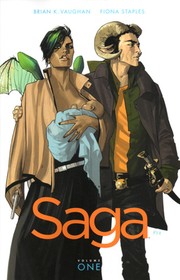
Saga, Volume 1
Alana and Marko flee a galaxy-wide war with baby Hazel, hunted by both sides.
2,200-word summary · 10 min read

Cress
Imprisoned hacker Cress joins Cinder Scarlet Wolf Thorne to stop Levana's wedding to Kai.
2,534-word summary · 11 min read

Watership Down
Hazel leads a small band of rabbits from a doomed warren to Watership Down, where survival means facing snares, farms and General Woundwort.
2,550-word summary · 11 min read