
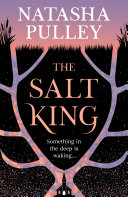
The Salt King
2,214-word summary 10 min read 464 pages in the book
- First published
- 2026
- Publisher
- Bloomsbury
- Pages
- 464
- ISBN
- 9781639737291
Reading options
What's inside (8 sections)
I picked up The Salt King because a friend described it as an apocalyptic novel with footnotes, and that combination sounded strange enough to trust. Natasha Pulley published it in 2026 through Bloomsbury, and the copy I read runs to 464 pages. By the time I finished I had been dragged through a salt mine, a Vatican office, a shoreline in Jordan, and a couple of places I never expected a book like this to go. It is a novel that keeps changing its own genre while you are reading it, which is either thrilling or maddening depending on your mood. For me it was mostly thrilling, though not without a few complaints I will get to.
A town you are not supposed to leave
The story centers on Avelyn Brocken, a Jesuit priest stationed at the Vatican, who has built his whole adult life around one rule: never go back to Hreodwater. Hreodwater is an isolated salt-mining town in the Fens of East Anglia, the kind of place that technically exists in the modern world but seems to have missed the memo about it. Avelyn was born there and got out, and he has spent the years since putting distance between himself and everything the place stands for. You get the sense immediately that this is not simple homesickness. He fled something.
Then reports start coming out of Hreodwater about miracles. The Vatican begins to pay attention, the way large institutions do when a remote corner of the world suddenly claims something the rest of us cannot explain. What turns curiosity into an order is a video. It shows a pilgrim who tried to leave the enclave being turned into a pillar of salt. It is a graphic image, and Pulley does not soften it. The Vatican foreign ministry decides somebody has to go back and find out what is happening, and they pick Avelyn because he alone understands the town's peculiar culture, language, and faith.
That decision is the engine of the whole book. Avelyn is not a tourist arriving with an open mind. He is a man being sent into the place he escaped, forced to use the very knowledge he spent his life trying to make irrelevant. He speaks the local language, he knows the customs, and he understands the worship of the Salt King better than anyone the Church could send. That god is a sleeping presence in the mine, and its tomb emits a glowing salt light. The people of Hreodwater treat this light as sacred. Whether it is sacred in any objective sense is the question the book keeps putting off, and that delay is part of the design.
What I liked here is how personal the stakes are. Avelyn is not solving a puzzle for its own sake. Every step back into Hreodwater drags up the childhood he worked hard to bury, and Pulley writes that unease well. The town feels like a character, closed off and strange, with its own logic that slowly becomes legible to us through Avelyn's eyes. There is a real pleasure in watching someone who knows the rules explain them to a reader who does not.
The dean who believes
Waiting for Avelyn is Jericho Calder, the dean of the abbey, and Jericho is the true believer to Avelyn's skeptic. The two spend a great deal of the novel bickering, and their arguments are among the best parts of it. Jericho argues that the glowing salt light can convert belief into tangible matter. In his telling, faith is not a private feeling you hold quietly. It is a force that can be directed, and the salt is what happens when enough belief gets pointed hard enough at something.
That is the book's central provocation. What if the things we dismiss as miracles are real, and what if they operate according to rules that nobody outside the enclave has bothered to learn? Pulley is smart enough not to settle the question early. She lets Jericho make a strong case, then lets Avelyn poke holes in it, then lets the evidence on the ground refuse to fit either man's explanation. The back and forth gives the novel its texture.
The relationship between these two is a slow burn. They start as antagonistic forces, a skeptical priest and a believing dean who cannot see eye to eye on anything, and the romance grows out of the arguments rather than sitting beside them. Pulley lets it build through shared danger and grudging respect, and by the time it tipped into something tender it felt earned to me. Publishers Weekly called the romance heart-binding, and I understand why. It works because the two men are genuinely changed by each other. Avelyn does not simply lose his skepticism, and Jericho does not simply abandon his faith. They end up somewhere more complicated, which is truer to life than a neat conversion.
I should say that the bickering is a taste thing. If you enjoy couples who argue in complete sentences about metaphysics while the world ends, you will be well served. If that sounds exhausting, there are long stretches here that will try your patience. I am firmly in the first camp, but I noticed the pages where the repartee starts to feel a little too polished for two men under this much pressure.
Salt starts showing up everywhere
Around the time Avelyn is settling into Hreodwater, the strange events stop being local. Eruptions of salt spread across the world. People are turned into salt statues without any warning, and electronics fail within minutes of exposure to the glowing light. This is where the novel starts to feel genuinely apocalyptic rather than merely odd. The salt is not a symbol anymore. It is a physical substance doing very real damage, and the fact that it arrives without explanation makes it harder to fight.
Pulley handles the escalation well. The early miracles in the enclave could be explained away as mass suggestion or elaborate fraud. Once the same thing is happening to strangers far outside Hreodwater, those explanations start to collapse. The book keeps a cold, almost clinical tone as it catalogs the failures: devices dying, bodies crystallizing, authorities struggling to name what is happening. That restraint makes the horror land harder than any amount of shouting would have.
Then there is Jordan. On the shore of the Dead Sea, two nuclear scientists discover a second source of the light, and this one is marked with a warning about Sodom and Gomorrah. That detail is a masterstroke, because it drags an ancient story into a modern setting and refuses to tell us whether the warning is literal, metaphorical, or a threat from whatever is waking up. The biblical echo is one of the reasons the novel feels so sure of itself. Pulley is clearly comfortable playing with scripture and folklore, and she trusts the reader to keep up.
This is also where the science fiction element earns its place in the category list. The scientist plot lines bring a forensic, investigative energy that balances the more mystical material in the mine. You get the sense of people trying to measure the immeasurable, taking readings and writing reports while the thing they are studying quietly gets stronger. The Dead Sea scenes have a different temperature from the Fens chapters, and the contrast keeps the book from feeling monotonous.
A countdown with a very literal clock
The structure of The Salt King is built as a countdown to the waking of the Salt King. That framing gives the whole novel a ticking quality, even in the quieter chapters where nothing much seems to be happening on the surface. Pulley hops between locations with confidence. The narrative moves from Hreodwater to Jordan, then to Tibet's Lancang region and Russia's Yekaterinburg, as Avelyn tries to work out what the phenomena actually are.
The geographic spread is one of the book's great strengths and also one of its few weaknesses. On the plus side, it gives the apocalypse a genuinely global scale. This is not a story where one small town holds all the answers and everyone else waits to be told. Different parts of the world are encountering different pieces of the puzzle, and the reader gets to see how each culture makes sense of the salt. The Lancang and Yekaterinburg sections widen the lens in ways that feel ambitious rather than decorative.
The downside is that the constant movement can be disorienting. Just as I was settling into one thread, Pulley would cut to another continent, and a few of those transitions took me a paragraph or two to reorient myself. There is a lot to keep track of: the mine, the Vatican, the scientists, the various outbreaks, the sleeping god, and Avelyn's own history. At 464 pages there is room for all of it, but the book asks you to hold a lot in your head, and I would not call it a light read.
Through all of it, Avelyn keeps returning to the same question. Are these phenomena miracles, hoaxes, or the awakening of an ancient deity he escaped as a child? Pulley refuses to pick an answer for him. That refusal is the source of much of the book's tension, and it is also the thing I admired most. A lesser novel would have tipped its hand and told us which explanation was correct. This one trusts the ambiguity to carry the weight.
What I liked and where it lost me
The footnotes deserve a mention, because they are a real feature of this book rather than a gimmick. Publishers Weekly praised them along with the extensively researched history, and I can see why. Pulley uses them to build out the world, dropping in bits of background that would otherwise clog the main narrative. They add a scholarly texture that suits a story about a priest, an abbey, and a god in a mine. At their best they are funny and sneaky, the kind of aside that makes you stop and reread.
The historical research is similarly woven in rather than displayed. The Fens setting feels lived in, and the mine has a physical presence that I could practically smell. Pulley writes about salt the way some writers write about the sea, as something with a weight and a taste of its own. Hachette's copy calls the book a multi-genre marvel, equal parts adventure tale, tender-hearted romance, and apocalyptic vision, and that is a fair description. It really is all of those things, often in the same chapter.
As for criticism, I have two. First, the pacing is uneven. The middle sections, particularly the ones that jump between continents, sometimes feel like they are delaying the inevitable in order to keep the clock running. I never wanted to put the book down, but I did notice a few stretches where the momentum flattened out. Second, the sheer number of threads means some characters get less attention than they deserve. The nuclear scientists in Jordan are fascinating, and I wanted more time with them than the structure allows.
Publishers Weekly likened the book to an apocalyptic X-Files episode, and that comparison is hard to improve on. There is the same mixture of conspiracy, faith, science, and men in positions of authority who may or may not be telling the truth. There is also the same willingness to let an episode end with more questions than it started with. If you miss that particular brand of paranoid, intellectually playful storytelling, this book will feel like a gift. CrimeReads selected it among twenty speculative thrillers to get through 2026, and after finishing it I can see the logic.
Who should read it
I would hand The Salt King to readers who like their genre fiction willing to misbehave. If you want a cleanly sorted book where fantasy stays in the fantasy lane and romance stays in the romance lane, this will frustrate you. If you enjoy a novel that picks up a religious mystery, a global catastrophe, and a queer love story and then refuses to rank them, you will probably have a good time.
The faith versus skepticism debate is the largest draw, and Pulley handles it with unusual fairness. She is not interested in proving Avelyn right or Jericho right. Publishers Weekly noted that she offers no easy answers, and that is precisely the point. The novel is more interested in what people do when they cannot be certain than in declaring what is true. That is a more mature approach than the usual supernatural thriller, and it is the reason I would recommend the book to someone who normally avoids the genre.
I finished The Salt King with the strange feeling that I had been told a story that was still unfolding somewhere off the page. The countdown reaches its moment, but the implications keep spreading. That is an appropriately unsettling way to end an apocalypse, and it left me thinking about the book for days afterward. It is not a perfect novel, but it is an ambitious and memorable one, and I would happily read another chapter in this particular version of the world's last days.
FAQ
Is The Salt King part of a series?
No. It is a standalone novel from Natasha Pulley, published in 2026 by Bloomsbury.
How long is The Salt King and what genre is it?
It runs 464 pages and blends fantasy, science fiction, horror, and romance into what its publisher calls an apocalyptic, multi-genre tale.
Does the book say whether the miracles are real?
No. Pulley deliberately leaves the faith versus skepticism debate open, and Publishers Weekly noted that she offers no easy answers.
Similar books

The River Has Roots
A fairy-tale novella in which a village on the edge of Faerie, a river that turns a girl into a swan and a harp that sings an accusation retell The Bonny Swans.
2,025-word summary · 9 min read
Nightmares and Dreamscapes
King's 1993 collection runs from a man buried alive in a Cadillac to a town of dead rock stars, mixing horror, science fiction and dark humor across 816 pages.
3,232-word summary · 14 min read
Beauty: A Retelling of the Story of Beauty and the Beast
Robin McKinley's debut retells Beauty and the Beast through a plain, book-loving girl whose nightly refusals of the Beast's proposals slowly become something…
2,100-word summary · 9 min read
Alchemised
A memory-wiped alchemist wakes a prisoner of the regime that won Paladia's civil war, and her captor is the former rival who wants what remains inside her head.
2,596-word summary · 12 min read

A Palace Near the Wind
In this 2025 science-fantasy novella, a Feng princess takes her sister's place as a human king's bride intending to assassinate him on her wedding day.
2,304-word summary · 10 min read

Wilder Girls
At a quarantined boarding school off Maine, three girls with strange mutations search for a missing friend and learn what the adults have hidden.
2,594-word summary · 12 min read
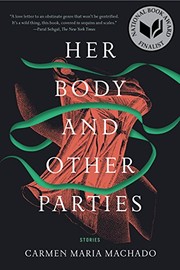
Her Body and Other Parties: Stories
Eight stories where bodies, medicine and old fairy tales get taken apart, with a green ribbon running through the whole book.
2,997-word summary · 13 min read
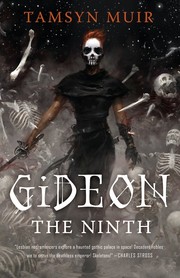
Gideon the Ninth
Swordswoman Gideon guards necromancer Harrow in a deadly Emperor trial.
2,232-word summary · 10 min read
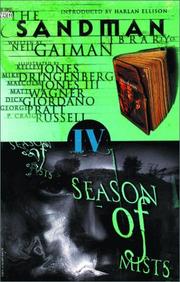
The Sandman, Vol. 4: Season of Mists
Dream travels to Hell and is handed the key to its gates, then every god and demon arrives to argue who should rule.
2,351-word summary · 10 min read
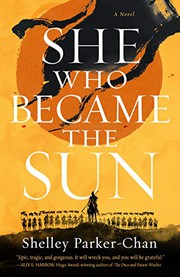
She Who Became the Sun
A peasant girl takes her dead brother's name and becomes Zhu Chongba, climbing from a Buddhist monastery toward a fractured China's throne.
2,170-word summary · 10 min read

Yellow Crocus
In 1837 Virginia, an enslaved wet nurse is separated from her own son to raise a planter's daughter, and the two women build a love the law says cannot exist.
2,094-word summary · 9 min read
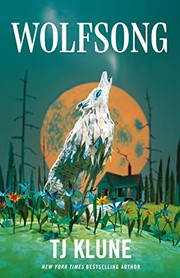
Wolfsong
Ox Matheson grows up believing he is worth nothing. Then the Bennett family moves in next door, werewolves with a secret, and a boy named Joe begins to howl…
2,823-word summary · 13 min read
Wild Magic
A thirteen-year-old orphan in the kingdom of Tortall learns to live with the gift of speaking to animals, and discovers that the creatures she loves are not…
2,056-word summary · 9 min read
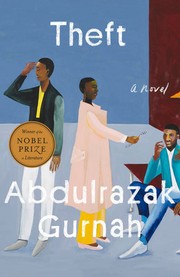
Theft
Gurnah traces three linked lives in Tanzania, where a servant's accusation of theft opens a family history of love, duty and quiet betrayal.
2,454-word summary · 11 min read
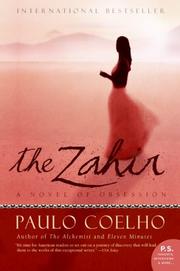
The Zahir
A bestselling novelist's wife vanishes from their Paris home, sending him on a search that becomes a reckoning with his own marriage and attention.
2,433-word summary · 11 min read
The Witch of Portobello
A journalist collects testimony from those who knew Athena, a woman born in Transylvania who became a dancer and teacher in Portobello. Coelho keeps her fate…
2,499-word summary · 11 min read

The Survivor Wants to Die at the End
The third They Both Die at the End novel follows two nineteen-year-olds who would rather not be alive, and the contract they sign to live for Begin Days…
2,986-word summary · 13 min read
The Lunatic Cafe
Anita Blake takes a missing-shapeshifter case into St. Louis werewolf politics while Jean-Claude and Richard both press their claim on her.
2,327-word summary · 10 min read
The Binding
In an alternate Victorian England, binders remove unbearable memories into books, and a young apprentice discovers his own past was erased from him.
2,036-word summary · 9 min read
Saga, Volume 4
Book Two opens with Alana and Marko trying to raise Hazel in hiding on Gardenia, while a vengeful robot kidnaps Prince Robot IV's newborn son.
2,003-word summary · 9 min read
Release Me
A guarded engineering graduate newly arrived in Los Angeles is used as bait at an art gala, then offered a million dollars to pose for a powerful man's private…
2,070-word summary · 9 min read

Our Wives Under the Sea
A marine researcher returns from a deep-sea dive changed, and her wife must decide whether to hold on or let go.
2,286-word summary · 10 min read
Memnoch the Devil
In the fifth Vampire Chronicles novel, Lestat is taken by the Devil on a tour of Heaven and Hell and asked to serve as God's adversary.
2,619-word summary · 12 min read
King of Ashes
A Virginia crematorium, a debt owed to the Black Baron Boys and a family secret pull Roman Carruthers back into a war where everything burns.
2,229-word summary · 10 min read
Ghost Story
Four elderly friends who trade ghost stories every week find their tales coming true after a fifth member dies in this 1979 horror novel.
2,461-word summary · 11 min read
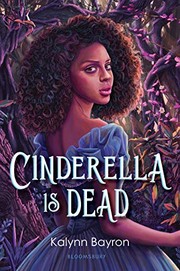
Cinderella Is Dead
Two centuries after Cinderella, a Black teenager in love with another girl flees her kingdom's forced marriage ball.
2,250-word summary · 10 min read
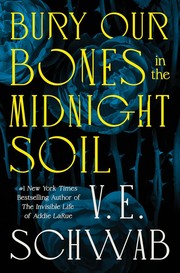
Bury Our Bones in the Midnight Soil
Across five centuries, three women are turned into vampires by the same restless figure, and each must decide what her endless hunger will cost.
2,727-word summary · 12 min read
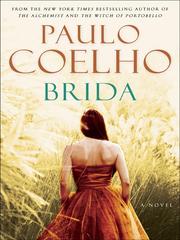
Brida
A young Irishwoman convinced she has a spiritual Gift seeks out a forest Magus and a Dublin witch, and learns that her gift is to bridge the visible and…
2,012-word summary · 9 min read

The Wind Through the Keyhole
Sheltering from a killing storm, Roland tells his ka-tet a tale of his youth, then a boy's fairy tale that mirrors his own loss.
2,504-word summary · 11 min read
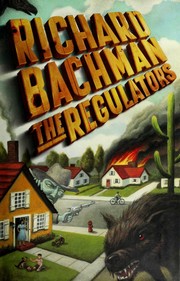
The Regulators
A suburban Ohio street turns into a violent Western set in this Richard Bachman novel, a mirror to Desperation in which an autistic boy hosts a creature called…
2,259-word summary · 10 min read