
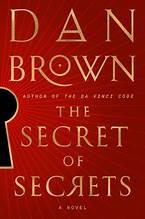
The Secret of Secrets
2,251-word summary 10 min read 688 pages in the book
- First published
- 2025
- Publisher
- Doubleday
- Pages
- 688
- ISBN
- 9780385546898
- Series
- Robert Langdon (#6)
Reading options
What's inside (8 sections)
I started this book expecting the usual Dan Brown machinery, and I got it in full measure, but the opening is quieter than I expected. It begins with a dream. Katherine Solomon, a noetic scientist who studies human consciousness, is in Prague to give a lecture, and she wakes from a disturbing dream about a strangely dressed woman. She is not traveling alone. Robert Langdon, the Harvard symbologist at the center of this series, is with her, and the two are a couple now rather than the wary partners of earlier adventures. This is the sixth Robert Langdon novel, published by Doubleday in 2025, and Brown opens it by dropping his famous puzzle solver into a city of dark alleys and older legends.
The Prague setting does a lot of work early on. This is a place of bridges, stone statues and buried passages, and Brown counts on a reader accepting that a secret might be hidden under almost any cobblestone. Katherine is there to talk about consciousness, the subject that has made her a name in scientific circles and that will make her a target before the book is very old. Her forthcoming book is the thing everyone wants, and I found it worth noticing that Brown makes a work of popular science the object of the chase rather than a painting or a religious relic. The stakes are still life and death, but the prize is a set of ideas about the mind.
A dream, a bridge, and an evacuation
The strange woman from Katherine's dream does not stay in the dream. Later, on Charles Bridge, Langdon sees her in the flesh, or thinks he does. The figure is dressed oddly enough to linger in the eye, and a man who has spent several books reading danger into symbols and coincidences is not going to shrug it off. Langdon fears a bombing and acts fast, getting Katherine and the other guests out of their hotel. It is the kind of instinct that has carried him through this series before, and here it sets the whole plot in motion.
The evacuation looks like panic until the authorities arrive. Captain Janáček and lieutenant Pavel, both of the Czech intelligence service known as the ÚZSI, tell Langdon that a real bomb was found in the hotel and disarmed. So the alarm was not empty after all, or at least the danger was genuine. But the officers are not entirely sympathetic. They suspect that Langdon and Katherine staged the whole scare to stir up interest in her forthcoming book. It is a neat bit of misdirection from Brown, because it leaves the reader unsure for a while whether the couple are being framed, being used, or simply being watched. The suspicion also tells us something about how the novel sees its own hero. A man who keeps stumbling into public incidents looks, to a skeptical officer, exactly like a man who manufactures them.
Katherine's scientific work is the reason for all this attention, and the book takes its time explaining why. Her research concerns non-local consciousness, the idea that mind is not confined to the brain in the way conventional science assumes. I will say more about where that leads, because the payoff arrives much later and depends on details Brown plants here. For now it is enough that the woman in the strange clothes, the bomb, and the intelligence officers all circle back to Katherine and her ideas. Langdon, who is far more comfortable with art history and church architecture, finds himself guarding a scientist whose lecture has made her dangerous.
The Crucifix Bastion and a body
The first real death comes quickly. Katherine had arranged to meet a scientist named Brigita Gessner at the Crucifix Bastion, one of those heavy stone fortifications Prague is full of. When Langdon gets there, Gessner is dead. The killer, a figure calling himself the Golěm, has claimed her, and the name is no accident in a city that has kept the old stories of the golem alive for centuries. Brown uses the folklore as both a costume and a clue, which is his usual habit with symbols: the surface is a shocker, and underneath is a puzzle about identity and who gets to invent it.
At the bastion Langdon also meets Sasha Vesna. She is a woman who was brought out of a Russian mental hospital after Gessner treated her epilepsy with a brain implant. That detail matters far more than it appears to at the time. Sasha is quiet, damaged and easily overlooked, the sort of person who passes through a thriller as a witness rather than a suspect. Gessner had been working with her, and now Gessner is dead and Sasha is still standing there. Langdon does what Langdon does, which is to notice the odd detail and start asking questions, though the answers he gets are slow in coming.
The Golěm does not stop with one killing. Two more people die as the chase widens: Michael Harris, an attaché at the embassy, and Janáček, the captain who had questioned the couple earlier. Three murders with the same signature turn a local scare into a hunt, and each death tightens the net around Langdon and Katherine. The fact that the killer chooses a name out of Prague folklore makes the murders read like a message, but the message is not about old magic. It is about power, and about who is willing to kill to control what the public gets to know.
In-Q-Tel and the lab under the park
Behind the killings is an organization Brown names In-Q-Tel, led by a former CIA agent called Everett Finch. Finch runs a facility code-named Threshold beneath Folimanka Park, and I have to admit the image of a hidden laboratory under a public park is exactly the sort of thing this series does well. Above ground, people walk their dogs and sit on benches. Below, a team is working on ways to watch and influence human minds.
Finch's motive is not world domination in the cartoon sense. He wants to suppress Katherine's research on non-local consciousness because it overlaps with his own work. This is a more interesting driver than pure malice, because it means the danger comes from a rivalry as much as a conspiracy. Katherine is close to publishing ideas that would make his secret program look small, or obsolete, or expose it altogether. Silencing her and taking control of her book becomes, in his mind, a reasonable step. Brown is at his best when a villain can explain himself, and Finch gets that chance.
Ambassador Heide Nagel is drawn into the project through pressure. She is threatened with a treason charge, and that threat is what keeps her compliant for much of the book. Her position makes her useful to Finch, and her fear makes her reliable, until it does not. At a turning point she turns against him. I liked that shift, because Nagel is one of the few characters whose change of heart feels earned by circumstance rather than sudden virtue. She has been coerced, and when the balance tips she acts like someone who has been looking for a way out the whole time.
What Threshold was really building
The middle of the novel sends Langdon and Katherine inside Threshold, and this is where the book cashes in the scientific setup. They learn that the CIA stole designs from Katherine's graduate thesis. Those designs were used to build artificial neurons, and those neurons let operators monitor people who have been placed in near-death states. The research that Finch wanted to bury was, in fact, the foundation of his own program. The theft is the original sin of the plot, and it explains why Katherine was never just an inconvenient author. She is the person who can recognize what has been taken from her, and the person the project cannot afford to let speak freely.
This is also where the theme of the book becomes clear. The title points to a secret of secrets, and the answer is not a lost document or a hidden chamber but a method. A young researcher's thesis was turned into a tool for watching minds at the edge of death, and the people who built it have been living off that theft ever since. Brown connects the idea to noetic science in a way that is easy to follow even when the physics gets thick. He is less interested in the exact mechanism than in the moral fact: knowledge taken without consent and used without oversight.
I should be fair about the pacing here. The reveal is satisfying, but the route to it runs through a lot of explanation. There are long stretches where characters stand in a room and trade technical background about consciousness, implants and monitoring. In the earlier Langdon books the lectures were about art and architecture, which suited a symbologist. Here the science is heavier, and it sometimes slows the chase just as the chase is getting good. Readers who loved the breakneck rhythm of the earlier novels may find themselves skimming a few of these passages. I did not mind them as much as I expected, because the payoff depends on understanding what was stolen, but the book does ask for patience.
The Golěm unmasked
The last movement of the plot is violent and quick. The Golěm incapacitates Finch and destroys the Threshold facility, ending the project in the most literal way possible. Then comes the reveal that reframes everything: the killer is Sasha. The woman Langdon met at the bastion, the quiet patient with the brain implant, is the figure who has been leaving bodies behind her.
The explanation is psychological rather than supernatural. Sasha has dissociative identity disorder, and it formed after years of abuse. The strange woman from Katherine's dream and the figure on Charles Bridge were not a ghost or an old legend come to life. They were an alter, a part of Sasha that the implant and Gessner's treatment had helped bring forward. The identity the killer adopted, the Golěm, fits the neat symmetry of the book, since a golem in the old stories is a created being made to serve a purpose. Here a damaged person was turned into a weapon by people who saw her as a tool, and the tool eventually turned on its makers. It is the most human idea in the novel, and it lands better than the conspiracy around it.
Katherine, who has spent the book studying consciousness from the scientific side, ends up facing a case where a mind split into parts and acted on its own. The parallel is not subtle, but it gives her work a personal stakes she did not have at the start. Langdon, for his part, is once again the man who notices the odd detail and follows it until it becomes the answer. Seeing the woman on the bridge was not a coincidence he stumbled into. It was the first thread of the case, and his habit of paying attention is what pulls it all together.
How the book lands
The reviews were mixed in a way I think is fair. Critics admired the intricate, quick-moving plotting and the way Brown keeps the pieces in the air, but many argued that the novel feels like a relic of an earlier era of thrillers. The puzzles and secret societies that once felt fresh do not carry the same cultural force they had when The Da Vinci Code appeared. That criticism stuck with me as I read. The machinery still works, and I was kept turning pages, but I was aware of enjoying a familiar machine rather than discovering something new.
There is also the matter of Brown's handling of the present day. The CIA, a secret lab, a stolen thesis and a killer hiding behind folklore are all durable ingredients, and he arranges them with real skill. Yet the world around them has changed since he first made this formula famous, and the book never quite reckons with that. It asks the reader to accept that a shadowy program can operate under a public park and that a single scientist's book could justify a string of murders. I was willing to go along with it for 688 pages, but I could feel the bargain I was making.
For a reader coming to the series for the first time, this is a strange entry point. The plot assumes you know Langdon and his habits, and emotional weight rests on a relationship that earlier books built. For a longtime fan, it delivers what the series promises: a city to explore, a string of puzzles, a hidden room, a shocking reveal and a final page that pushes you to keep reading. I had a good time with it, especially the sections in Prague and the unmasking of Sasha, and I would hand it to anyone who has missed these books. I would be honest with them that the formula is showing its age. The secret at the center of this novel is about stolen knowledge and the damage done when powerful people decide that some minds are worth watching and others are worth silencing. That is a strong idea, and the book is at its best when it trusts the idea instead of dressing it up as one more puzzle.
FAQ
Who is the Golěm in The Secret of Secrets?
The killer proves to be Sasha Vesna, the woman Langdon meets at the Crucifix Bastion. Her dissociative identity disorder formed after years of abuse, and the implant used to treat her epilepsy helped bring the violent identity forward.
What is Threshold and who runs it?
Threshold is a facility run by former CIA agent Everett Finch beneath Prague's Folimanka Park, operating through the organization In-Q-Tel. It used designs stolen from Katherine's graduate thesis to build artificial neurons for monitoring people placed in near-death states.
Is this a good place to start the Robert Langdon series?
Probably not. It is the sixth novel and assumes you already know Langdon and his relationship with Katherine, so longtime fans will get more from it than newcomers.
Similar books
More from Robert Langdon first, then related titles.

Angels & Demons
Dan Brown's Angels & Demons explained: a murdered physicist, the Illuminati, four missing cardinals, and Robert Langdon racing through Rome to stop an…
2,548-word summary · 11 min read
The Da Vinci Code
Dan Brown's The Da Vinci Code retold: a Louvre murder, Sophie Neveu, the Grail cryptex, and the chase to Rosslyn.
2,590-word summary · 12 min read
The Lost Symbol
Langdon races through Washington to save Solomon from a tattooed killer seeking an ancient Masonic secret.
2,145-word summary · 10 min read

Inferno
Dan Brown's Inferno retold: Robert Langdon wakes in Florence with lost memory, follows Dante's clues with Sienna Brooks from Palazzo Vecchio to Venice and…
2,395-word summary · 11 min read
Origin
Robert Langdon chases Edmond Kirsch's lost discovery through Bilbao and Barcelona to answer where we come from and where we are going.
2,604-word summary · 12 min read

Six Years
A professor who promised to forget the woman he loved sees her husband's obituary and discovers that the wedding, the marriage, and the woman herself may never…
2,076-word summary · 9 min read

Whisper Network
Four women at a Dallas sportswear company decide to name their boss in an anonymous spreadsheet of bad men, and the office turns on itself.
2,152-word summary · 10 min read

The Moonlight Child
On a cold January night, Sharon Lemke sees a child washing dishes in a neighbour's kitchen and decides she cannot ignore it.
2,169-word summary · 10 min read
The Atlantis Gene
A geneticist and an intelligence operative chase two kidnapped boys through a global conspiracy about human evolution and a weapon built to cull humanity.
2,369-word summary · 11 min read

State of Terror
A new secretary of state and her team unpick a web of attacks across Pakistan, Afghanistan, and Iran in this 2021 political thriller.
2,307-word summary · 10 min read
Zero Day
Army investigator John Puller is sent alone to a West Virginia coal town to solve a colonel's murder, and finds a much larger secret buried nearby.
3,434-word summary · 15 min read

You Are Not Alone
A lonely New Yorker witnesses a subway suicide and falls in with the dead woman's friends, where a makeover and a framed murder hide a hidden mastermind.
2,588-word summary · 12 min read
Gone Before Goodbye
Reese Witherspoon's first novel, written with Harlan Coben, follows a bereaved surgeon whose griefbot guides her into a medical conspiracy stretching from…
2,648-word summary · 12 min read

Broken Country
A historical love story built like a thriller: a farmer's wife in 1968, a son lost two years before, and the return of the man who once broke her heart.
2,461-word summary · 11 min read

The Divorce
A Long Island mother is evicted by her hedge-fund husband on their anniversary, and a twisty custody fight hides an older secret about her son.
2,227-word summary · 10 min read

The Camel Club
Four Washington misfits witness a murder on Roosevelt Island and stumble into a conspiracy that reaches the Oval Office, with a hostage president and a nuclear…
2,354-word summary · 10 min read
Sleeping Giants
A girl falls into a field and lands in a giant metal hand. Years later a secret team assembles the rest of the machine, and it chooses its own pilots.
2,466-word summary · 11 min read

Tinker, Tailor, Soldier, Spy
Retired spymaster George Smiley is brought back to find a Soviet mole inside British intelligence, and the trail leads through old friends, old betrayals, and…
2,092-word summary · 9 min read

The Broker
A disgraced Washington lobbyist is pardoned and hidden in Bologna, where the CIA uses him as bait to find out who wants a stolen satellite.
2,211-word summary · 10 min read

The Best of Friends
Three lifelong friends discover their teenage sons were hiding more than anyone knew after a night that leaves one dead, one in a coma and one silent.
2,040-word summary · 9 min read

Girl, Forgotten
A rookie US marshal guards a judge with a stalker and ends up reopening the 1982 prom-night murder of the judge's pregnant daughter.
2,111-word summary · 9 min read
When No One Is Watching
Sydney Green watches her Brooklyn block's Black residents vanish one by one in Cole's Edgar-winning thriller about gentrification as a crime scene.
2,165-word summary · 10 min read

The Boy from the Woods
Wilde, found feral in a New Jersey forest in 1986, hunts for a missing teenager while a senator's secrets tear a wealthy town apart.
2,270-word summary · 10 min read
The Spy Who Came In from the Cold
A burnt-out Berlin agent takes one last mission that requires him to look like a traitor.
2,578-word summary · 11 min read
Keep It in the Family
Mia and Finn renovate a long empty house and find seven children hidden in the attic.
2,270-word summary · 10 min read

Every Last Secret
A wealthy wife tracks a possible affair, but dinners, therapy, and a sudden death expose buried secrets across two polished suburban marriages and force her to…
2,687-word summary · 12 min read
Bring Me Back
Finn lost Layla at a French rest stop twelve years ago. Now engaged to her sister Ellen, he faces sightings, emails and Russian dolls that reopen everything.
2,912-word summary · 13 min read

The Other Mrs.
A Chicago family inherits a house on a Maine island, then a neighbor is found murdered. Kubica's 2020 thriller builds to a final reframe.
2,267-word summary · 10 min read

The Cousins
Three cousins work at their rich grandmother island resort while digging into why their parents were cut off.
2,565-word summary · 11 min read

Reconstructing Amelia
A grieving lawyer mother reopens her teen daughter's alleged suicide at an elite Brooklyn school, uncovering bullying and secrets.
2,032-word summary · 9 min read