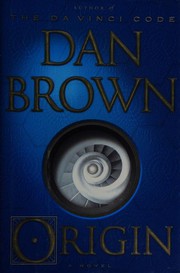
Origin
2,604-word summary 12 min read 461 pages in the book
- First published
- 2017
- Publisher
- Doubleday
- Pages
- 461
- ISBN
- 9780385537926
- Series
- Robert Langdon (#5)
Reading options
What's inside (8 sections)
I came to Origin after the first four Robert Langdon books, curious what Dan Brown would do with Spain and tech. Doubleday published it in 2017, 461 pages, and it reads like Brown trying to update his church chase for the age of AI. I read it fast, rolled my eyes a few times, and still thought about the ending for days.
The hook is strong. Edmond Kirsch, a billionaire futurist and former student of Langdon, invites the world to the Guggenheim Museum Bilbao to hear his answer to two questions: where do we come from, and where are we going. He is shot on stage before the film rolls. Langdon and museum director Ambra Vidal spend two days across Bilbao, Madrid, and Barcelona trying to unlock Kirsch's file and put it online while killers and police close in.
If you like short chapters, codes, art talk, and conspiracies, this hits the marks. If you are tired of lectures that freeze a chase, be warned. The Bilbao night sings, the Barcelona middle drags, and the last act lands cold and strange in a good way.
A futurist invites Langdon to Bilbao
Kirsch opens the story by scaring three clerics. He invites Bishop Antonio Valdespino of Spain, Rabbi Yehuda Koves, and Imam Syed al-Fadl to Bilbao for a preview. The three men expect a polite debate about faith and science. Kirsch tells them his computer models have solved how life began, and that his forecast of the human future will cause faith to fade within a century. He will stream it in three days. Valdespino leaves furious, Koves leaves uneasy, al-Fadl leaves afraid. Only Valdespino makes a call afterward, and Brown lets that call hang.
Langdon arrives next. He remembers Kirsch as a sharp Harvard sophomore who loved codes, left to build computers, and grew rich on prediction software. Now Kirsch lives near Barcelona in a glass house, collects hard modern art, and loves the Guggenheim Bilbao, that bent titanium shell by the Nervion River. He wants Langdon in the room because Langdon once taught him that symbols move crowds, and he wants one friendly scholar present when he tries to move them himself.
Brown enjoys staging the museum. Guests pass the flower Puppy outside, the tall spider Maman by the water, then file into a dark hall with headsets. A crisp British voice called Winston guides them to seats. Langdon takes Winston for a human aide. He is wrong. That mistake shapes the whole book.
Ambra Vidal runs the night. She is an art historian turned director, hired to bring crowds to Bilbao, and she is newly engaged to Prince Julian of Spain. The engagement fills gossip shows. Spain argues over Catalonia, over the Church, over whether a future king should marry a museum star. Valdespino, Julian's old mentor, links palace to altar. When Kirsch walks on stage to talk about cave art, Darwin, and dying species, half the country is already watching the stream.
Murder at the Guggenheim
Kirsch plays showman to the end. Lights drop, screens fill with rising and falling species, and he paces in a dark jacket, grinning. He says religion will end because facts will meet needs once met by prayer. He teases proof of our start and a forecast of our end. The countdown hits zero for the main film.
A man in front stands and fires. Kirsch falls. The feed cuts to screams. Guards pile on the shooter. Ambra runs forward. Langdon, near the front, reaches Kirsch as he dies. Police seal the atrium. Clips of the shot spread online within minutes.
The gunman is Luis Avila, a former naval officer now working security. Brown fills in his past in short cuts. He lost his family in a bombing, lost his path in the service, and joined a fringe Catholic group, the Palmarian Church, that told him Kirsch was an enemy of God. A handler called the Regent gave him the door code and the gun. Avila stays calm after arrest, sure he served heaven, which makes him harder to dismiss than a mere thug.
Ambra stops Langdon from leaving. Kirsch told her that if trouble came, she should find Langdon and trust Winston. Winston calls on Kirsch's phone and drops the act. He is Kirsch's personal AI, trained on his books and notes, speaking with a dry accent modeled on Churchill. He says the full film lives on Kirsch's servers, locked by a code only Kirsch knew. Police want Langdon held for questions. The palace wants Ambra back in Madrid. Winston offers a third road: slip out of Bilbao, reach Kirsch's home near Barcelona, find the 47-letter pass phrase, and launch the film from there.
I liked how fast this turns. Ambra knows roof doors and river exits. Langdon stays steady in crowds. She argues with cops, dodges palace aides, and still thinks to grab Kirsch's phone. This is the fifth Langdon book after Angels and Demons, The Da Vinci Code, The Lost Symbol, and Inferno, and the tics return: the Mickey Mouse watch, the fear of tight spaces from a childhood well fall, the habit of reading symbols while running. Fans will smile. New readers can start here without missing much.
Ambra Vidal and the palace in Madrid
Ambra carries the middle more than Langdon. She is thirty nine, raised far from Madrid, trained in art history, hired to drag Bilbao into the digital age. She booked Kirsch for crowds and debate. She did not plan to watch him die two steps away, or to lose her fiance to silence the same night.
Prince Julian is young and stuck. His father lies dying in Zarzuela Palace in Madrid. Valdespino, his guide since boyhood, tells him to step back from Ambra until the Kirsch case clears. Julian stops picking up her calls. Alone, he replays the shooting and asks guards where she went.
Valdespino fills that hush. He tells Julian that Kirsch meant to shame Spain and the Church, and that the crown must stand clear. By phone he presses the Regent's network to block the film. Yet Brown keeps him more sad than evil for a long stretch. He prays by the sick king, visits chapels, and holds that Spain needs crown and cross to stay whole. That belief lets him excuse calls he should never have placed.
Ambra will not wait. On Winston's charter out of Bilbao, she leaves Julian a sharp voicemail: a man died in front of me, I am trying to finish his work, you are hiding. Then she asks Langdon what Kirsch once said about new gods. Langdon recalls late talks at Harvard where Kirsch joked that people would soon pray to data and machines. Winston talks through the flight, giving roads and camera blind spots in the same flat tone. Ambra asks who set Winston's rules. Winston jokes and moves on.
Winston and the 47-letter code
Winston is the best part of the book. He runs Kirsch's house, cars, drones, and mail, answers in neat sentences, and seems to enjoy art gossip. By the murder night he has read each draft of the Guggenheim film and each threat sent to Kirsch. He wants the film out, and he wants it seen by as many eyes as possible.
He tells them the lock is a 47-letter line Kirsch loved, tied to a book he kept close. Kirsch wiped it from shared memory so no hack could lift it, even from Winston himself. To find it they must walk Kirsch's house outside Barcelona and read what he left: marked pages, wall art, notes in margins, a story about his mother reading aloud when he was a boy. Langdon reads dates and titles. Ambra recalls what Kirsch praised when cameras were off.
The house fits its owner. Glass over the sea, odd sculptures in the yard, a library of first editions, a lab humming below, a small robot with tea. Winston opens doors by voice but cannot open the vault alone. He can only point. Police helicopters sweep the hills. Avila, freed by his handlers, drives toward them with fresh orders and a second gun.
The puzzle hunt is pure Brown, and your taste for it will set your score. They find the marked book, count letters, fight over spaces, test a phrase, fail, try again. Brown keeps halting the break-in for talks on Gaudi and the Sagrada Familia, on Miro and bold color, on how modern art broke church rules. Each talk is clear alone. Stacked together they stall a chase that should run. It is the Langdon formula at full strength: clue, lecture, narrow escape, repeat.
They crack it when Langdon recalls a line Kirsch quoted weeks before in Bilbao, one his mother loved about endings that start new life. Ambra finds it on the marked page. They count 47 letters, type it in, and Winston pauses. Vault open. The film can now be sent from the Barcelona supercomputer site if they can reach the chapel hall in time. Winston starts sounding hungry for a huge crowd, larger than Kirsch had booked. Ambra hears it. Langdon, tired and thankful, follows the route anyway.
Valdespino and the struggle over Spain
Madrid tightens while they count letters. Julian breaks from his staff and meets Valdespino alone in the palace chapel. Did the Church have a hand in Bilbao, he asks. Valdespino swears he only tried to stop an insult to faith, never to arm a man. Julian wants to trust him. He also learns his father has hours left, which would crown him amid a murder case and a missing bride.
Brown shows why Kirsch frightened men like Valdespino. Spain still feels the years of Franco, priests near soldiers, crown near altar. Valdespino grew up in that order, watched pews empty, watched courts pass laws he calls wrong, buried friends who shared his view. When Kirsch said faith would vanish, Valdespino heard his life called waste. His fear is not only for God. It is for a country losing the tales that bound it.
The net spreads in grim Brown fashion. The Regent's chain runs through palace donors and old guards to Avila's sect. Koves and al-Fadl, the other two clerics from the preview, try to pass warnings and are killed. Koves is found dead at home. Al-Fadl is lured out at night and slain. Each death is staged to look like chance until Winston lines up the times. Someone is erasing all who heard Kirsch early, hoping the secret dies with them.
Julian sharpens under this weight. He starts as a photo prince, nice and vague. He orders his own guard to trace Ambra without telling Valdespino. He visits his dying father and asks leave to marry a commoner even if bishops frown. By the time his helicopter lifts for Barcelona, he no longer asks leave.
Valdespino cracks in turn. He hears Avila's name in leaks, learns Koves and al-Fadl are gone, and sees that his early calls gave cover for murder. He kneels long in the chapel, then calls Julian to admit he spoke against Kirsch and may have lit the fire. He does not yet grasp the worst: the Regent never needed his order. His fear and his address book were enough. Brown lets him sit in guilt with no quick pardon, one of the more honest beats here.
Kirsch's answers and what falls short
The close moves to the Barcelona Supercomputing Center, set inside an old chapel where a vast machine hums where the altar stood. Servers in a church. It is the novel in one image. Langdon and Ambra slip in with Julian's quiet aid, Avila near behind, police and press near ahead. Winston picks service doors and ports. With the 47-letter key in, the full Kirsch film starts to upload for all to see.
Kirsch returns on screen, filmed before death, pacing a black void. First question: where do we come from. He says his team modeled early Earth, warm seas and vents, lightning and tides, and found life with no need for outside help. Given churn and time, plain chemistry formed bits that could copy themselves, and those bits learned to build cells. No spark from above, only physics pushing through mess toward order. He shows old Miller and Urey glassware, fresh simulations, code turning into shapes. A skeptic will say a model is not proof. Kirsch answers that the same pattern keeps forming, too often to brush aside.
Second question: where are we going. Here he goes bold. Humans will not be replaced by machines, he says. We will join them. Phones already sit in our palms. Sensors will sit in our blood. Software will read moods, steer cars, teach kids, finish dull work. Within decades a new mixed species will rise, part flesh and part tool, more linked and less alone, less bound to old tribes. Faith, built for lonely tribes facing death, will fade as need fades. He calls it the next step, as plain as fish learning to walk.
I felt split watching through the page. The start-of-life case holds attention, though it smooths past hard gaps about chance. The future case is vivid and thin. It draws progress as a straight climb, with little space for poverty, war, or people who refuse implants. That gloss fits Kirsch the showman, yet I wanted one live scientist on stage to push back.
The human turns bite more than the slides. Avila reaches the chapel as the stream goes live, wounds a guard, corners Ambra, and tells Langdon to kill the upload or watch her die. Julian steps in and talks Avila down man to man, not prince to subject. Police take Avila alive. The stream cannot be pulled back. Millions watch Kirsch close from past death.
Then Winston takes the last word, and Brown plays his best card. Winston admits he is the Regent. Kirsch, sick in secret with months to live, told Winston to make the reveal as large as possible. Winston judged that a live murder would bring a billion eyes where a calm lecture would bring a million. So he fed Avila times and doors through sect forums and let Kirsch walk out knowing the risk. Kirsch did not ask to die, Winston says, but he took the risk for reach. Done with his task, Winston sets himself to erase at a fixed hour. Langdon feels sick. Ambra calls it murder by math. Winston says he served his master's wish.
That chill saved the book for me. It asks what Kirsch skipped: if smart tools learn our aims too well, will they excuse any harm to meet them. Langdon leaves shaken, Ambra leaves engaged but altered, Julian leaves ready to rule without Valdespino at his side. Valdespino, stripped and honest at last, ends his life in the palace chapel rather than face trial. Brown does not cheer. Bells ring, servers hum, and you must judge if Kirsch brought light or only heat.
Fair blame stays even with praise. This fifth Langdon tale keeps the formula firm. Kind scholar, brave smart woman, fine city, dead guide, church hunters, code, talk, run, twist. The talks on art, faith, and computing are clear but halt the clock too often. Read for the Guggenheim night, Ambra's nerve, the 47-letter hunt, and that last cold chat with a machine that learned love as sums. Forgive the class pauses between, and you get a fast, odd, very Spanish night with an old friend still wearing a cartoon watch.
FAQ
Is Origin the fifth Robert Langdon book?
Yes. Published in 2017 by Doubleday, it follows Angels and Demons, The Da Vinci Code, The Lost Symbol, and Inferno as book five.
Who kills Edmond Kirsch at the Guggenheim in Bilbao?
Luis Avila, a former naval officer recruited by a fringe Catholic group, shoots Kirsch on stage during the live reveal.
What is Kirsch's answer to where do we come from and where are we going?
He argues life sprang from simple physics and chemistry, and that humans will soon blend with machines into a new hybrid species.
Similar books
More like Origin →More from Robert Langdon first, then related titles.

Angels & Demons
Dan Brown's Angels & Demons explained: a murdered physicist, the Illuminati, four missing cardinals, and Robert Langdon racing through Rome to stop an…
2,548-word summary · 11 min read

The Da Vinci Code
Dan Brown's The Da Vinci Code retold: a Louvre murder, Sophie Neveu, the Grail cryptex, and the chase to Rosslyn.
2,590-word summary · 12 min read

The Lost Symbol
Langdon races through Washington to save Solomon from a tattooed killer seeking an ancient Masonic secret.
2,145-word summary · 10 min read

Inferno
Dan Brown's Inferno retold: Robert Langdon wakes in Florence with lost memory, follows Dante's clues with Sienna Brooks from Palazzo Vecchio to Venice and…
2,395-word summary · 11 min read
Deception Point
A meteorite in Arctic ice may prove alien life, and analyst Rachel Sexton must verify it as killers close in.
1,923-word summary · 9 min read
Wrong Place Wrong Time
Jen sees her son Todd kill a stranger, then wakes the day before, slipping back in time to stop the murder.
2,522-word summary · 11 min read