
Reading options
What's inside (8 sections)
An odd pairing on the cover
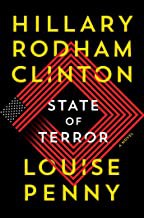
I picked this up for the unlikely pairing on the spine. Here was Hillary Rodham Clinton, the 67th secretary of state, writing a work of fiction with Louise Penny, the Canadian novelist behind the Chief Inspector Armand Gamache mysteries. The two published it in 2021, and the cover of the Simon & Schuster hardcover carries both names, so this summary credits them both, even though the clean published title is simply State of Terror, without the parentheses that some jacket designs use as a flourish. Clinton supplies the inside view of diplomacy, and Penny supplies the patience of a mystery writer who knows how to make a room full of officials feel like a room full of suspects. The result is a political thriller that reads like a cabinet meeting crossed with a whodunit.
The book was announced in February 2021 and released that October, and it arrived with a great deal of noise. It went straight to number one on the New York Times combined print and e-book and hardcover fiction lists and appeared on Publishers Weekly's bestseller lists too. I mention the noise only to set it aside, because the question worth asking about a novel with a former secretary of state's name on it is not whether the author knows the territory. She plainly does. The question is whether the story can stand as a story, and for the most part it can.
Ellen Adams says yes to the wrong job
The premise is laid out with almost no fuss. After a tumultuous period in American politics, a new administration is sworn in. The country has spent four years shrinking from the world stage, and the new president, to everyone's surprise, offers the vital position of secretary of state to a political enemy. That is Ellen Adams. She has been running a multinational media conglomerate, and taking the job means stepping down from it, which is exactly why the president wants her. The appointment silences one of his harshest critics. There is no love lost between the two, and the book takes its time letting Ellen settle into a role she did not ask for and does not especially want.
Ellen is the sort of protagonist who is routinely underestimated, sometimes for her age and sometimes because she is a woman, and the publisher's own reading guide points to that as one of the book's recurring notes. She turns that habit of being dismissed into an advantage as the plot unfolds. It is a satisfying shape for a character, though the book leans on it more than once. Her son Gil appears in the story, and a former president named Dunn has interactions with Ellen that the publisher invites readers to judge for themselves. Around her is Betsy, a close ally whose relationship with Ellen the publisher calls one of the unusual hearts of the book. I found that bond more convincing than most of the politics, and it is Penny's hand I kept feeling there.
Ellen is new to the job in every sense. She has to learn which aides to trust, how to read a briefing, and how much of what the president tells her is genuine. Clinton writes those scenes with the calm of someone who has sat in the actual room, and the detail is the book's strongest asset. A secretary of state does not simply receive bad news. She receives it through layers of people who each have a reason to soften it, and Ellen's early confusion is less a character flaw than an accurate description of the job.
Her media background is tested early. Running a multinational conglomerate has taught her how to read a room and how to be misread in one, and those skills transfer to diplomacy better than the book at first allows. The president who appointed her assumed she would be a critic silenced by a title. Instead she becomes a secretary who asks inconvenient questions, and the friction between them gives the early chapters their energy.
A text that comes too late
The machinery starts with a message. As the new president addresses Congress for the first time, with Secretary Adams present, a young foreign service officer named Anahita Dahir is sitting at the Pakistan desk at the State Department. An anonymous source sends her a text that makes no sense at first. Too late, she understands that it was a hastily coded warning. That moment, a junior officer reading a garbled message while the cameras point at the podium, is the book at its best. It is small, specific, and quietly frightening, because it captures how a warning can arrive in time and still be unread.
The attacks are reported in the clipped language of official life, which is precisely how they become unnerving. A message arrives, a briefing is updated, a call is made, and only gradually does the pattern emerge. Clinton is very good on the way a large government processes a surprise: slowly at first, then all at once, with junior officers like Anahita seeing the shape of it before their seniors do. The book's thriller machinery depends on that gap between noticing and believing.
What follows is a series of apparent terrorist attacks that throw the global order into disarray. The word apparent matters, because the book is interested in how a government reads the signals it receives when it has been out of practice. The conspiracy is designed to take advantage of an America that is out of touch with international affairs, out of practice with diplomacy, and short of power in the places where it counts. Ellen has to assemble a team to unwind it, and the publisher describes that team in three parts: a passionate young foreign service officer, a dedicated journalist, and a smart, determined, as yet untested secretary of state. Anahita is the officer. Ellen is the secretary. The journalist gives the book its street-level view of events that otherwise happen in secure rooms.
Anahita's thread is the one I would have liked to follow further. She is the youngest person in the room and the first to sense that something is wrong, and her Pakistan desk gives the novel its most concrete stakes. When the attacks begin, she is the person who can connect a coded message to a larger pattern while her seniors are still treating each event on its own. The book rewards her patience, but it also keeps her at a distance from the centers of power, which is both realistic and a little frustrating for a reader who wants her in the room.
A chessboard across three countries
The scale is deliberately international. The plot moves through the volatile politics of Pakistan, Afghanistan, and Iran, the race to develop nuclear weapons in the region, the Russian mob, and a rogue terrorist organization that is only beginning to be understood. A Russian president appears in the story, and the publisher's reading guide asks readers whether the portrayal resembles the real one. Clinton's experience shows most in these passages, not in any claim to inside knowledge of a specific leader, but in the routine of it: the cables, the briefings, the awkward gap between what an ambassador reports and what a president wants to hear.
Penny's influence shows in the pacing. Each thread arrives with a small complication rather than a grand reveal, and the reader is asked to keep track of who knew what and when. The conspiracy is an international chess game, and the book is at its strongest when Ellen and her team are trying to work out which pieces are actually on the board. It is weaker when the narrative pauses to explain the stakes in the language of a policy memo. There are stretches where the threat feels assembled from a briefing book rather than grown from character, and a few officials read as functions rather than people.
The journalist on Ellen's team gives the novel its only real contact with ordinary life. While the officials trade assessments in secure rooms, this character follows sources, checks stories, and works out what is true by talking to people who have no reason to be careful with the truth. It is the most Penny-like thread in the book, a reminder that a mystery still turns on somebody asking the right question of the wrong person.
The nuclear thread gives the story its urgency. The fear is not only that a weapon might be built but that the countries involved might misread one another while everyone is distracted. That is a genuinely Clinton-esque concern, the idea that danger comes from the gap between capabilities and understanding, and it gives the thriller a more adult shape than a simple race against a bomb. The Russian mob and the rogue organization widen the field, and at times the book carries more threads than it can comfortably hold. I found myself flipping back to remember which official had been introduced in which capital.
What the coauthors each bring
Reading the two names on the cover, I kept trying to hear the seam. Clinton's contribution is the texture of the State Department: the way a secretary is briefed, the way a president uses an appointment, the way a career officer like Anahita watches a crisis arrive before her bosses do. Penny's contribution is the shape of the puzzle and the warmth around Ellen, Betsy, and Gil. The publishers, Simon & Schuster in the United States and St. Martin's Press in the companion edition, split the book between them, which seems fitting for a novel with two authors who usually work alone.
The collaboration produced a number one bestseller, but the interesting question is whether the two voices actually blend. My answer is that they take turns. The diplomatic chapters have a cool, procedural confidence. The character chapters have the slower, kindlier rhythm of a Gamache novel, where people are rarely what they first appear to be and a conversation carries as much information as a file. That split is not a flaw exactly. It gives the book a wider range than either writer would have reached alone, though it also means the tone shifts more than a single-author thriller would.
Neither author is writing far outside her own territory. Clinton has written about diplomacy in memoirs and public life, and Penny has spent two decades building a detective and a village that readers trust. The novel asks each to stretch a little: Clinton toward plot, Penny toward politics. That is a fair description of the collaboration's ambition, and it explains why the book feels more like two books in one than a seamless blend.
State of Terror is also a spin-off of Penny's Gamache books in a quiet way. Chief Inspector Armand Gamache appears in a minor role, which is a small wink to readers of the Three Pines novels. If you came for Gamache, you will have to hunt for him. If you came for Clinton, you will find her interest in process on nearly every page. The book works best for readers who can enjoy both impulses, the puzzle and the policy, without needing one to dominate.
The nightmare at the end
I will leave the mechanism of the conspiracy mostly alone, because the publisher's own reading guide treats the biggest twist as a question for discussion and I would rather not flatten it here. What matters is that the attacks turn out to be part of a single carefully constructed plan, aimed at a government that had forgotten how to practice diplomacy. Ellen's team works the way a good investigative team should: one person notices a coded message, another follows a money trail, and the secretary has to decide what to believe with incomplete information. Anahita comes into her own, Betsy's bond with Ellen is tested, and the former president Dunn proves to be a complication rather than a convenient mentor.
Near the end there is a line about having found the next nightmare. It is a small, dry note on which to close a book about terrorism and nuclear politics, and it is the right one. The story does not end with a tidy sense that everything has been fixed. It ends with the suggestion that the next crisis is already forming, which is the honest posture for a thriller built on the idea that a country can lose its footing abroad and only notice the gap when something goes wrong.
The reading guide that publishers attach to the book is unusually candid about this. It asks readers which characters are based on real people, whether a president would really appoint an enemy, and how Ellen's gender and age shaped the way others underestimated her. Those questions are the novel's real subject, and the thriller is the container that makes them move. A political thriller written by someone who held the office is always going to be read as a roman a clef, and this one does little to resist the reading.
If you want a conventional mystery, this is not quite one, and the pacing in the middle can drag while the geopolitical pieces are being arranged. If you want a novel that takes the machinery of American foreign policy seriously enough to build a thriller out of it, it delivers. The title promises a condition of the country, and the book treats that condition as a puzzle with real people inside it, which is a more ambitious thing than its bestseller branding suggests. The nightmare line is not a cliffhanger so much as a reminder that diplomacy is a practice, and a country that stops practicing it has to learn again the hard way.
FAQ
Who wrote State of Terror?
It was co-written by Hillary Rodham Clinton and Louise Penny, and Simon & Schuster published it in 2021. The cover credits both authors, and Gamache appears in a minor role.
When was State of Terror published and how long is it?
It was published on October 12, 2021 by Simon & Schuster. The hardcover runs 320 pages with ISBN 9781982173678.
Is the title State of Terror or (State of Terror)?
The publisher and library catalogs list the clean title as State of Terror. Some jacket artwork styles the words with parentheses, but the published title has none.
Similar books
The Atlantis Gene
A geneticist and an intelligence operative chase two kidnapped boys through a global conspiracy about human evolution and a weapon built to cull humanity.
2,369-word summary · 11 min read
Zero Day
Army investigator John Puller is sent alone to a West Virginia coal town to solve a colonel's murder, and finds a much larger secret buried nearby.
3,434-word summary · 15 min read
Gone Before Goodbye
Reese Witherspoon's first novel, written with Harlan Coben, follows a bereaved surgeon whose griefbot guides her into a medical conspiracy stretching from…
2,648-word summary · 12 min read

Six Years
A professor who promised to forget the woman he loved sees her husband's obituary and discovers that the wedding, the marriage, and the woman herself may never…
2,076-word summary · 9 min read

The Camel Club
Four Washington misfits witness a murder on Roosevelt Island and stumble into a conspiracy that reaches the Oval Office, with a hostage president and a nuclear…
2,354-word summary · 10 min read
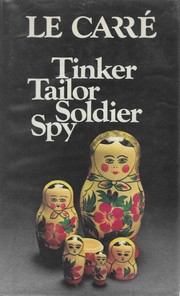
Tinker, Tailor, Soldier, Spy
Retired spymaster George Smiley is brought back to find a Soviet mole inside British intelligence, and the trail leads through old friends, old betrayals, and…
2,092-word summary · 9 min read
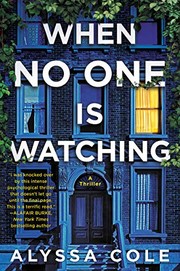
When No One Is Watching
Sydney Green watches her Brooklyn block's Black residents vanish one by one in Cole's Edgar-winning thriller about gentrification as a crime scene.
2,165-word summary · 10 min read
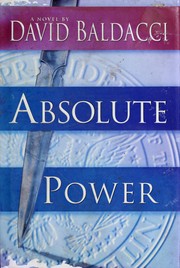
Absolute Power
A thief watches the president kill, then runs with a lawyer who believes him.
2,401-word summary · 11 min read
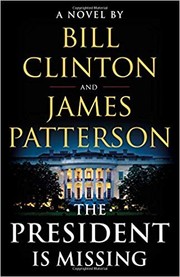
The President Is Missing
President Jonathan Duncan faces impeachment over a secret call while a virus called Dark Ages threatens to erase American data in this 2018 Clinton and…
2,324-word summary · 10 min read
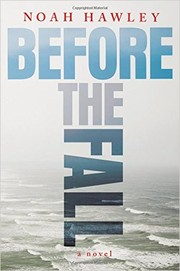
Before the Fall
A private jet falls off Martha's Vineyard. A painter and a small boy survive, then face grief and the news cycle.
2,185-word summary · 10 min read
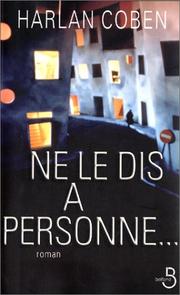
Tell No One
Harlan Coben's Tell No One fully retold: Beck, his wife's murder eight years back, a tell no one email, and a run from police. A 2001 Delacorte standalone with…
3,579-word summary · 16 min read
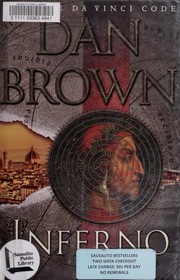
Inferno
Dan Brown's Inferno retold: Robert Langdon wakes in Florence with lost memory, follows Dante's clues with Sienna Brooks from Palazzo Vecchio to Venice and…
2,395-word summary · 11 min read
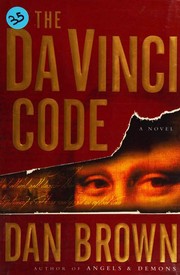
The Da Vinci Code
Dan Brown's The Da Vinci Code retold: a Louvre murder, Sophie Neveu, the Grail cryptex, and the chase to Rosslyn.
2,590-word summary · 12 min read

Angels & Demons
Dan Brown's Angels & Demons explained: a murdered physicist, the Illuminati, four missing cardinals, and Robert Langdon racing through Rome to stop an…
2,548-word summary · 11 min read

Wayward
With Ethan Burke now sheriff, Wayward Pines runs on cameras, fear and a founder's private plan, until a murder forces him to choose between order and the truth.
2,252-word summary · 10 min read

The Moonlight Child
On a cold January night, Sharon Lemke sees a child washing dishes in a neighbour's kitchen and decides she cannot ignore it.
2,169-word summary · 10 min read
The 5th Horseman
Two linked cases pull Lindsay Boxer and the Women's Murder Club into a hospital full of strange deaths and a luxury-car murder spree.
2,609-word summary · 12 min read
Make Me
Reacher drifts into a quiet Midwestern town and finds a missing investigator, a trail of killers, and a deep web secret.
2,352-word summary · 10 min read

You Are Not Alone
A lonely New Yorker witnesses a subway suicide and falls in with the dead woman's friends, where a makeover and a framed murder hide a hidden mastermind.
2,588-word summary · 12 min read
The Secret of Secrets
Robert Langdon travels to Prague with Katherine Solomon, a scientist whose work on consciousness has made her a target. A dream, a bomb and a killer called the…
2,251-word summary · 10 min read
The Running Grave
In the seventh Cormoran Strike novel, Robin goes undercover inside a Norfolk cult while Strike digs into a child's death from decades earlier.
2,615-word summary · 12 min read
The Midnight Line
A West Point class ring in a Wisconsin pawnshop sends Jack Reacher across the Midwest, from a biker's lie to a wounded veteran hiding from the opioid trade.
2,590-word summary · 12 min read
The Maid's Diary
A cleaner who snoops through her wealthy clients' lives finds a secret that could destroy them, while a detective investigates a bloody waterfront house with…
3,459-word summary · 15 min read
The Keeper of Lost Causes
Jussi Adler-Olsen introduces Carl Mørck and Department Q, a Copenhagen cold-case unit in a basement, and a missing politician whose file refuses to stay closed.
2,759-word summary · 12 min read
The Hard Way
A man Reacher sees drive a ransom-laden Mercedes pulls him into a retired colonel's hunt for his missing wife and stepdaughter.
2,637-word summary · 12 min read

The Cellar
Abducted in her small English town, sixteen-year-old Summer is locked in a cellar with three other girls. Their captor calls himself Clover and wants a perfect…
2,551-word summary · 11 min read
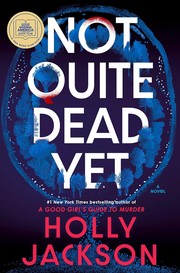
Not Quite Dead Yet
A drifting twenty-seven-year-old is told she will die within a week and decides to solve her own attempted murder instead of taking surgery with a ten percent…
2,010-word summary · 9 min read
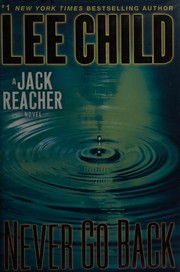
Never Go Back
Reacher returns to his old military unit to find Major Susan Turner jailed and two invented cases hiding an opium smuggling ring.
2,245-word summary · 10 min read
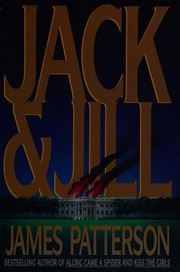
Jack & Jill
A senator is killed with a nursery-rhyme calling card as a child is murdered near Alex Cross's home. The third Alex Cross novel pulls him toward two cases, one…
2,646-word summary · 12 min read
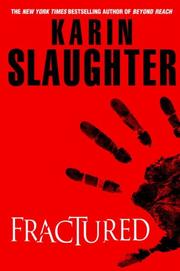
Fractured
In Karin Slaughter's second Will Trent novel, a mother kills the wrong man in an Atlanta mansion, and a GBI agent with a hidden reading difficulty finds a…
2,219-word summary · 10 min read