
Reading options
What's inside (8 sections)
A week to live
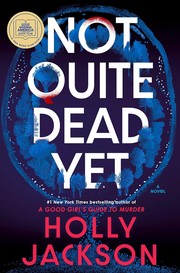
Margaret Mason, called Jet, is twenty-seven and drifting. She has dropped out of law school, left a job at a bank and moved back in with her wealthy parents in Woodstock, Vermont. She lives on the promise that she will do something with her life later. Holly Jackson's adult thriller debut begins with a woman who has been given every advantage and has not worked out what to do with any of them.
On Halloween night, while she is home alone, someone strikes her from behind. Her childhood friend Billy Finney hears the dog barking, breaks into the house and finds her. The doctors deliver a verdict that is both absurd and specific. A bone fragment is pressing against a major artery. Surgery offers a ten percent chance of survival. Without it, she will die of an aneurysm within a week.
Jet refuses the operation. Instead she decides to spend her final days solving her own attempted murder. It is a premise that could only work in a thriller, and the book knows it. The New York Times called the novel surprisingly suspenseful despite its bonkers premise, which is the most accurate short description I have seen. The reader has to accept that a woman with a weeks-long deadline and a ten percent surgical option would choose detective work over treatment. Once that leap is made, the book moves with considerable speed.
Jackson is good on the particular shape of Jet's drift. She does not come from poverty, and she has not been failed by the world in any obvious way. She has simply never had to choose anything. Law school was something she could leave. The bank job was something she could quit. Moving back to her parents' house in Vermont is less a failure than a pause that has no ending. That kind of aimlessness is hard to write without making the character insufferable, and the book solves it by giving Jet a voice with real energy. She is bored rather than sad, and her humor comes from that boredom.
The Halloween attack changes the terms of her life instantly. One moment she is a woman with no deadline. The next she has seven days. Jackson does not soften the transition with a long period of denial. Jet is frightened, then angry, then practical. The refusal of surgery is presented as a decision made in minutes, which is the only way the plot can support it.
Moving in with Billy
Jet moves in with Billy to investigate. He is the childhood friend who found her, and the arrangement gives the book its domestic base. The two of them go through her life looking for people who had a reason to want her dead, and the list is longer than either expected.
The suspects are drawn from her family and its business. Her ex-boyfriend JJ is an obvious candidate. Her brother Luke and his wife have reasons of their own. The family construction company has made enemies over the years, and any of them might have cause. The clues are the kind that a detective novel trains you to notice: a hammer from a tool set, a piece of red wig hair, a missing tea towel, her stolen phone. Jackson is careful to give each object a plausible innocent explanation before turning it into evidence.
The family construction business is more than a source of suspects. It is the novel's account of how a wealthy family holds itself together. Jet's parents have money because of the company, her brother Luke expects to inherit it, and Jack spent years positioning himself to control it. The attempted murder is not a crime of passion in any conventional sense. It is a business decision made by a man who believed he had been cheated out of what was owed to him. Jackson is interested in the way families turn money into private grievance, and she lets the construction company carry that theme without turning the book into a corporate thriller.
The clues work well in sequence. The hammer is the physical weapon, or a version of it. The red wig hair belongs to a disguise someone wore. The missing tea towel is the small domestic detail that tells Jet someone was in the house who should not have been. Her stolen phone explains how her movements were tracked. None of these is especially clever on its own, and that is a strength. The investigation feels like the work of an ordinary person noticing things, not like the performance of a gifted detective.
I liked the way the book handles Jet's voice. She is sarcastic, defensive and funny even when the situation is terrifying. The Washington Post's E. A. Aymar praised that voice while noting that her investment in solving her own murder strains credulity and that the constant quips can exasperate. Both responses seem right. Jet's humor is the book's best quality and also its most tiresome one. There are moments when a short, unironic sentence would have been more powerful than another joke.
The structure benefits from the deadline. Every chapter happens inside a week, and Jackson uses the ticking clock to justify decisions that would otherwise seem wildly impractical. Jet questions people, breaks into places and takes risks because she has nothing left to lose. The book's pacing is propulsive, as Shelf Awareness noted, and it earns that description. There is very little dead space.
The answer
The killer is Billy's father, Jack. He had a long affair with Jet's mother Dianne, and he fathered Luke. When Jack learned that Luke would not inherit the company and that Dianne had opposed his bid to become police chief, he attacked Jet to seize control. He planted the tool set in Billy's apartment to frame him. The red wig, the missing towel and the stolen phone all turn out to be parts of the same arrangement.
That resolution ties the attempted murder to the family's money and status, which is where the book has been pointing all along. Jet's privileged, directionless life was not as carefree as she thought. It was built on a history of affairs and inheritance disputes that she never asked about. Her drift is revealed to be a form of protection. If she never wanted anything, she could never be in a position to threaten anyone.
At Jet's funeral, Billy confronts Jack with what he has learned. Luke, who overheard, shoots Jack dead on the family doorstep. It is a startling ending, and it resolves the case in a way that is satisfying rather than tidy. The truth comes out, but not through a police investigation or a courtroom. It comes out through a confrontation between people who have already lost everything.
What the book is doing
Jackson is best known for the A Good Girl's Guide to Murder series, and this is her first book for adults. The move shows in the opening sections. The humor is sharper, the violence is more sudden, and the heroine's disaffection is presented without the scaffolding a young adult novel would provide. Jet is not a likable person in the conventional sense. She is privileged, evasive and often unkind. What makes her compelling is the narrowness of her escape. She has spent her life being the daughter of a wealthy family, and the only thing that makes her interesting to anyone is the possibility that someone wants her dead.
The title is a piece of black comedy. "Not quite dead yet" is what Jet tells herself, and it is also a description of her entire life. She has been going through the motions of existence without really participating. The attack forces her into a kind of intensity she has never had before. In that sense the thriller plot and the character arc are the same story. She solves the murder by finally paying attention to the people around her, which is what she should have been doing all along.
There is a good detail about the family dog. Billy hears the dog barking and comes in, which means the animal notices the attack before any of the humans do. Jackson uses that fact without making it sentimental. The dog is a mechanism in the plot and a small reminder that Jet's household contains more awareness than she realizes.
Billy deserves a word. As the childhood friend who finds Jet and then houses her during the investigation, he is given the difficult role of being both helper and suspect. The book plays with that ambiguity for a while. He was the first person at the scene. He has access to the house. He knew Jet when they were children, which gives him a history the reader cannot fully see. Jackson uses him well, and the eventual revelation about his father is more painful because the relationship between the two men has been so lightly sketched. We know enough to understand the betrayal and not enough to feel it fully.
That is a recurring issue in the book. The relationships are functional rather than developed. Jet's mother Dianne is central to the solution but barely appears as a person. Luke is a brother and then a shooter, with little in between. The book asks the reader to care about a family it has not fully built. The pace is part of the reason. There is always another clue, another interview, another weekday closer to the aneurysm.
Where it strains
The premise is the main obstacle. A reader who cannot accept that Jet would refuse surgery with a ten percent chance of survival and a week to live will not get far. Jackson does not provide a psychological explanation beyond Jet's general impulsiveness, and the book moves too quickly to supply one later. The quips compound the problem. There are scenes where a woman who has been told she is dying makes a joke, and the joke works, and then there are scenes where it feels like the author is protecting her from the gravity of her own situation.
Some of the suspects are drawn too broadly. JJ and the family's business enemies are functional figures who exist to be eliminated. The red wig is a fine clue, but the chain of reasoning that connects it to Jack depends on a coincidence that the book does not fully explain until the end. A patient reader will accept it. A reader who likes fair-play mysteries may feel shortchanged.
I also think the ending asks the reader to accept a great deal very quickly. Billy confronts Jack, Luke appears, shoots him, and the book is over. The emotional consequences are compressed into a few paragraphs. Given that the entire novel is about a woman using her last week to uncover the truth, it is odd that the aftermath gets so little space.
What I finished with
Despite those problems, I finished the book in a single sitting and would have kept reading past the end if there had been another chapter. That is the measure of a propulsive thriller. Jackson understands that the reader will forgive an implausible premise if the scenes are clean and the pace is relentless, and she writes clean, relentless scenes. The best of them are Jet's conversations with her family, where the sarcasm is at its sharpest and the information arrives as a byproduct of people failing to control what they say.
The shift to adult fiction suits her. Jet's voice is sharper than anything in the younger books, and the book is willing to leave her unpleasant. The final image of Jack shot on the family doorstep, with the truth out and nobody changed by it, is a good deal darker than a young adult version would have been. Jackson is not interested in comforting the reader. She is interested in a woman who finally has a reason to look closely at her own life, and in the people who would rather she did not.
FAQ
Is Not Quite Dead Yet Holly Jackson's first adult novel?
Yes. The British author is best known for the A Good Girl's Guide to Murder series. This 2025 thriller is her adult debut and was published by Bantam.
Why does Jet refuse surgery?
The operation offers only a ten percent chance of survival, and without it she has a week to live. She decides to use that week to find the person who attacked her, which is the premise the book asks the reader to accept.
Who attacked Jet?
Billy's father Jack, who had a long affair with Jet's mother Dianne and fathered her brother Luke. He attacked Jet after learning Luke would not inherit the company and Dianne had opposed his bid to become police chief.
Similar books

The Witness
A Chicago murder witnessed at sixteen sends a woman into hiding in the Arkansas Ozarks, where a police chief starts asking questions about her past.
2,217-word summary · 10 min read

The Anniversary
Alex Finlay's standalone revisits May 1 in a Nebraska town for ten years as two former classmates close in on the May Day Killer.
2,237-word summary · 10 min read

Worth Dying For
Reacher stops for one night in rural Nebraska and finds a family that runs the county, a missing girl and a shipment worth killing for.
2,021-word summary · 9 min read

Say You're Sorry
A widowed prosecutor defends the teenager accused of killing her babysitter, uncovering a small town's secrets and a killer hiding in plain sight.
2,116-word summary · 9 min read
The Other Mrs.
A Chicago family inherits a house on a Maine island, then a neighbor is found murdered. Kubica's 2020 thriller builds to a final reframe.
2,267-word summary · 10 min read
Listen for the Lie
Lucy Chase cannot remember the night her best friend Savvy died in Plumpton, Texas, until a true crime podcast pulls her back.
2,160-word summary · 10 min read
The Reappearance of Rachel Price
Bel films a doc when her missing mother walks back after years.
2,254-word summary · 10 min read

Kill Joy
Pip hosts a 1920s murder mystery party with her friends, solves the fake case, and feels a real scare that points toward A Good Girl's Guide to Murder.
2,537-word summary · 11 min read
Wayward
With Ethan Burke now sheriff, Wayward Pines runs on cameras, fear and a founder's private plan, until a murder forces him to choose between order and the truth.
2,252-word summary · 10 min read
The Moonlight Child
On a cold January night, Sharon Lemke sees a child washing dishes in a neighbour's kitchen and decides she cannot ignore it.
2,169-word summary · 10 min read
The Atlantis Gene
A geneticist and an intelligence operative chase two kidnapped boys through a global conspiracy about human evolution and a weapon built to cull humanity.
2,369-word summary · 11 min read
The 5th Horseman
Two linked cases pull Lindsay Boxer and the Women's Murder Club into a hospital full of strange deaths and a luxury-car murder spree.
2,609-word summary · 12 min read

State of Terror
A new secretary of state and her team unpick a web of attacks across Pakistan, Afghanistan, and Iran in this 2021 political thriller.
2,307-word summary · 10 min read
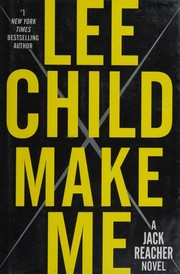
Make Me
Reacher drifts into a quiet Midwestern town and finds a missing investigator, a trail of killers, and a deep web secret.
2,352-word summary · 10 min read

Forever Odd
Six months after Stormy's death, Odd Thomas tracks a kidnapped friend to a decaying hotel and faces a cultist who wants his gift.
2,308-word summary · 10 min read
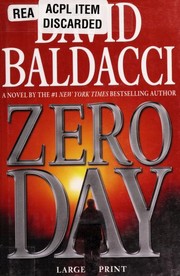
Zero Day
Army investigator John Puller is sent alone to a West Virginia coal town to solve a colonel's murder, and finds a much larger secret buried nearby.
3,434-word summary · 15 min read
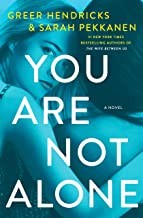
You Are Not Alone
A lonely New Yorker witnesses a subway suicide and falls in with the dead woman's friends, where a makeover and a framed murder hide a hidden mastermind.
2,588-word summary · 12 min read
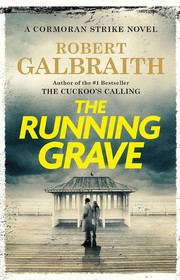
The Running Grave
In the seventh Cormoran Strike novel, Robin goes undercover inside a Norfolk cult while Strike digs into a child's death from decades earlier.
2,615-word summary · 12 min read
The Midnight Line
A West Point class ring in a Wisconsin pawnshop sends Jack Reacher across the Midwest, from a biker's lie to a wounded veteran hiding from the opioid trade.
2,590-word summary · 12 min read
The Maid's Diary
A cleaner who snoops through her wealthy clients' lives finds a secret that could destroy them, while a detective investigates a bloody waterfront house with…
3,459-word summary · 15 min read
The Keeper of Lost Causes
Jussi Adler-Olsen introduces Carl Mørck and Department Q, a Copenhagen cold-case unit in a basement, and a missing politician whose file refuses to stay closed.
2,759-word summary · 12 min read
The Hard Way
A man Reacher sees drive a ransom-laden Mercedes pulls him into a retired colonel's hunt for his missing wife and stepdaughter.
2,637-word summary · 12 min read

The Cellar
Abducted in her small English town, sixteen-year-old Summer is locked in a cellar with three other girls. Their captor calls himself Clover and wants a perfect…
2,551-word summary · 11 min read
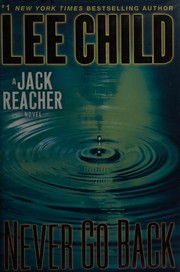
Never Go Back
Reacher returns to his old military unit to find Major Susan Turner jailed and two invented cases hiding an opium smuggling ring.
2,245-word summary · 10 min read
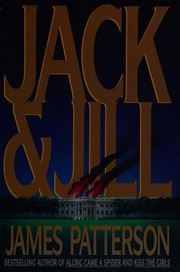
Jack & Jill
A senator is killed with a nursery-rhyme calling card as a child is murdered near Alex Cross's home. The third Alex Cross novel pulls him toward two cases, one…
2,646-word summary · 12 min read
Gone Before Goodbye
Reese Witherspoon's first novel, written with Harlan Coben, follows a bereaved surgeon whose griefbot guides her into a medical conspiracy stretching from…
2,648-word summary · 12 min read
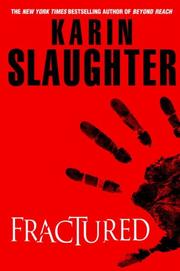
Fractured
In Karin Slaughter's second Will Trent novel, a mother kills the wrong man in an Atlanta mansion, and a GBI agent with a hidden reading difficulty finds a…
2,219-word summary · 10 min read
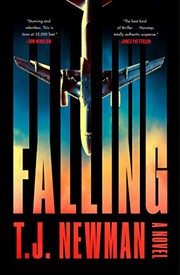
Falling
A pilot is told his family will be killed unless he crashes his Los Angeles to New York flight. Newman's debut turns one clean premise into a relentless…
2,507-word summary · 11 min read
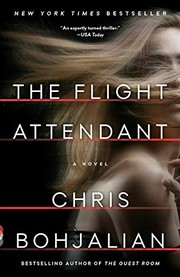
The Flight Attendant
A flight attendant wakes in a Dubai hotel beside a dead man she may have killed, and spends the rest of the novel lying to everyone who could help her.
2,496-word summary · 11 min read

What She Knew
Rachel lets her eight-year-old son run ahead in a Bristol park, and the nine-day search turns her into a suspect in the public eye.
2,952-word summary · 13 min read