
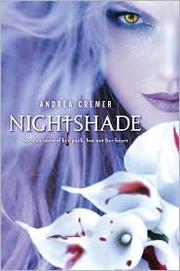
Nightshade
2,619-word summary 12 min read 454 pages in the book
- First published
- 2010
- Publisher
- Philomel Books
- Pages
- 454
- ISBN
- 9780399254826
- Series
- Nightshade (#1)
Reading options
What's inside (9 sections)
I picked this up because a friend insisted it was the werewolf book that actually had a plot, and because the cover looked like the kind of thing I used to sneak off the shelf as a teenager. What I got was a 2010 debut that reads very much like a 2010 debut: ambitious, breathless, occasionally clumsy, and hard to put down. Andrea Cremer (who now publishes as Andrea Robertson) built a whole hidden world here, then spent the rest of the book letting her heroine take it apart piece by piece.
The book arrived from Philomel Books in October 2010, the first of what became a six novel series. The copy I read runs to 454 pages in the first hardcover, which is a lot of room for a story that basically comes down to one question: what does a girl do when every choice she has ever been allowed to make has been made for her? I want to walk through how that question gets asked, because the answer the book arrives at is more interesting than the romance that gets most of the marketing.
A world built on a bargain
The first thing to understand is that the werewolves in this book are not the ones you might be expecting. They call themselves Guardians, and they were made, not born, by a race of magical beings called the Keepers. The Keepers are close to witches, though the book never uses that word neatly, and they have been fighting a long war against a group called the Searchers. The Searchers used to be Keepers themselves, until an argument centuries ago over what to do about human beings split the two sides apart. The official story is that the Searchers want to kill all humans, and that the Guardians exist to protect sacred sites from them and from any human who wanders too close.
I should flag that almost everything in the previous paragraph is what Calla has been taught, and the whole point of the novel is that the teaching is wrong. Cremer is careful to show you the rules as a teenager would know them, which means the early chapters have the flat certainty of a catechism. Humans are at the bottom of the hierarchy. Guardians serve. Keepers command. The sacred places stay secret. There is a social order here, and Calla has never had a reason to question it.
The setting does a lot of the work. Vail, Colorado, is a real place with a fancy ski town surface, and just outside it there is an exclusive high school where the two local Guardian packs send their teenagers. The Nightshades and the Banes are the two packs in town, and the tension between them is the kind of petty, packed-hallway tension that any school story recognises, except that these kids can turn into wolves and fight. One of the sacred sites is a cave called Haldis, near the hiking trails, and Calla opens the book patrolling it.
The arrangement works because Cremer gives the supernatural rules ordinary social consequences. Who sits where at lunch, who is allowed to date whom, who gets to lead, all of it flows from the pack structure. The world feels lived in because the politics are small before they are large.
Calla, Ren, and the life already chosen
Calla Tor is seventeen, blonde, golden eyed, and the alpha female of the Nightshade pack. She is also a fighter, and Cremer is careful to show her earning that rather than just announcing it. She has been raised to obey the Keepers, and she is good at it. Her parents arranged her marriage at birth. On Samhain, the night of October 31, she is supposed to be mated to Ren Laroche, the alpha male of the Bane pack, and the two of them will form a new pack made of five young werewolves from each side and guard a sacred site together.
That is the future she has been told to want, and mostly she does want it. Ren is attractive, and the arrangement is political in a way she understands. What bothers her, and I thought this was a sharp detail, is that she has never even had her first kiss, while Ren has dated what seems like half the graduating class. The unfairness of that lands harder than any speech about destiny. She is being asked to give herself to someone who has already had a great deal more freedom than she has.
Ren himself is a tangle. He is confident to the point of arrogance, possessive, and quick to jealousy, but Cremer does not write him as a villain. He cares about Calla in the way someone can care about a person they have been told they own. His mother Corinne turns out to matter later, in a way that gives him a choice of his own to make. There is a sibling too: Ansel Tor, Calla's younger brother, who is part of the Nightshade pack and one of the people she is trying to protect when her choices start putting everyone around her in danger.
The book has a reputation as a love triangle, and it is one, but I think that label sells short what is actually happening. The triangle is not really about which boy Calla likes more. It is about whether she is capable of wanting anything at all that was not assigned to her. Ren is the assigned life, solid and known. The other boy is the unknown. The real conflict is internal, and the romance is the grammar Cremer uses to write it.
The bear, the boy, and the first cracked rule
The scene that starts everything is a bear attack. Calla, patrolling near Haldis as a wolf, finds a human hiker being mauled by a grizzly. The law says to leave him. Humans are not part of the world she is supposed to protect, and revealing herself to one is forbidden. Instead she shifts, gives him her blood to heal him, and saves his life. In a sensible book this might be a small act of kindness. Here it is a crack in the whole structure, because her blood changes things.
The boy is Shay Doran. He survives, and he remembers enough to know that the girl who saved him was also the wolf he saw. Cremer could have conveniently had him dismiss it as trauma, and a lesser book probably would. Instead Shay turns up a few weeks later as a transfer student at the Mountain School. There is a moment when Calla realises the boy she broke the law for is now sitting in her classes, and that is the moment the book actually begins.
The Keepers respond by assigning Calla to protect him, which is both a punishment and a test. Shay has questions he should not have answers to. He has a cross tattoo on the back of his neck that he cannot see himself, and an uncle named Bosque Mar who turns out to be a Keeper, though Shay knew none of this before he met Calla. He is also, it emerges, the Scion, a figure in an old prophecy, and the Searchers want to get their hands on him. All of this is planted early and paid off later, which I appreciated, even if the planting is sometimes a little heavy handed.
What makes Shay work as a character is that he is genuinely curious rather than merely attractive. He is not a magic key who exists to unlock Calla's feelings. He reads forbidden books, asks why the history they are taught leaves things out, and pushes at the rules because the rules do not make sense to someone who was not raised inside them. Calla's attraction grows out of that argument as much as out of any touch.
Forbidden books and a cave with a spider
The middle of the book is an investigation. Shay shows Calla books and records the Keepers have kept out of reach, and the picture they build contradicts the history she has been taught. The Keepers are not quite the benevolent protectors she was raised to believe in. The war with the Searchers is more complicated than the official version, and the role of the Guardians is less noble than it sounds. Cremer is essentially running a conspiracy plot inside a high school supernatural romance, and for a while it works well.
The best set piece in this stretch is a trip to Haldis, the cave Calla guards. She and Shay go looking for answers and find a giant spider instead. Calla is badly hurt, and Shay, who is still human, does not run. To save his life, Calla transforms him into a Guardian by sharing her blood again. This is a big deal in the internal logic of the book: she has now made the boy she was told to stay away from into one of her own kind, and she has done it deliberately.
I have mixed feelings about how the transformation is handled. On the page it is intense and clear, and the physical stakes are real. But Cremer leans very hard on the physical charge between Calla and the two boys, to the point where a touch can drive Calla to what the book describes as uncontrollable bliss. Kirkus, reviewing in 2010, noted that the sexual tension sometimes overpowers the plot, and I think that is fair. There are passages where the mythology stops advancing and the temperature simply rises. If you are reading this for the plot, a few chapters feel like they are treading water.
Still, the investigation carries you. The clues about Shay's identity accumulate, and the approaching Samhain ceremony gives the whole thing a clock. Calla's decision is larger than which boy she loves. She is deciding whether the story she has been told about her own life is true, and that is a much better hook.
Samhain, and what the union really means
The Samhain ceremony is the hinge of the novel. Calla has been preparing for it her whole life, and the book builds it as a celebration of the two packs and their future. Shay's research reveals what it actually is: the union is a trap. The Keepers intend to use the Scion as a sacrifice, and Calla and Ren are expected to help. The girl who was raised to obey is being asked to hand over the boy she loves, and the arranged marriage was never a marriage at all in the way she imagined it.
At the ceremony Calla finds Shay restrained. Lana Flynn, a Keeper who has been posing as a nurse at the school, reveals herself as a succubus and attacks. Calla fights back, kills Flynn, and gets Shay out rather than submit. This is the point where the book stops being a story about divided loyalty and becomes a chase, and the shift is abrupt in a way I actually enjoyed. All that accumulated tension finally has somewhere to go.
Ren is sent after them, which is the moment his character earns its keep. Calla tells him what she has learned, including the truth about his mother Corinne, and he has to decide whether to follow the order he has obeyed his whole life or the people in front of him. He lets them go and creates a diversion, betraying the Keepers and putting himself at risk. It is the strongest thing Ren does in the book, and it arrives late enough that it feels earned rather than convenient.
I want to be honest about a small problem here. The mythology gets complicated fast, and Cremer sometimes explains it in blocks of dialogue that read like homework. There is a lot to keep straight: Keepers, Searchers, Guardians, the Scion, the sacred sites, the history of the schism. If you are the kind of reader who enjoys assembling a rulebook as you go, this is fine. If you want your world building to stay in the background, some of these conversations will feel like they are stopping the story to deliver information.
Rowan estate and the capture
After the escape, Calla and Shay head to Rowan estate, Shay's uncle's place, to get supplies and work out a way forward. This is where the book goes properly strange. The estate is defended by animated statues drawn out of a book, and they are attacked by a chimera and by creatures called the Fallen. Bosque Mar, Shay's uncle and a powerful Keeper, confronts them. It is a sequence that swings hard into the fantastic after a book that has spent most of its time in school hallways, and I am still not sure the tonal jump fully works.
The fight leaves Calla gravely wounded. Ethan, a Searcher, shoots her with a crossbow, and the Searchers carry both Calla and Shay away. Calla wakes in captivity, separated from her pack and from the people she was trying to protect, with no clear idea what has happened to Shay. That is where the book stops. Publishers Weekly, in its 2010 review, called the ending a cliffhanger, and it is a blunt one. The choice to defy the Keepers is resolved. Almost everything else is left open for Wolfsbane, the second book.
That kind of ending annoys some readers and delights others. I land in the middle. The emotional decision is complete, which gives the book a real ending even though the plot is suspended. But the final pages are deliberately frustrating, and if you want a story that closes its own loops, you will probably finish this one irritated.
What works and what drags
The thing I would tell a friend before handing them this book is that the world is better than the romance cliches. Cremer has built a society with rules, a history, and a hierarchy, and she lets a seventeen year old pull on the threads until the whole thing starts to come apart. Calla's central problem is not which boy she ends up with. It is the discovery that obedience and loyalty are not the same thing, and that a person can be loyal to a pack and still be wrong about what the pack is for. That is a good idea for a young adult novel, and the book treats it seriously.
The writing is uneven. There are scenes, like the bear attack and the cave, where the pace and the physical detail are excellent. There are others where the mythology is delivered in dense chunks and the love triangle turns repetitive. Kirkus called the book an imaginative paranormal suspense story whose themes of individualism and freedom lift it above its genre ingredients, and that feels exactly right to me. The LA Times, reviewing it the same month, described it as historical fiction with a modern pop culture twist, which is a stranger and less useful way to put it, though I know what they meant about the tone.
The audience matters here. This is a book for readers who like their supernatural worlds rule bound and their heroines angry at the rules. It is not for someone who wants a clean, self contained story, and the cliffhanger ending will decide a lot of whether you continue. The 454 page hardcover is not a quick read, but it moves. I finished it in a couple of evenings and went straight to the sequel, which is probably the most honest recommendation I can give. Cremer's debut is messy in specific ways, and it is also the kind of messy that makes you want to see what the author does next.
FAQ
Is Nightshade part of a series?
Yes. It is book one of Andrea Cremer's Nightshade series, followed by Wolfsbane and Bloodrose, and was first published by Philomel Books in 2010.
What are the Keepers and the Guardians?
The Keepers are magical beings who command the Guardians, the shape-shifting wolves bound to protect their sacred sites. The book slowly reveals that the history behind this arrangement is not what Calla was taught.
Does Nightshade have a self-contained ending?
Not entirely. Calla's decision to defy the Keepers is resolved, but the novel closes on a cliffhanger with Calla and Shay taken captive, setting up the sequel.
Similar books
More from Nightshade first, then related titles.
Shadowland
Ever Bloom cannot touch Damen without risking his life. As she hunts for a cure, a mysterious surfer named Jude arrives and her loyalty to Damen is tested.
2,301-word summary · 10 min read
Blue Moon
Ever Bloom tries to save her immortal boyfriend, Damen, from a mysterious illness while a new student named Roman quietly takes control of her school and her…
1,998-word summary · 9 min read
The Demon King
A thief steals an amulet once owned by a legendary sorcerer, while a princess flees a forced marriage in the first volume of Cinda Williams Chima's high…
2,371-word summary · 11 min read
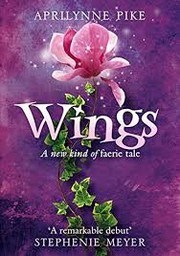
Wings
A homeschooled fifteen-year-old grows a blue flower from her back and learns she is a faerie sent to guard a hidden gate. Pike's debut makes plant lore feel…
2,506-word summary · 11 min read
Wild Magic
A thirteen-year-old orphan in the kingdom of Tortall learns to live with the gift of speaking to animals, and discovers that the creatures she loves are not…
2,056-word summary · 9 min read

White Hot Kiss
Layla is half Warden, half demon, and one kiss from her steals a soul. A demon prince warns that Hell is hunting her, and she must choose between the clan that…
2,299-word summary · 10 min read
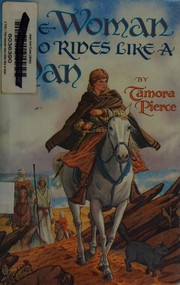
The Woman Who Rides Like a Man
Newly knighted, Alanna heads south into Tortall's desert, where a broken sword and a dead shaman leave her responsible for a rebel tribe and three Gifted…
2,894-word summary · 13 min read
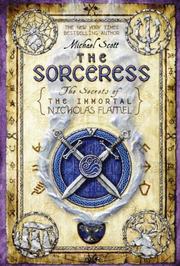
The Sorceress
Flamel takes the twins to London to find Gilgamesh, while Perenelle fights for her life on Alcatraz and an older threat wakes.
2,684-word summary · 12 min read
The Golden Enclaves
The Scholomance trilogy closes as El Higgins hunts the monsters beneath every enclave, tries to reach the boy trapped inside one, and learns what her world's…
2,564-word summary · 11 min read
The Girl of Fire and Thorns
Rae Carson's debut follows Elisa, an insecure princess born with a godstone in her navel, who is married to a foreign king and must grow into the leader a…
2,331-word summary · 10 min read
The Darkest Part of the Forest
In a town built around a sleeping horned boy in a glass coffin, a girl discovers she has been spending her nights as a faerie king's knight and remembers none…
2,012-word summary · 9 min read
Oathbound
Bree Matthews has exiled herself from the Legendborn Order to protect the people she loves, but an unbreakable bargain with a shapeshifting demon has bound her…
2,751-word summary · 12 min read
Nightbane
Isla Crown has thirty days to defend Lightlark after Grim threatens to destroy it, while memories of the year she spent with him return.
2,353-word summary · 10 min read

Magic Study
Sentenced to die in Ixia, Yelena returns to the land she was stolen from to learn the magic that made her an outlaw.
2,542-word summary · 11 min read
Beauty: A Retelling of the Story of Beauty and the Beast
Robin McKinley's debut retells Beauty and the Beast through a plain, book-loving girl whose nightly refusals of the Beast's proposals slowly become something…
2,100-word summary · 9 min read
The Paper Magician
A graduate magician is assigned to paper magic instead of metal, then must face a woman who tears out her mentor's heart.
2,454-word summary · 11 min read
Six Crimson Cranes
A princess who loses her voice when a curse turns her six brothers into cranes must work in secret, trust a dragon, and speak a name she does not know.
2,214-word summary · 10 min read
Ptolemy's Gate
Nathaniel and a weakened Bartimaeus face a possession plot in Stroud's dark final Bartimaeus novel.
2,328-word summary · 10 min read
Keeper of the Lost Cities
A twelve-year-old telepath leaves her human family for a hidden world of elves, where her powers and manufactured origins make her the target of a dangerous…
2,443-word summary · 11 min read
A Hunger Like No Other
Kresley Cole's 2006 paranormal romance pairs a Lycan freed after a thousand years of Fae captivity with a Valkyrie who has no wish to be claimed.
2,539-word summary · 11 min read

Inkdeath
The final Inkworld novel sends Mo into the land of the dead, leaves Meggie choosing between two boys, and ends the Adderhead's immortality with three written…
2,062-word summary · 9 min read
Lioness Rampant
Alanna searches for the Dominion Jewel with the Shang Dragon, then returns to Tortall to face Duke Roger at Jonathan's coronation.
2,478-word summary · 11 min read

The Siren
Saved from a shipwreck in 1930, Kahlen becomes a siren who sings men to their deaths for the Ocean, until a boy in a college library makes her want a life she…
2,369-word summary · 11 min read
The Golem's Eye
Two years after The Amulet of Samarkand, Nathaniel is a rising bureaucrat, Bartimaeus is his unwilling servant again, and something made of clay is tearing…
2,299-word summary · 10 min read

The Rose & the Dagger
Shahrzad is pulled from her Caliph husband and left in a desert camp of rebels, needing to break his curse and end a war before it ends her.
2,520-word summary · 11 min read
The Queen of the Tearling
Nineteen-year-old Kelsea leaves the woods to take her throne, ends a shipment of human captives, and draws the Red Queen's revenge.
2,357-word summary · 10 min read

We Hunt the Flame
In a fractured Arabia-inspired world, a disguised huntress and a prince-assassin race to find a magic-restoring book and confront an ancient evil.
2,195-word summary · 10 min read
The Magician
Sophie and Josh flee to Paris with Nicholas Flamel, where John Dee, Machiavelli, and an awakened god close in on the missing pages of the Codex.
2,162-word summary · 10 min read
The Hazel Wood
Alice Proserpine has spent her life running from bad luck. When her mother vanishes, she follows a trail of fairy-tale clues to her grandmother's estate and…
2,064-word summary · 9 min read
In the Hand of the Goddess
Alanna, still disguised as a boy, survives war, court plots, and a death duel as the Goddess's chosen warrior in the second Song of the Lioness book.
2,018-word summary · 9 min read