
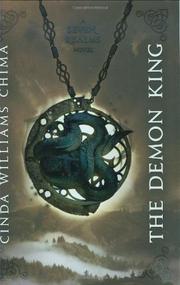
The Demon King
2,371-word summary 11 min read 506 pages in the book
- First published
- 2009
- Publisher
- Hyperion Books
- Pages
- 506
- ISBN
- 9781423118237
- Series
- Seven Realms (#1)
Reading options
What's inside (8 sections)
I picked this one up on a wet Saturday expecting a familiar sort of story: a young person discovers a hidden talent, gets packed off to a magical academy, and learns to wield power under the watchful eye of a kindly teacher. That is roughly where the book ends up, but it is not remotely where it starts. The first hundred pages of The Demon King read more like a street crime novel than a fantasy. There are muggings, gang grudges, a corrupt magic trade, and a sixteen-year-old who makes his living stealing from people foolish enough to walk the wrong streets after dark. Cinda Williams Chima published this in 2009 through Hyperion Books as the opening volume of her Seven Realms series, and the first American hardcover runs 506 pages. It is a big book that spends a long time on the ground before it ever looks up at the sky.
A burned mountain and a stolen amulet
The story opens with Han Alister, who used to lead a gang called the Raggers and now goes by the name Cuffs because of the pair of silver bracelets he has worn since birth. He has quit the gang to keep his younger sister safe and is trying to live honestly, which in this city means delivering packages for a shady middleman and stealing when the opportunity presents itself. Out hunting with his clan brother Fire Dancer, Han runs into three young wizards who have set fire to the sacred mountain of Hanalea. They are burning it so that Princess Raisa and her mother can hunt upland deer, an excuse that sounds like privilege dressed up as tradition. One of the wizards is Micah Bayar, son of the High Wizard, and Han takes his amulet in the confrontation that follows.
That amulet is the engine of almost everything to come. Han does not know it at first, but it once belonged to the Demon King, the sorcerer who nearly destroyed the world a thousand years ago. The wizards want it back badly enough to kill, and Han suddenly finds himself at the center of a chase he does not understand. He is framed for murders he did not commit, and the people hunting him are not street thieves but the most powerful magical family in the Queendom of the Fells. The amulet also holds a passenger: a mysterious figure called Crow is sealed inside it, and Crow starts teaching Han the old magic. It is a neat trick, because Han's silver cuffs have been draining his own power since he was a child. He has been living his whole life as a person who cannot access what is actually his.
The early chapters move fast. Chima writes Han as a character with a face for every situation, a former gang kid who can turn charming in a heartbeat when it suits him. That quality gets him into trouble as often as it gets him out. The violence in this section is sudden and ugly, and the book does not soften the fact that Han's choices have consequences for the people around him. When his mother and sister are caught in a standoff with Lord Bayar, the results are devastating. I found this stretch grim enough that I had to remind myself I was reading a book marketed to teenagers. The stakes are real, and Chima does not pull the usual punches about children being protected by the plot.
The princess who would rather be anywhere else
The second main thread belongs to Raisa ana'Marianna, the heir to the Gray Wolf Throne. She has spent three years away from court with her father's family at Demonai Camp, riding and hunting and working the clan markets. Being dragged back to Fellsmarch means learning the manners of a court that does not much care what she thinks. Her mother, Queen Marianna, favors Raisa's younger sister Mellony, and the feeling of being the unwanted daughter shapes nearly every scene Raisa has at home. The queen is arranging a marriage between Raisa and Micah Bayar, the same wizard whose amulet Han has taken. The marriage would break an old law banning a queen from wedding a wizard consort, but the Wizard Council is powerful enough to bend the rule.
Raisa is sixteen, stubborn, quick to anger, and far more interested in justice than in etiquette. Chima gives her a moment early on where she starts a prison escape to free tortured Raggers, which tells you almost everything about her. She says naive things to Han at first, like promising him a fair trial if he gives himself up, because she has grown up assuming the law means what it says. Over the course of the novel she learns how wrong that is, and the education is one of the better things in the book. Her mother and the Bayars treat her as a piece on a board. Her best friend, Amon Byrne, the captain of her guard, wants only to keep her safe, and his caution irritates her precisely because she cannot stand being managed.
When Raisa refuses the marriage, she leaves. She ends up at Oden's Ford, home of the finest academy in the Queendom of the Fells and well beyond it, under the name Rebecca Morley. Amon goes with her, and so do the gray wolves she has bonded with. This is the point where the two halves of the book start sliding toward each other. Han, meanwhile, has been told by the clans that he is descended from the Demon King himself, that the cuffs on his wrists suppressed a real talent, and that if he wants to survive the Bayars he needs to learn how to use it. So he agrees to travel to Oden's Ford and enroll at Mystwerk, the wizard university there. Both teenagers arrive at the same school under false names and with secrets they would kill to keep.
Where the two roads meet
The convergence is the payoff the whole first half has been building toward, and Chima handles the timing well enough. Raisa, calling herself Rebecca, meets Han at Oden's Ford, and he knows her only by that false name. Their first interactions are prickly and funny, with neither willing to admit who they are. The romance that develops across the series starts here as mutual suspicion rather than instant attraction, which made it easier for me to believe. They are both displaced people, both lying about their origins, and both trying to work out what loyalty means when your family has failed you.
The academy setting also lets Chima expand the magic system. At Mystwerk, magic is taught, ranked, and politically managed. The Bayars have their fingers in it, and the tension between the clans and the wizards becomes the book's central conflict rather than a background grudge. Crow continues to instruct Han from inside the amulet, teaching him an older and rougher kind of power than anything the school offers. That juxtaposition is the most interesting idea in the novel. Han is learning two conflicting lessons at once: the formal, careful magic of the academy and the dangerous, ancient magic of the man sealed in his amulet. Which one he trusts says a lot about who he is becoming.
The book's title refers, of course, to the Demon King of legend, but it is also about inheritance. Han has to decide whether being descended from a monster makes him one. Raisa has to decide whether being born to a throne makes her a ruler. Neither answer comes easily, and the book is at its best when it lets them be frightened of what they are supposed to become. The Gray Wolf Throne is not a prize in this story. It is a trap with a pretty name, and Raisa's whole arc is about working out whether she wants to sit in it or break it.
The Bayars, the Council, and the politics of fear
I want to say more about the villains, because this is where the book's world building pays off. Gavan Bayar is the High Wizard, a man whose authority reaches into the court itself. His son Micah is the handsome, ambitious wizard who started the fire on Hanalea and who has been told to take Raisa as a bride. Micah's sister Fiona is another piece on the board, and the family's reach is long enough that even Han's own clan history is tangled up with it. Micah is related to Fire Dancer, Han's clan brother, because Gavan Bayar seduced Fire Dancer's mother years ago. That kind of knot is all over this book, and it is what makes the politics feel personal rather than abstract.
The law against a queen marrying a wizard consort is not a piece of trivia. It comes from the Naèming, the ceremony performed by Queen Hanalea to save the world from the Demon King during the Breaking. Raisa's mother is trying to push through a marriage that would undo a thousand years of settled rule, and the Wizard Council is strong enough to make the attempt. Chima does not stop the plot to give a history lecture, but enough of the old story leaks into the present to explain why everybody is so frightened. The wizards want the amulet because of what it was, and they want Raisa because of what she is. Both wants are really the same want: control of the power that nearly destroyed the world once before.
Mellony, Raisa's younger sister, is the other casualty of this arrangement. She is bubbly and trusting where Raisa is prickly, and she has fallen in love with Micah, which makes her easy for the Bayars to use. When Raisa warns her that their mother planned to force the marriage, Mellony refuses to believe it, because believing it would mean facing what their mother is. I found this subplot more painful than the open fights. The cost of the court's scheming is measured in what it does to a girl who only wants to be loved, and Chima lets that sit without commentary.
What works, and what drags
I liked the voices. Han's chapters have a clipped, slangy energy, while Raisa's carry the fussier rhythm of someone who has been trained to watch her words. Chima is good at small, physical details: the weight of the amulet, the fit of a borrowed coat, the way a room goes quiet when a wizard enters. The world is built out of these details rather than out of long history lessons, which is why the world feels lived in even when the plot is doing something improbable.
The criticism I would make is that the first half asks the reader to hold a lot of names and grudges in their head before the two storylines finally touch. Clans, camps, court titles, and local politics arrive in a rush, and if you like a book that explains its world up front, the first hundred pages may feel like being dropped into a conversation already in progress. There are also a few conveniences that stretched my belief, from the timing of certain discoveries to the way some characters seem to appear exactly when the plot needs them. The magic has rules, but Chima reveals them in fragments, so the reader is often trying to work out the boundaries while the characters are already breaking them.
None of that ruins the book, but it does mean the opening volume is more of a foundation than a finished story. The actual collision between Han and Raisa arrives late, and the book ends with more questions than answers about the Wizard Council, the Bayars, and what Crow really wants. If you want a self-contained adventure that ties everything up in one sitting, this will frustrate you. It is the first door in a four-book arc, and it is written with the assumption that you will walk through the next one.
The older magic and the person underneath
One of the things I keep coming back to is how the book treats power as something that can be taken. Han's cuffs are not a metaphor anyone spells out, but they do the work of one. He has been robbed of his own nature by people who decided it was safer that way, and his journey is partly about finding out who he might have been if they had not. Crow's lessons are not gentle. The old magic is rougher and more expensive than the tidy spells taught at Mystwerk, and Han's willingness to use it is what makes the other characters nervous, including the ones who like him.
Raisa's version of the same problem is her name. She goes by Rebecca because who she really is would put her in immediate danger, and the longer she keeps it up the more she has to think about what the name actually obliges her to do. I found her sections quieter than Han's but more satisfying in retrospect. She is the one who has to make the harder choice at court, while Han mostly has to survive. The book gives both of them room to be young and angry and occasionally stupid, which is a relief after so many heroes who seem born knowing exactly what is right.
By the last chapters, the pieces are in place for the rest of the series. Han has a target on his back and a teacher inside an amulet. Raisa has a throne she does not want and a mother who would hand her to the Bayars to keep the peace. The two of them have found each other in a place where neither belongs, and the book closes with the sense that the real story is only beginning. That is a legitimate way to end a first volume, provided the reader is willing to keep going. I was. The mix of street-level cunning and large magical stakes worked for me more often than it did not, and Chima's willingness to let her heroes make genuine mistakes gave the whole thing a weight that a simpler fantasy would have lacked.
FAQ
Is The Demon King a good place to start the Seven Realms series?
Yes. Published in 2009, it is the first of four novels in the series and introduces Han Alister and Raisa ana'Marianna before their stories converge.
Is this a standalone fantasy or part of a larger story?
It is the opening volume of a four-book arc, followed by The Exiled Queen, The Gray Wolf Throne, and The Crimson Crown. The ending leaves several conflicts deliberately unresolved.
What exactly is the amulet that Han steals?
It once belonged to the Demon King, an ancient sorcerer who nearly destroyed the world. A figure named Crow is sealed inside it and begins teaching Han an older form of magic.
Similar books
More from Seven Realms first, then related titles.
The Magician's Land
Exiled from Fillory, Quentin takes a teaching job at Brakebills, joins a crew of magical thieves, and must help rebuild a dying world to finish the trilogy.
2,204-word summary · 10 min read
The Woman Who Rides Like a Man
Newly knighted, Alanna heads south into Tortall's desert, where a broken sword and a dead shaman leave her responsible for a rebel tribe and three Gifted…
2,894-word summary · 13 min read
The Sorceress
Flamel takes the twins to London to find Gilgamesh, while Perenelle fights for her life on Alcatraz and an older threat wakes.
2,684-word summary · 12 min read
The Golden Enclaves
The Scholomance trilogy closes as El Higgins hunts the monsters beneath every enclave, tries to reach the boy trapped inside one, and learns what her world's…
2,564-word summary · 11 min read
The Girl of Fire and Thorns
Rae Carson's debut follows Elisa, an insecure princess born with a godstone in her navel, who is married to a foreign king and must grow into the leader a…
2,331-word summary · 10 min read

Magic Study
Sentenced to die in Ixia, Yelena returns to the land she was stolen from to learn the magic that made her an outlaw.
2,542-word summary · 11 min read
Ptolemy's Gate
Nathaniel and a weakened Bartimaeus face a possession plot in Stroud's dark final Bartimaeus novel.
2,328-word summary · 10 min read

Inkdeath
The final Inkworld novel sends Mo into the land of the dead, leaves Meggie choosing between two boys, and ends the Adderhead's immortality with three written…
2,062-word summary · 9 min read

Lioness Rampant
Alanna searches for the Dominion Jewel with the Shang Dragon, then returns to Tortall to face Duke Roger at Jonathan's coronation.
2,478-word summary · 11 min read

The Golem's Eye
Two years after The Amulet of Samarkand, Nathaniel is a rising bureaucrat, Bartimaeus is his unwilling servant again, and something made of clay is tearing…
2,299-word summary · 10 min read

The Rose & the Dagger
Shahrzad is pulled from her Caliph husband and left in a desert camp of rebels, needing to break his curse and end a war before it ends her.
2,520-word summary · 11 min read

The Queen of the Tearling
Nineteen-year-old Kelsea leaves the woods to take her throne, ends a shipment of human captives, and draws the Red Queen's revenge.
2,357-word summary · 10 min read

We Hunt the Flame
In a fractured Arabia-inspired world, a disguised huntress and a prince-assassin race to find a magic-restoring book and confront an ancient evil.
2,195-word summary · 10 min read
The Magician
Sophie and Josh flee to Paris with Nicholas Flamel, where John Dee, Machiavelli, and an awakened god close in on the missing pages of the Codex.
2,162-word summary · 10 min read
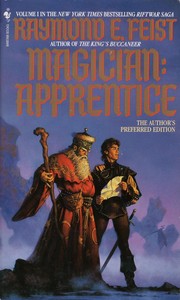
Magician: Apprentice
An orphan kitchen boy and a smith's son grow up in a frontier castle just as invaders from another world open a rift and begin a war that will change both of…
2,114-word summary · 9 min read
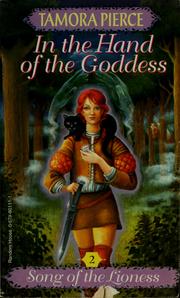
In the Hand of the Goddess
Alanna, still disguised as a boy, survives war, court plots, and a death duel as the Goddess's chosen warrior in the second Song of the Lioness book.
2,018-word summary · 9 min read
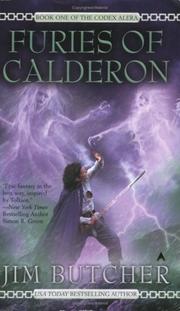
Furies of Calderon
Furyless Tavi defends Calderon Valley when the Marat return and lords scheme.
2,587-word summary · 11 min read

A Winter's Promise
Ophelia reads objects and is sent to marry Thorn on a cold ark.
2,502-word summary · 11 min read
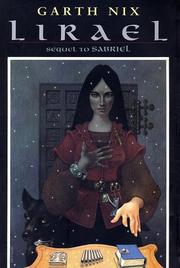
Lirael
A Sightless Clayr girl and a prince afraid of Death join the Dog and Mogget to stop necromancers from waking the Destroyer Orannis at the Red Lake while old…
2,692-word summary · 12 min read
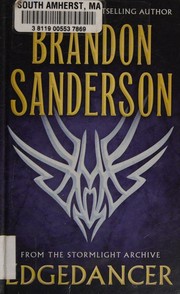
Edgedancer
Hungry street thief Lift and her vine-like friend Wyndle cross the Herald Nale in Tashikk when a child emperor shows Radiant signs and she refuses to step…
2,328-word summary · 10 min read
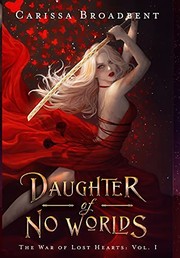
Daughter of No Worlds
A former slave with rare magic hires exiled warrior Max to train her for a daring rescue, sparking slow burn love and wider war in this big 520-page fantasy…
2,529-word summary · 11 min read
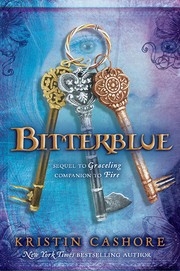
Bitterblue
Eighteen-year-old Queen Bitterblue sneaks out to learn why Monsea still suffers after Leck, facing court lies, ciphers, and trials in Cashore's rich third…
2,686-word summary · 12 min read
The Tombs of Atuan
Priestess Arha guards dark Tombs until wizard Ged comes to steal back ring.
2,043-word summary · 9 min read

The Amulet of Samarkand
Boy magician Nathaniel summons djinn Bartimaeus to steal the Amulet and stop Lovelace's coup in London.
2,350-word summary · 10 min read
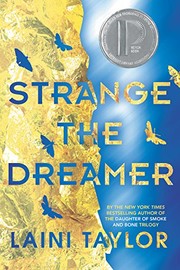
Strange the Dreamer
Orphan librarian Lazlo Strange joins a quest to the lost city of Weep, where blue-skinned godspawn haunt dreams.
2,221-word summary · 10 min read
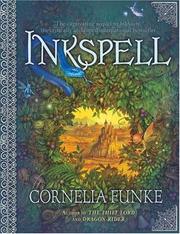
Inkspell
Meggie and Farid read themselves into the Inkworld, where Mo is wanted as the Bluejay and words can wound.
2,406-word summary · 11 min read
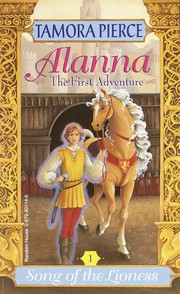
Alanna: The First Adventure
Twins swap roles so Alanna trains as boy page Alan for knighthood while Thom studies sorcery.
2,107-word summary · 9 min read
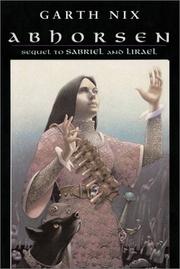
Abhorsen
Lirael as Abhorsen-in-Waiting must bind the Destroyer Orannis with Sam, Dog, and Mogget.
2,214-word summary · 10 min read
The Alchemyst
Twins Sophie and Josh learn their boss is Flamel as Dee steals the Codex minus two pages.
2,085-word summary · 9 min read

Poison Study
Sentenced to die, Yelena becomes the Commander's poison taster and learns survival in Ixia has a daily price.
2,501-word summary · 11 min read