
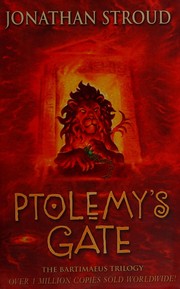
Ptolemy's Gate
2,328-word summary 10 min read 515 pages in the book
- First published
- 2005
- Publisher
- Doubleday
- Pages
- 515
- ISBN
- 9780385606165
- Series
- Bartimaeus (#3)
Reading options
What's inside (10 sections)
I picked this up because I wanted to see how Stroud closed the Bartimaeus trilogy after the amulet and the golem. Published in Britain by Doubleday in September 2005, the first hardback runs 515 pages, and it is a far grimmer book than the caper I expected. The story is set in an alternate London of roughly 2005, three years after the previous book, and it assumes the reader knows what a binding costs. The footnotes are still funny, but the jokes sit beside a story about propaganda, occupation, and a boy who discovers that freeing someone he loves might cost him his life.
The magician who asked a demon questions
The title refers to an experiment from two thousand years before the main story. In flashbacks threaded through the chapters, an Egyptian magician named Ptolemy summons the djinn Bartimaeus in 126 BCE. Most magicians in this world call up spirits to build walls, win battles, or intimidate their neighbors. Ptolemy wants an interview. He is writing a book about the Other Place, the dimension where spirits come from, and he hopes to narrow the gap between humans and the beings they bind. That makes him a strange figure in his own society, and it makes him the moral ancestor of everything that follows.
Bartimaeus arrives expecting the usual orders and finds a magician who asks about his home instead. The djinn is wary at first, then drawn in by a question nobody else has bothered to put to him. Ptolemy's cousin, an arrogant and paranoid heir to the throne, sends assassins, and the surprising thing is who protects whom. Bartimaeus, bound and centuries old, becomes the guardian of the fragile human who called him up. He proves as useful with a blade or a disguise as any court magician, and his long memory gives the flashbacks their authority.
Ptolemy then does something no one else in this history thinks to attempt. He designs and tests a reverse summoning, a doorway that lets a person's essence pass into the Other Place. The experiment is meant as proof of trust, a way of showing Bartimaeus that a human can enter the spirit world without trying to own it. The trial leaves Ptolemy severely weakened. When Roman magicians hired by his cousin corner the pair in a catacomb, surrounded by more djinn than either could fight, Ptolemy's last act is to dismiss Bartimaeus back to the Other Place before the assassins close in. He dies knowing that the demon he summoned is free.
That dismissal is the hinge of the novel. Stroud plants it early and keeps measuring the present against it, asking whether anyone in power ever lets a servant go without a fight.
Three years later, Nathaniel is the establishment
The main story opens about three years after the events of The Golem's Eye, in an alternate London where magicians form the ruling class and use summoned spirits to control a non-magical population. Nathaniel, who still goes by John Mandrake in official circles, now works for the government. His portfolio is propaganda: keeping commoners distracted from wars overseas and smoothing over unrest at home. He is famous, well dressed, and deeply unhappy. The boy who once wanted to prove himself has quietly become the man he used to resent, which is a harder thing for a children's book to admit than a simple fall from grace.
Bartimaeus is in worse shape. Years of continuous service have worn him thin, and Mandrake treats him poorly, partly from the habit of command and partly from fear. He refuses to dismiss the djinn because he does not want another magician to learn his birth name, the one thing that gives a magician power over him. That single secret keeps an ancient being trapped in a servitude that is slowly erasing him. The footnotes still crackle with insults about modern magic and bad Latin, but there is exhaustion under the wit now, and that change gives the book its weight. A demon who once mocked empires from a safe distance is now too tired to leave the room.
Against them stands Kitty Jones, a former resistance member who has begun studying magic under an independent teacher. She wants to understand why the arrangement keeps repeating itself: magicians rise, oppress ordinary people, and are eventually overthrown by the next group. Kitty is not interested in swapping one set of rulers for another. She gives the novel a second moral center, because she has every reason to hate Nathaniel and slowly learns to see the person behind the official title. Her skepticism about heroes keeps the book honest when Nathaniel's guilt threatens to become self-indulgent.
Mandrake tries to get a weapon
A large part of the middle follows Nathaniel's frustration with his own government. He wants Prime Minister Rupert Deveraux to authorize the use of Gladstone's staff, a magical weapon that holds several powerful spirits, to help with a war abroad that is going badly and with the unrest at home. Deveraux is paranoid and distractible, and he refuses because he is afraid of being overthrown. The scene is funny in the way Stroud's bureaucracy is always funny, with ministers guarding their chairs more carefully than their country, but it is also bleak. The people who hold power are too frightened to use it well, and the people who could use it are not trusted.
Disillusioned, Nathaniel seeks out his old art teacher, Ms. Lutyens, hoping to thank her for kindness she showed him as a child. She rebukes him coldly and criticizes the man he has become. It is one of the sharpest scenes in the book because he expects warmth and gets a mirror. He cannot even claim that he was forced into his choices, and the scene refuses to let him. When he learns that Kitty Jones is still alive, he tries to apprehend her himself, only to be interrupted by a summons from Quentin Makepeace, an influential theatre director who insists that Kitty join him. The summons reads like a favor to a promising young actress. It is actually the moment the conspiracy steps into the light.
Makepeace is an inspired choice of villain. He understands that theatre and government are both performances, and he has spent years using the coups of Lovelace and Duvall as rehearsals. Stroud lets him speak in the polished phrases of a man who has never had to clean up after a trick, and the politeness makes the threat worse.
The conspiracy that eats its own organizers
Bartimaeus is tasked with investigating a plot among low-level government members. He tracks the conspirators, including a mild-mannered librarian named Hopkins and a bearded mercenary who is resistant to magic and once worked for Simon Lovelace and Henry Duvall. Bartimaeus and several other djinn are sent to capture Hopkins for interrogation. They find that Hopkins has been possessed by the demon Faquarl, who kills the other djinn and traps Bartimaeus, leaving him for dead. The scene strips away the comedy. Spirits in this series can be hurt, and the ones who serve the government are disposable to the people above them.
The plot is masterminded by Makepeace, who had Hopkins developing a method of merging humans with spirits. Makepeace and his followers capture the senior members of government and possess themselves with demons, expecting to control the result. Instead the spirits, acting on Faquarl's orders, overwhelm their hosts and create an army of hybrids led by an ancient demon named Nouda. Stroud's villains keep making the same mistake across three books: they assume that a force they have summoned will stay obedient because they were clever enough to summon it. The hybrids are not puppets. They are the suppressed majority of this world finally holding the levers, and the horror on the faces of the ministers is the point.
There is a grim pleasure in watching the government that spent three hundred pages filing possession paperwork get possessed by its own paperwork. Stroud never lets the satire become a lecture. He simply shows the same officials who signed the orders now unable to give them.
Nouda's unexpected mercy
When Mandrake tries to summon his djinn, only Bartimaeus answers. Nouda, the ancient demon leading the hybrids, takes pity on the weakened spirit and his long servitude. He lets Bartimaeus be dismissed and grants his request that Mandrake and Kitty be spared. It is a strange reversal. The most frightening creature in the book shows a kindness that the magicians, with all their rules and ceremonies, rarely extend to anyone. Nouda has no reason to be generous and gains nothing by it, which makes the gesture more convincing than any speech about brotherhood would have been.
As London falls to the hybrids, Mandrake and Kitty escape together, which is the first time the novel puts them on the same side without a bargain binding them. They argue, and neither fully trusts the other, but the argument has changed texture. They are no longer a master giving orders and a servant taking them. Kitty has learned about Ptolemy's Gate and journeys to the Other Place to persuade Bartimaeus to come back. That return is the emotional center of the ending. Bartimaeus goes back not because a magician ordered him but because a human being asked, and because Ptolemy's old experiment suggests that the gap between the two kinds of being might be bridged from both directions.
Sharing a body with a djinn
The final battle rests on an arrangement no magician in this history has attempted. Bartimaeus and Mandrake share Nathaniel's body, which lets them wield Gladstone's staff and fight the hybrids as partners rather than as master and servant. It is a clever solution to a problem the series has been building since the first book: the magic is powerful, but the relationship that powers it is corrupt. For a few chapters the corruption lifts. They destroy many of the possessed rebels, including Faquarl, and the prose picks up speed as the two voices argue and cooperate inside one skin. Some of the best lines arrive in the middle of a fight, when Bartimaeus critiques Nathaniel's form even as he saves it.
Nouda cannot be beaten by ordinary force. Mandrake realizes that the only way to destroy him is to release the full power of the staff, and at the critical moment he dismisses Bartimaeus, mirroring Ptolemy's sacrifice in the catacomb. The explosion kills Nouda and Nathaniel. A boy who spent three years hiding his name ends by giving up his life, and the djinn he once enslaved is the one who survives to tell it. Kitty declines a position in the new government and leaves England to recover from the lasting effects of her journey to the Other Place. Her refusal is small and firm, and it is the only ending the book could honestly give her.
Why the footnotes still matter
Bartimaeus tells parts of the story in his own voice, and the footnotes he appends to Nathaniel's chapters are where the trilogy's argument lives. In the earlier books the notes were mostly jokes at the expense of magicians and their pretensions. Here they carry grief. A spirit who has watched empires rise and fall now writes from inside a body that is failing him, and the asides about bad Latin and worse masters have a hard edge underneath. My favorite running gag is his contempt for the way modern magicians pronounce the old summoning words, which is funny until you realize he is the only one left who remembers how they sounded.
The structure asks something of the reader. The footnotes often know more than the main narrative, and Bartimaeus will contradict Nathaniel's account of a scene in a few lines of small print. That makes the notes a record kept by the powerless, a version of events that an official history would leave out. Stroud is teaching a kind of skepticism without ever naming it. When a government in the story writes the news that Nathaniel is paid to distribute, the reader already knows to check the margins.
The notes also keep the tone buoyant. The middle chapters have possession, a frightened prime minister, and a boy who learns that his old teacher cannot stand him. Without the jokes the book could turn grim in a way that would not suit its audience. With them, the horror arrives between laughs, which is often how it arrives in life.
What the ending leaves open
The book won a Locus Award and a Cybils Award and drew starred reviews from Kirkus and Booklist, and it is easy to see why it appealed to young readers. It takes the jokes and the stairwell chases of the earlier books and asks what a world built on bound labor actually costs. The weakness is structural. The political settlement after the explosion is thin, and a reader who wants to see how the hybrids' defeat changes London will not find it here. Stroud is more interested in the ethics of the partnership than in the mechanics of the new order, which is a defensible choice but leaves the story slightly lopsided. Some of the set pieces, especially the capture of Hopkins, also feel arranged to display Bartimaeus's competence rather than to move the plot.
The last image that stays with me is not the explosion. It is Kitty walking away from a government that wants to use her, carrying the memory of a doorway into a place where spirits and humans might one day meet as equals. Nathaniel never gets to see what he bought with his life. Bartimaeus, who has outlived kings and magicians, finally gets to walk out of a binding because a boy chose to let him go. That is the note the book ends on, and it is a better ending than any speech about victory would have been.
FAQ
When was Ptolemy's Gate published?
Doubleday released it in Britain in September 2005; the first hardback runs 515 pages with ISBN 9780385606165.
Is this the last Bartimaeus book?
It is the third and final volume of the main trilogy. A prequel, The Ring of Solomon, appeared in 2010.
Does the ending resolve the war?
It destroys Nouda but leaves the political order uncertain, and Kitty leaves rather than join the new government.
Similar books
More from Bartimaeus first, then related titles.

The Amulet of Samarkand
Boy magician Nathaniel summons djinn Bartimaeus to steal the Amulet and stop Lovelace's coup in London.
2,350-word summary · 10 min read
The Golem's Eye
Two years after The Amulet of Samarkand, Nathaniel is a rising bureaucrat, Bartimaeus is his unwilling servant again, and something made of clay is tearing…
2,299-word summary · 10 min read
The Demon King
A thief steals an amulet once owned by a legendary sorcerer, while a princess flees a forced marriage in the first volume of Cinda Williams Chima's high…
2,371-word summary · 11 min read

Jade City
On an island where jade grants power, two clans fight over the mineral, the family name, and the right to decide what loyalty costs.
2,403-word summary · 11 min read
The Woman Who Rides Like a Man
Newly knighted, Alanna heads south into Tortall's desert, where a broken sword and a dead shaman leave her responsible for a rebel tribe and three Gifted…
2,894-word summary · 13 min read
The Sorceress
Flamel takes the twins to London to find Gilgamesh, while Perenelle fights for her life on Alcatraz and an older threat wakes.
2,684-word summary · 12 min read
The Girl of Fire and Thorns
Rae Carson's debut follows Elisa, an insecure princess born with a godstone in her navel, who is married to a foreign king and must grow into the leader a…
2,331-word summary · 10 min read

Magic Study
Sentenced to die in Ixia, Yelena returns to the land she was stolen from to learn the magic that made her an outlaw.
2,542-word summary · 11 min read
Keys to the Demon Prison
The fifth and final Fablehaven book sends Kendra and Seth Sorenson across secret preserves to keep the last keys to the demon prison out of rival hands.
2,251-word summary · 10 min read

Inkdeath
The final Inkworld novel sends Mo into the land of the dead, leaves Meggie choosing between two boys, and ends the Adderhead's immortality with three written…
2,062-word summary · 9 min read

Lioness Rampant
Alanna searches for the Dominion Jewel with the Shang Dragon, then returns to Tortall to face Duke Roger at Jonathan's coronation.
2,478-word summary · 11 min read

The Rose & the Dagger
Shahrzad is pulled from her Caliph husband and left in a desert camp of rebels, needing to break his curse and end a war before it ends her.
2,520-word summary · 11 min read

The Queen of the Tearling
Nineteen-year-old Kelsea leaves the woods to take her throne, ends a shipment of human captives, and draws the Red Queen's revenge.
2,357-word summary · 10 min read

We Hunt the Flame
In a fractured Arabia-inspired world, a disguised huntress and a prince-assassin race to find a magic-restoring book and confront an ancient evil.
2,195-word summary · 10 min read
The Magician
Sophie and Josh flee to Paris with Nicholas Flamel, where John Dee, Machiavelli, and an awakened god close in on the missing pages of the Codex.
2,162-word summary · 10 min read
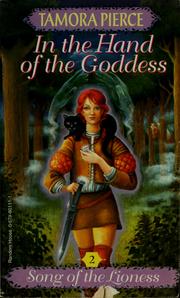
In the Hand of the Goddess
Alanna, still disguised as a boy, survives war, court plots, and a death duel as the Goddess's chosen warrior in the second Song of the Lioness book.
2,018-word summary · 9 min read
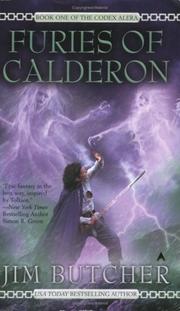
Furies of Calderon
Furyless Tavi defends Calderon Valley when the Marat return and lords scheme.
2,587-word summary · 11 min read
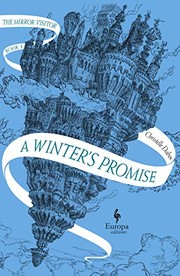
A Winter's Promise
Ophelia reads objects and is sent to marry Thorn on a cold ark.
2,502-word summary · 11 min read
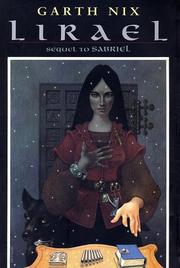
Lirael
A Sightless Clayr girl and a prince afraid of Death join the Dog and Mogget to stop necromancers from waking the Destroyer Orannis at the Red Lake while old…
2,692-word summary · 12 min read
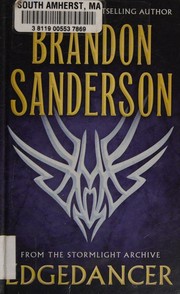
Edgedancer
Hungry street thief Lift and her vine-like friend Wyndle cross the Herald Nale in Tashikk when a child emperor shows Radiant signs and she refuses to step…
2,328-word summary · 10 min read
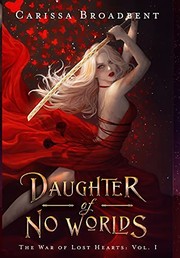
Daughter of No Worlds
A former slave with rare magic hires exiled warrior Max to train her for a daring rescue, sparking slow burn love and wider war in this big 520-page fantasy…
2,529-word summary · 11 min read
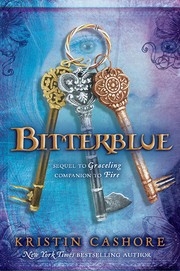
Bitterblue
Eighteen-year-old Queen Bitterblue sneaks out to learn why Monsea still suffers after Leck, facing court lies, ciphers, and trials in Cashore's rich third…
2,686-word summary · 12 min read
The Tombs of Atuan
Priestess Arha guards dark Tombs until wizard Ged comes to steal back ring.
2,043-word summary · 9 min read
Strange the Dreamer
Orphan librarian Lazlo Strange joins a quest to the lost city of Weep, where blue-skinned godspawn haunt dreams.
2,221-word summary · 10 min read
Inkspell
Meggie and Farid read themselves into the Inkworld, where Mo is wanted as the Bluejay and words can wound.
2,406-word summary · 11 min read
Alanna: The First Adventure
Twins swap roles so Alanna trains as boy page Alan for knighthood while Thom studies sorcery.
2,107-word summary · 9 min read
Abhorsen
Lirael as Abhorsen-in-Waiting must bind the Destroyer Orannis with Sam, Dog, and Mogget.
2,214-word summary · 10 min read
The Alchemyst
Twins Sophie and Josh learn their boss is Flamel as Dee steals the Codex minus two pages.
2,085-word summary · 9 min read

Poison Study
Sentenced to die, Yelena becomes the Commander's poison taster and learns survival in Ixia has a daily price.
2,501-word summary · 11 min read
To Kill a Kingdom
A siren princess turned human must steal a siren-hunting prince's heart to win back the sea.
2,248-word summary · 10 min read