
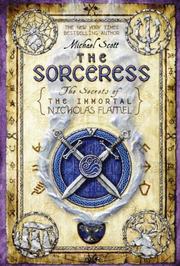
The Sorceress
2,684-word summary 12 min read 502 pages in the book
- First published
- 2009
- Publisher
- Delacorte Press
- Pages
- 502
- ISBN
- 9780385735292
- Series
- The Secrets of the Immortal Nicholas Flamel (#3)
Reading options
What's inside (9 sections)
I came to The Sorceress because Harry Potter had already put Nicholas Flamel's name in my head, and because I had stayed with the first two books long enough to want the third. Michael Scott published it in 2009 through Delacorte Press. The copy I read is the 502 page American hardcover, ISBN 9780385735292. The British edition followed in June from Doubleday. This is the third of six books in The Secrets of the Immortal Nicholas Flamel, and it pulls fifteen year old twins Sophie and Josh Newman out of a shattered Paris and into a London that does not want them. It also hands the title to a woman who has spent most of the series in a prison, which is the smartest choice Scott makes here.
The setup is familiar by now. John Dee has the Codex, the Book of Abraham the Mage, except for two pages Josh took in the first book. Those pages contain the Final Summoning that the Dark Elders need in order to return to the earth, and the Elders want them before Litha, the summer solstice, only three weeks away. Nicholas is aging quickly because he cannot brew the elixir that keeps him and his wife young. The twins have been Awakened but are still learning what that means. Scott does not stop to explain any of it. Open this book cold and the first chapter will leave you guessing. I had the earlier novels in mind, so I settled in fast, and the speed of the telling keeps confusion brief.
A hostile welcome in London
Nicholas narrates the opening as the three of them step into St. Pancras station. He is weakening visibly, and he knows London is a city where Dee has deep power. Their goal is Gilgamesh the King, the oldest immortal, who knows every kind of elemental magic even though he has no aura of his own and cannot use any of it. If anyone can teach the twins a third magic, it is him.
Before they can even leave the station area, three Genii Cucullati corner them in a dead end alley. They are flesh eaters sent by Dee, and they move like men who have forgotten how to be human. Josh draws Clarent, the stone sword he carried out of Paris, and buys a few seconds. Nicholas wears a bracelet woven from the aura of the Elder Iris. He tips a puddle toward the creatures and turns it into something close to the water of the river Styx, and all three go down. It is a clever bit of magic, and it tells you exactly what kind of fight this book will be: improvised, ugly, and won with whatever is to hand.
Meanwhile, in Paris, Dee and Niccolo Machiavelli get their orders from the Dark Elders. Dee is to hunt Nicholas in England. Machiavelli is to fly to America, kill Perenelle on Alcatraz, and loose the monsters sleeping there on San Francisco. The Elders mean to use the twins' auras to fuel the Final Summoning and tear open the shadow worlds where they were exiled. Three weeks. Two pages. One aging alchemist. Scott keeps the clock loud enough that you feel it while the twins bicker and Nicholas dodges questions.
The junkyard and the Bard
Francis, an old ally, points Nicholas toward Palamedes, the Saracen Knight who once rode with King Arthur and watched him fall. Palamedes lives in a fortified junkyard in London, guarded by the Gabriel Hounds, shape shifting dog people who answer to some masters more than others. He is not pleased to see Flamel. He growls about earlier candidates, children the Flamels had tried to Awaken and failed, and the twins hear enough to make their trust in Nicholas thinner than it was. That distrust is one of the better threads in the book, because it is earned. Nicholas has lied to them before, and Palamedes is only the latest person to say so out loud.
The person who makes the junkyard worth visiting is William Shakespeare. In this version of history the Bard is immortal, trained first by Flamel and then taken by Dee, and he lives with Palamedes among the scrap. He tells the twins that Dee killed his twin son Hamnet with a failed Awakening, which is a bleak little story and gives his hatred of the Magician a real source. He also suggests that the Dark Elders might be worth bringing back, since humanity is quite capable of wrecking the earth on its own. That argument makes him more than a cameo. He is a clever, damaged man with a point of view the twins are not ready to accept.
Shakespeare solves the immediate problem of distance with scrying, a kind of magical long distance call through liquid crystal screens. Flamel manages to speak with Perenelle across the ocean. It is a short conversation, and it nearly goes wrong. Vampire creatures attack her while the link is open, and Sophie and Josh pour their auras into Nicholas to strengthen the connection. The surge works, but it also acts as a beacon, and every supernatural thing within miles can now feel where they are. I liked this consequence. In many books a magical call would just be a call. Here it has a cost, and the cost arrives almost at once.
Flamel also warns Sophie that the memories of the Witch of Endor, absorbed when the ancient woman taught her Air magic, are starting to crowd out her own. She is remembering a life that was not hers. This is the most interesting thing the series does with its magic, and The Sorceress pushes it further. Power here is not a clean upgrade. It changes the person holding it, and not always in a way they can control.
Perenelle's island war
The title sorceress is Perenelle Flamel, and her chapters are the best in the novel. She is on Alcatraz, the island prison Dee put her on, surrounded by monsters and cut off from the mainland. Her uneasy ally is Areop-Enap, the Old Spider, an Elder imprisoned under the island. The sea nymphs and their father Nereus, the Old Man of the Sea, have ringed the island so she cannot leave by water. The ghost of Juan Manuel de Ayala, the sailor who named Alcatraz, moves through the shadows and helps her find her way.
The Morrigan, the crow goddess who attacked her in the previous book, turns out to be three personalities in one body. The Words of Power on the island had held her down long enough for her sisters Macha and Badb to surface. Perenelle wins them over and frees them, and the Crow Goddess becomes an ally instead of a killer. It is a good twist because it grows out of something already on the page, and it gives Perenelle a fighting chance that feels earned rather than handed to her.
Areop-Enap's spider army is then hit by a swarm of poisoned flies. Perenelle saves what she can by conjuring a false stench at the San Francisco dump to pull the swarm away, but the Old Spider is badly hurt and retreats into a healing cocoon. She is alone again, with Nereus still in the water. Later she uses an image out of Sophie's mind during the scrying link to call down an ice storm that buries the Sphinx under rubble. She does not kill it. She only slows it, which is the honest scale of her victories throughout this book.
Machiavelli arrives with Billy the Kid, who goes by Henry McCarthy and drives a Thunderbird convertible, to finish her. Perenelle, with Macha and Badb on her side, tricks them both, steals their boat, and makes it back to the mainland. When the London group comes through the stones at the end, she is already there. Perenelle is the character who spends the least time with the twins and the most time acting on her own, and she is the one I wanted to follow. Scott clearly knows it too.
The Horned God arrives
Back in London, the Elders send something older than themselves. Cernunnos, the Horned God, is an Archon, a being from before the Elders walked the earth, and he leads the Wild Hunt, a pack of wolves with human faces. Dee has called in a debt, and the Archon comes to the junkyard to help destroy Nicholas and the twins. Bastet, the cat goddess, later explains that the Witch of Endor was once Cernunnos's wife and cursed him out of love to keep his rage from wrecking the world. Sophie carries that same witch's memories now, which gives the confrontation a private edge.
The junkyard battle is the biggest set piece in the book. Shakespeare and the Gabriel Hounds fight alongside Palamedes and the twins. Josh refuses to run. He ignites an oil moat with Clarent and makes a wall of fire, and when Dee shows up carrying Excalibur, the twin of Josh's sword, the two blades cross. Josh pushes his aura into Clarent, the stone turns gold, and Dee is blasted backward. Then a thunderstorm rolls in and puts out the fires. Sophie, running on a depleted aura, wraps Cernunnos in a fire tornado and drops unconscious. The group escapes in a cab while the junkyard burns behind them.
I enjoyed this more than I expected. The scene is absurd in the way only this series can be, with ancient gods, talking dogs, and a boy with a magic sword, but the staging is clean enough that I could follow who was where. It also gives Josh a real moment. For most of the series he has been the skeptic who sulks while Sophie gets the interesting magic. Here he makes the decision to stand and fight, and the book lets him be the one who saves the others.
Gilgamesh and the price of water
The group collects Gilgamesh before heading toward Stonehenge, and this is where Flamel's withholding turns ugly. He has not told the twins what is wrong with the oldest immortal. Gilgamesh's mind is full of so many centuries that it has come apart. He is a wild haired vagrant who forgets where he is, attacks Nicholas with a dagger when he sees him, and claims to recognize the twins from a time before history. He knows every magic but has no aura, so he cannot cast any of it. What he can do is teach. Nicholas admits that earlier candidates were damaged by failed Awakenings, left in comas or worse, and that he never told Sophie and Josh. That admission made me like Flamel less, which I think is the point.
Gilgamesh agrees to teach water magic on one condition: the twins must one day return the Codex so he can reverse the immortality formula and finally die. Sophie promises. The lessons take place in a barn near one of Shakespeare's safe houses, among objects left behind by people nobody remembers, and Gilgamesh says a person is truly lost only when everyone has forgotten them. He shows the twins the force and long history of water through visions. It is the quietest part of the book and one of its best ideas, that an old man with a broken mind still has something worth passing on.
Cernunnos finds them again near Stonehenge. The twins use what they have just learned: Josh turns the ground under the Archon into liquid, and Sophie bakes it hard as iron, trapping him. Josh throws Clarent at Dee to protect the collapsed Flamel and knocks him out, but loses the sword in the grass. Shakespeare and the surviving Gabriel Hounds cover their retreat. Machiavelli, using his power as head of French intelligence, has locked down the roads around Stonehenge, so the police are closing in too, and Josh uses water magic to bring down a sudden rain that stops them. It is a clever use of a new power rather than another explosion, and it suits a boy who has never been the flashy twin.
Stonehenge and the swords rejoined
At the stones, Flamel collapses while trying to open the ley gate. Josh pours his golden aura into two upright pillars and discovers they are made from the same igneous rock as Clarent and Excalibur. Sophie, weak as she is, touches the second pillar. It flares silver, the gate opens, and Flamel drags both twins through to the other side, in California near Mount Tamalpais. Perenelle is waiting. She has already escaped Alcatraz, fought off Nereus, and driven to the meeting point with the Crow Goddess at her side. The reunion is short but it lands, because the book has spent hundreds of pages keeping these two people apart.
The loose ends are deliberate. Scathach and Joan of Arc tried to reach Perenelle through a gate in Paris, but Machiavelli trapped the passage with ground mammoth bones and an Attraction spell. They stepped out onto Mount Tamalpais a million years in the past, among mastodons and saber toothed cats, and they are still there when the book ends. I found this thread frustrating while reading and effective in hindsight. It keeps the series moving, but it also means one of the best characters spends the whole novel out of play.
The final image belongs to Dee. He finds Clarent in the grass near Stonehenge, brings it together with Excalibur, and the two blades fuse into one weapon that leaks gray smoke. Gilgamesh shuffles out of the dark, touches the fused sword, and says that the two that are one are the one that is all. The line is deliberately mysterious, and it points straight at the twins. It is a strong note to end on, even if it is obviously a hook for the next volume.
What lands and what grates
The best thing here is the split structure. The twins get the loud, physical story in London, with chases and battles and a god made of wolves. Perenelle gets the stranger, slower story on an island full of ghosts and spiders, and hers is the one with more thought in it. Scott writes her as a strategist who reads her enemies and uses what is lying around, and I wished the book had more of her. When the two lines finally meet, the payoff feels earned because both sides did real work.
The meanness of the adults is another strength. Flamel is not a kindly wizard. He lies, he withholds, and he has hurt children before these two. Palamedes calls him on it, Shakespeare has his own bitter reasons for distrusting him, and the twins are right to keep asking questions. The Witch of Endor memories crowding Sophie's mind add a cost to her power that most books in this vein skip. You can feel her losing a little of herself each time she reaches for Air or Fire.
The weaknesses are the same ones the earlier books had. The prose is plain to the point of flatness, and nobody gets a memorable line unless it is a myth name. The twins are still less vivid than the adults around them, even when the book is trying hard to give Josh the spotlight. New characters arrive with a label and an aura and a smell, and the parade can feel like a catalogue. I also think the cliffhanger at the end does some heavy lifting for a book that has not finished its own argument.
That said, I had a good time. The novel is brisk, the myths are used with real knowledge, and the Perenelle chapters gave me something to think about after I closed the book. I would hand it to a reader who has already met Flamel and the twins, and I would tell them to have The Necromancer ready. Starting here would be a mistake. The book assumes you know who Dee is, what the Codex cost, and why the two pages matter, and it is much better when that knowledge is already in place.
FAQ
Is The Sorceress part of a series?
Yes. It is book three in The Secrets of the Immortal Nicholas Flamel, following The Magician and preceding The Necromancer. Delacorte Press published it in 2009.
Who is the sorceress in the title?
The title refers to Perenelle Flamel, Nicholas's wife, who is imprisoned on Alcatraz and fights her way free while the twins train in London.
Does The Sorceress end on a cliffhanger?
Yes. Dee fuses Clarent with Excalibur, and Scathach and Joan of Arc are left stranded in a shadow world, so the fight over the Codex continues in The Necromancer.
Similar books
More from The Secrets of the Immortal Nicholas Flamel first, then related titles.
The Alchemyst
Twins Sophie and Josh learn their boss is Flamel as Dee steals the Codex minus two pages.
2,085-word summary · 9 min read
The Magician
Sophie and Josh flee to Paris with Nicholas Flamel, where John Dee, Machiavelli, and an awakened god close in on the missing pages of the Codex.
2,162-word summary · 10 min read
Children of Blood and Bone
White haired Zelie chases magic return with princess Amari hunted by Inan.
2,027-word summary · 9 min read
The Demon King
A thief steals an amulet once owned by a legendary sorcerer, while a princess flees a forced marriage in the first volume of Cinda Williams Chima's high…
2,371-word summary · 11 min read
The Woman Who Rides Like a Man
Newly knighted, Alanna heads south into Tortall's desert, where a broken sword and a dead shaman leave her responsible for a rebel tribe and three Gifted…
2,894-word summary · 13 min read
The Tyrant's Tomb
Apollo, still trapped in a mortal teenager's body, carries Jason Grace's coffin to Camp Jupiter and must learn what a hero is before the emperors destroy it.
2,292-word summary · 10 min read
The Girl of Fire and Thorns
Rae Carson's debut follows Elisa, an insecure princess born with a godstone in her navel, who is married to a foreign king and must grow into the leader a…
2,331-word summary · 10 min read

Magic Study
Sentenced to die in Ixia, Yelena returns to the land she was stolen from to learn the magic that made her an outlaw.
2,542-word summary · 11 min read
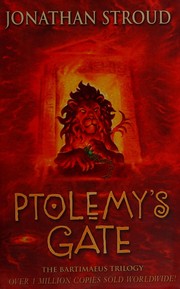
Ptolemy's Gate
Nathaniel and a weakened Bartimaeus face a possession plot in Stroud's dark final Bartimaeus novel.
2,328-word summary · 10 min read
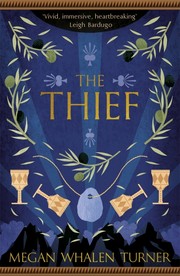
The Thief
A boastful young thief is pulled from a prison to steal a legendary stone for the king's magus, and the story he tells about himself is not the whole story.
2,514-word summary · 11 min read

Inkdeath
The final Inkworld novel sends Mo into the land of the dead, leaves Meggie choosing between two boys, and ends the Adderhead's immortality with three written…
2,062-word summary · 9 min read

Lioness Rampant
Alanna searches for the Dominion Jewel with the Shang Dragon, then returns to Tortall to face Duke Roger at Jonathan's coronation.
2,478-word summary · 11 min read

The Siren
Saved from a shipwreck in 1930, Kahlen becomes a siren who sings men to their deaths for the Ocean, until a boy in a college library makes her want a life she…
2,369-word summary · 11 min read

The Golem's Eye
Two years after The Amulet of Samarkand, Nathaniel is a rising bureaucrat, Bartimaeus is his unwilling servant again, and something made of clay is tearing…
2,299-word summary · 10 min read
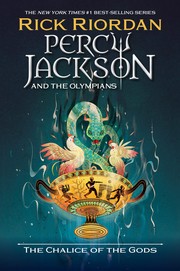
The Chalice of the Gods
Percy needs three recommendation letters from three gods to apply to college, so his first quest is recovering a stolen chalice from the god of old age.
2,106-word summary · 9 min read
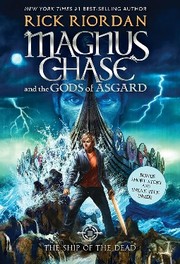
The Ship of the Dead
Magnus and his crew sail to the edges of the Norse worlds to stop Loki from launching Naglfar, the ship of the dead.
2,426-word summary · 11 min read

The Rose & the Dagger
Shahrzad is pulled from her Caliph husband and left in a desert camp of rebels, needing to break his curse and end a war before it ends her.
2,520-word summary · 11 min read

The Queen of the Tearling
Nineteen-year-old Kelsea leaves the woods to take her throne, ends a shipment of human captives, and draws the Red Queen's revenge.
2,357-word summary · 10 min read

We Hunt the Flame
In a fractured Arabia-inspired world, a disguised huntress and a prince-assassin race to find a magic-restoring book and confront an ancient evil.
2,195-word summary · 10 min read
The Burning Maze
Apollo, still trapped in a mortal teenager's body, follows a dangerous prophecy through the Labyrinth with Meg and Grover as the Triumvirate's grip tightens.
2,248-word summary · 10 min read

Lore
Lore Perseous, the last of a hunted bloodline, is pulled back into the Agon when a wounded Athena offers her revenge against the god who killed her family.
2,188-word summary · 10 min read
In the Hand of the Goddess
Alanna, still disguised as a boy, survives war, court plots, and a death duel as the Goddess's chosen warrior in the second Song of the Lioness book.
2,018-word summary · 9 min read
A Fate Inked in Blood
In Norse-inspired Skaland, a fish gutter hiding a goddess's blood is claimed by a jarl, bound by oath, and guarded by the son she cannot want.
1,971-word summary · 9 min read
Furies of Calderon
Furyless Tavi defends Calderon Valley when the Marat return and lords scheme.
2,587-word summary · 11 min read
A Winter's Promise
Ophelia reads objects and is sent to marry Thorn on a cold ark.
2,502-word summary · 11 min read
The Hammer of Thor
Magnus and Sam chase Thor's stolen hammer to a giant wedding heist, with Alex Fierro joining Floor Nineteen as Loki bargains and Ragnarok stirs.
3,068-word summary · 14 min read
Lirael
A Sightless Clayr girl and a prince afraid of Death join the Dog and Mogget to stop necromancers from waking the Destroyer Orannis at the Red Lake while old…
2,692-word summary · 12 min read
Edgedancer
Hungry street thief Lift and her vine-like friend Wyndle cross the Herald Nale in Tashikk when a child emperor shows Radiant signs and she refuses to step…
2,328-word summary · 10 min read
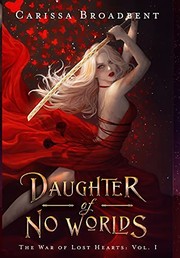
Daughter of No Worlds
A former slave with rare magic hires exiled warrior Max to train her for a daring rescue, sparking slow burn love and wider war in this big 520-page fantasy…
2,529-word summary · 11 min read
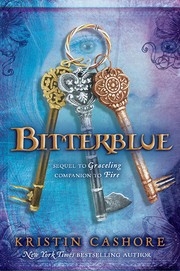
Bitterblue
Eighteen-year-old Queen Bitterblue sneaks out to learn why Monsea still suffers after Leck, facing court lies, ciphers, and trials in Cashore's rich third…
2,686-word summary · 12 min read